

What Does Gut Motility Mean for Your Digestive Health
Gut motility is defined as the coordinated muscular contractions and relaxations that move food, liquids, and waste through your gastrointestinal tract from mouth to colon. The enteric nervous system, a network of roughly 500 million neurons lining your gut wall, controls every contraction. When motility works correctly, digestion runs on schedule. When it breaks down, you feel it fast: bloating, constipation, cramping, or the opposite extreme. Understanding what gut motility means gives you a real framework for interpreting those symptoms and doing something about them.
What does gut motility mean: the core definition
Gut motility refers to the mechanical movement of the gastrointestinal tract. Two muscle layers drive this movement: an inner circular layer that narrows the tube and an outer longitudinal layer that shortens it. Together, they create the wave-like and mixing contractions that define normal digestion.
The gut motility definition goes beyond simple movement. Motility also mixes food with digestive secretions, controls how long contents stay in each segment, and times the release of nutrients into the bloodstream. A meal that moves too fast skips proper absorption. A meal that moves too slowly ferments and causes gas, pain, and bacterial imbalance.
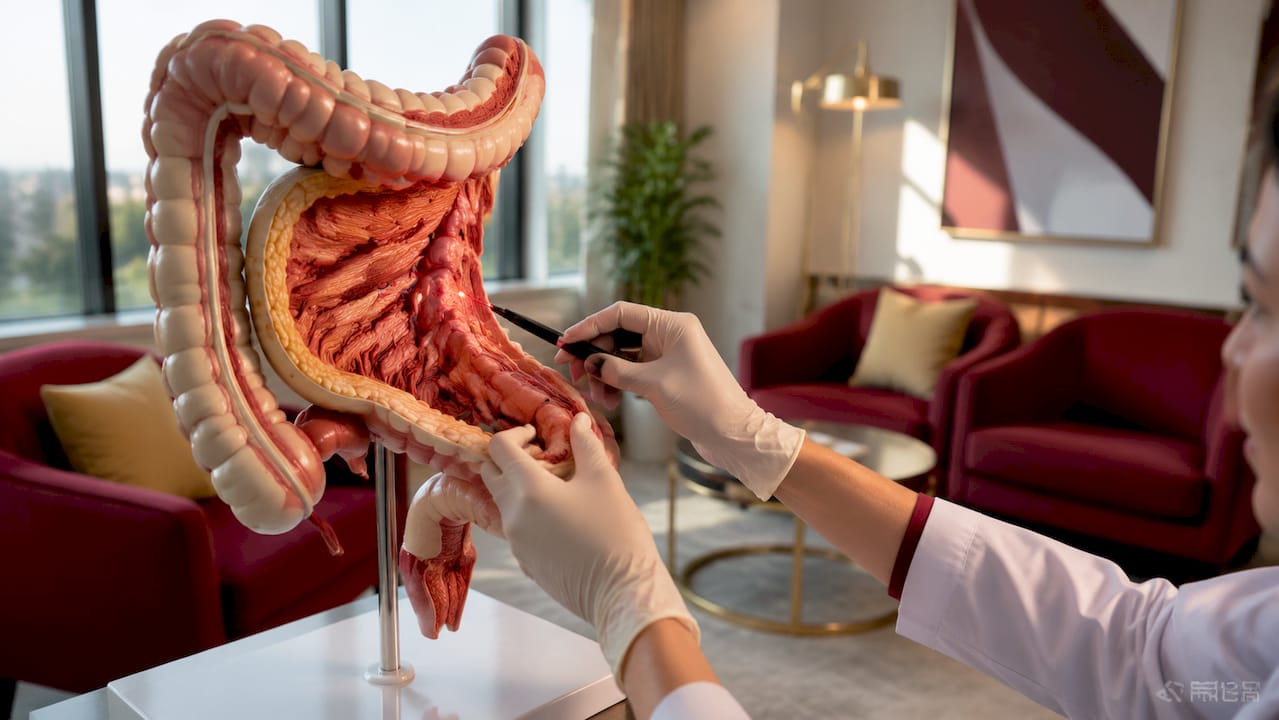
The enteric nervous system, often called the “second brain,” runs this entire operation. It can function independently of the central nervous system, reading local signals like pressure and chemical composition to decide which contraction pattern to trigger. This independence is why your gut keeps working even when your brain is focused elsewhere.
How gut motility works: mechanisms and patterns
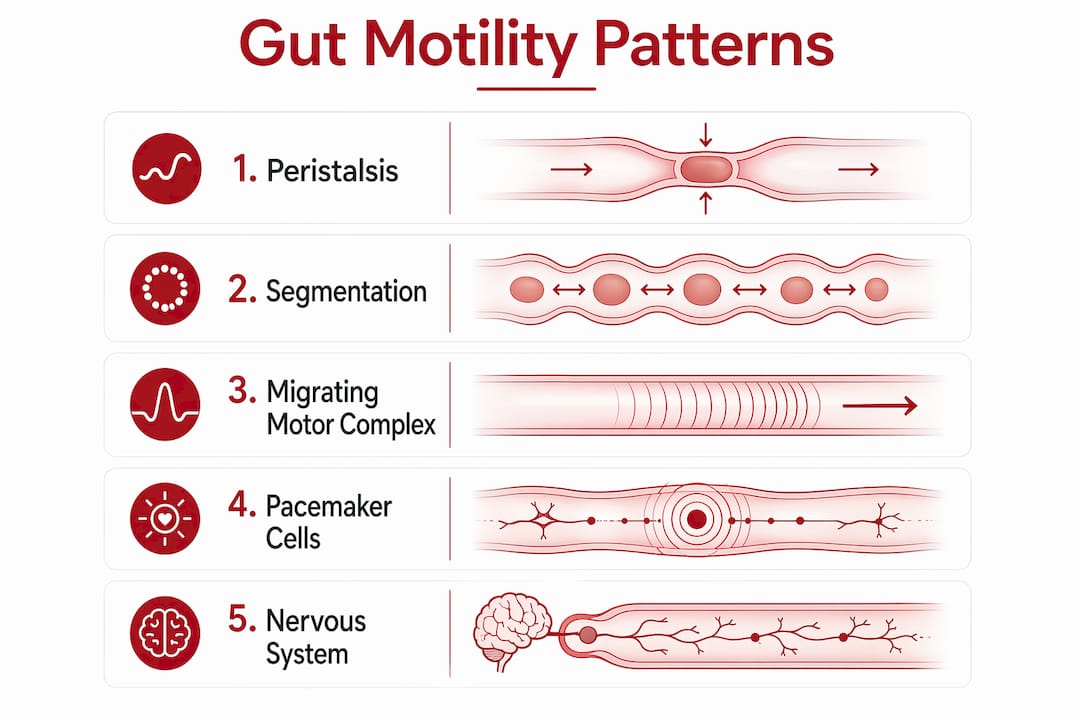
The physiology of gut motility and digestion rests on two dominant movement patterns: peristalsis and segmentation.
Peristalsis is a coordinated wave of contraction behind a bolus of food and relaxation ahead of it. This propels contents forward. You see it most clearly in the esophagus, where a single swallow triggers a clean peristaltic wave that pushes food into the stomach in seconds. In the small intestine, peristalsis moves partially digested material toward the colon.
Segmentation works differently. Instead of pushing forward, it produces rhythmic, localized contractions that chop and mix contents with digestive enzymes and bile. This pattern dominates the small intestine during active digestion, maximizing contact between nutrients and the absorptive lining. Without adequate segmentation, nutrients pass through before they can be absorbed properly.
The migrating motor complex: gut housekeeping
Between meals, a third pattern takes over. The migrating motor complex sweeps through the gut every 90–120 minutes during fasting, clearing undigested residue, dead cells, and bacteria. Think of it as a cleaning cycle that runs only when the kitchen is empty. The hormone motilin triggers each cycle. If you eat before the cycle completes, it resets. This is one reason constant snacking can disrupt gut hygiene and contribute to bacterial overgrowth.
Pacemaker cells and electrical slow waves
Underlying all these patterns are specialized cells called Interstitial Cells of Cajal (ICC). These pacemaker cells generate slow waves that set the maximum contraction frequency for each gut segment. The stomach fires at roughly 3 cycles per minute, the duodenum at 12, and the ileum at 8. These rates are not random. Each segment has a job, and the electrical rhythm matches the workload.
The autonomic nervous system modulates this baseline rhythm. Vagal (parasympathetic) stimulation increases contraction amplitude, which is why eating in a relaxed state improves digestion. Sympathetic stimulation, the fight-or-flight response, reduces motility. Stress literally slows your gut down.
| Motility pattern | Location | Primary function |
|---|---|---|
| Peristalsis | Esophagus, stomach, intestines | Propels contents forward |
| Segmentation | Small intestine | Mixes contents with secretions |
| Migrating motor complex | Stomach and small intestine | Clears residue during fasting |
| Tonic contractions | Stomach, sphincters | Controls reservoir function and flow |
Pro Tip: Eating your last meal at least two hours before bed gives the migrating motor complex time to run a full housekeeping cycle overnight, which supports better gut health by morning.
What affects gut motility: internal and external factors
Gut motility does not operate in a vacuum. A wide range of biological and lifestyle factors push it faster or slower, and understanding them is the practical core of gut health.
Neurotransmitters and hormones
Serotonin is the most important chemical signal in gut motility. About 95% of the body’s serotonin is produced in the gut, not the brain. It triggers peristaltic reflexes by activating sensory neurons in the gut wall. When serotonin signaling is disrupted, peristalsis becomes erratic. This is a key reason why antidepressants that affect serotonin levels often cause digestive side effects.
Motilin, as noted above, triggers the migrating motor complex. Gastrin, released when food enters the stomach, increases contraction amplitude to begin breaking down a meal. These hormones work in sequence, and disrupting one affects the whole chain.
The gut microbiome
The gut microbiome and motility interact in both directions. Microbial metabolites, particularly short-chain fatty acids produced when gut bacteria ferment fiber, affect motility coordination directly by stimulating enteroendocrine cells. A healthy, diverse microbiome supports regular transit. A depleted or imbalanced microbiome, called dysbiosis, correlates with both constipation and diarrhea depending on which bacterial populations dominate.
This bidirectional relationship means motility also shapes the microbiome. Slow transit allows bacteria to colonize areas of the gut where they do not belong, a condition called small intestinal bacterial overgrowth (SIBO). Fast transit flushes beneficial bacteria before they can establish. Motility is the traffic control system that keeps microbial populations in their correct zones.
Diet, hydration, and lifestyle
- Dietary fiber adds bulk and stimulates stretch receptors in the gut wall, triggering peristalsis. Soluble fiber from sources like oats and legumes also feeds the bacteria that produce motility-supporting short-chain fatty acids.
- Hydration keeps stool soft and easy to move. Dehydration is one of the most common and correctable causes of slow transit.
- Physical activity increases parasympathetic tone and directly stimulates gut contractions. Even a 20-minute walk after a meal measurably speeds gastric emptying.
- Chronic stress activates the sympathetic nervous system, suppressing motility and redirecting blood flow away from the gut. Long-term stress is a documented trigger for irritable bowel syndrome (IBS).
- Sleep quality matters more than most people realize. The gut follows a circadian rhythm. Poor sleep disrupts the timing of motility cycles, contributing to morning constipation or irregular transit.
Pro Tip: Prebiotic fiber feeds the gut bacteria that produce short-chain fatty acids, which in turn support healthy motility. Yacon root is one of the richest natural sources of prebiotic fructooligosaccharides (FOS), with up to 50g per 100g.
What are common gut motility disorders?
When the coordination of nerves, muscles, and hormones breaks down, motility disorders develop. These conditions are more common than most people expect, and they are frequently misdiagnosed as purely psychological or dietary problems.
- Gastroparesis is delayed gastric emptying without a mechanical blockage. The stomach empties too slowly, causing nausea, early fullness, and vomiting. Diabetes is a leading cause because high blood sugar damages the vagus nerve over time.
- Irritable bowel syndrome (IBS) involves altered motility throughout the colon and small intestine. Depending on the subtype, transit is either too fast (IBS-D, diarrhea predominant) or too slow (IBS-C, constipation predominant). The disruption in nerve, muscle, and hormone coordination drives the unpredictable symptoms.
- Functional dyspepsia affects the stomach’s ability to relax and accommodate a meal, causing pain and discomfort in the upper abdomen without any structural cause visible on imaging.
- Chronic intestinal pseudo-obstruction mimics a physical bowel blockage but has no mechanical cause. The gut simply stops moving effectively, leading to severe distension and pain.
Common symptoms across these conditions include constipation, abdominal pain, bloating, delayed transit, and nausea. The shared root cause is a breakdown in the signaling system that coordinates contraction. Ion channel dysfunction, inflammation, and microbiota imbalance are all documented contributors.
Modern gastroenterology uses prokinetic agents like mosapride and domperidone to restore motility in clinical settings. Gastrointestinal motility disorders have complex, multifactorial causes, which is why no single drug works for every patient. Emerging research into traditional Chinese medicine and microbiome-targeted therapies is expanding the treatment toolkit.
Why does gut motility matter beyond digestion?
The importance of gut motility extends well past moving food from A to B. It shapes your nutritional status, mental health, immune function, and long-term disease risk.
-
Nutrient absorption depends on transit timing. If food moves too fast, the small intestine does not have enough contact time to absorb iron, calcium, and fat-soluble vitamins. If it moves too slowly, bacterial fermentation produces gas and toxins before nutrients reach the bloodstream.
-
The gut-brain axis runs in both directions. The enteric nervous system communicates with the brain via the vagus nerve, and gut motility signals influence mood, anxiety, and cognitive function. Chronic motility disorders correlate with higher rates of depression and anxiety, not just as a consequence of discomfort but through direct neurochemical pathways.
-
Immune function depends on proper transit. Roughly 70% of the immune system is located in the gut. Slow motility allows pathogens and inflammatory compounds to linger in contact with the gut lining, increasing the risk of immune activation and systemic inflammation.
-
The microbiome stays balanced only when motility is regular. As covered above, motility controls where bacteria live and in what numbers. Disrupted motility is a primary driver of dysbiosis, which connects to conditions ranging from metabolic syndrome to autoimmune disease.
-
Quality of life is directly affected. Chronic motility disorders are associated with missed work, social withdrawal, and reduced physical activity, creating a feedback loop that makes the underlying condition worse.
Key Takeaways
Gut motility is the foundation of digestive health, controlled by the enteric nervous system and shaped by diet, stress, hormones, and the microbiome.
| Point | Details |
|---|---|
| Core definition | Gut motility is coordinated muscle contractions that move and mix contents through the GI tract. |
| Two key patterns | Peristalsis propels food forward; segmentation mixes it with digestive secretions for absorption. |
| Fasting cycle matters | The migrating motor complex runs every 90–120 minutes to clear residue and control bacteria. |
| Multiple factors affect it | Serotonin, motilin, fiber, hydration, stress, and sleep all directly influence motility speed and rhythm. |
| Disorders are common | Gastroparesis, IBS, and functional dyspepsia all stem from disrupted nerve, muscle, and hormone coordination. |
Gut motility is the part of digestion most people ignore until it breaks
Most people think about digestion in terms of what they eat. I think about it in terms of how the gut moves. After spending years reading the research on gastrointestinal physiology and talking with people who struggle with chronic digestive symptoms, the pattern is clear: motility is the missing piece in most gut health conversations.
The biggest misconception I encounter is that constipation or bloating is always a fiber problem. Sometimes it is. But often the real issue is a disrupted migrating motor complex from constant snacking, a serotonin signaling problem, or chronic stress suppressing vagal tone. Eating more fiber into a gut with broken motility is like adding more cars to a highway where the traffic signals are broken.
What actually moves the needle, in my experience, is addressing the nervous system first. That means managing stress, protecting sleep, and eating in a way that supports the gut’s natural rhythms rather than fighting them. Spacing meals to allow the migrating motor complex to complete its cycles is one of the most underrated habits in gut health. It costs nothing and most people have never heard of it.
The research on prebiotic fiber is also more exciting than the mainstream conversation suggests. Short-chain fatty acids produced by gut bacteria fermenting prebiotic FOS do not just feed the colon lining. They signal directly to enteroendocrine cells that regulate motility. Choosing foods that feed the right bacteria is not a vague wellness recommendation. It is a specific, mechanistic intervention.
If you have persistent digestive symptoms, do not normalize them. Gastroparesis, IBS, and functional dyspepsia are real, diagnosable conditions with real treatment options. A gastroenterologist can run motility studies that show exactly where your gut’s rhythm is breaking down. That information changes everything.
— Celeste
Support your gut with a breakfast that works with your digestion
Gut health starts at the breakfast table. What you put on your pancakes and waffles matters more than most families realize.

Yakonow is a single-ingredient syrup pressed from hand-harvested Peruvian yacon root. It carries a glycemic index of just 1 and delivers up to 50g of prebiotic FOS fiber per 100g, the same type of prebiotic fiber that feeds motility-supporting gut bacteria. Unlike maple syrup, honey, or agave, Yakonow does not spike blood sugar or disrupt the gut environment. It is keto-friendly, diabetic-friendly, and vegan. Try the Yakonow Premium Pancake Syrup in a single 6oz bottle and give your family a breakfast that supports digestion from the first bite.
FAQ
What is the simple gut motility definition?
Gut motility is the coordinated muscular contractions that move and mix food, liquids, and waste through the gastrointestinal tract. The enteric nervous system, with roughly 500 million neurons, controls this process.
How does gut motility work during fasting?
During fasting, the migrating motor complex runs every 90–120 minutes, sweeping undigested residue and bacteria out of the gut. The hormone motilin triggers each cycle, and eating resets it.
What are the most common signs of poor gut motility?
Poor motility typically causes constipation, bloating, abdominal pain, nausea, and delayed gastric emptying. These symptoms reflect a breakdown in the coordination of gut nerves, muscles, and hormones.
What affects gut motility the most?
Serotonin levels, stress, hydration, dietary fiber, sleep quality, and physical activity all directly influence motility speed and rhythm. Chronic stress is one of the most common and overlooked suppressors of gut movement.
Can diet improve gut motility?
Yes. Prebiotic fiber feeds gut bacteria that produce short-chain fatty acids, which stimulate motility-supporting cells in the gut lining. Adequate hydration and regular physical activity also support consistent transit.