

Safe Syrup Options for Insulin Resistance: A Family Guide
For people managing insulin resistance, the safest syrup choices are yacon syrup, non-nutritive sweeteners like stevia and monk fruit, and pure maple syrup used sparingly. No sweetener is entirely without trade-offs, so monitoring your glucose response after trying anything new is worth the extra step, especially if you take glucose-lowering medication.
Here is a quick read on each main option:
- Yacon syrup: Very low digestible carbs, rich in prebiotic fiber (FOS), roughly 20 kcal per tablespoon. Best for drizzling over pancakes, yogurt, or oatmeal.
- Stevia and monk fruit extracts: No meaningful glycemic effect in ordinary amounts. Good for sweetening drinks or sauces, though neither has the thick, pourable texture of a traditional syrup.
- Erythritol: A sugar alcohol with minimal blood-glucose impact. Works in baking; can cause GI discomfort in large amounts.
- Pure maple syrup (small amounts): A glycemic index around 54, so it does raise blood sugar. A teaspoon rather than a tablespoon keeps the load manageable.
- Agave, honey, rice malt syrup: Use with caution or avoid. Agave is high in fructose; rice malt syrup tests very high on the glycemic index.
Table of Contents
- How “safe” is defined for people with insulin resistance
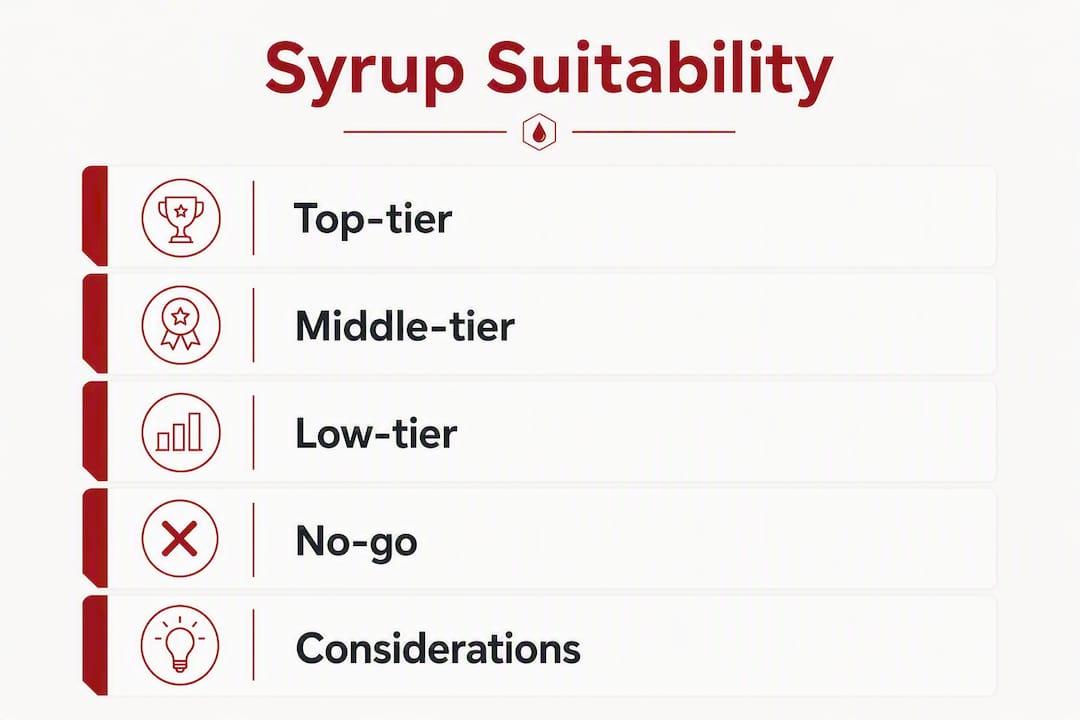
- Practical list of syrup and sweetener options, ranked by suitability
- How to swap syrups safely and preserve taste and texture in recipes
- Side effects, safety warnings, and label-reading red flags
- Yacon syrup explained: what it is and why it fits the table
- How to trial a new syrup safely and when to contact your clinician
- Key takeaways
- A warm word on mornings
- Yakonow yacon syrup: a syrup worth keeping on the table
- Sources and further reading
How “safe” is defined for people with insulin resistance
Calling a syrup “safe” for insulin resistance means more than a low number on a glycemic index chart. Three measures together tell the real story: glycemic index (GI), glycemic load (GL), and available carbohydrate per serving.
GI ranks how quickly a food raises blood glucose on a scale of 0–100. But GI is measured in isolation, on an empty stomach, with a fixed carbohydrate dose. Eat that same syrup drizzled over a fiber-rich oatmeal bowl and the actual glucose rise will be lower. That is where glycemic load comes in: GL multiplies GI by the grams of available carbohydrate in a realistic serving, then divides by 100. A food can have a low GI yet still carry a high GL if you pour enough of it. Health organizations caution that even a low-GI syrup is a concentrated carbohydrate source, and total available carbs, not GI alone, determine how much a sweetener interacts with glucose-lowering medication.
Prebiotic fiber content adds a third dimension. Yacon syrup is high in fructooligosaccharides (FOS), a fiber the body cannot digest directly. FOS ferments in the gut, producing short-chain fatty acids (SCFAs) that influence gut hormones like GLP-1 and PYY, which play a role in satiety and insulin sensitivity. That mechanism is why yacon sits in a different category from most syrups.
Calorie and GI snapshot by syrup
| Syrup | GI (varies slightly depending on source and batch) | Calories per tablespoon | Notes |
|---|---|---|---|
| Yacon | 1–5 | ~20 kcal | High FOS; low digestible carbs |
| Pure maple | ~54 | 54 kcal per tablespoon | Moderate GI; use in small amounts |
| Agave | 22–28 | 63 kcal per tablespoon | Low GI but very high fructose |
| Honey | — | 64 kcal per tablespoon | Similar to maple; natural but not low-GI |
| Rice malt syrup | ~98 | high calorie content | Very high GI; avoid for insulin resistance |
| Honey | — | relatively high calorie content | Similar to maple; natural but not low-GI |
| Rice malt syrup | ~98 | high calorie content | Very high GI; avoid for insulin resistance |
Evidence quality matters here too. A randomized crossover trial found that a single-meal dose of yacon syrup reduced postprandial glucose and insulin in adult women. That is a single-meal study. A meta-analysis of pooled RCTs found no statistically significant effect on fasting glucose or insulin overall, though subgroup results improved for interventions lasting longer than 8 weeks. Short-term taste tests will not capture the full picture.
Practical list of syrup and sweetener options, ranked by suitability
Top-tier options
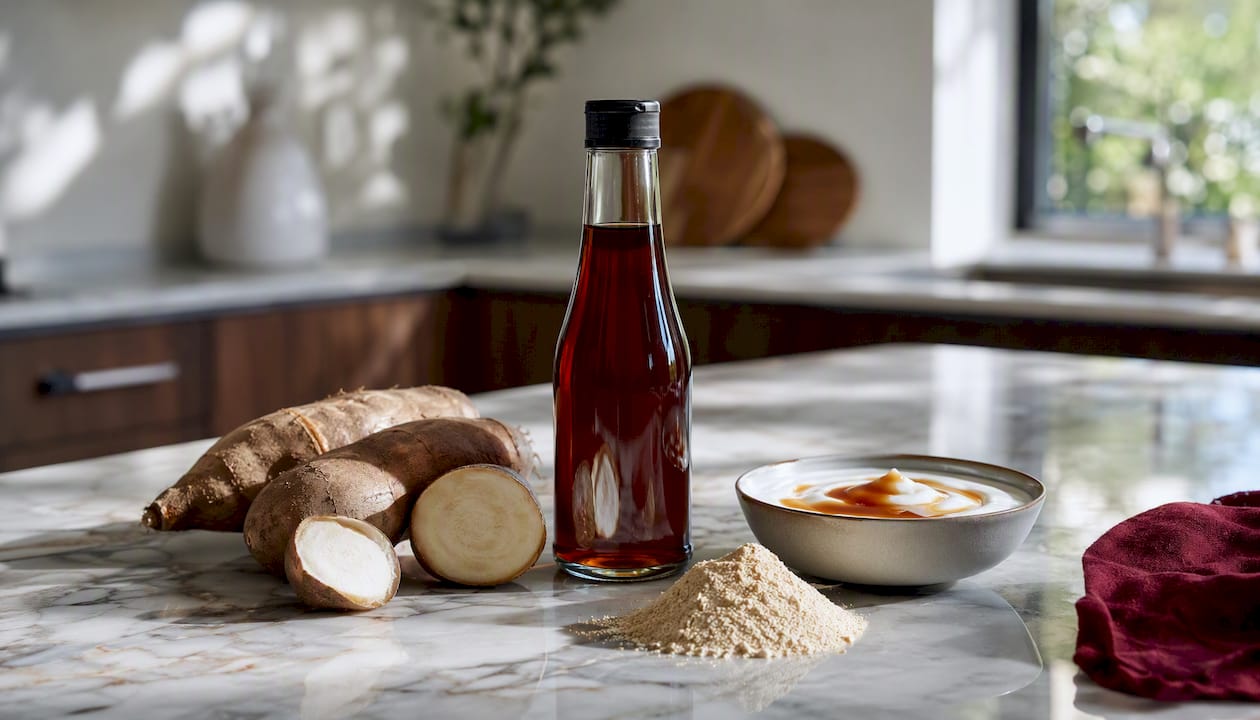
Yacon syrup stands apart because its sweetness comes mostly from FOS, a fiber your body does not metabolize into glucose. The Cleveland Clinic notes that non-nutritive sweeteners and low-digestible-carb options are the most appropriate choices for people watching blood sugar, and yacon fits that description while still behaving like a real syrup at the table. For a deeper look at how it compares to other low-sugar options, the yacon vs. agave, stevia, and monk fruit comparison is worth reading.
Stevia and monk fruit extracts have no meaningful glycemic effect in ordinary amounts and work well in drinks, sauces, and some baked goods — for practical tips, see how to make healthy drinks appealing to kids. They work well in drinks, sauces, and some baked goods, but they do not pour or caramelize the way a syrup does. If you need that drizzle texture, you will need to blend them into a thickened base or choose a different option.
Erythritol is a sugar alcohol that the body absorbs but does not metabolize into glucose to any significant degree. It works in baking and can be combined with stevia for a more balanced sweetness. Large amounts (typically above 30–50 g in one sitting) can cause bloating or loose stools.
Middle-tier options (use sparingly)
Pure maple syrup has a GI around 54. A teaspoon over pancakes is a very different glycemic event than a generous pour. The yacon vs. maple syrup comparison breaks down exactly where the difference shows up in practice. Stick to single-teaspoon portions and pair with protein or fiber to blunt the glucose response.
Agave syrup tests low on the GI scale (roughly 22–28 in some samples) because it is predominantly fructose, which bypasses the usual glucose pathway. The catch: chronic high fructose intake is associated with liver fat accumulation and worsened insulin sensitivity over time. A small drizzle occasionally is not the same as using it as your daily sweetener.
Lower-tier options (avoid or minimize)
- Rice malt syrup: GI around 98, almost entirely glucose. Spikes blood sugar faster than table sugar.
- “Maple-flavored” syrups: Usually corn syrup with artificial flavoring. Check the label; many contain high-fructose corn syrup as the first ingredient.
- Corn syrup and glucose syrup: High GI, no fiber, no redeeming nutritional profile for someone managing insulin resistance.
Single-ingredient syrups are almost always the safer choice. A label that reads “yacon syrup” or “pure maple syrup” tells you exactly what you are getting. A label with five sweeteners listed means the GI and fructose load are harder to predict.
How to swap syrups safely and preserve taste and texture in recipes
Swapping a familiar syrup is easier than it sounds, but a few small adjustments make the difference between a flat result and one the whole table enjoys.

Step 1. Start with a 1:1 volume swap and taste before adding more. Yacon syrup is roughly 50–75% as sweet as maple syrup, so you may want a touch more to match the flavor.
Step 2. Reduce other liquids slightly in baked goods. Yacon syrup adds moisture; if a recipe calls for 3 tablespoons of maple syrup, reduce another liquid by about 1 teaspoon to compensate.
Step 3. Expect less browning. Yacon’s FOS does not caramelize the way sucrose does, so pancakes and baked goods will be lighter in color. That is fine; it does not affect flavor.
Step 4. For sauces and dressings, yacon syrup behaves very similarly to honey or maple, with a mild, slightly earthy sweetness that pairs well with citrus, ginger, and cinnamon.
Step 5. For baking with erythritol or stevia blends, add a small amount of a binding liquid (like unsweetened applesauce) to compensate for the lack of moisture these sweeteners provide.
Sweetness and culinary behavior at a glance
| Sweetener | Sweetness vs. sugar | Heat stable? | Best uses |
|---|---|---|---|
| Yacon syrup | ~50–75% | Moderate (avoid high heat) | Drizzling, oatmeal, sauces, light baking |
| Pure maple syrup | ~100% | Yes | Pancakes, baking, glazes |
| Stevia extract | — | Yes | Drinks, sauces, baking blends |
| Erythritol | ~70% | Yes | Baking, dry rubs |
| Monk fruit extract | — | Yes | Drinks, sauces |
Pro Tip: When baking with yacon syrup, keep oven temperature at or below 350°F. Prolonged high heat can degrade FOS and alter the syrup’s mild flavor. For a full baking substitution guide, Yakonow’s recipe resource walks through ratios for muffins, pancakes, and quick breads.
For family mornings, the simplest swap is 1 tablespoon of maple syrup over pancakes replaced with 1–2 teaspoons of yacon syrup. The kids get the drizzle; you get a fraction of the glycemic load. Oatmeal works the same way: stir in a teaspoon of yacon at the end of cooking rather than adding honey or brown sugar.
Side effects, safety warnings, and label-reading red flags
Most of the risks with low-glycemic syrups are manageable, but a few deserve a clear heads-up before you stock your pantry.
GI symptoms with yacon: Because FOS ferments in the colon, introducing yacon too quickly can cause bloating, gas, or abdominal discomfort. Clinical reviews confirm that symptoms are dose-dependent and typically subside when intake is increased gradually. Start with 1 teaspoon and hold there for a few days before increasing.
Sugar alcohol effects: Erythritol is generally the gentlest sugar alcohol, but xylitol, sorbitol, and maltitol can cause significant GI distress at moderate doses. More critically, xylitol is highly toxic to dogs. If you keep a dog in the house, check every sugar-free product label for xylitol before it enters your kitchen.
Fructose load in agave: Some commercial agave syrups contain 70–90% fructose. A low GI reading does not mean metabolically neutral in large amounts.
Label red flags to watch for:
- “Maple-flavored syrup” (not maple syrup): almost always corn syrup-based
- High-fructose corn syrup listed as the first or second ingredient
- “Natural sweetener blend” with dextrose, glucose syrup, or maltodextrin in the ingredient list
- “Sugar-free” products that contain multiple sugar alcohols, which may include xylitol
Pro Tip: “Natural” on a syrup label is a marketing term with no FDA regulatory definition for sweeteners. The only reliable signal is the ingredient list. If the first ingredient is not the syrup you think you are buying, put it back.
Allergies to yacon are rare but possible; people with sensitivities to plants in the Asteraceae family (ragweed, chrysanthemums, daisies) should introduce yacon cautiously. For a step-by-step guide to choosing a prebiotic syrup based on your household’s needs, Yakonow’s blog covers the label-reading process in detail.
Yacon syrup explained: what it is and why it fits the table
Yacon (Smallanthus sonchifolius) is a tuberous root native to the Andes. The syrup is extracted from the root by pressing and evaporating the juice, leaving a dark, molasses-like liquid that is naturally sweet. What makes it unusual is that most of its sweetness comes from FOS, a prebiotic fiber the small intestine cannot absorb. The result: very low digestible carbohydrates per serving, roughly 20 kcal per tablespoon, and a glycemic index of 1–5.
The systematic review of human evidence on yacon syrup found reductions in fasting insulin and HOMA-IR in some trials, with effects mediated partly through FOS fermentation into SCFAs that stimulate GLP-1 and PYY. The meta-analysis is more cautious: pooled results across RCTs showed no statistically significant change in fasting glucose or insulin overall, but subgroup analyses favored interventions lasting more than 8 weeks, particularly in adults over 40. The honest read is that yacon is promising, not proven, and that consistent daily use over months is more likely to show a measurable effect than a single-week trial.
For family use, yacon syrup works best as a drizzle, not a cooking syrup. Stir it into yogurt, pour it over waffles, or swirl it into warm oatmeal just before serving. Avoid boiling it directly, which can degrade the FOS.
Yakonow sources its yacon from Peru and bottles it in an FDA-compliant facility in Texas with a single ingredient: yacon syrup. No added sugars, no colorants, no artificial sweeteners. For more on the benefits of yacon syrup and how it fits a daily gut-health routine, the Yakonow blog goes deeper on the FOS mechanism and practical serving ideas.
Pro Tip: Individual gut microbiota profiles influence how well you respond to prebiotic FOS. People with higher baseline levels of bifidobacteria tend to respond more noticeably. If you do not feel a difference in the first week, that does not mean yacon is not working; the metabolic benefits in research tend to appear after 8 or more weeks of consistent use.
How to trial a new syrup safely and when to contact your clinician
Trying a new syrup when you are managing insulin resistance does not need to be complicated. A simple protocol keeps the risk low and gives you real information about your own response.
- Start small. Use 1 teaspoon of the new syrup on day one. For yacon specifically, hold at 1 teaspoon daily for 3–4 days before increasing, to let your gut adjust to the FOS.
- Check your glucose. For the first week, measure fasting glucose in the morning and again 30–90 minutes after a meal that includes the new syrup. Write down the numbers.
- Note symptoms. Bloating, unusual fatigue, or a glucose reading significantly above your personal baseline are signals worth tracking.
- Increase gradually. After 4–5 days without symptoms, you can move to 1 tablespoon per serving if you want more sweetness.
- Assess at two weeks. If glucose readings are stable and GI symptoms have settled, the syrup is likely working well for your body at that dose.
When to call your clinician or diabetes educator:
- You use insulin or a sulfonylurea (like glipizide or glibenclamide) and your glucose readings shift noticeably after adding a new syrup, even a low-GI one
- You experience persistent GI symptoms beyond the first week
- Your fasting glucose rises or falls outside your usual range for more than two consecutive days
A useful phrase for your appointment: “I’ve been trialing a low-GI prebiotic syrup and tracking my post-meal glucose. Here are my readings from the past two weeks. I’d like to know if this changes anything about my current plan.”
Pro Tip: A continuous glucose monitor (CGM) makes this kind of personal food trial far more informative than fingerstick readings alone. If your clinician has not discussed CGM access, it is worth asking, especially for prediabetes or early-stage insulin resistance.
For more on yacon syrup and diabetes-specific considerations, including how to discuss it with your care team, Yakonow’s guide covers the conversation in plain language.
Key takeaways
Yacon syrup, stevia, monk fruit, and erythritol are the most suitable syrup and sweetener options for people managing insulin resistance, with yacon standing out for its prebiotic FOS fiber and very low caloric load of 20 kcal per tablespoon.
| Point | Details |
|---|---|
| GI alone is not enough | Glycemic load and available carbs per serving matter as much as GI when choosing a syrup. |
| Yacon’s calorie advantage | Yacon syrup delivers ~20 kcal per tablespoon, compared with 54 kcal for maple and 64 kcal for honey. |
| Introduce slowly | Start with 1 tsp of yacon daily for 3–4 days; FOS can cause bloating if increased too quickly. |
| Read the label carefully | “Maple-flavored,” “natural blend,” and “sugar-free” labels can hide high-GI or high-fructose ingredients. |
| Yakonow for family mornings | Yakonow’s single-ingredient yacon syrup is a low-glycemic, prebiotic drizzle for pancakes, oatmeal, and yogurt. |
A warm word on mornings
Weekend mornings have a particular quality when there is no rush. The table is set, the pancakes are stacked, and everyone is still in pajamas. What goes on top of those pancakes is a small decision, but it is also a kind of care, the quiet kind that does not announce itself. A syrup that is gentle on blood sugar and good for the gut does not make the morning healthier in a clinical sense; it just means you can be fully present at the table without a second thought. That is the version of nourishment worth gathering around.
Yakonow yacon syrup: a syrup worth keeping on the table

If you have been looking for a syrup that earns its place at the family table without the blood-sugar worry, Yakonow is worth trying. It is 100% pure Peruvian yacon syrup, single-ingredient, bottled in Texas, with a glycemic index of 1–5 and roughly 20 kcal per tablespoon. No added sugars, no artificial anything.
For a first try, the single 6oz squeezable bottle is the easiest starting point. Families who go through it quickly tend to reach for the pack of 2 for busy weekday mornings, or the pack of 4 when they want to stop thinking about running out. All three are available at yakonow.co.
Sources and further reading
This guide draws on clinical trials, systematic reviews, and trusted health organization resources. A brief note on evidence strength follows each source.
- Impacts of Yacon Syrup (Smallanthus sonchifolius) on Human Health: A Systematic Review — Systematic review of RCTs; covers FOS mechanism, GI effects, and dose-dependent outcomes. Primary reference for the yacon section.
- Yacon syrup reduces postprandial glycemic response to breakfast: A randomized, crossover, double-blind clinical trial — Single-meal RCT in adult women; strongest short-term human evidence for postprandial glucose and insulin reduction.
- Differential Effects of Chronic Ingestion of Refined Sugars on Metabolic Outcomes — Research on fructose and metabolic impact; supports the agave caution in this guide.
- Effects of a Carob-Pod-Derived Sweetener on Glucose Metabolism — Clinical trial context for natural sweetener alternatives in people with impaired glucose metabolism.
This article is general information, not personalized medical advice. If you take insulin, a sulfonylurea, or any glucose-lowering medication, consult your clinician or a registered dietitian before making significant changes to your sweetener intake.