

Why Prebiotic Foods Matter for Your Kids' Gut Health
Prebiotic foods are specific nondigestible fibers that selectively feed beneficial bacteria in your child’s gut, and that targeted nourishment drives real health outcomes. The International Scientific Association for Probiotics and Prebiotics (ISAPP) defines prebiotics as substrates that must be selectively utilized by host microorganisms and must confer a measurable health benefit. That definition matters because it separates genuinely useful fibers from the generic “added fiber” you see on cereal boxes. Understanding why prebiotic foods matter for kids starts with knowing that not all fiber qualifies, and the right kinds can shape your child’s digestion, immunity, and nutrient absorption from the earliest years.
What scientifically proven benefits do prebiotic foods offer children?
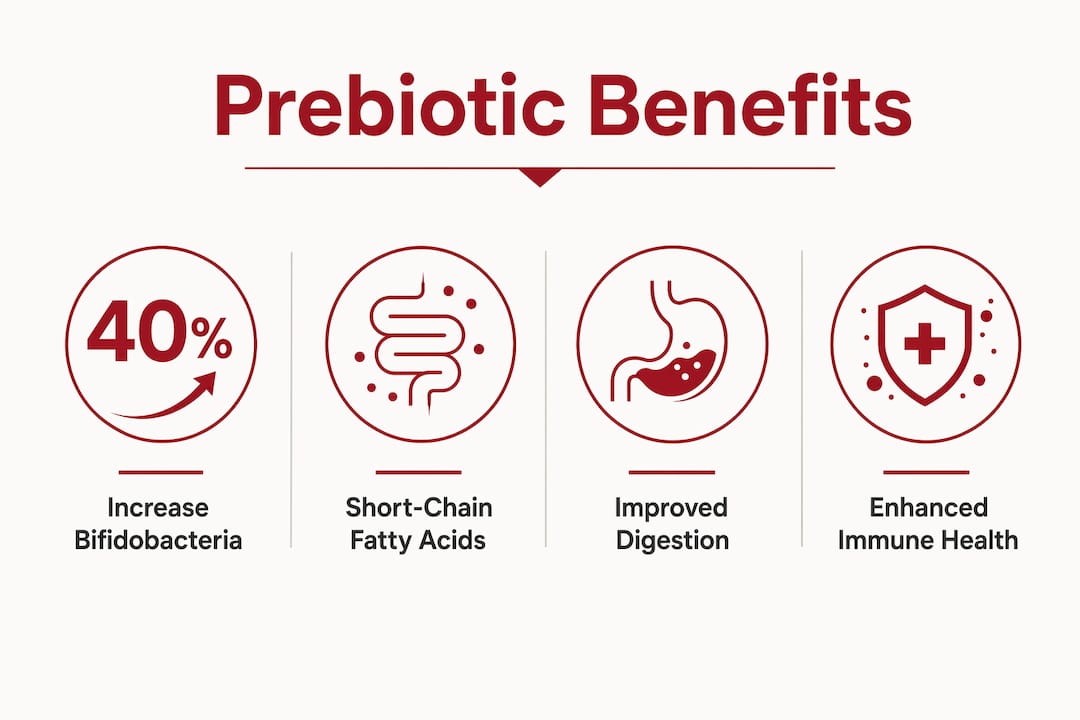
Prebiotic fibers work by selectively feeding beneficial bacteria, particularly Bifidobacterium and Lactobacillus, which are the dominant good microbes in a healthy child’s gut. When these bacteria ferment prebiotic fibers, they produce short-chain fatty acids (SCFAs). SCFAs strengthen the gut lining, reduce inflammation, and signal the immune system to stay balanced.
Multiple human studies published between 2024 and 2025 confirm that prebiotic supplementation increases Bifidobacterium and Lactobacillus populations and raises SCFA levels in children. Higher SCFA levels correlate with a stronger gut barrier and better immune modulation. That connection explains why pediatric researchers at institutions like the Children’s Hospital of Philadelphia consistently link gut microbiome health to broader child wellness outcomes.
The documented benefits for children include:
- Improved stool consistency. Prebiotics soften stool and can reduce straining, which matters for toddlers prone to constipation.
- Immune system support. SCFA production from fermented prebiotic fibers helps regulate immune responses, potentially lowering the risk of allergic reactions.
- Better nutrient absorption. A healthier gut lining absorbs minerals like calcium and magnesium more efficiently.
- Reduced gut inflammation. SCFAs lower inflammatory markers in the colon, supporting long-term digestive comfort.
Individual responses vary widely among children. A child’s baseline diet, existing microbiome composition, and fiber type all influence how much benefit they actually receive. That variability is not a reason to skip prebiotics. It is a reason to introduce them thoughtfully.
Are there any risks or considerations when giving prebiotic foods to children?
Prebiotic fibers are safe for most children, but high doses can cause gas, bloating, and abdominal discomfort, especially in kids with sensitive digestive systems. A network meta-analysis on pediatric abdominal pain found that prebiotics showed no significant benefit for functional abdominal pain disorders and could actually worsen symptoms at high doses due to gas and gut distension. That finding does not apply to all children, but it signals that more fiber is not always better.
Parents should watch for these warning signs when introducing prebiotic-rich foods:
- Increased gas or flatulence within 24–48 hours of a new food
- Visible bloating or a hard, distended belly
- Complaints of stomach cramps or nausea
- Loose stools that persist beyond two days
A systematic review of 15 randomized controlled trials found that prebiotics did not significantly increase bowel movement frequency in children with functional constipation, though stool consistency and abdominal comfort showed modest improvement. The evidence certainty was low to very low. That means prebiotics are unlikely to be a standalone fix for constipation, but they can still play a supporting role in a broader dietary approach.
Children with diagnosed irritable bowel syndrome or functional abdominal pain disorders need extra caution. Fermentable fibers can act as symptom triggers rather than remedies in kids with visceral hypersensitivity. Always consult a pediatrician before adding prebiotic supplements to the diet of a child with an existing gut condition.
Pro Tip: Start with half a teaspoon of a prebiotic-rich food or syrup per day and increase gradually over two to three weeks. This “low and slow” approach gives your child’s gut microbiome time to adjust without triggering discomfort.
Which foods are the best sources of prebiotics for kids?
The best prebiotic foods for toddlers and older children are whole foods that naturally contain inulin, fructooligosaccharides (FOS), or galactooligosaccharides (GOS). These are the fiber types with the strongest scientific backing. Yacon root, chicory root, onions, garlic, leeks, asparagus, and bananas are the most concentrated natural sources.

| Food | Main Prebiotic Fiber | Kid-Friendly Serving Idea |
|---|---|---|
| Yacon syrup | FOS (up to 50g per 100g) | Drizzled on pancakes or oatmeal |
| Banana (slightly unripe) | Resistant starch, FOS | Sliced with nut butter |
| Onion (cooked) | Inulin, FOS | Mixed into pasta sauce |
| Asparagus (roasted) | Inulin | Served as finger food |
| Garlic (cooked) | Inulin, FOS | Stirred into soups or rice |
| Leeks (sautéed) | Inulin | Added to scrambled eggs |
Yacon syrup stands out because it delivers up to 50g of prebiotic FOS fiber per 100g, making it one of the most concentrated food-based prebiotic sources available. Unlike chicory root, which is rarely eaten on its own, yacon syrup integrates easily into foods children already love. ISAPP research confirms that not all fibers marketed as prebiotics meet the strict scientific criteria for selective utilization and demonstrated benefit. Yacon’s FOS content meets that standard.
Whole food sources are preferable to prebiotic supplements for most children. ESPGHAN’s consensus on infant formula supplemented with prebiotics confirms safety but notes that the evidence for broader clinical benefits remains weak. Food-based prebiotics come packaged with vitamins, minerals, and other fibers that supplements cannot replicate.
Pro Tip: Pair prebiotic-rich foods with probiotic foods like yogurt or kefir. Prebiotics feed the beneficial bacteria that probiotics introduce, creating a synbiotic effect that research suggests may amplify gut health outcomes.
How do prebiotics differ from probiotics and synbiotics?
Probiotics are live beneficial microorganisms, primarily Bifidobacterium and Lactobacillus strains, that you introduce directly into the gut. Prebiotics are the nondigestible fibers those microorganisms eat. Synbiotics combine both in a single product or meal, with the goal of delivering live bacteria and their preferred fuel at the same time.
The clinical picture for children shows meaningful differences in where each works best:
- Probiotics show stronger evidence for reducing diarrhea duration, preventing antibiotic-associated gut disruption, and improving outcomes in functional abdominal pain disorders.
- Prebiotics show clearer benefits for stool softening, Bifidobacterium enrichment, and SCFA production, but individual responses vary widely based on the child’s existing microbiome.
- Synbiotics are promising in theory, but research on pediatric abdominal pain suggests that combining prebiotics with probiotics is not always advantageous, particularly in children with visceral hypersensitivity, because the fermentation triggered by prebiotics can worsen pain.
The practical takeaway for parents is straightforward. If your child is generally healthy and you want to support gut diversity and digestion, food-based prebiotics are a safe and effective starting point. If your child has a diagnosed gut condition, probiotics with specific strain evidence may be more appropriate, and synbiotics should be introduced only under pediatric guidance. Pediatric expert groups recommend aligning prebiotic introduction with the child’s existing diet and symptoms for the best effect.
Key Takeaways
Prebiotic foods selectively nourish beneficial gut bacteria in children, producing short-chain fatty acids that strengthen digestion, immunity, and nutrient absorption when introduced gradually and matched to each child’s tolerance.
| Point | Details |
|---|---|
| Prebiotics feed good bacteria | FOS, inulin, and GOS fibers selectively grow Bifidobacterium and Lactobacillus in children’s guts. |
| Start low and go slow | High doses of fermentable fiber can cause gas and bloating; gradual introduction prevents discomfort. |
| Whole foods beat supplements | Yacon syrup, bananas, onions, and asparagus deliver prebiotics alongside vitamins and minerals supplements lack. |
| Probiotics and prebiotics differ | Probiotics introduce live bacteria; prebiotics feed them. Each has distinct clinical strengths in children. |
| Sensitive kids need extra care | Children with functional abdominal pain may react poorly to fermentable fibers; consult a pediatrician first. |
What I’ve learned from watching families add prebiotics to real meals
Parents often ask me whether they need a supplement to get prebiotics into their kids. My honest answer is almost always no. The most consistent gut health improvements I see come from small, steady changes to what families already eat, not from adding a capsule to the morning routine.
The research backs this up, but it also humbles me. The evidence for prebiotics in children is genuinely mixed in some areas. Prebiotics will not cure constipation on their own, and they can make a sensitive child’s stomach worse if you push too much too fast. That nuance gets lost in wellness marketing, and I think parents deserve to hear it plainly.
What I find most encouraging is that the upside of food-based prebiotics is real and the risk is low when you introduce them gradually. A slightly unripe banana at breakfast, a drizzle of yacon syrup on oatmeal, some cooked garlic in dinner. These are not dramatic interventions. They are small, consistent additions that compound over time. Your child’s gut microbiome responds to patterns, not single meals.
Work with your pediatrician if your child has any existing gut symptoms before making changes. And pay attention to your child’s individual response. Some kids tolerate leeks and asparagus beautifully from the start. Others need a slower ramp. Both are normal.
— Celeste
Yakonow makes prebiotic mornings simple for your family
Getting prebiotic fiber into a picky eater does not have to be a battle. Yakonow yacon syrup delivers up to 50g of prebiotic FOS fiber per 100g from a single, clean ingredient: hand-harvested yacon root from Peru. It has a glycemic index of just 1, zero added sugar, and no artificial sweeteners, making it a genuinely better option than maple syrup or honey for kids.

Drizzle it over pancakes, waffles, oatmeal, or yogurt and your child gets a naturally sweet breakfast with real prebiotic benefit built in. The squeezable 6oz bottle is designed for family mornings when you need something fast, delicious, and worth reaching for again tomorrow. No complicated prep. No convincing required.
FAQ
What are prebiotic foods, exactly?
Prebiotic foods contain specific nondigestible fibers, such as FOS, inulin, and GOS, that selectively feed beneficial bacteria in the gut. ISAPP defines them as substrates that must confer a measurable health benefit, not just add bulk fiber.
What are the best prebiotic foods for toddlers?
Bananas, cooked onions, cooked garlic, asparagus, and yacon syrup are among the most practical prebiotic foods for toddlers. They are soft, easy to prepare, and naturally sweet enough for young palates.
Can too many prebiotic foods hurt my child’s stomach?
Yes. High doses of fermentable fibers like inulin and FOS can cause gas, bloating, and abdominal pain, especially in sensitive children. Introduce prebiotic-rich foods gradually and reduce the amount if your child shows signs of discomfort.
Are prebiotic supplements safe for kids?
Specific prebiotic supplements used in infant formulas are confirmed safe, but the evidence for broader clinical benefits remains weak. Whole food sources are preferable for most children, and supplements should be discussed with a pediatrician before use.
How are prebiotics different from probiotics for children?
Probiotics are live beneficial bacteria; prebiotics are the fibers that feed them. Probiotics show stronger evidence for conditions like diarrhea and antibiotic recovery, while prebiotics excel at enriching Bifidobacterium populations and softening stool over time.