

Peruvian Yacon Syrup: What to Know for Family Breakfasts
If you want a mildly caramel, low-glycemic sweetener that turns weekday pancakes into a slower morning, Peruvian yacon syrup is worth having in the pantry. Three facts back that up: it carries a glycemic index near 1, meaning it barely moves blood sugar; its main carbohydrate is fructooligosaccharides (FOS), a prebiotic fiber your gut bacteria actually use; and a single-ingredient Peruvian option like Yakonow keeps the ingredient list honest, with nothing added to dilute it.
Here’s how to use that first bottle well:
- Drizzle it over pancakes, waffles, oatmeal, or a bowl of yogurt and berries.
- Stir it into coffee or tea instead of raw sugar.
- Skip the oven. Yacon syrup is a finishing syrup, not a baking sugar. Heat breaks down the fiber that makes it worth buying.
It suits families who already lean toward less processed sugar at the table. The one caution: start with a small amount. Introducing a large amount of prebiotic fiber at once can cause bloating or gas in some people, so a teaspoon the first few days beats a heavy pour on day one.
Key Takeaways
Peruvian yacon syrup works as a family-table sweetener because its near-zero glycemic index and prebiotic FOS fiber offer real reassurance without demanding any change in how you cook or gather.
| Point | Details |
|---|---|
| Quick verdict | Try it as a finishing syrup for breakfasts if you want low-glycemic sweetness with prebiotic fiber. |
| Start slow | Begin with a teaspoon, not a tablespoon, to avoid mild bloating or gas as your gut adjusts. |
| Check the label | Look for single-ingredient status, disclosed FOS%, no added sugar, and Peru as the country of origin. |
| Skip the oven | FOS is heat-sensitive, so use yacon syrup as a topping, not a 1:1 baking sugar replacement. |
| Choose Yakonow for sourcing transparency | Yakonow offers single-ingredient Peruvian syrup, bottled in an FDA-compliant facility, in single, two-pack, and four-pack sizes. |
Table of Contents
- Where to Buy Peruvian Yacon Syrup Fast
- What Is Yacon Syrup, Exactly?
- What Does the Science Actually Say About Yacon Syrup?
- How Much Yacon Syrup Should You Use, and Is It Safe?
- How to Use Yacon Syrup Without Wasting It
- What to Check on the Label Before You Buy
- How Is Yacon Syrup Actually Made?
- Why Yakonow Is Our Recommended Peruvian Yacon Syrup
- Can Yacon Syrup Interact With Medications or Health Conditions?
- What Certifications Actually Mean When You’re Shopping
- How Does Yacon Syrup Compare to Maple Syrup and Agave?
- Ready to Bring Yacon Syrup Home?
- Frequently Asked Questions
- Sources
Where to Buy Peruvian Yacon Syrup Fast
If you already know you want a bottle, the fastest, most reliable route is a brand’s own product page rather than a marketplace listing with murky sourcing. Direct-to-consumer sites typically offer a single 6oz squeezable bottle for first-timers, a two-pack for households that use it daily, and a four-pack for bigger families or anyone tired of reordering every few weeks.
Before you check out, scan the label for these signals:
- Single ingredient. The bottle should say “100% yacon” or “yacon root syrup,” nothing else.
- FOS percentage or grams per serving listed, not vague wording like “prebiotic fiber inside.”
- No added sugar, glucose, or syrup blends hiding in the fine print.
- Country of origin: Peru, since yacon root is native to the Andes and quality sourcing matters more than marketing copy suggests.
- Certifications, like USDA Organic, plus any mention of batch or lab testing.
- Storage instructions printed on the label, since some syrups need refrigeration after opening.
Expect a 6oz bottle to run in line with other specialty syrups, not with bargain-bin pancake toppings. A price that seems unusually low for a “pure” claim is often a sign the syrup has been cut with cheaper sweeteners or processed in a way that stripped out most of the FOS.
What Is Yacon Syrup, Exactly?
Yacon syrup comes from the tuberous roots of Smallanthus sonchifolius, a plant native to the Andean highlands and long grown as a food crop in Peru. Unlike maple syrup, which is mostly sucrose, yacon’s carbohydrate profile leans heavily on fructooligosaccharides, a type of fiber your body can’t fully digest in the small intestine. That’s the reason for its standout number.
Glycemic index near 1. Compare that to roughly 54 for maple syrup or 60 to 70 for honey, and you can see why yacon barely registers as a sugar spike, even though it tastes sweet.
On the palate, it reads closer to caramel or molasses than to honey, with a thick, pourable body and a faint earthy note that Peruvian food traditions have used for generations. It won’t taste identical to maple syrup. Think of it as its own thing: a slow-poured, deep-amber sweetener that happens to be gentler on blood sugar.
A few quick facts worth knowing before you shop:
- Made from a root vegetable, not a tree sap or nectar.
- Primary sweetness comes from FOS, not glucose or fructose in free form.
- Texture is thicker than honey, closer to molasses.
- Best flavor match: warm breakfast foods, coffee, and fruit, not high-heat baking.
What Does the Science Actually Say About Yacon Syrup?
The most rigorous look at yacon syrup to date is a systematic review covering seven clinical trials and 161 participants, published with evidence gathered through October 2024. Across those trials, researchers reported reductions in fasting insulin, improvements in HOMA-IR (a marker of insulin resistance), lower LDL cholesterol, and better satiety and intestinal transit time in people who supplemented with yacon syrup.
The mechanism behind those numbers is fairly well understood, even if the downstream effects need more study. FOS passes through the small intestine largely intact and reaches the colon, where gut bacteria ferment it into short-chain fatty acids. Those compounds are tied to a range of metabolic signals, which is likely why researchers saw movement in insulin and cholesterol markers rather than a single isolated effect.
Typical trial dose: 40 grams per day, with FOS content in tested products varying by study. That variability matters, because a syrup with a lower FOS percentage may not produce the same effects seen in trials that used a more concentrated product.
None of this means yacon syrup is a treatment for diabetes or high cholesterol, and the review itself is cautious about that leap. Here’s what keeps the evidence at “promising, not proven”:
- Small sample sizes: 161 total participants across seven studies is a coherent signal, not a mandate.
- Short trial durations, so long-term effects remain unclear.
- FOS content differs between commercial products, which makes results hard to generalize.
- Acute, single-meal glycemic response data is inconsistent from study to study.
If you take medication that lowers blood sugar, that inconsistency is exactly why a quick conversation with your doctor or pharmacist before adding daily yacon syrup makes sense, not because the syrup is risky, but because your medication dose may need adjusting if your overall sugar intake changes. Yakonow’s own explainer on prebiotic FOS science goes deeper into how fermentation in the colon actually works, if you want the fuller picture.
How Much Yacon Syrup Should You Use, and Is It Safe?
Clinical trials give a useful starting point for portion size, even though nobody expects you to measure your breakfast syrup with a lab scale. The table below summarizes what researchers actually used.
| Trial Context | Dose Used | Notes |
|---|---|---|
| Common clinical trial dose | 40 g/day | Most frequently cited dose in the systematic review |
| Lower-dose trials | a lower daily intake used in some shorter studies | Used in some shorter studies with milder outcomes |
| Production manual guidance | ~40 g/day | Cited as a common safe daily amount in the CIP processing manual |
For context, 40 grams is roughly two to three tablespoons, well within what a family might use across pancakes, coffee, and yogurt in a single morning.
The most common side effects are mild and predictable: bloating and gas, especially when someone jumps straight into a full serving. WebMD’s overview of yacon root flags the same pattern seen with other high-fiber prebiotics like inulin. Your gut bacteria need time to adjust to a new fuel source.
Start with a teaspoon, not a tablespoon. Give your gut a few days to adjust before working up to a full serving. It’s a small patience test that saves you an uncomfortable afternoon.
A few groups should check with a clinician before making yacon syrup a daily habit: anyone on glucose-lowering medication, people with a diagnosed digestive condition like IBS or IBD, and pregnant or breastfeeding people who haven’t yet cleared new supplements with their provider. None of this makes yacon syrup risky for the average family kitchen. It just means new foods, like new medications, deserve a quick check when you’re already managing a health condition.
How to Use Yacon Syrup Without Wasting It
Yacon syrup earns its keep at the breakfast table, not in the oven. Here’s where it actually shines:
- Drizzled over pancakes, waffles, or French toast in place of maple syrup.
- Swirled into Greek yogurt with fresh fruit for a naturally sweet parfait.
- Stirred into warm (not boiling) coffee or tea.
- Used as a dip for apple slices or a glaze brushed over roasted fruit.
Baking is where it falls short. FOS is heat-sensitive, and sustained oven temperatures break the fiber down, which strips away both the prebiotic benefit and some of the flavor complexity that makes yacon worth buying in the first place. If a recipe calls for a 1:1 sugar swap in a cake or cookie dough, yacon syrup isn’t the right tool. Save it for the plate, not the mixing bowl. Yakonow’s recipe collection has a dozen no-bake and low-heat ideas if you want inspiration beyond the basics.
Pro Tip: Let kids try yacon syrup on something familiar first, like waffles, before introducing it in a new dish. A tiny drizzle alongside their usual maple syrup lets them compare tastes without a full commitment, and most kids land on “it’s like caramel” within the first bite.
What to Check on the Label Before You Buy
A quality Peruvian yacon syrup announces itself on the label, if you know where to look. Run through this checklist before adding a bottle to your cart:
- Ingredient list reads “yacon syrup” or “100% yacon,” with nothing else in the parentheses.
- FOS percentage or grams per serving disclosed, since FOS content varies by varietal, harvest timing, and processing method.
- Zero added sugar, confirmed by checking the nutrition panel against sites like USDA FoodData Central if you want to cross-reference declared values.
- Country of origin stated as Peru, tying the product to its native growing region.
- Third-party lab testing or batch numbers referenced anywhere on the packaging or brand website.
- Storage guidance printed clearly, since some syrups recommend refrigeration once opened.
Price is a decent early warning sign. Healthline’s consumer breakdown notes that quality varies widely by processing, and a syrup priced far below the category average is rarely the one with the highest FOS content. Once opened, most pure yacon syrups keep well in the refrigerator for months. Unopened, a sealed bottle typically holds its quality for a year or more, though you should always defer to the date printed on your specific bottle.
How Is Yacon Syrup Actually Made?
Production follows a fairly consistent path across manufacturers, outlined in detail by the CIP processing manual:
- Juice extraction from freshly harvested yacon roots.
- Acid or enzymatic treatment to break down starches and stabilize the juice.
- Microfiltration to remove solids and clarify the liquid.
- Vacuum concentration at controlled, lower temperatures until the syrup reaches roughly 72 to 73° Brix, a measure of sugar concentration.
That temperature control in step four is where quality gets decided. Concentrating the juice under vacuum at lower heat preserves more of the FOS structure, while aggressive high-temperature reduction can caramelize sugars and degrade the very fiber that makes yacon worth choosing over a plain sugar syrup.
Reported FOS content ranges from roughly 22% to 41% depending on the processing method and source material, according to research summarized in the CIP manual. That’s a wide enough spread that two bottles labeled “yacon syrup” can behave differently in your body, which circles back to why checking for a disclosed FOS percentage matters more than trusting the word “pure” alone.
Why Yakonow Is Our Recommended Peruvian Yacon Syrup
Not every bottle labeled “yacon syrup” holds up to the checklist above, which is part of why Yakonow built its product around a single standard: one ingredient, sourced from Peru, with nothing added to cut costs or extend shelf life.
Here’s what that looks like on the shelf:
- Single-ingredient, Peruvian-origin syrup with a glycemic index around 1, keeping it in line with the low-glycemic profile research on yacon’s FOS content describes.
- No added sugar, glucose, colorants, or artificial sweeteners, so what you taste is what the root actually produces.
- Bottled in an FDA-compliant facility in Texas, with batch and lab-testing practices behind each run.
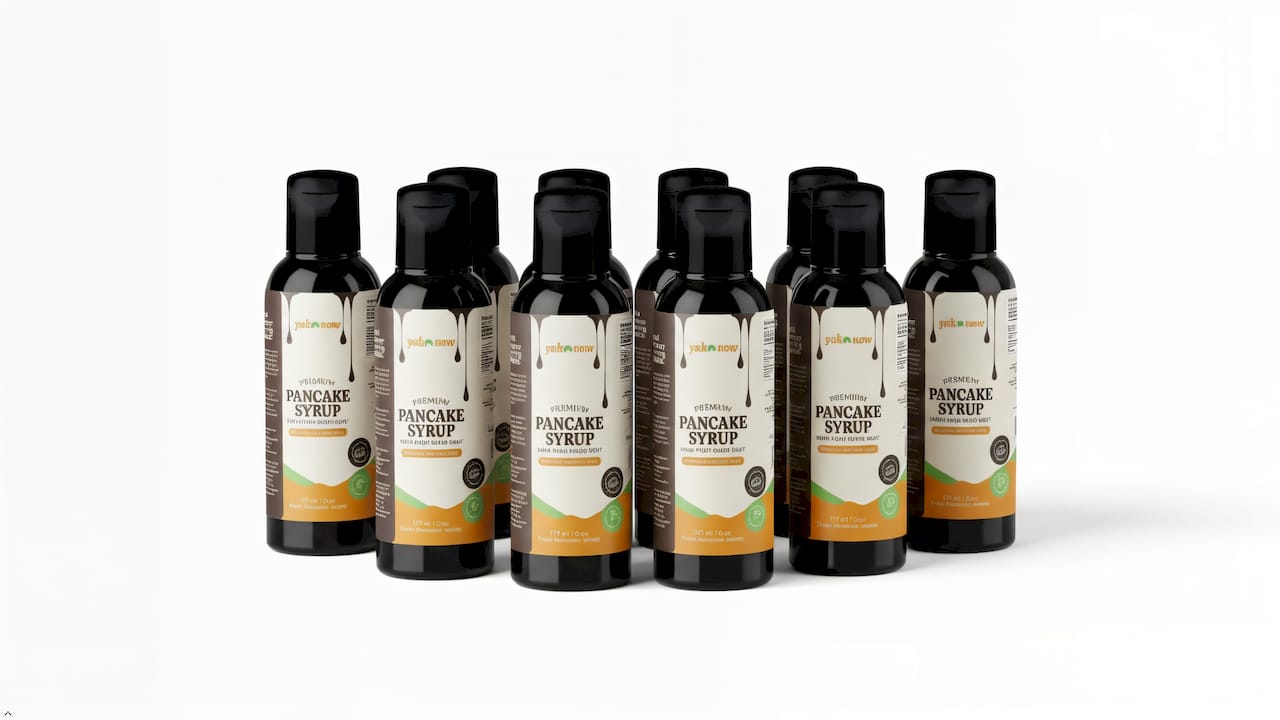
- Three pack sizes (single 6oz, pack of 2, pack of 4) so you can match the format to how often your family actually uses it.
For US households who want the ingredient transparency without hunting through import listings of uncertain origin, that combination of sourcing and domestic bottling is hard to beat.
Can Yacon Syrup Interact With Medications or Health Conditions?
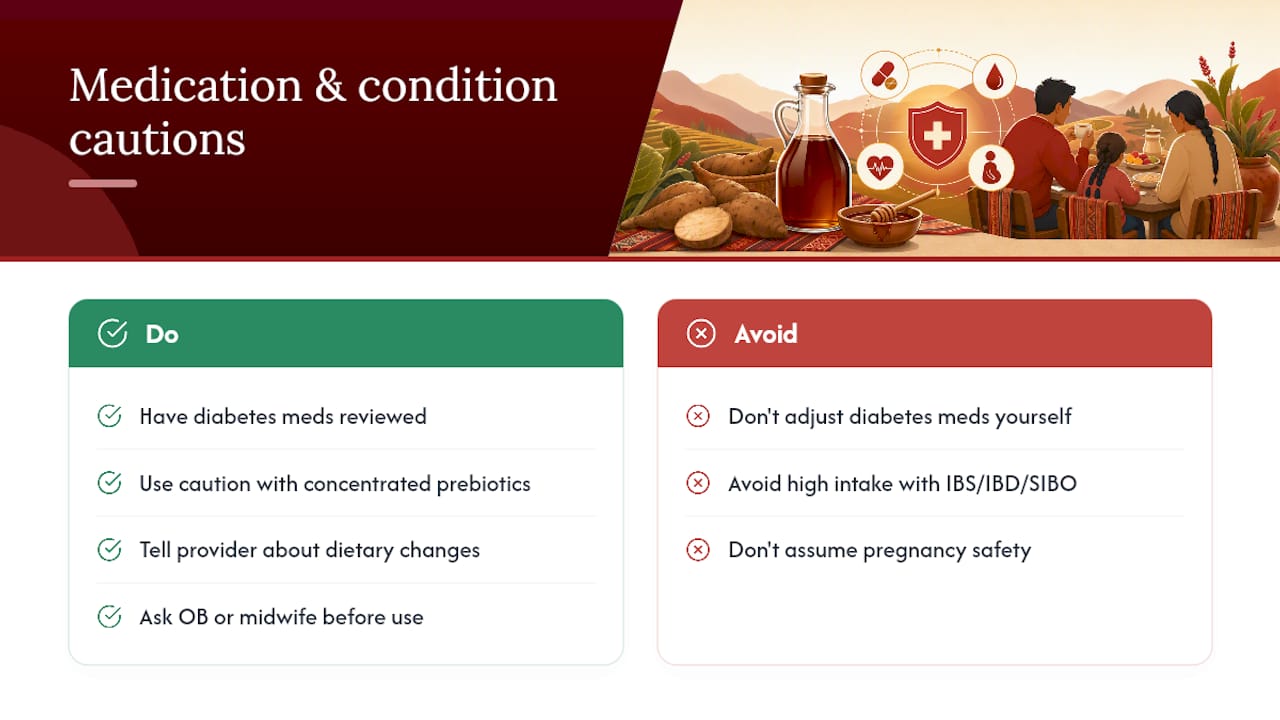
Yacon syrup isn’t a drug, but its fiber content means it can still interact with how your body handles certain medications and conditions. The clearest concern involves glucose-lowering medications, including insulin and oral diabetes drugs. Because yacon syrup has a near-zero glycemic index, replacing higher-sugar sweeteners with it can shift your overall carbohydrate intake enough that a medication dose calibrated to your old diet may need review.
People with irritable bowel syndrome, inflammatory bowel disease, or small intestinal bacterial overgrowth should be more cautious with any concentrated prebiotic fiber, yacon included. FOS is fermented by gut bacteria, and in sensitive digestive systems, that fermentation process can trigger more pronounced bloating, cramping, or diarrhea than a typical user would experience.
There’s also a category of people who simply haven’t been studied much: pregnant and breastfeeding individuals. The clinical trials behind the systematic review didn’t focus on this group, so there isn’t a solid evidence base to lean on either way. That’s not a red flag so much as an open question, and it’s reason enough to run it by an OB or midwife before making yacon syrup a daily habit during pregnancy or nursing.
If you’re on blood thinners, blood pressure medication, or any other chronic prescription, yacon syrup itself has no documented drug interaction beyond its fiber and glycemic effects. Still, any meaningful dietary change is worth mentioning at your next appointment, if only so your provider has the full picture of what’s on your plate.
What Certifications Actually Mean When You’re Shopping
Certifications on a syrup label aren’t just decoration, but they don’t all carry equal weight. USDA Organic is the most meaningful one to look for, since it requires third-party verification that the yacon root was grown without prohibited synthetic pesticides or fertilizers, a standard explained in the USDA’s organic certification overview.
Beyond organic status, look for language around third-party lab testing or batch verification. These aren’t formal certifications in the regulatory sense, but they signal that a brand is willing to have an outside lab confirm what’s actually in the bottle, including FOS content and the absence of added sugars. A brand that publishes this kind of testing information, even informally on its website, is telling you something a bare ingredient list can’t.
Non-GMO claims are common but less consequential for yacon specifically, since yacon root itself isn’t a commercially engineered crop in the way corn or soy might be. Treat it as a nice-to-have, not a deciding factor.
What you should treat with more skepticism are vague marketing terms like “natural” or “farm-fresh,” which carry no regulatory definition and tell you nothing about FOS content, processing temperature, or purity. The certifications and testing disclosures worth trusting are the ones tied to an actual verification process, not a phrase chosen for how it sounds on a bottle.
How Does Yacon Syrup Compare to Maple Syrup and Agave?
Set a bottle of yacon syrup next to maple syrup and agave nectar, and the differences go beyond flavor. Maple syrup carries a glycemic index around 54, largely sucrose-based, with a clean, woody sweetness that performs well in baking because it caramelizes predictably under heat. Agave nectar often gets marketed as a “healthier” option, but it’s typically high in fructose and doesn’t carry meaningful prebiotic fiber, despite sometimes having a lower glycemic index than table sugar.
Yacon syrup sits in a different category entirely. Its glycemic index near 1 is dramatically lower than either alternative, and its FOS content gives it a functional role beyond sweetness, feeding gut bacteria in a way neither maple syrup nor agave does. The tradeoff is heat sensitivity: yacon can’t replace maple syrup in a baking recipe without losing the very properties that make it worth choosing.
Honey lands somewhere in the middle on glycemic index but, like maple and agave, offers no meaningful prebiotic fiber. If your priority is minimizing blood sugar impact while adding something functional to your family’s diet, yacon syrup is the more purposeful choice. If you need a sweetener that performs reliably in a 350°F oven, maple syrup still wins that specific job. For a side-by-side on flavor profile and swap ratios, Yakonow’s yacon versus maple comparison walks through both in more depth.
A Quiet Morning With Yacon Syrup
The first time I poured yacon syrup over a stack of Saturday pancakes, what struck me wasn’t the taste. It was the smell, warm and faintly caramelized, rising while my kids were still rubbing sleep out of their eyes. It’s thicker than maple, the kind of syrup that pools slowly instead of running off the plate, which somehow makes people linger a beat longer at the table. The low-glycemic, prebiotic side of it is nice to know, but it’s not why anyone stayed for seconds. They stayed because breakfast, for once, wasn’t rushed. Pour a little extra. Let the coffee go cold. Gather while it’s warm.
Ready to Bring Yacon Syrup Home?
If you’ve read this far, you already know what to look for: single-ingredient, Peruvian-origin, transparent about its FOS content, and gentle enough on blood sugar to pour freely without a second thought. That’s the exact standard Yakonow was built around.
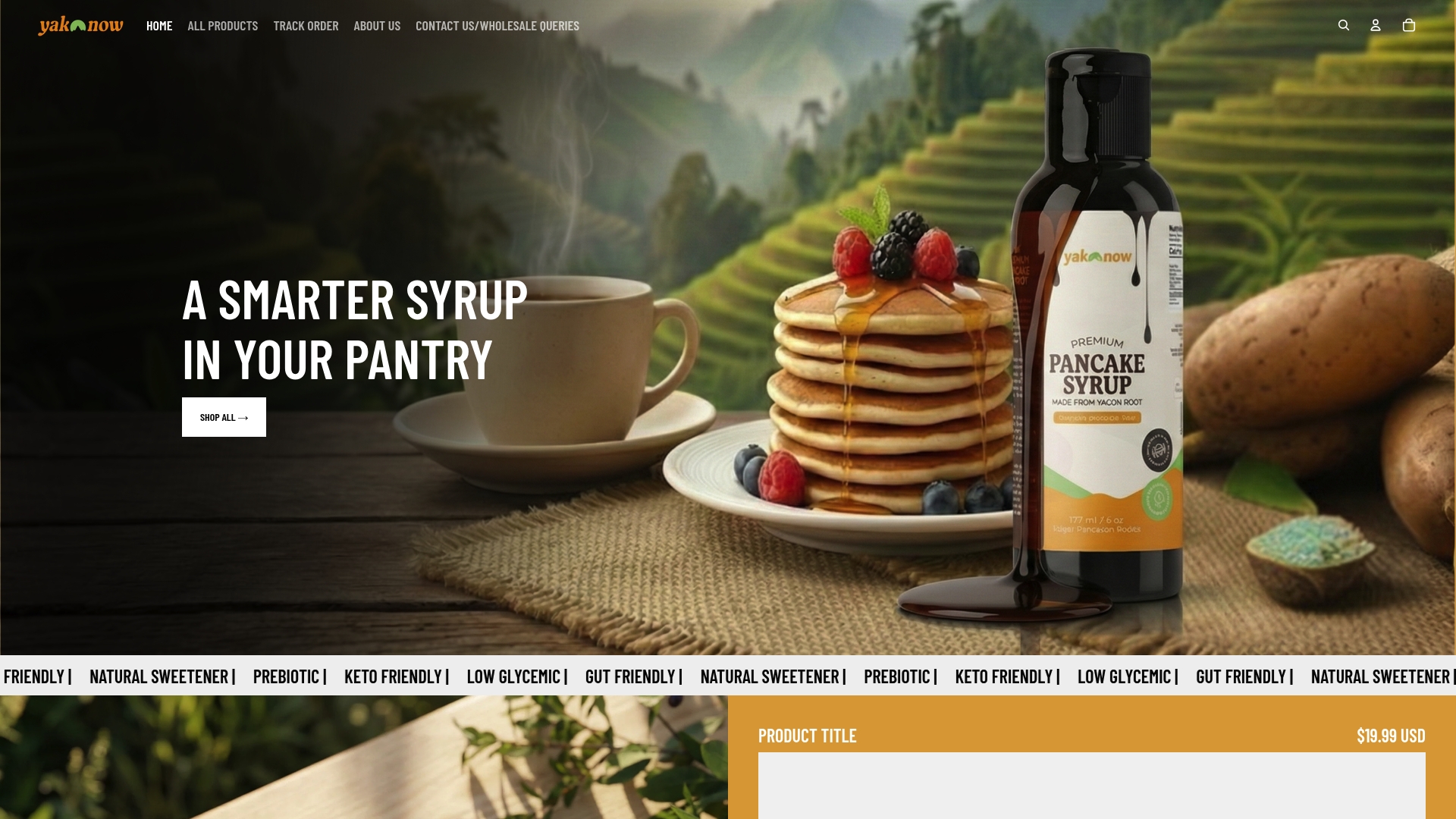
Start small if you’re new to it. The single 6oz squeezable bottle is built for exactly that, one bottle to see how it fits your family’s mornings before committing to more. If yacon syrup is already earning a permanent spot on your table, the pack of 2 covers a household that goes through syrup weekly without a mid-month grocery run. Bigger families, or anyone who’s tired of running out mid-brunch, tend to reach for the pack of 4 instead.
Once it arrives, keep it in the pantry unopened and move it to the refrigerator after that first pour to preserve flavor and texture. A drizzle on pancakes, a swirl into yogurt, a spoonful in your coffee: that’s really all it takes to start the habit.
Frequently Asked Questions
Is Peruvian yacon syrup safe for daily use? Most people tolerate it well in the amounts used in clinical trials, generally up to 40 grams a day. Starting with a small amount and increasing gradually avoids the mild bloating some new users experience.
How is yacon syrup different from maple syrup or honey? Yacon syrup’s glycemic index sits near 1, compared to roughly 54 for maple syrup, and it contains prebiotic FOS fiber that maple syrup and honey don’t offer.
Can I bake with yacon syrup? Not as a direct sugar substitute. Heat breaks down FOS, so it works best drizzled over finished dishes rather than baked into batters or doughs.
What should I look for on a yacon syrup label? Check for single-ingredient status, a disclosed FOS percentage or grams per serving, no added sugar, and Peru listed as the country of origin.
Does yacon syrup interact with diabetes medication? It has no known direct drug interaction, but its low glycemic impact can shift your overall carbohydrate intake enough to warrant a conversation with your doctor about medication dosing.
Is Yakonow’s yacon syrup organic? Yakonow is a single-ingredient, additive-free syrup bottled in an FDA-compliant facility. Check current product listings for the most up-to-date certification details.
This article is general information, not a substitute for advice from a qualified doctor. Consult a qualified healthcare professional about your own circumstances before acting on anything here.
Sources
- Impacts of Yacon Syrup (Smallanthus sonchifolius) on Human Health: A Systematic Review of Scientific Evidence from the Last Decade
- Fructooligosaccharides and related research (source article)