

Vegan Pancake Toppings Explained for Family Brunch
Vegan pancake toppings are flavorful, nutritious, and endlessly versatile additions that turn a simple stack into a slow, beautiful morning ritual. Whether you are setting the table for a quiet Sunday or hosting a full family brunch, the right toppings carry as much weight as the pancakes themselves. This guide covers vegan pancake toppings explained from sweet syrups to savory spreads, with practical ideas for every appetite and a close look at what each topping actually does for your body. You will also find homemade recipes, balancing tips, and a few things most topping guides never mention.
What are the best vegan pancake toppings for a sweet morning?
Sweet vegan pancake toppings fall into two broad categories: liquid sweeteners and whole fruit. Each brings a different texture, flavor, and effect on your blood sugar.
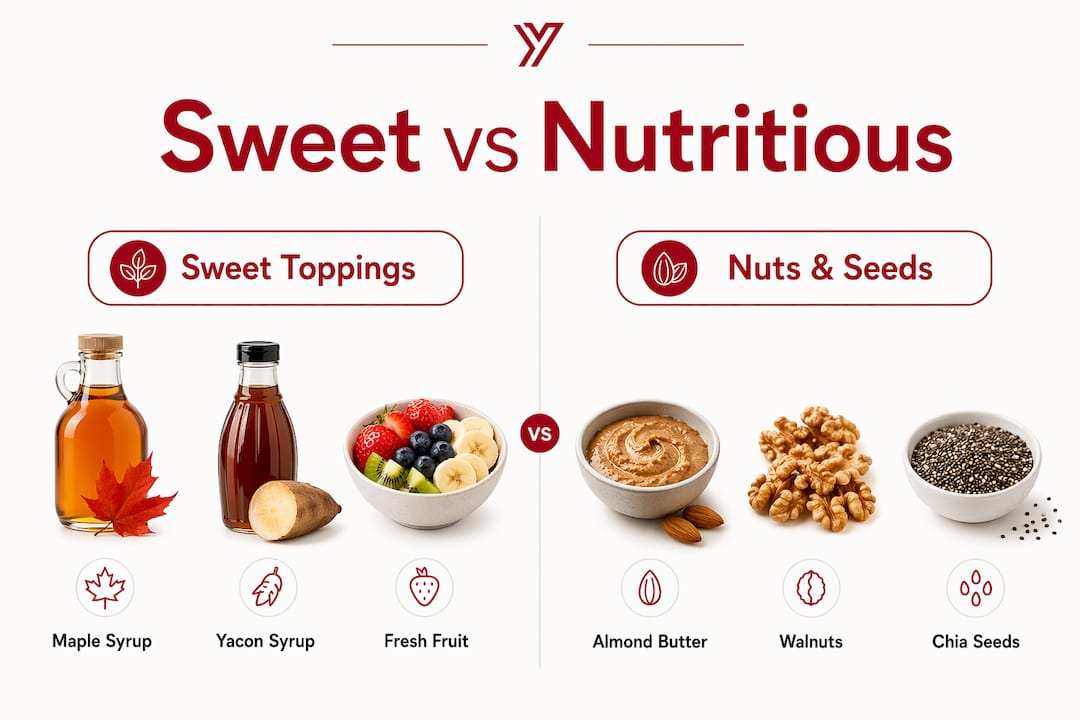
Liquid sweeteners are the most common choice. Pure maple syrup is a popular pick because it contains manganese, zinc, and antioxidants, making it a better option than artificial syrups built mostly from high-fructose corn syrup. That said, maple syrup carries a glycemic index of 54, which means it raises blood sugar noticeably. Agave syrup sits in a similar range and is often marketed as a health food, but nutrition experts caution that natural sweeteners still spike blood sugar when used in large amounts. The label “natural” does not mean unlimited.
Yacon syrup stands apart from the rest. Its glycemic index is just 1, compared to 54 for maple syrup, making it the lowest-GI liquid sweetener you can drizzle over pancakes. That difference matters for anyone who wants the sweetness without the spike. Monk fruit and erythritol blends also register a GI of 0, though their flavor profile is more neutral and less complex than yacon’s natural caramel notes.
Whole fruit toppings are the other great sweet option. Fresh fruit adds fiber and antioxidants that processed syrups simply cannot match. Sliced strawberries, blueberries, mango, or banana bring natural sweetness alongside nutrients that slow sugar absorption. The fiber in whole fruit is the key difference. It buffers the sugar hit in a way that a syrup, even a good one, cannot replicate.
| Sweetener | Glycemic index | Key benefit |
|---|---|---|
| Yacon syrup | 1 | Lowest GI, prebiotic fiber |
| Monk fruit blend | 0 | Zero calories, neutral flavor |
| Pure maple syrup | 54 | Natural minerals, antioxidants |
| Agave syrup | ~15–30 | Mild flavor, still calorie-dense |
| Honey | 58–69 | Familiar taste, high GI |
Pro Tip: Treat any liquid sweetener, even the natural ones, as a flavor accent rather than a sauce. A tablespoon goes a long way when the pancakes are good.
Healthy vegan pancake toppings: nuts, seeds, and butters
Nut and seed butters are among the most satisfying toppings you can add to a vegan pancake. Almond butter, peanut butter, sunflower seed butter, and tahini each bring a creamy richness that makes a stack feel genuinely filling. They also deliver heart-healthy monounsaturated fats, protein, magnesium, and vitamin E. One tablespoon contains roughly 70–102 calories, so a little goes a long way.
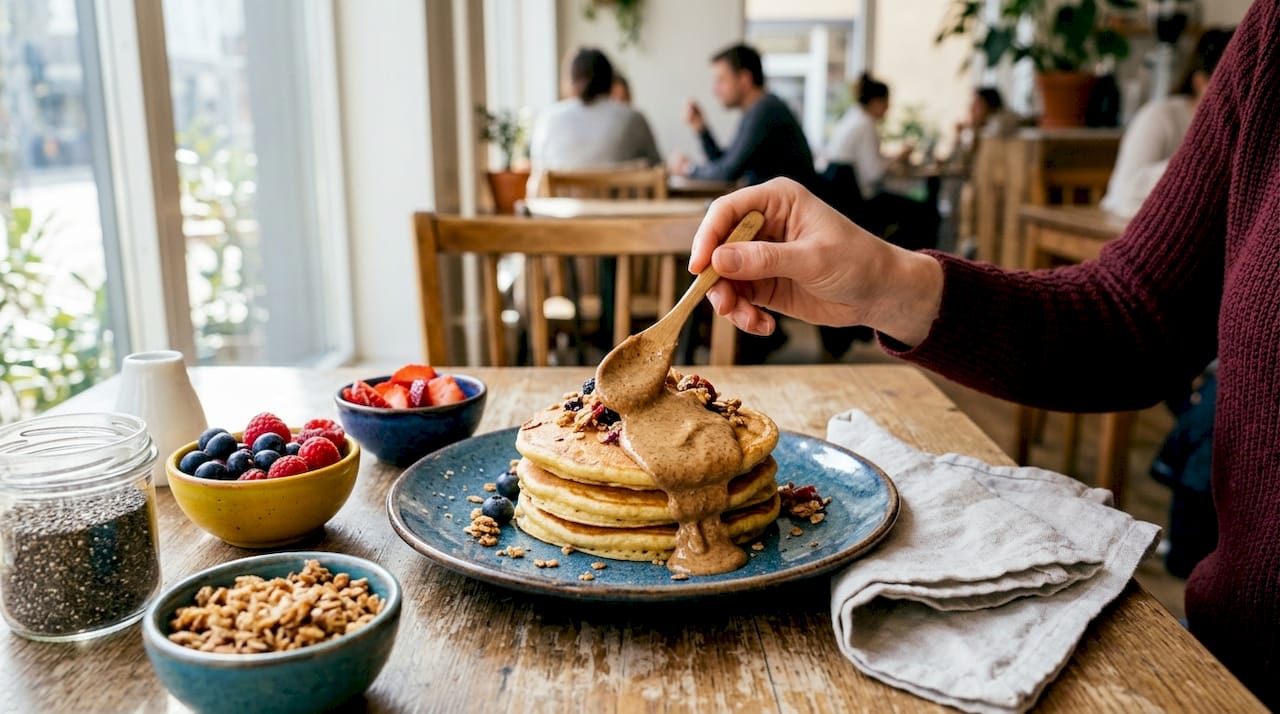
Chopped nuts add crunch and a different kind of depth. Walnuts bring omega-3 fatty acids. Pecans add a buttery sweetness. Pumpkin seeds and hemp seeds are excellent for zinc and plant-based protein. Sprinkled over a stack with fresh fruit, they create a topping combination that is both textured and nourishing.
Coconut-based toppings round out this category beautifully. Coconut yogurt adds a cool, tangy creaminess that pairs well with warm pancakes and fresh berries. Whipped coconut cream, made from chilled full-fat coconut milk, is a simple, lush alternative to dairy whipped cream. Both options keep the plate fully plant-based without sacrificing indulgence.
The best easy vegan pancake toppings in this category include:
- Almond butter drizzled over sliced banana for a protein-rich, naturally sweet combination
- Tahini paired with a small drizzle of low-GI syrup for a nutty, Middle Eastern-inspired flavor
- Pumpkin seeds scattered over coconut yogurt and fresh mango for crunch and color
- Chopped walnuts with blueberries and a light pour of yacon syrup for a well-rounded plate
- Sunflower seed butter for a nut-free option that is school-safe and just as creamy
Pro Tip: Warm your nut butter for 15 seconds before drizzling. It spreads more evenly and the aroma is noticeably better, which matters when you are setting a table worth gathering around.
How do you make homemade vegan pancake toppings?
Homemade toppings are the easiest way to control what goes on your family’s plate. They take minutes, use simple ingredients, and taste far better than anything from a jar.
A quick fruit compote is the most useful recipe to have ready. Heating frozen berries with mashed banana and cinnamon creates a thick, glossy syrup with no added sugar. The banana acts as a natural sweetener and thickener. The berries bring color, antioxidants, and a gentle tartness that balances the sweetness of the pancake itself.
Date caramel is another option worth knowing. Blended soaked Medjool dates with a splash of plant-based milk and a pinch of sea salt produce a rich, sticky sauce that tastes indulgent but contains only whole-food ingredients. Tahini caramel follows the same logic: tahini, a small amount of low-GI syrup, and vanilla extract stirred together into a pourable sauce that is earthy, sweet, and deeply satisfying.
Quick berry compote recipe
- Add 1 cup of frozen mixed berries to a small saucepan over medium heat.
- Mash half a ripe banana directly into the pan.
- Stir in a pinch of cinnamon and a splash of water.
- Cook for 5–7 minutes, stirring occasionally, until the mixture thickens.
- Remove from heat and let it cool slightly before spooning over pancakes.
Spices are the underrated element in homemade vegan pancake topping recipes. Cinnamon, cardamom, and vanilla extract all deepen flavor without adding sugar or calories. A pinch of cardamom in a mango compote or a drop of vanilla in coconut cream changes the entire character of the topping.
Pro Tip: Make a double batch of compote on Sunday and store it in a jar in the refrigerator. It keeps for up to five days and works over oatmeal, yogurt, and waffles just as well as pancakes.
How do you balance vegan pancake toppings for a great brunch?
The biggest mistake people make with plant-based pancake toppings is piling everything on at once. Topping creep, adding multiple calorie-dense toppings simultaneously, creates a caloric overload that turns a nourishing breakfast into something closer to dessert. The fix is simple: follow the “one-rich-one-fresh” rule.
The one-rich-one-fresh rule means pairing one calorie-dense topping with one light, fresh element. Nut butter is rich, so pair it with sliced strawberries. Coconut cream is rich, so pair it with a handful of blueberries and a light drizzle of low-GI syrup. This approach keeps the plate balanced in flavor and in nutrition, without requiring you to calculate anything.
Presentation matters too, especially when you are feeding a family or hosting brunch. Small bowls of toppings set in the center of the table let everyone build their own plate. That format works well for children, picky eaters, and guests with different dietary needs. It also makes the table feel generous and intentional, which is the whole point of a slow morning meal.
A few practical balancing tips for what to put on vegan pancakes:
- Choose one liquid sweetener per plate. Do not layer syrup over compote over coconut cream.
- Add fresh fruit after the warm toppings, not before, so it stays bright and cool.
- Use seeds and chopped nuts as a finishing touch rather than a base layer.
- Serve nut butters on the side so the pancake does not get soggy before everyone sits down.
- Let the pancake itself be the foundation. Toppings should complement it, not bury it.
Key Takeaways
The best vegan pancake toppings balance one rich element with one fresh element, choosing low-GI sweeteners like yacon syrup and whole fruit over processed syrups for flavor and nutrition.
| Point | Details |
|---|---|
| Choose low-GI sweeteners | Yacon syrup (GI 1) and monk fruit (GI 0) raise blood sugar far less than maple syrup (GI 54). |
| Use whole fruit for fiber | Fresh or frozen fruit adds antioxidants and fiber that liquid syrups cannot provide. |
| Portion nut butters carefully | One tablespoon of nut butter contains 70–102 calories; treat it as a drizzle, not a spread. |
| Make compotes ahead | A berry and banana compote takes under 10 minutes and keeps in the refrigerator for five days. |
| Follow one-rich-one-fresh | Pairing one calorie-dense topping with one light topping keeps flavor and nutrition in balance. |
What I have learned from years of Sunday pancake mornings
By Celeste
The toppings I reach for on a slow Sunday morning have changed more than the pancake recipe itself. For a long time, I defaulted to whatever syrup was in the cabinet, not because it was the best choice, but because it was the easiest one. What shifted things for me was paying attention to how the table felt after breakfast, not just during it. When the toppings were heavy and sweet and stacked three layers deep, everyone felt sluggish by 10 AM. When I started keeping it simpler, one good syrup, a bowl of fresh fruit, maybe a small jar of almond butter, the morning stretched out in a better way.
The thing most topping guides miss is that the ritual matters as much as the recipe. Setting out small bowls of berries and a squeeze bottle of low-GI yacon syrup takes two minutes, but it changes how the table looks and how the meal feels. My kids are more engaged when they can build their own plates. My guests linger longer when the spread looks thoughtful. That is not a nutrition win. That is a gathering win, and it is the one I care about most.
The other thing I have learned: do not underestimate homemade. A quick berry compote made from frozen fruit costs almost nothing and tastes like you planned the whole morning in advance. It is the kind of small detail that makes people feel cared for without you having to say a word about it.
— Celeste
Yakonow on your pancake table this weekend
The right syrup is a small thing that changes the whole plate. Yakonow yacon syrup is hand-harvested from yacon root in Peru and bottled in an FDA-compliant facility in Texas. It carries a glycemic index of just 1, contains up to 50g of prebiotic FOS fiber per 100g, and has zero added sugar. It drizzles like maple syrup and tastes like a gentle caramel, which means it fits naturally into any of the topping combinations in this article.
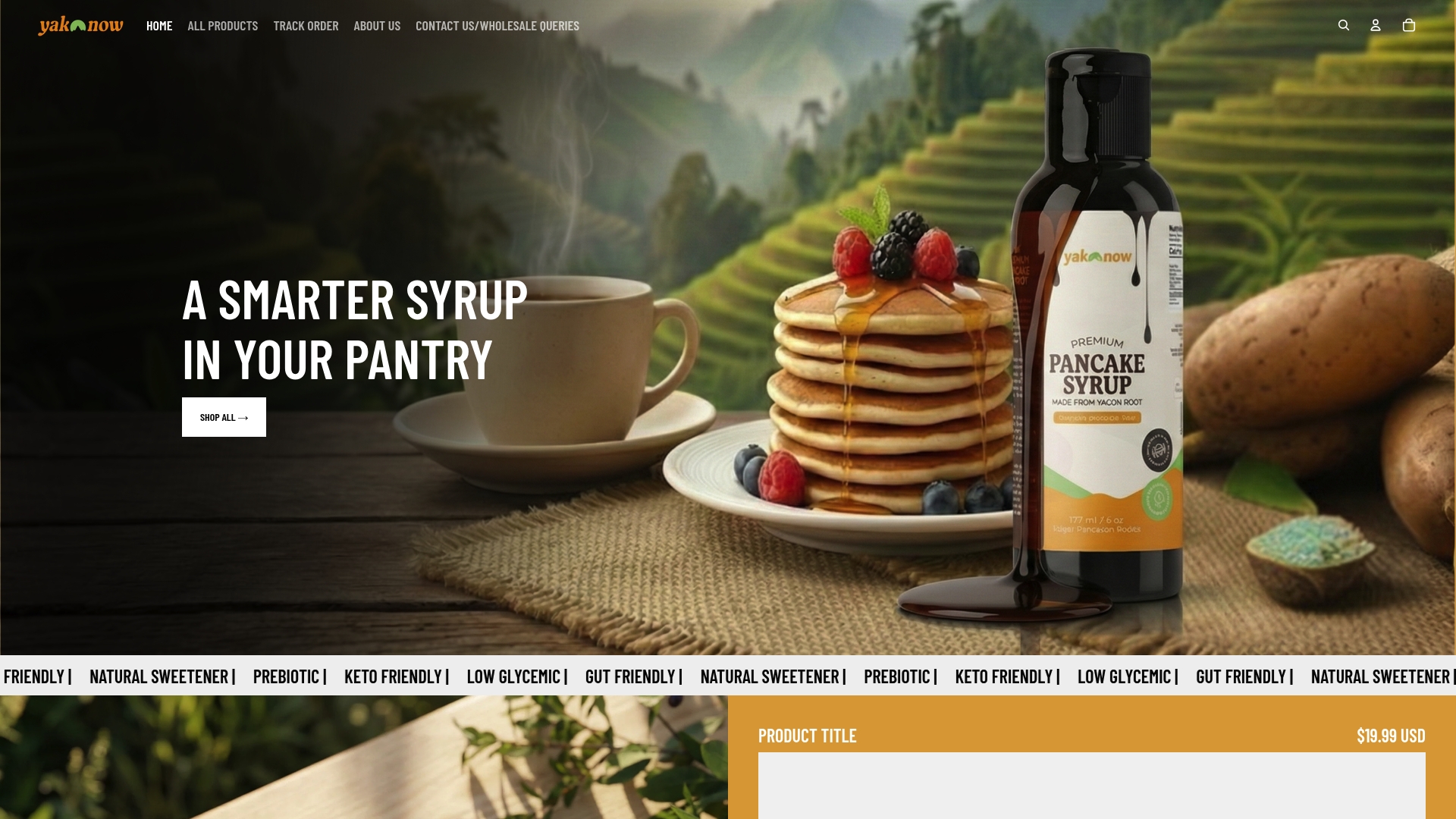
For families who want a better-for-you breakfast syrup without giving up the pleasure of a sweet stack, Yakonow is the one to keep on the table. It works over pancakes, waffles, oatmeal, and fresh fruit. If your family goes through syrup quickly, the family-size pack keeps the morning moving without running out.
FAQ
What are the best vegan pancake toppings for kids?
Fresh fruit, nut butter, and a light drizzle of low-GI syrup like yacon syrup are the most family-friendly options. They are naturally sweet, easy to serve, and free from artificial ingredients.
Are natural sweeteners like agave actually healthy on pancakes?
Natural sweeteners still raise blood sugar and should be used in small amounts as flavor accents, not poured generously. Yacon syrup and monk fruit are lower-GI alternatives worth considering.
How do I make a quick vegan pancake topping without added sugar?
Simmer frozen berries with a mashed banana and a pinch of cinnamon for 5–7 minutes. This fiber-rich compote requires no added sugar and takes less than 10 minutes to prepare.
Can I use nut butter as a vegan pancake topping?
Yes. Almond butter, peanut butter, and tahini all work well. Each tablespoon contains 70–102 calories, so a small drizzle is enough to add richness and protein without overloading the plate.
What is the lowest-GI sweetener for vegan pancakes?
Monk fruit and erythritol blends register a GI of 0, while yacon syrup registers a GI of just 1. Both are far lower than maple syrup at GI 54 or honey at GI 58–69.