

Yacon Syrup Taste: Caramel Forward, Less Sweet Than Honey
Yacon syrup tastes like a soft, caramel-forward drizzle with a whisper of molasses. It’s noticeably less sweet than honey, closer to a gentle sugarcane note than a floral one, and it pours thin enough to melt straight into cold yogurt or a warm bowl of oats. If you’re picturing a finishing syrup rather than a dessert topping, you’ve got the right idea.
TL;DR:
- Yacon syrup has a mild caramel and molasses flavor with faint fruity undertones, and it is less sweet than honey or maple syrup.
- It contains fermentable fibers called FOS that improve gut health and lower blood sugar, but can cause mild bloating if introduced too quickly.
- When baking, yacon syrup requires adjustments for water content and sweetness level, making it suitable for muffins and glazes but not for high-heat caramelizing.
- It is made solely from yacon roots in Peru, ensuring consistent flavor and low glycemic impact compared to other sweeteners.
Table of Contents
- What Does Yacon Syrup Actually Taste Like?
- How Does Yacon Syrup Compare to Other Sweeteners?
- Can You Bake with Yacon Syrup?
- What Does the Research Say About Yacon Syrup and Digestion?
- How Should You Use Yacon Syrup at Home?
- Where Does Yakonow’s Yacon Syrup Come From?
- A Small Pour, a Slower Morning
- Bring the Ritual to Your Table
- Sources
What Does Yacon Syrup Actually Taste Like?
Pour a spoonful and the first thing you notice is the color: a deep amber, almost like strong brewed tea catching afternoon light. The aroma follows a beat later, warm and faintly caramelized, the way a kitchen smells after sugar has just started to brown in a pan.
On the tongue, yacon syrup taste unfolds slowly rather than hitting all at once. There’s caramel up front, a soft edge of molasses underneath, and sometimes a mild, almost fruity undertone that people compare to dried apple or raisin. Cleveland Clinic describes it as tasting “a bit like honey, but not as sweet,” with a consistency thinner than molasses, which matches what most home cooks notice first: it pours, it doesn’t ooze.
- Caramel and light molasses as the dominant notes
- A faint nutty or dried-fruit undertone in some bottles
- No bitter or medicinal aftertaste, unlike some sugar alternatives
- Thin, pourable texture that blends into cold foods without heating
Because yacon syrup comes from a root vegetable rather than a refined crop, small batch-to-batch differences in flavor are normal. How the roots are dried and concentrated before pressing can shift the balance between caramel and fruitiness slightly, the same way olive oil varies harvest to harvest.
Pro Tip: Taste yacon syrup on its own first, straight off a spoon, before adding it to anything. It reads differently in isolation than it does once it hits warm oatmeal or tart yogurt.
How Does Yacon Syrup Compare to Other Sweeteners?
Yacon sits at the mild end of the sweetness scale. Where honey and maple syrup announce themselves, yacon syrup flavor is quieter, more of a background note than a headline.
- Vs. honey: Honey is floral and sharply sweet; yacon is milder and more caramel than floral, which makes it easier to layer without overpowering fruit or coffee.
- Vs. maple syrup: Maple carries resinous, woody notes and hits hard on sweetness; yacon is gentler and works better when you want the other ingredients, like berries or granola, to still come through.
- Vs. agave: Agave is neutral and very sweet with almost no flavor identity; yacon actually tastes like something, which is either its charm or its limit depending on what you’re making. For a closer breakdown, see this yacon syrup vs maple syrup comparison.
- Vs. table sugar: Sugar is one-note sweetness with no depth; yacon brings complexity but less raw sweetening power, so recipes built around sugar’s intensity need adjusting.
Yogurt, fruit, and no-bake bars are yacon’s natural home. Tea and heavily baked goods tend to favor honey or maple’s stronger presence. If you’re weighing yacon against agave, stevia, or monk fruit specifically, this sweetener comparison guide breaks down the practical differences further. Beyond flavor, USDA composition data places yacon among the lower-glycemic options in this category, a detail that matters more for how it fits daily habits than for how it tastes.
Can You Bake with Yacon Syrup?
Yacon doesn’t swap in at a clean 1:1 ratio, and treating it like maple syrup in a recipe usually disappoints. It’s less sweet by volume and carries more water, which affects both browning and final texture.
- Start by taste, not by formula. Add yacon gradually and taste the batter, since sweetness perception shifts by recipe more than fixed conversion charts admit.
- Trim other liquids slightly. Yacon’s higher water content can leave batters looser than expected, so pull back a tablespoon or two elsewhere.
- Expect less deep caramelization. Yacon browns more subtly than maple or honey at high heat, so cookies and crusts may come out lighter.
- Add a binder if structure sags. A little extra flour or an additional egg can steady a cake that’s gone too loose.
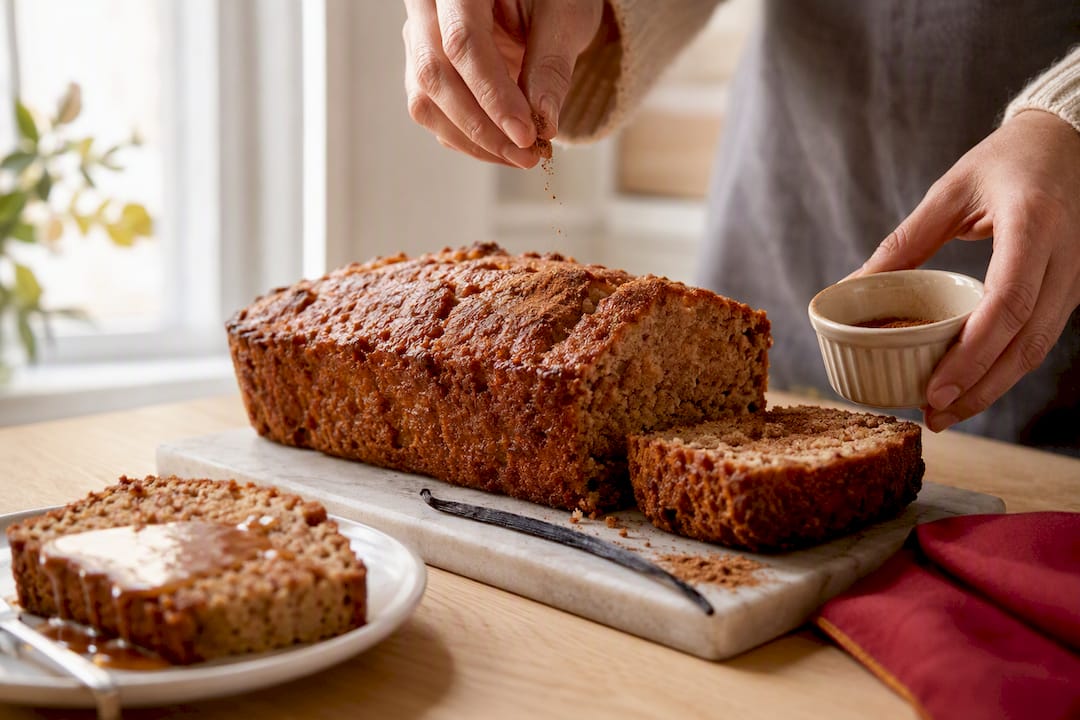
Yacon shines in muffins, quick breads, and glazes where a gentle sweetness is welcome. For high-heat caramelizing, like brittle or hard candy, reach for something else. Full swap notes live in this baking substitution guide.
Pro Tip: If a baked good tastes flat after swapping in yacon, a pinch of cinnamon or a splash of vanilla often restores the warmth that sugar’s intensity used to provide.
What Does the Research Say About Yacon Syrup and Digestion?
Yacon’s gentle sweetness comes partly from fructooligosaccharides, or FOS, a fermentable fiber the body doesn’t fully digest, which is why yacon syrup tastes sweet but registers as low glycemic. A systematic review of yacon syrup trials found that FOS intake improved satiety and colonic transit time in several studies, alongside reductions in fasting insulin, HOMA-IR, and LDL cholesterol, though results varied with dose and how long people used it.
One clinical trial found that a daily intake of yacon syrup supplying a moderate dose of FOS reduced colonic transit time significantly over two weeks, per research published in PMC.
That same trial noted mild bloating in some participants, a common response to fermentable fibers introduced quickly.
- FOS feeds gut bacteria rather than raising blood sugar the way table sugar does
- Effects on insulin and cholesterol appear dose- and duration-dependent, not immediate
- Starting with a small serving and increasing slowly tends to reduce bloating
- Everyday glycemic considerations make yacon a reasonable pick for households already watching sugar intake, though it isn’t a medical treatment
How Should You Use Yacon Syrup at Home?
Start small. A teaspoon or two stirred into yogurt or oatmeal is plenty to notice the caramel note without overwhelming the bowl. For pancakes or waffles, a light drizzle, closer to what you’d use for honey than for maple, keeps the flavor in balance.
- Morning ritual: One to two teaspoons over oatmeal, following the approach in this family oatmeal ritual guide
- Smoothies: A tablespoon blended in works well without dulling the flavor, and pairs nicely in this agave and yacon smoothie recipe
- No-bake bars and salad glazes: Its thin consistency mixes into cold ingredients without melting first
- Storage: Keep it in the pantry unopened; refrigerate after opening and use within a few months for best flavor
If a recipe seems to need more browning or body, a touch more syrup plus a longer simmer or an extra pinch of flour usually solves it. More ideas live in this collection of yacon syrup recipes.
Where Does Yakonow’s Yacon Syrup Come From?
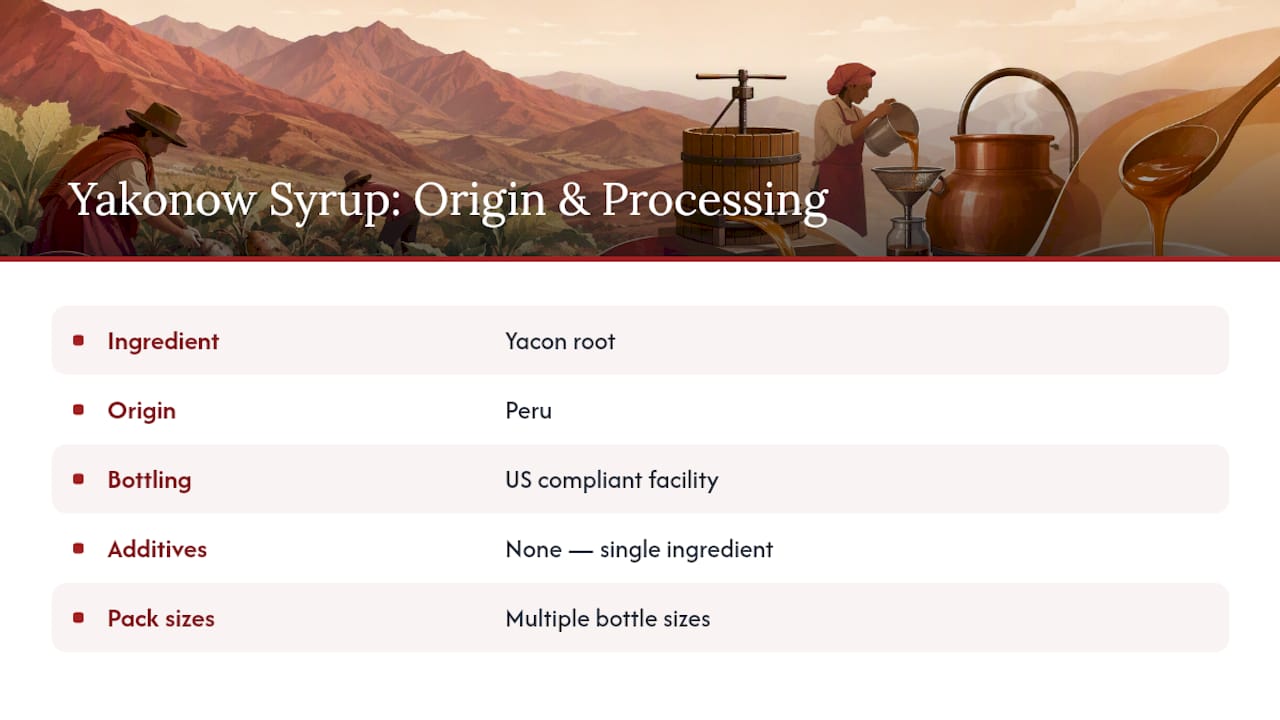
The syrup is made from yacon root in Peru and bottled in a compliant facility in the US, with nothing added beyond the root itself. It is available in multiple bottle pack sizes for households that go through it quickly. Those single-ingredient, low-glycemic basics are exactly what make the sensory notes above hold true bottle to bottle. For more on how it’s made, see what yacon syrup actually is, written by Yakonow’s Celeste.
A Small Pour, a Slower Morning
There’s a particular quiet to a Sunday table when the syrup gets passed around and nobody’s rushing. I think about that first taste often: caramel, a little earthy, gentler than anyone expects. Try a small drizzle over something simple this week and see if it doesn’t turn an ordinary breakfast into a moment worth lingering over.
— Celeste
Bring the Ritual to Your Table
Yakonow is a single ingredient, nothing else, which means the caramel note you taste on a spoon is the same one you’ll taste over pancakes months from now. That kind of consistency is hard to promise with syrups cut from multiple sources.

For everyday mornings, the single 6oz bottle is an easy way to see if the flavor fits your table. Families who go through syrup fast tend to reach for the pack of two for busy weekday mornings, and households that never want to run out often choose the pack of four. Pick the size that matches your table, and let the next pancake morning be the test.
Sources
- Systematic review of yacon syrup clinical trials (Nutrition journal entry)
- Clinical trial evidence on yacon syrup effects (PMC article)
- Is Yacon Syrup Healthy? — Cleveland Clinic
- USDA FoodData Central