

Diabetic Friendly Baking: A Practical Guide to Real Dessert
Yes, you can bake desserts that fit a diabetes-care plan. The key is total carbohydrate per serving, smart portion sizes, and ingredient swaps that behave well in an oven, not a hunt for “sugar-free” labels. The American Diabetes Association and the CDC both say dessert has a place at the table when it’s planned, and a pantry staple like Yakonow yacon syrup can make that planning a lot easier.
Three rules carry almost the entire practice of diabetic friendly baking:
- Know your carbs. Count total carbohydrate per serving, not just added sugar. Flour and fruit contribute plenty of their own.
- Swap with intention. Choose higher-fiber flours and low-glycemic sweeteners, often in blends rather than straight substitutions.
- Mind the portion. A smaller slice paired with protein or fiber blunts the blood sugar response far more than any single ingredient swap.
Key Takeaways
Diabetic-friendly baking works when you count total carbohydrate per serving, choose fiber-forward flours, and blend sweeteners rather than swapping them one for one.
| Point | Details |
|---|---|
| Count total carbs | Focus on total carbohydrate per serving over “sugar-free” labels, since flour and fruit still count. |
| Blend sweeteners | Replace no more than half the sugar with a substitute; blends preserve browning and texture better. |
| Choose flour by texture goal | Almond flour gives a tender crumb 1:1 by weight; coconut flour needs about a quarter the weight plus extra eggs. |
| Adjust for liquid sweeteners | Lower oven temp 20 to 25 degrees Fahrenheit and add dry ingredients when using syrups like yacon. |
| Try yacon syrup for baking | Yakonow’s single-ingredient yacon syrup offers a low-glycemic, prebiotic swap for traditional syrups in family bakes. |
This article is general information, not a substitute for advice from a qualified doctor. Consult a qualified healthcare professional about your own circumstances before acting on anything here.
Table of Contents
- What Makes a Dessert Diabetic-Friendly?
- Smart Swaps for Sugar That Actually Bake Well
- Flour Swaps That Keep Texture Intact
- Recipe Blueprints Worth Keeping in Your Back Pocket
- How to Count Carbs and Portion a Dessert
- What the Research Says About Baking With Yacon
- Storing Diabetic-Friendly Bakes Without Losing Texture
- Common Mistakes That Undo All Your Careful Swaps
- Author’s Closing Note
- Where to Find Yakonow for Your Next Bake
- Sources
What Makes a Dessert Diabetic-Friendly?
Total carbohydrate per serving matters more than any “sugar-free” claim on a box. A treat can skip added sugar entirely and still load up on carbs from white flour, so reading past the sugar-free label to the full Nutrition Facts panel is the habit that actually protects blood sugar.
Fiber and protein slow digestion, which softens the glucose spike that follows a sweet bite. That’s why a bowl of fresh berries with Greek yogurt behaves so differently in the body than a slice of frosted layer cake, even when the sugar grams look similar on paper. Nuts work the same way, adding fat and protein that stretch out digestion.
Consider the difference in practice: a half-cup fruit cobbler made with oats and almond flour might contain moderate carbohydrate, fiber included, while a standard slice of birthday cake with frosting contains a higher carbohydrate load per serving. The ADA’s dessert guidance frames this as fitting dessert into the broader Diabetes Plate Method: half the plate in non-starchy vegetables at the meal, leaving dessert as a planned, portioned carbohydrate rather than an afterthought.
Statistic to note: studies on bread enriched with 6% to 11% yacon flour found the glycemic index shifted from moderate to low as the yacon percentage increased, alongside measurable prebiotic activity in vitro.
Smart Swaps for Sugar That Actually Bake Well
Not every sweetener behaves the same way in an oven, and that’s where most home bakers get tripped up. Grouping them by how they act helps more than memorizing brand names.
- Sugar alcohols (erythritol, xylitol). These measure and caramelize close to sugar, but too much can cause digestive upset and a cooling aftertaste in delicate bakes.
- Allulose. Browns nicely and holds moisture well, making it one of the more forgiving swaps for cookies and quick breads.
- Nonnutritive sweeteners (stevia, monk fruit blends). Very low carb impact, but many lose sweetness or stability under sustained heat, so they work best blended with another sweetener.
- Liquid low-glycemic syrups (yacon syrup). Adds moisture and a caramel-like flavor without the sharp aftertaste some substitutes carry, though it changes the liquid ratio in a recipe.
Food scientists at the University of Georgia’s CAES field report advise against replacing more than half the sugar in a recipe with a substitute alone. Blends, or a small amount of real sugar alongside the substitute, tend to preserve the browning and texture that make baked goods feel like dessert instead of a science project.
When you do swap in a liquid sweetener, drop the oven temperature by about 20 to 25 degrees Fahrenheit, since liquid sweeteners brown faster than granulated sugar. Add roughly a quarter teaspoon of baking soda per cup of yacon syrup to balance the acidity, and increase your dry ingredients by 15% to 25% to account for the added moisture.
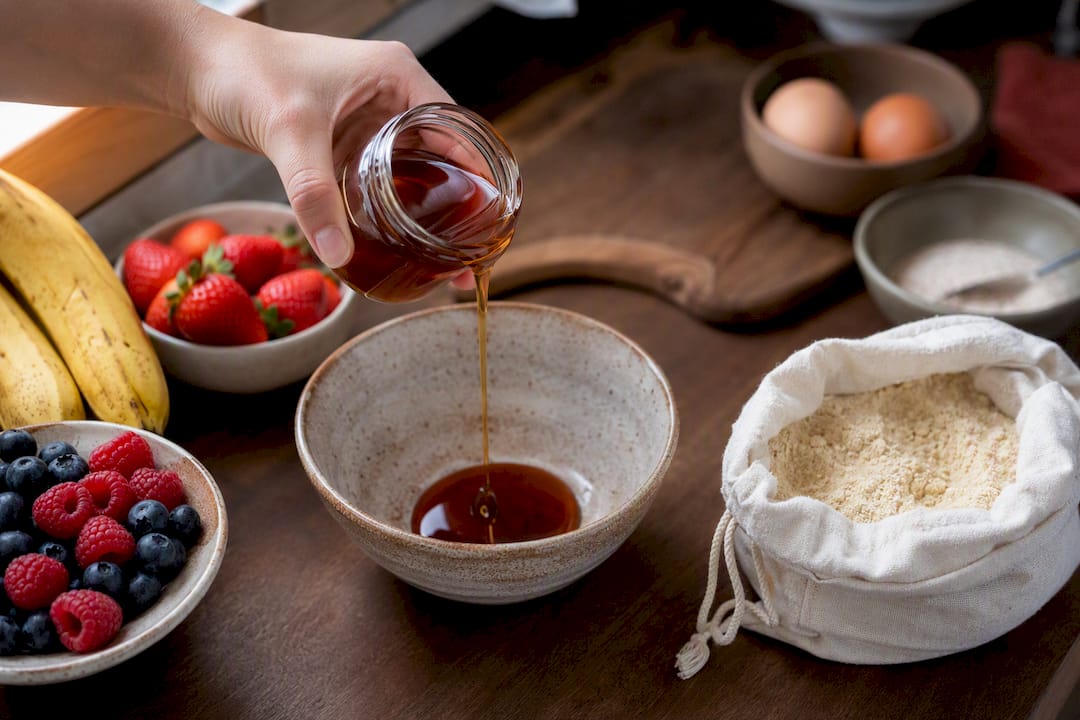
Pro Tip: Test one substitution at a time. If you change the sweetener and the flour in the same batch, you won’t know which swap caused the dry or gummy result.
Flour Swaps That Keep Texture Intact
Almond flour is the most forgiving place to start. Most recipes accept it roughly 1:1 by weight against wheat flour, though expect a denser, moister crumb since it carries no gluten to trap air.
Oat flour lands in the middle of the glycemic spectrum and produces a texture closer to what most people expect from traditional baking, which makes it a good bridge flour for skeptical eaters. Coconut flour is the outlier: it is extremely absorbent, so use only about a quarter of the weight you’d use for wheat flour, and add extra eggs or liquid or the result will crumble on the fork.
- Almond flour: 1:1 by weight, denser crumb, lower carb count.
- Oat flour: familiar texture, moderate glycemic impact.
- Coconut flour: use at roughly 1/4 the weight of wheat flour, plus extra eggs or liquid.
- Whole-wheat flour: adds fiber but also more carbohydrate than almond or coconut.
If a batter still feels loose, a pinch of xanthan gum acts as a binder, and letting the batter rest for 10 minutes before baking lets the flours fully absorb moisture.
Pro Tip: Always bake a test muffin or two before committing a full batch to a party tray. A five-minute test bake saves you from serving a dense brick at brunch.
Recipe Blueprints Worth Keeping in Your Back Pocket
These are starting points, not rigid formulas. Adjust sweetness and portion size to your own routine and how your body responds.
- Almond flour cookies with erythritol. Roughly 8 to 10 grams of carbohydrate per cookie. Chill the dough first, since almond flour dough spreads more than wheat dough.
- Yacon syrup and oat flour mug cake. A single-serving mug cake using Yakonow’s syrup substitution ratios lands around 20 grams of carbohydrate and takes 90 seconds in the microwave.
- Angel-food-style fruit sponge. Egg whites keep it airy and naturally lower in carbohydrate than a butter-based cake, around 12 grams per slice.
- No-crust berry cobbler. Skipping the pastry crust cuts a meaningful chunk of carbs; a half-cup serving runs about 15 to 18 grams.
- Greek yogurt chocolate mousse. Cocoa powder and a light sweetener keep this near 10 grams of carbohydrate per half-cup, with protein from the yogurt slowing absorption.
- Low-carb brownies with almond flour. A modest sugar substitute blend keeps a standard-size brownie in the 12 to 15 gram range.
For step-by-step ratios, the Yakonow recipe collection walks through each of these in more detail, including how much syrup to use per batch.
How to Count Carbs and Portion a Dessert
A mug cake made with yacon syrup and oat flour contains a moderate amount of carbohydrate per serving. If that’s your dessert, trimming the starch at lunch, a smaller roll or half the usual rice, keeps your day’s total carbohydrate in the same range you’d normally eat.
A single serving of no-crust berry cobbler lands closer to 15 to 18 grams. Pairing it with a spoonful of Greek yogurt or a few almonds adds protein that slows how fast that carbohydrate hits your bloodstream, which is exactly the pairing the CDC recommends.
The only way to know how a specific recipe affects you is to check your blood glucose about two hours after eating it. Response varies from person to person, so treat these carb estimates as a starting point, not a guarantee, and adjust based on your own numbers over a few tries.
What the Research Says About Baking With Yacon
Bread made with 6% to 11% yacon flour showed a real shift: glycemic index moved from moderate down to low as the yacon percentage increased, and the same study found prebiotic activity in vitro. Separate research on powdered yacon as a bakery ingredient points to real technological feasibility for adding fiber to bread without wrecking the dough.
Yacon’s fructooligosaccharide content is what sets it apart in baked goods: it sweetens the way sugar does, but the body doesn’t process it the same way, and early bread trials link it to a lower glycemic index compared with standard flour blends.
For home baking, treat Yakonow syrup as a liquid sweetener: reduce other liquids slightly, drop the oven temperature by 20 to 25 degrees, and adjust leavening as described earlier. Yakonow’s lineup, the single 6oz bottle, the pack of 2, the pack of 4, and the pack of 12, covers everything from a single Sunday bake to a kitchen that never wants to run out. The full substitution guide walks through exact ratios.
Storing Diabetic-Friendly Bakes Without Losing Texture
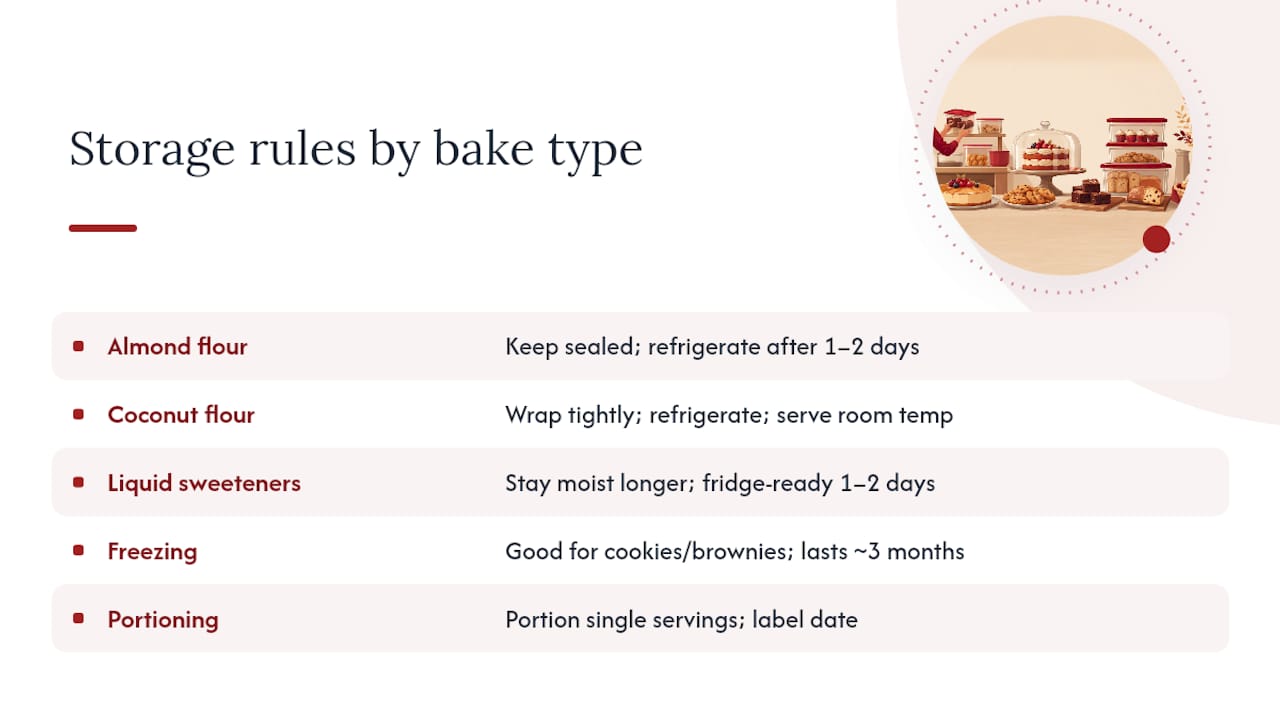
Almond and coconut flour bakes hold moisture differently than wheat-based ones, which changes how they should be stored. Almond flour treats stay moist longer at room temperature because of their natural oil content, but that same oil content means they can turn rancid faster in a warm the kitchen, so a sealed container in the refrigerator is usually the safer call after the first day or two.
Coconut flour bakes dry out fast since the flour already pulled so much moisture during mixing. Wrap them tightly in plastic before refrigerating, and let them come to room temperature before serving so the crumb doesn’t taste chalky.
Anything made with yacon syrup or another liquid sweetener stays moist a little longer than a sugar-based bake, since liquid sweeteners hold onto water more effectively than granulated sugar does. That’s good news for make-ahead baking. A batch of mug cake batter or cobbler filling can sit in the fridge for a day or two before baking, which suits a busy week better than baking everything the morning of a gathering.
Freezing works well for most of these recipes, cookies and brownies especially, but fruit-forward bakes like the no-crust cobbler lose some structure after thawing. Portion into single servings before freezing so you’re not tempted to defrost the whole tray at once, and label with the date. Most diabetic-friendly bakes made with alternative flours and low-glycemic sweeteners hold their quality for about three months in the freezer, similar to conventional baked goods.
Common Mistakes That Undo All Your Careful Swaps
The most common mistake is swapping the sweetener and the flour in the same recipe without adjusting anything else. Both changes affect moisture and structure, and stacking them without adjustment is how a well-intentioned bake turns dry, gummy, or flat.
A second mistake is trusting a “sugar-free” label as a green light. As noted earlier, total carbohydrate still counts flour, fruit, and other starches, so a sugar-free muffin loaded with white flour can carry more carbs than a modest slice of real cake.
Skipping the oven temperature adjustment when using a liquid sweetener is another frequent slip. Liquid sweeteners like yacon syrup brown faster than granulated sugar, so baking at the recipe’s original temperature often scorches the edges before the center sets.
Overcorrecting on portion size is a subtler error. Some bakers cut a diabetic-friendly dessert into such small pieces that it stops feeling like a treat, then end up eating three pieces instead of one. A single, honest portion, planned into the rest of the day’s carbohydrate, tends to work better than a portion so small it doesn’t satisfy.
Finally, skipping the test bake before a big event is a mistake almost everyone makes once. Alternative flours and sweetener blends behave differently across brands and even across humidity levels in your kitchen, so a small test batch a day or two ahead saves the real occasion from a texture surprise.
Author’s Closing Note
There’s a particular quiet in a kitchen when something’s cooling on the counter and everyone’s circling closer. That’s the moment worth baking for. Try one recipe this week, share it warm, and let the rest sort itself out.
— Celeste
Where to Find Yakonow for Your Next Bake
Yakonow is a single-ingredient yacon syrup, hand-harvested in Peru and bottled in the US, with a naturally low glycemic profile and prebiotic FOS fiber built in without any added sugar. No long ingredient list to squint at, no artificial sweeteners hiding behind a health claim, just one root, prepared simply.

If you’re baking for a Sunday brunch or a weeknight treat, the single 6oz bottle is enough to test a few recipes from this guide. Families who bake often tend to reach for the pack of 4 or the pack of 12 so the pantry never runs dry mid-recipe. Before your first bake, walk through the how to bake with yacon syrup guide for the exact oven and liquid adjustments covered above, and while you’re planning a weekend of hosting, the meal-prep tips for busy home cooks are worth a bookmark too. Order a bottle, pick one recipe from this guide, and see how it fits your table this weekend.
Sources
- Dessert | American Diabetes Association
- Can people with diabetes eat dessert? | CDC
- Study: bread with yacon flour presented low/moderate glycemic index and prebiotic potential
- Cooking and Baking with Sugar Substitutes | CAES Field Report