

Low FODMAP Sweeteners for Family Breakfasts: What to Pick
Yacon syrup is the recommended low FODMAP sweeteners choice for the family table, and it earns that spot honestly: naturally sweet, gentle on blood sugar, and rich in a prebiotic fiber that most syrups do not have. Here’s the short version before we get into the why.
- Taste: subtle caramel notes, closer to molasses than maple, and mild enough that kids drink it up on pancakes.
- Glycemic impact: tested low-GI in lab analysis, so it won’t send blood sugar spiking the way table syrup does.
- Prebiotic fiber: naturally rich in FOS, the fiber that feeds good gut bacteria.
- Texture: thick and pourable, kid-friendly straight from a squeeze bottle.
If you want to try it this weekend, the single 6oz bottle is the easiest way in. It’s a single ingredient, nothing added, and a randomized clinical trial plus a systematic review of seven trials both back up why it behaves so differently on the plate than the sweeteners you grew up with.
Key Takeaways
Yacon syrup works as a family-friendly low FODMAP sweeteners choice because its prebiotic FOS fiber and naturally low glycemic profile deliver sweetness without the blood sugar spike of maple syrup or honey.
| Point | Details |
|---|---|
| Low glycemic sweetener | Lab testing found yacon concentrate scoring a GI of 40 ± 4, well below table sugar. |
| Clinically studied doses | Trials used 20 g/day for gut benefits and a 40 g single dose for glucose and insulin effects. |
| Introduce gradually | Start with a teaspoon per person and build up over one to two weeks to avoid bloating. |
| Check the label | Prioritize single-ingredient syrups with stated FOS content and Peruvian sourcing. |
| Yakonow’s role | Yakonow’s single 6oz bottle and multi-pack options meet that checklist for families ready to try it. |
Table of Contents
- What Makes Yacon Syrup a Low FODMAP Sweetener?
- How Do You Use Yacon Syrup at the Table?
- How Much Yacon Syrup Should Kids and Adults Have?
- What Should You Look for on the Label?
- How Do You Store and Introduce Yacon Syrup to Kids?
- The Real Point of a Good Breakfast Syrup
- Try Yacon Syrup at Your Own Table
- Sources
What Makes Yacon Syrup a Low FODMAP Sweetener?
The short answer is fiber. Yacon syrup gets most of its sweetness from fructooligosaccharides, or FOS, a prebiotic fiber your gut bacteria feast on instead of your bloodstream absorbing straight sugar. That’s the whole mechanism behind why it tastes sweet but behaves so differently once it hits your stomach.
FOS is what feeds beneficial bacteria strains like bifidobacteria and lactobacilli, the same microbes tied to a resilient gut. It’s not a vitamin you’re adding. It’s more like fertilizer for bacteria that are already living in your gut, working quietly whether you feed them well or not.
The clinical picture backs this up in a few specific ways:
- A randomized trial gave adult women a single 40 g dose of yacon syrup (14 g FOS) with breakfast. Blood glucose dropped at 30 minutes, and insulin was lower at 15, 30, and 45 minutes, compared with placebo.
- A systematic review of seven trials, 161 participants total, found consistent reductions in fasting insulin, HOMA-IR, and LDL cholesterol, along with better satiety and faster intestinal transit.
- Separate lab testing found one yacon concentrate carried a glycemic index of 40 ± 4, squarely in low-GI territory, though FOS content varied widely by batch, from roughly 11% to over 50%.
None of this makes yacon syrup a treatment for anything. The trials are small, mostly short-term, and the researchers behind the systematic review are candid that larger studies are still needed. What the evidence does show, consistently, is a syrup that moves blood sugar less than sugar-based alternatives and feeds gut bacteria most American diets underfeed. You can read more on what the FOS science actually says if you want the deeper dive.
How Do You Use Yacon Syrup at the Table?
Treat it exactly like you’d treat maple syrup, honey, or agave. That’s the appeal: no learning curve, no special recipe required.
- Pancakes and waffles: drizzle straight on, warm or room temperature. The caramel note plays well with butter.
- Oatmeal: stir in a spoonful while the oats are still hot; it melts into the bowl the way brown sugar would.
- Plain yogurt: a teaspoon or two sweetens without masking the tang.
- Fresh fruit: works especially well over sliced bananas or berries.
- Baked finishes: a light glaze over muffins or a fruit crisp before serving.
- Salad dressings: a small amount balances vinegar in a vinaigrette.
For a straight swap, replace maple syrup or honey one-to-one in most recipes. Because it’s thicker than maple syrup, it pours a little slower in cold dishes and loosens up nicely once warmed. For baking specifically, you may want to drop the oven temperature by about 25 degrees since yacon browns faster than white sugar.
For portioning, a teaspoon is plenty for a child’s bowl of oatmeal; adults typically use one to two tablespoons per serving. More recipe ideas, including smoothies and a dozen family-friendly uses, are worth bookmarking for slow Sunday mornings.

Pro Tip: Warm the bottle briefly in a cup of hot water before serving. Cold syrup pours slowly, and a warmer drizzle spreads more evenly over pancakes.
How Much Yacon Syrup Should Kids and Adults Have?
Clinical trials give a useful frame here, even though breakfast syrup isn’t medicine. Studies testing gut and metabolic effects generally used 20 g of yacon syrup daily, roughly one and a half tablespoons, sustained over two weeks. One trial in that range brought colonic transit time down from 59.7 to 38.4 hours. Separately, a single 40 g dose, about three tablespoons, produced the acute glucose and insulin improvements mentioned above.
For a household just getting started, smaller and slower beats a big first pour:
- Start with a teaspoon per person for the first few days.
- Build up to one to two tablespoons daily over one to two weeks.
- Watch how everyone’s stomach responds before increasing further.
Because FOS is a fermentable fiber, introducing too much too fast can cause bloating or loose stools in some people. These symptoms are usually mild and tend to fade as the gut microbiota adapts to the new fiber load.
If your child has a known sensitivity to fructans, a diagnosed case of IBS, or takes a medication where fiber intake matters, check with your pediatrician before making yacon syrup a daily habit. Cleveland Clinic notes that anyone especially sensitive to fructans can experience more noticeable digestive upset, so pay attention to how your own family responds rather than assuming everyone reacts the same way.
What Should You Look for on the Label?
Not every bottle sold as yacon syrup delivers the same thing, and the label tells you most of what you need to know before you buy.
- Single ingredient: the label should read yacon root extract, nothing else. Added sugars or syrups dilute both the flavor and the FOS content.
- Origin: Peruvian yacon is the traditional source and the one most studies have tested.
- FOS content stated: look for a specific figure, since published testing shows FOS can range from roughly 11% to over 50% depending on how the syrup was processed.
- No added sugars or fillers: a syrup padded with cane sugar or corn syrup is no longer a low-glycemic sweetener, whatever the front label claims.
- GI or lab testing referenced: a brand willing to publish lab numbers is telling you something about its own confidence.
- Food-safety and bottling info: FDA-compliant bottling and clear sourcing details matter more than a pretty label.
Yakonow’s single 6oz bottle and its pack of two or pack of four options are built around exactly this checklist: single ingredient, Peruvian sourced, and bottled in an FDA-compliant US facility.
Pro Tip: A premium single-ingredient syrup will cost more per ounce than a supermarket blend. That price difference usually reflects gentler processing that preserves more FOS, not just fancier packaging.
How Do You Store and Introduce Yacon Syrup to Kids?
An unopened bottle keeps well in the pantry; once opened, refrigeration helps preserve flavor and extends shelf life. Before each use, a quick glance and sniff is enough: separation or an off smell means it’s time to toss it.
Introducing something new to a picky eater works better as a small experiment than a big announcement.
- Start by mixing a small amount into a food they already love, like plain yogurt with berries.
- Let them pour it themselves from a kid-sized squeeze bottle. Ownership makes it more appealing.
- Give the syrup its own name at the table, something simple like “the golden drizzle,” so it becomes part of the ritual rather than a substitution they notice.
- Serve it the same way each weekend so it becomes expected, not novel.
The amber color and warm, faintly caramelized aroma do a lot of the persuading on their own, especially warmed slightly before it hits the pancakes.
The Real Point of a Good Breakfast Syrup
There’s something quietly meaningful about the fifteen minutes before everyone scatters for the day: someone’s pouring juice, someone’s still in pajamas, and the syrup bottle gets passed hand to hand around the table. That’s the moment we built Yakonow for, not a nutrition label.
The low glycemic index and the prebiotic fiber matter, and we’re glad the research backs them up. But they’re reassurance, not the reason you’ll reach for it again next Sunday. The reason is simpler: it tastes good, it feels a little special, and it gives you one more small excuse to gather everyone around the same table before the day pulls them apart.
Try Yacon Syrup at Your Own Table
Yakonow is a single ingredient, pure Peruvian yacon syrup, hand-harvested and gently processed to protect its natural FOS content, then bottled in an FDA-compliant Texas facility. No added sugar, no glucose, no artificial anything. Just a warm, caramel-toned syrup that happens to be low glycemic and quietly good for the gut.
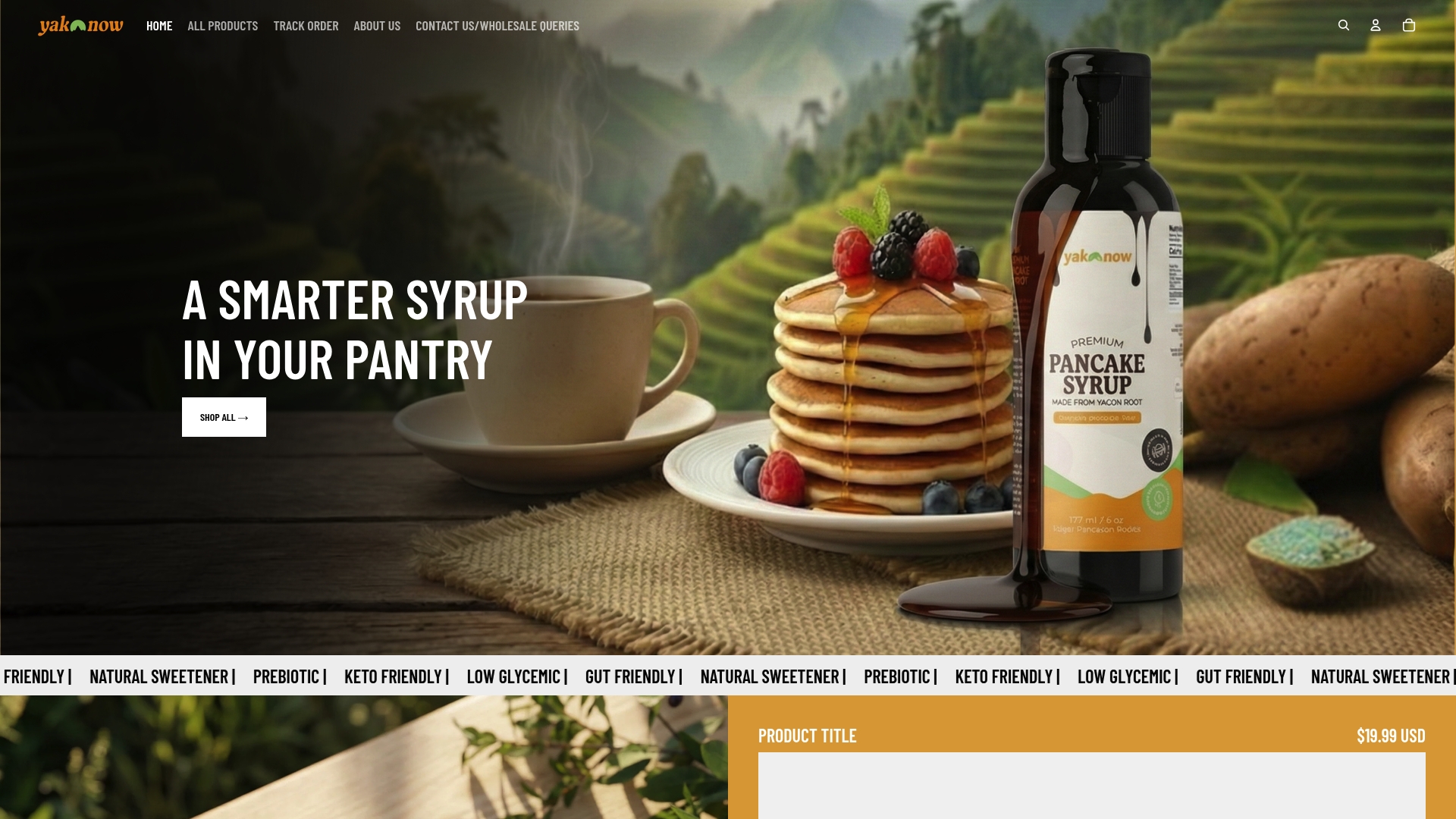
If this is your first bottle, start with the single 6oz size and see how it fits your weekend pancake routine. Once it becomes a fixture, the pack of two keeps busy mornings covered, and the pack of four means you won’t be caught short when the whole family wants seconds. Order online and it ships direct to your door, ready for the next slow Sunday brunch you decide to host.
Sources
- Effect of yacon syrup on postprandial glucose and insulin in adult women (randomized clinical trial)
- Impacts of Yacon Syrup (Smallanthus sonchifolius) on Human Health: A Systematic Review of Scientific Evidence from the Last Decade
- Yacon syrup clinical effects: intestinal transit time and microbiota (clinical findings summarized)
- A sustainable wholesome foodstuff; health effects and potential dietotherapy applications of yacon
- Is yacon syrup healthy? (Cleveland Clinic consumer health piece)
This article is general information, not a substitute for advice from a qualified doctor. Consult a qualified healthcare professional about your own circumstances before acting on anything here.