

Kitchen Ready Vegan Honey Swaps for Families, DIY Apple Syrup & Yacon
Maple syrup handles most 1:1 swaps in cooking and baking, agave nectar dissolves best into tea and dressings, date syrup and molasses bring the deep caramel notes some desserts need, and yacon syrup offers a lighter, family-friendly option with a gentler effect on blood sugar. Commercial vegan honey exists too, for anyone who wants that classic honey look and drizzle. Which one belongs in your kitchen depends less on labels and more on what you’re actually making, so here’s how each one behaves once it hits the pan, the mug, or the mixing bowl.
TL;DR:
- Maple syrup offers a universal replacement for honey, swapping 1:1 in most recipes with a warm, caramel flavor suitable for baking and cooking.
- Agave nectar is milder and sweeter than honey, requiring about two-thirds the amount and best dissolving into cold drinks and dressings.
- Date syrup has a strong, fruity flavor that enhances rich desserts and glazes, with a typical substitution ratio of roughly 1:1 but a more assertive taste.
- Yacon syrup is lighter and less sweet, ideal for pancakes, yogurt, and partial baking swaps, with a need for volume adjustments due to its high fiber content.
- Commercial vegan “honeys” are easy to use alternatives that mimic honey’s appearance and viscosity, suitable for decorative or simple culinary uses.
Table of Contents
- What Is the Best Vegan Honey Substitute?
- How Do You Substitute Honey in Recipes?
- How Do You Make Vegan Honey at Home?
- Which Vegan Sweetener Works Best in Tea, Baking, or Dressings?
- Why Isn’t Honey Vegan, and What Should You Know Before Swapping?
- A Table Worth Slowing Down For
- Bring a Little of Peru to Your Breakfast Table
- Sources
- FAQ
What Is the Best Vegan Honey Substitute?
There isn’t one answer, because honey does different jobs in different recipes. It sweetens, it browns, it thickens, it binds. A good vegan swap has to match the job, not just the sweetness level.
- Maple syrup is the closest thing to a universal substitute. It swaps 1:1 for honey in most recipes according to Food Network’s substitution guide, with a warm, faintly caramel flavor that plays well in oatmeal, marinades, and quick breads.
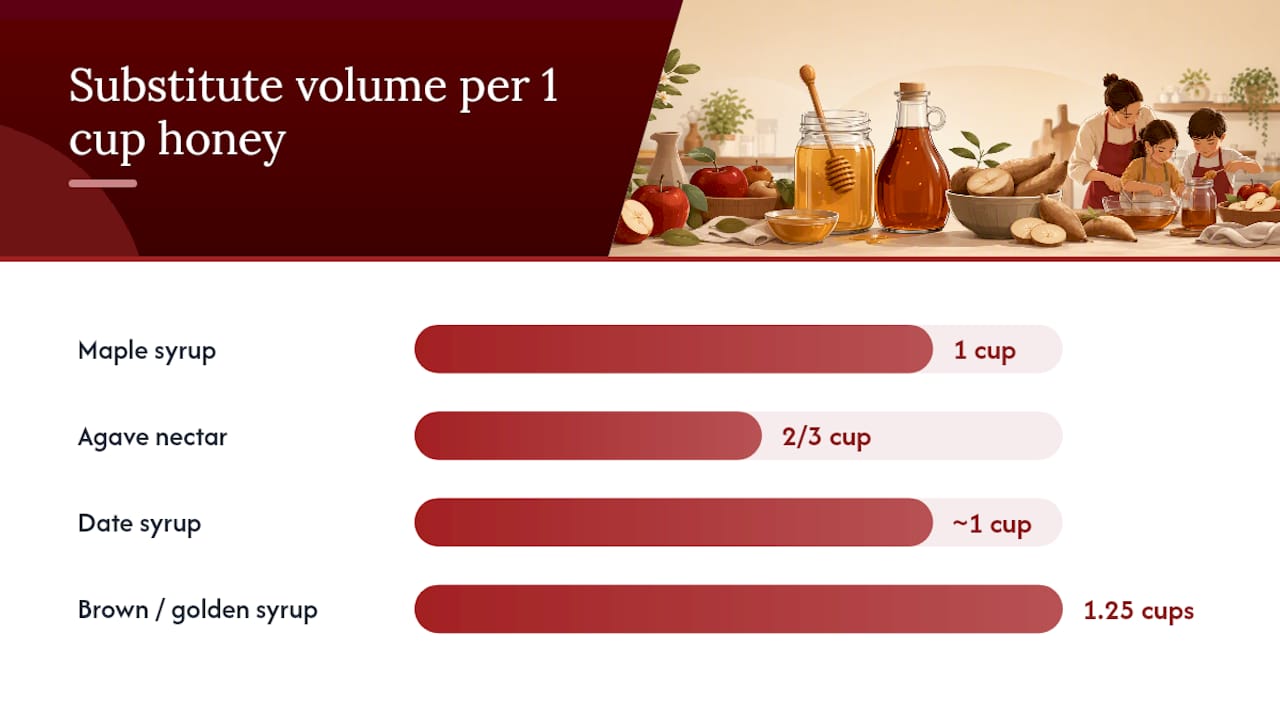
- Agave nectar is thinner and milder, often a touch sweeter than honey, which is why cooks typically start with about 2/3 cup agave for every cup of honey a recipe calls for and adjust from there. It stirs into cold tea and salad dressings without turning cloudy or gritty.
- Date syrup is thick, dark, and unmistakably fruity. It leans into rich desserts, glazes for roasted vegetables, and marinades where you want the sweetener to be part of the flavor, not just background sweetness.
- Yacon syrup pours lighter than most of the others on this list, with a mild, almost molasses-adjacent flavor and a texture that sits between maple and agave. It works well on pancakes and yogurt and can replace part of the honey in baking, though it’s worth testing at a slightly reduced volume since its high fiber content changes how it behaves in the oven.
- Brown rice syrup and golden syrup are less sweet gram for gram, so Food Network notes you may need about 25 percent more volume to match honey’s sweetness. Their toasty, malty character suits granola bars and glossy glazes.
- Molasses is bold and bittersweet, best used sparingly in gingerbread, baked beans, or barbecue sauce where its intensity is the point rather than a side effect.
- Commercial vegan “honeys” and apple-based bee-free honeys are built to mimic honey’s amber color and viscosity, often using apple juice concentrate or cane syrup as a base. They’re the easiest drop-in if you want the honey look on a cheese board or biscuit without changing your habits.
Flavor intensity matters more than any “honey” label on the bottle. Reach for a neutral syrup like maple or agave when you want the dish itself to shine, and reach for date syrup or molasses when you want the sweetener to be the star.
How Do You Substitute Honey in Recipes?
Ratios get you most of the way there, but a few small adjustments keep texture and moisture where they should be.
- Maple syrup: swap 1:1. No other changes needed in most recipes.
- Agave nectar: start with 2/3 cup per 1 cup of honey, then taste and adjust. It’s sweeter than honey, so more isn’t automatically better.
- Date syrup: swap roughly 1:1, but expect a stronger, more assertive flavor to come through in the finished dish.
- Brown rice or golden syrup: increase the volume by about 25 percent to match honey’s sweetness.
- Molasses: use less than the recipe calls for, then build up. Its bitterness intensifies with heat.
Because honey is thicker than most substitutes, reduce another liquid in the recipe by about two tablespoons per cup swapped, or add a tablespoon of flour if you’re baking bread, since a change in liquid sweetener shifts dough hydration and yeast activity. Going the other direction with a thicker option like molasses may mean adding a splash of water to loosen the batter back up.
Baking reacts to sweeteners differently than you’d expect. A sweeter substitute like agave can brown crusts faster, so drop your oven temperature by about 25 degrees or start checking a few minutes early. For cold applications like iced tea or vinaigrettes, agave wins on convenience because it dissolves without warming. Anything thicker, like date syrup, benefits from a quick warm and whisk before it goes into a cold liquid.
Pro Tip: Add agave or date syrup in stages rather than all at once. Both taste sweeter than honey to most palates, and it’s much easier to add a little more than to fix an oversweetened batch.
How Do You Make Vegan Honey at Home?
A simple apple-juice reduction gets you close to honey’s body and gloss using nothing more exotic than what’s already in your pantry.
- Combine 2 cups unsweetened apple juice, 1 cup granulated sugar, and 1 tablespoon lemon juice in a saucepan.
- Bring to a low boil, then reduce to a simmer.
- Let it reduce uncovered for 30 to 40 minutes, stirring occasionally, until it thickens into a syrup that coats a spoon.
- Cool completely before transferring to a jar. It will thicken further as it cools.
This method yields roughly one cup of syrup, enough for a couple of weeks of breakfasts.
For variety, try one of these:
- Stir in a teaspoon of orange blossom or rose water at the end for a floral note closer to raw honey.
- Add a spoonful of molasses for more depth and a darker color.
- Steep a sliced chili in the syrup while it cools, then strain, for a hot honey stand in that’s excellent on biscuits or pizza.
Store your vegan honey in a sealed jar in the refrigerator for up to three weeks. If you notice bubbling, a sour smell, or cloudiness, that’s fermentation setting in, and it’s time to toss it.
Which Vegan Sweetener Works Best in Tea, Baking, or Dressings?
The right substitute changes depending on whether you’re pouring, baking, or whisking.
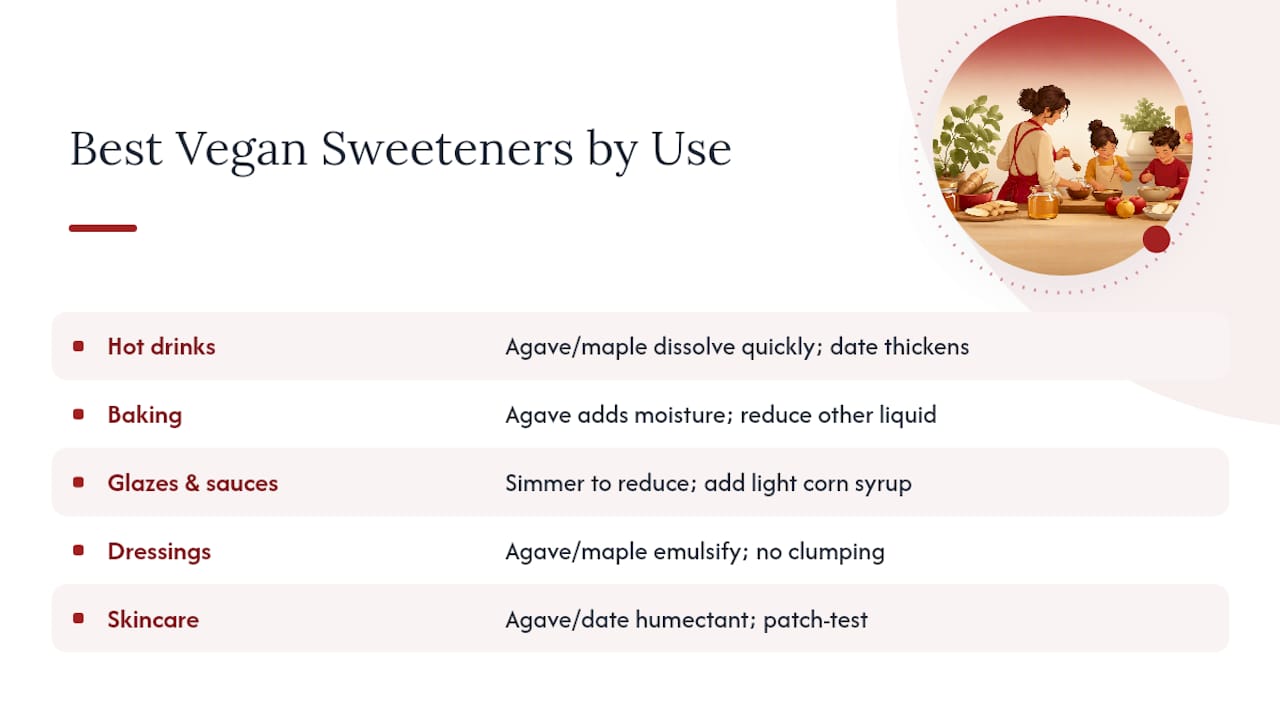
In hot tea or coffee, agave and maple syrup both dissolve cleanly with a quick stir, no warming required. Date syrup can work too, but it’s thick enough that you’ll want to stir longer or thin it with a splash of the hot liquid first.
In baking, watch for two things: crumb moisture and browning speed. Wetter substitutes like agave can leave cakes slightly denser, so cutting back another liquid by a tablespoon or two keeps the batter balanced. Sweeter substitutes brown faster, so a lower oven temperature or shorter bake time prevents a scorched top before the center sets.
For glazes and sauces, honey’s stickiness comes from its concentration, and you can recreate that by simmering your chosen syrup for a few minutes to reduce and thicken it. A combination of a syrup with a touch of light corn syrup can also help mimic honey’s gloss on roasted vegetables or grilled proteins, though corn syrup’s flavor and industrial origin make it a poor fit for anyone chasing a more natural pantry.
For dressings, agave and maple syrup emulsify well when whisked into oil and vinegar, since neither one clumps or separates the way a thicker syrup can.
If you’re experimenting with DIY skin care, agave and date syrup both have some humectant qualities that mimic honey’s moisture binding, though homemade cosmetic recipes should always be patch tested first and kept away from broken skin.
Pro Tip: When a glaze looks too thin straight off the stove, give it five more minutes of simmering rather than reaching for cornstarch. Reduction concentrates flavor as well as thickness.
Why Isn’t Honey Vegan, and What Should You Know Before Swapping?
Honey comes from bees, which makes it an animal product by definition, and that’s the simple reason it doesn’t fit a vegan diet regardless of how it’s harvested. Beyond ethics, there’s a nutrition conversation worth having honestly: honey does contain trace minerals and antioxidants and has mild antimicrobial properties, but those benefits are minor at the serving sizes most people actually eat. From a metabolic standpoint, honey, maple syrup, and table sugar are processed by the body in largely the same way, which is why general dietary guidance recommends keeping added sugars under 10 percent of daily calories no matter which bottle is in your pantry.
Whole-food sweeteners hold a slight edge here. Date paste, for instance, retains fiber that slows sugar absorption compared to a purified syrup, which is one reason it’s worth keeping in rotation alongside the more neutral options.
Celeste has spent years testing pantry swaps for readers who want a straight answer, not a lecture, and this list reflects what actually holds up in a real kitchen. Yacon syrup fits naturally into that conversation: it’s a single-ingredient syrup made from the yacon root, grown in Peru and bottled in a U.S. facility, with a low glycemic index between 1 and 5 and a naturally high prebiotic fiber content. It won’t replace honey in every recipe, but on pancakes, in yogurt, or as a partial swap in baked goods, it earns its place. For deeper baking notes, the guide to baking with yacon syrup walks through volume adjustments in more detail.
A Table Worth Slowing Down For
There’s a particular kind of quiet that happens on a Saturday morning when the pancakes are finally on the table and everyone’s still in pajamas. That’s the moment the syrup matters, not because of what’s printed on the label, but because it’s the last small thing standing between the plate and the people gathered around it.
Choosing a sweetener doesn’t have to be complicated. Taste it. See how it pours. Notice whether your kids ask for seconds. The rest is marketing.
Sweetness, like most good things at the table, is best enjoyed without overthinking it. A drizzle here, a little more there. Let it be part of the gathering, not the point of it.
— Celeste
Bring a Little of Peru to Your Breakfast Table
Yakonow gives you a honey alternative that pours easily, works across the same pancakes and oatmeal you already make, and skips the overly sweet punch that agave or date syrup can bring to a delicate dish.
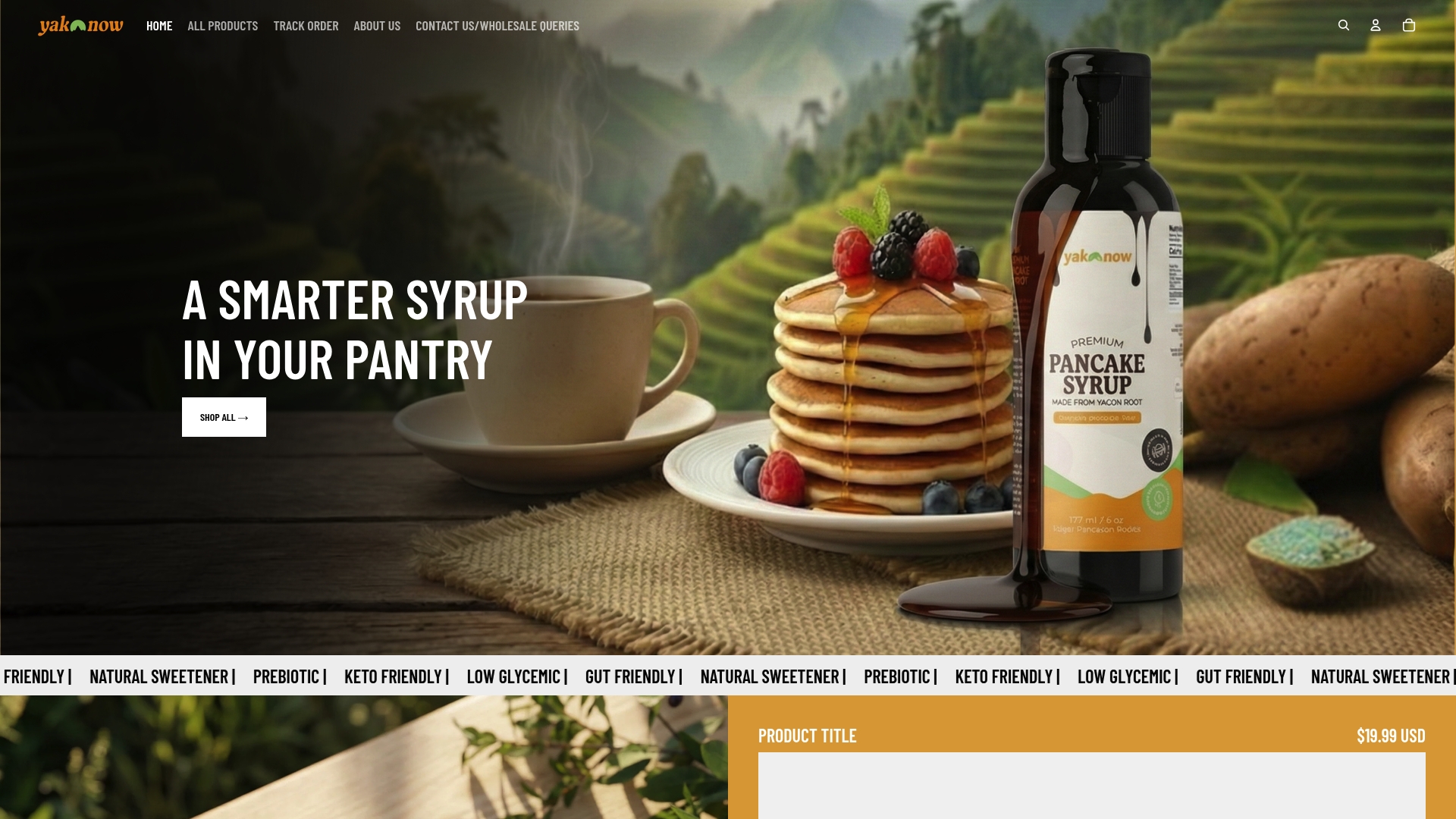
For a family that goes through syrup fast, the pack of 4 keeps the pantry stocked without another mid-week grocery run, and the pack of 12 is built for households that genuinely never run out. If you’re just testing the waters, the single 6oz bottle is the easiest way to see if it earns a permanent spot next to your maple syrup, and the pack of 2 is a solid middle ground for busy weekday mornings.
Try it warm over waffles, stirred into plain yogurt with berries, or as a partial swap the next time you bake muffins. Pick up a bottle and see how it fits your own table.
Sources
- The Ultimate Guide to Honey Substitutes | Food Network
- Sweet taste, not just calories, dictates metabolic response | Yale News
- Are whole food sugars actually healthier? Experts weigh in on nutrition of dates, honey and more - ABC News
- Are ‘Natural’ Sweeteners Healthier Than Sugar? | University Hospitals
FAQ
What can vegans use instead of honey?
Maple syrup, agave nectar, date syrup, yacon syrup, brown rice syrup, molasses, and commercial vegan honey all work, with the right choice depending on whether you’re baking, sweetening tea, or making a glaze.
Is there vegan-friendly honey?
Yes. Several brands make apple juice or cane syrup based “honey” that mimics the color and texture of real honey without using any bee-derived ingredients.
What is the best replacement for honey?
Maple syrup is the most reliable all-purpose swap because it replaces honey 1:1 in most recipes, though yacon syrup is a good option for anyone wanting a lighter, family-friendly syrup with less impact on blood sugar.
Why can’t vegans eat honey?
Honey is made by bees, which makes it an animal product, and that places it outside a vegan diet regardless of how it’s harvested or sourced.