

What Is Clean Keto Eating? A Practical Guide
Clean keto eating is defined as a ketogenic diet built around whole, minimally processed, nutrient-dense foods rather than simply hitting macronutrient targets. Where standard or “dirty” keto permits processed convenience foods as long as carbs stay low, clean keto treats food quality as a non-negotiable. The macronutrient structure stays the same: roughly 5% carbohydrates, 70–80% fat, and 20–30% protein. The difference is what fills those numbers. Grass-fed beef, wild-caught fish, avocado, olive oil, and non-starchy vegetables replace processed meats, seed oils, and packaged keto snacks. The result is a diet that delivers ketosis and the micronutrients, fiber, and anti-inflammatory compounds your body needs to thrive long term.
What is clean keto eating, and how does it differ from dirty keto?
Clean keto and dirty keto share identical macro targets. The split comes down entirely to food quality. Healthline describes clean keto as a focus on grass-fed beef, wild fish, eggs, olive oil, and non-starchy vegetables, while dirty keto allows processed convenience foods that technically fit the carb count. That distinction matters more than it sounds.
Dirty keto can keep you in ketosis while leaving you short on magnesium, potassium, B vitamins, and fiber. Clean keto closes that gap by choosing foods that carry nutrients alongside their fat and protein. Think of it this way: a fast-food bacon cheeseburger without the bun and a plate of salmon with roasted broccoli in olive oil both fit dirty keto macros. Only one of them actually feeds your cells.
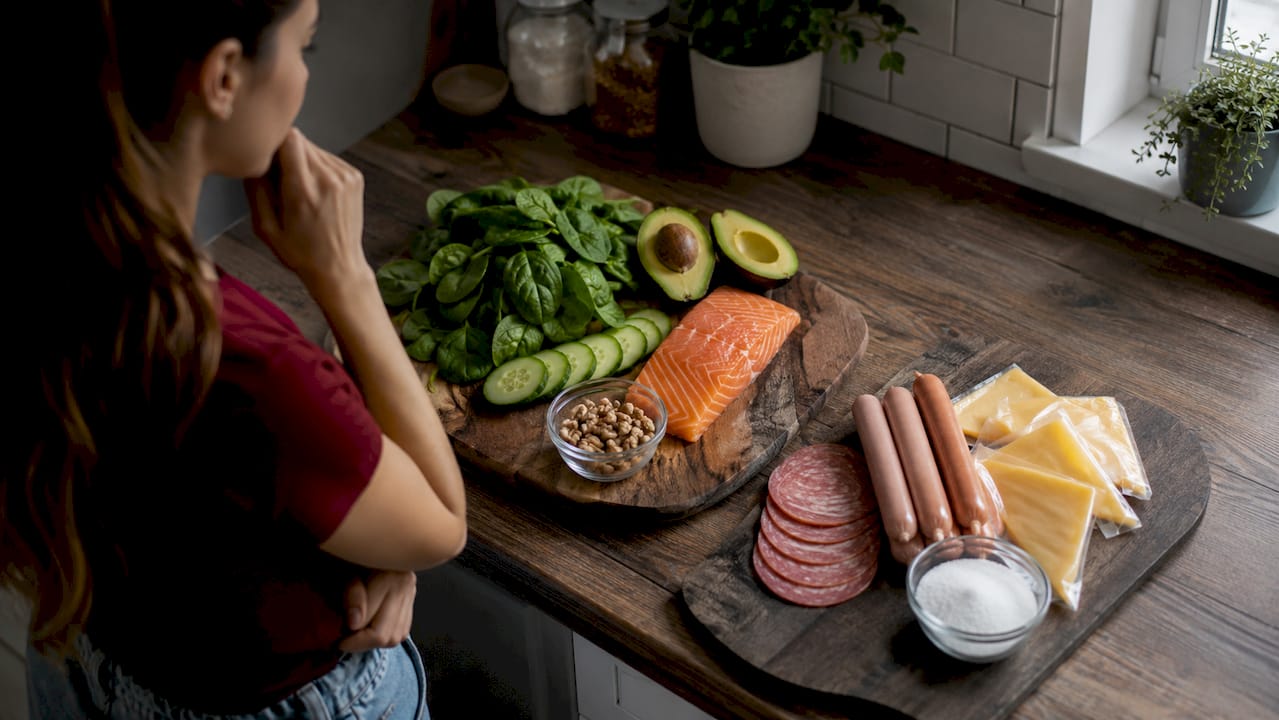
The term “clean keto” is not a clinical designation. Clinically, ketogenic diets are defined by carbohydrate restriction. Clean keto is a quality overlay applied on top of that carb goal. Recognizing this distinction helps you avoid treating it as a rigid rulebook and instead use it as a practical framework.
What to eat on clean keto: the full food list
Clean keto centers on a short list of whole foods that are naturally low in carbohydrates and high in nutrients.
Foods to prioritize:
- Proteins: grass-fed beef, pasture-raised eggs, wild-caught salmon and sardines, organic chicken thighs
- Fats: extra-virgin olive oil, avocado, avocado oil, coconut oil, grass-fed butter, ghee
- Vegetables: spinach, kale, zucchini, broccoli, cauliflower, asparagus, cucumber, bell peppers
- Nuts and seeds: macadamia nuts, almonds, walnuts, chia seeds, flaxseeds
- Dairy: full-fat Greek yogurt, hard cheeses, heavy cream (in moderation)
Foods to avoid or minimize:
- Processed meats with fillers, nitrates, or added sugars (many deli meats and sausages)
- Packaged “keto” bars, cookies, and chips made with artificial sweeteners or seed oils
- Low-quality fats like refined vegetable oils (canola, soybean, corn oil)
- Sweeteners with high glycemic impact or gut-disrupting effects
Net carb labeling on packaged products can be misleading. A packaged keto brownie might claim 2 grams of net carbs, but the sugar alcohols and fiber used to calculate that number do not always behave predictably in the body. Clean keto sidesteps this problem by choosing inherently low-carb whole foods where the carb count is straightforward.
Pro Tip: Build your grocery list from the perimeter of the store first. The produce section, meat counter, and dairy case cover 80% of a clean keto meal plan before you ever reach the packaged food aisles.
How do macronutrient targets work in clean keto?
Clean keto uses the same macro ratios as traditional ketogenic dieting. Perfect Keto outlines clean keto macros as approximately 5% carbohydrates, 70–80% fat, and 20–30% protein. These ratios push the body into ketosis, a metabolic state where fat becomes the primary fuel source instead of glucose.
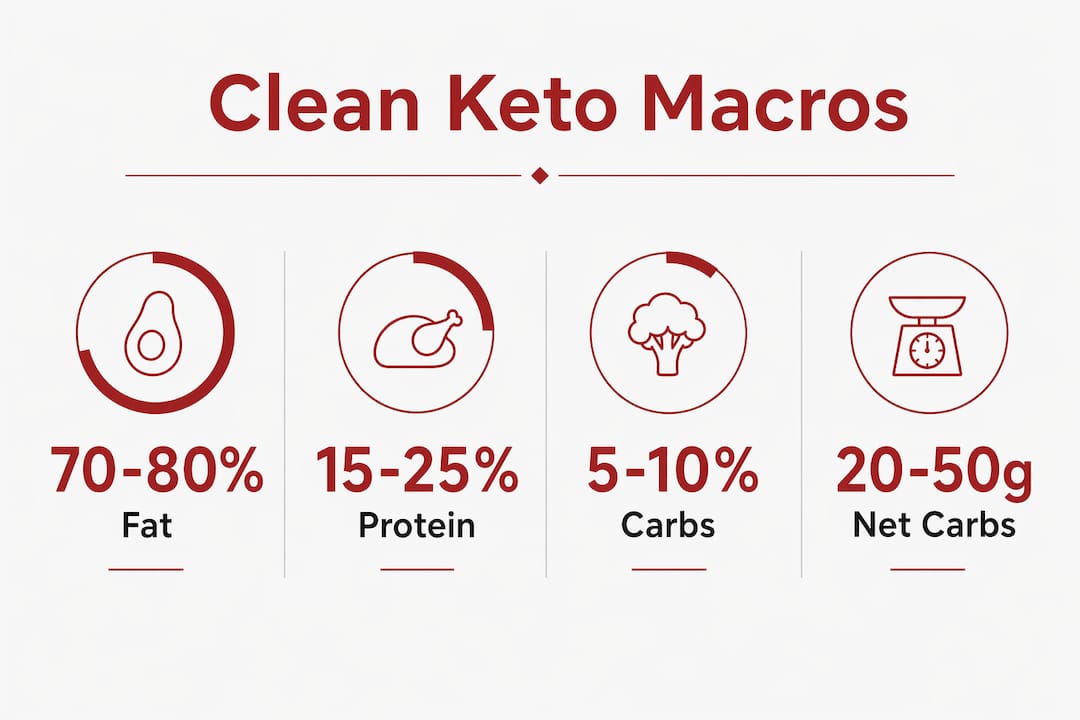
The carbohydrate ceiling is the most critical number. StatPearls confirms that ketosis requires restricting net carbs to 20–50 grams per day. Most people starting clean keto aim for the lower end of that range, around 20–25 grams, to reliably enter ketosis within the first week.
| Macronutrient | Clean Keto Target | Primary Food Sources |
|---|---|---|
| Fat | 70–80% of calories | Olive oil, avocado, nuts, grass-fed butter |
| Protein | 20–30% of calories | Eggs, wild fish, grass-fed beef, chicken |
| Carbohydrates | ~5% of calories (20–50g net) | Leafy greens, broccoli, zucchini, peppers |
The practical order of operations matters. Start by choosing your whole-food proteins and fats, then add non-starchy vegetables for volume and fiber, and finally check whether your macros land in the right range. Most people who build meals this way hit their targets naturally without obsessive tracking. Dirty keto reverses this logic: it starts with the macro target and fills it with whatever fits, quality aside.
What are the health benefits of clean keto eating?
The most significant advantage of clean keto over dirty keto is micronutrient adequacy. Healthline notes that clean keto improves fiber and micronutrient intake compared to dirty keto because it replaces ultra-processed foods with whole-food sources. Spinach delivers magnesium. Salmon delivers omega-3 fatty acids and vitamin D. Avocado delivers potassium. These nutrients do not show up in a bag of pork rinds.
The case against ultra-processed foods extends well beyond keto. A 2025 systematic review published in Springer Nature found that ultra-processed food intake is linked to a 15% higher risk of all-cause mortality in the highest versus lowest consumption groups. That finding reinforces why clean keto’s emphasis on minimizing processed foods aligns with the broader evidence on long-term health.
“Minimizing ultra-processed foods aligns clean keto with broader evidence on healthy diets lowering long-term risks.” — Springer Nature, 2025
Gut health is another area where clean keto’s food choices pay off. Fiber from non-starchy vegetables feeds beneficial gut bacteria, which dirty keto diets often starve. Reduced processed food intake also lowers exposure to emulsifiers and additives that research increasingly links to gut barrier disruption.
Electrolyte balance is the most overlooked factor in keto adaptation. Ketoframework recommends 3,000–5,000 mg of sodium and 300–500 mg of magnesium per day during keto adaptation. Carbohydrate restriction causes the kidneys to excrete more sodium, which pulls magnesium and potassium along with it. Fatigue, headaches, and muscle cramps during the first week of keto are almost always electrolyte symptoms, not signs that the diet is failing.
Pro Tip: Add a pinch of sea salt to your water and eat magnesium-rich foods like pumpkin seeds and dark leafy greens daily during your first two weeks on clean keto. This one habit prevents most adaptation discomfort.
How to start clean keto eating: a step-by-step approach
Starting clean keto works best with a structured sequence rather than a wholesale pantry overhaul on day one.
- Clear out the obvious disqualifiers. Remove refined sugars, bread, pasta, rice, and packaged snack foods. This single step cuts most people’s carb intake dramatically before they add anything new.
- Stock whole-food staples. Fill your refrigerator with eggs, avocados, leafy greens, a quality protein (salmon, chicken thighs, or grass-fed ground beef), and a good fat source like extra-virgin olive oil or grass-fed butter.
- Build your first three days of meals. A clean keto meal plan does not need to be complex. Scrambled eggs with spinach and avocado for breakfast, a large salad with grilled chicken and olive oil for lunch, and salmon with roasted broccoli for dinner covers all three macros cleanly.
- Track net carbs for the first week. Apps like Cronometer or Carb Manager make this straightforward. The goal is to confirm you are staying under 25–30 grams of net carbs daily until you understand which foods fit naturally.
- Manage electrolytes proactively. Do not wait for symptoms. Salt your food generously, eat potassium-rich vegetables, and consider a magnesium glycinate supplement if cramping appears.
- Audit your progress at day 14. By this point, most people have adapted to fat burning. Clean keto adherence works best as a consistent pattern over time, not a perfect streak. If you had a less-than-ideal meal, return to whole foods at the next one.
Clean keto snacks follow the same logic as meals: whole food first. Hard-boiled eggs, a handful of macadamia nuts, celery with almond butter, or full-fat cheese with cucumber slices all work. Packaged keto snacks are a last resort, not a staple.
Pro Tip: Meal prep two proteins on Sunday, such as baked salmon and hard-boiled eggs, and keep pre-washed greens in the refrigerator. Having ready-to-eat clean keto components on hand eliminates the decision fatigue that drives most people toward processed shortcuts.
Key Takeaways
Clean keto eating succeeds when food quality drives every meal decision, not just carbohydrate counts.
| Point | Details |
|---|---|
| Quality over macros | Clean keto uses the same macro ratios as traditional keto but requires whole, minimally processed foods. |
| Carb ceiling is fixed | Net carbs must stay at 20–50 grams per day to maintain ketosis regardless of food quality. |
| Electrolytes are critical | Sodium (3,000–5,000 mg) and magnesium (300–500 mg) daily prevent most adaptation symptoms. |
| Avoid processed “keto” products | Packaged keto items with misleading net carb labels undermine the nutrient-density goal of clean keto. |
| Pattern beats perfection | Long-term clean keto success comes from consistent whole-food choices, not a flawless daily record. |
Why food quality in keto matters more than most people admit
I have watched a lot of people try keto and stall out within six weeks. Almost none of them failed because they ate too much fat. They failed because they built their diet around processed keto substitutes, ignored electrolytes, and treated the diet as a macro math problem rather than a food quality commitment.
The dirty keto approach is seductive because it requires less planning. You can technically stay in ketosis eating fast food without the bun and drinking diet soda. But the fatigue, brain fog, and cravings that people blame on keto itself are usually the result of micronutrient gaps and gut stress from ultra-processed ingredients. When those same people switch to whole foods, the symptoms disappear.
The sustainability argument for clean keto is also stronger than people give it credit for. Whole foods are more satiating gram for gram than processed alternatives. A meal of salmon, roasted vegetables, and avocado keeps hunger at bay for hours. A bag of keto chips does not. Satiety is the single biggest predictor of long-term dietary adherence, and clean keto wins that comparison decisively.
My honest advice: do not aim for perfection. Aim for a pattern where at least 80–90% of your meals come from whole, recognizable ingredients. That standard is achievable in real life, sustainable across months and years, and far more effective than chasing a flawless streak that breaks the moment you travel or have a busy week.
— Celeste
Yakonow and the clean keto breakfast table
One of the hardest parts of clean keto for families is finding a sweetener that fits the diet without compromising on quality or taste. Yakonow yacon syrup is hand-harvested from yacon root in Peru and contains a glycemic index of just 1, compared to 54 for maple syrup. It carries up to 50g of prebiotic FOS fiber per 100g, zero added sugar, and no artificial sweeteners or colorants.

Yakonow fits naturally into a clean keto breakfast: drizzled over almond flour pancakes, stirred into full-fat Greek yogurt, or added to a smoothie bowl. For families who want the ritual of a sweet morning table without the blood sugar spike, it is a genuinely clean option. A single bottle of Yakonow is a low-commitment way to try it, and a family pack of four keeps the pantry stocked for busy weeks.
FAQ
What is the difference between clean keto and dirty keto?
Clean keto and dirty keto share the same macronutrient ratios but differ entirely on food quality. Clean keto requires whole, minimally processed foods, while dirty keto allows processed convenience foods as long as carbs stay within the ketogenic range.
How many carbs can you eat on clean keto?
Clean keto restricts net carbohydrates to 20–50 grams per day to induce and maintain ketosis. Most people start at the lower end of that range, around 20–25 grams, for reliable results.
Is clean keto healthy long term?
Clean keto is considered a healthier long-term approach than dirty keto because it prioritizes micronutrient-rich whole foods and minimizes ultra-processed food intake, which research links to elevated mortality risk. Electrolyte management and food variety are the main factors to monitor over time.
What are the best clean keto snacks?
The best clean keto snacks are whole-food options: hard-boiled eggs, macadamia nuts, full-fat cheese, celery with almond butter, or cucumber slices. These deliver fat and protein without the misleading net carb labels found on packaged keto products.
Do you need to track macros on clean keto?
Tracking net carbs for the first two weeks helps confirm you are staying within the 20–50 gram daily limit. After that, most people who prioritize whole foods hit their macro targets naturally without detailed daily tracking.