

The Dawn Phenomenon: What It Means for Your Morning Blood Sugar
The dawn phenomenon is an early-morning rise in blood glucose that many people with diabetes experience, typically between 3 a.m. and 8 a.m., caused by a natural surge of hormones rather than anything eaten the night before. According to the Mayo Clinic, it is one of the most common reasons for unexplained morning hyperglycemia. Before changing any medication, the first step is to check overnight glucose data, either through a continuous glucose monitor (CGM) or scheduled fingerstick readings at 2–3 a.m. for several nights, and then review the pattern with your clinician.
Immediate steps to take:
- Check your CGM trend overnight, or do a fingerstick at 2–3 a.m. for three to seven nights.
- Log bedtime, 2–3 a.m., and pre-breakfast readings each day.
- Do not adjust basal insulin or other medications until you have reviewed the pattern with your care team.
- Rule out nocturnal hypoglycemia before assuming the cause is the dawn phenomenon.
Pro Tip: If you are a caregiver checking a child or family member overnight, set a quiet vibrating alarm rather than a loud one. Write down the exact time and reading immediately so the data is accurate for your clinician.
Table of Contents
- Who gets morning blood sugar spikes, and when do they happen?
- What actually causes the dawn phenomenon?
- How do you tell the dawn phenomenon from the Somogyi effect?
- How do clinicians confirm the dawn phenomenon?
- What are the most effective ways to manage the dawn phenomenon?
- What clinicians want you to know before adjusting your regimen
- Everyday steps that help keep morning glucose steady
- What happens when the dawn phenomenon goes unmanaged?
- Does what you eat in the evening affect the dawn phenomenon?
- Can medications other than insulin help with the dawn phenomenon?
- Key Takeaways
- Steady mornings are worth protecting
- Yakonow: a low-glycemic start to your steadiest mornings
- Useful sources to share with your clinician
Who gets morning blood sugar spikes, and when do they happen?
The dawn phenomenon is more common than most people realize. Cleveland Clinic data puts prevalence estimates above 50% for both type 1 and type 2 diabetes in several studies. That means if you are waking up with higher glucose than your bedtime reading, you are far from alone.
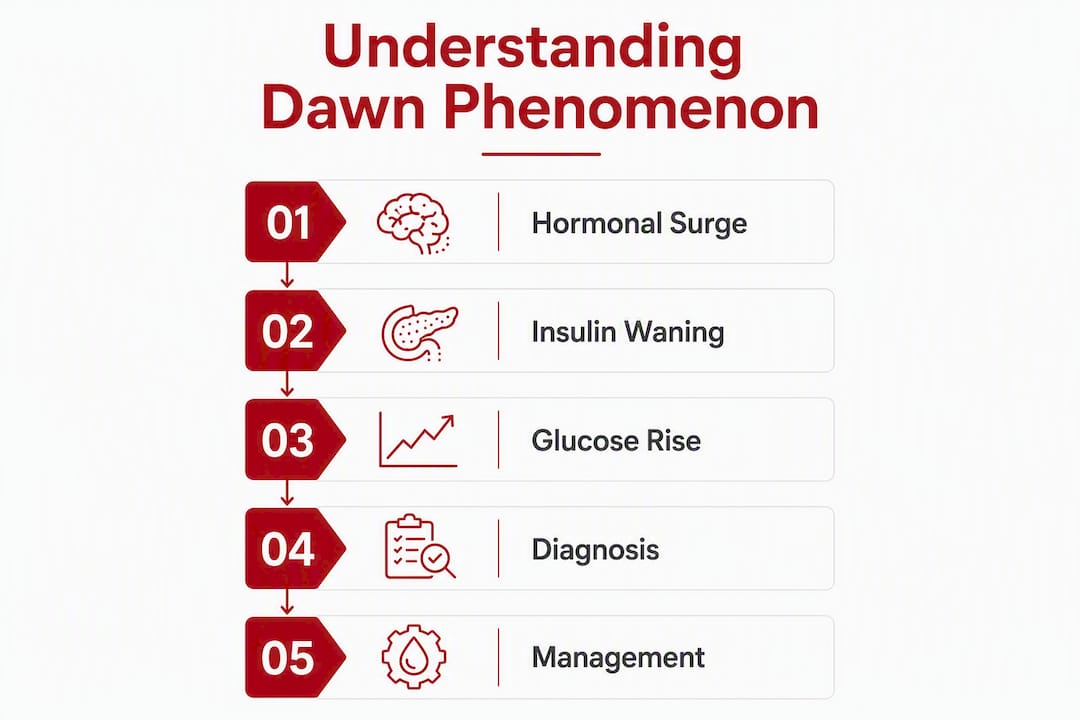
The typical window runs from roughly 3 a.m. to 8 a.m., with the sharpest rise often occurring between 4 a.m. and 8 a.m. What makes it tricky is that most people feel nothing. There is no headache, no sweating, no obvious diabetes morning symptom to flag it. The only signal is a consistently elevated pre-breakfast reading on your glucose meter or a rising CGM curve in the early hours.
Signs that point to the dawn phenomenon:
- Pre-breakfast glucose is regularly higher than your bedtime reading.
- The pattern repeats across multiple mornings, not just one or two.
- Overnight readings at 2–3 a.m. are normal or slightly elevated, not low.
- No obvious dietary cause (late-night snacks, extra carbs at dinner).
Prevalence note: Studies consistently show the dawn phenomenon affects more than half of people with either type 1 or type 2 diabetes, making it one of the most clinically significant contributors to morning hyperglycemia.
What actually causes the dawn phenomenon?

Every morning, your body releases a wave of hormones to prepare for the day. In people without diabetes, the pancreas responds with a matching insulin surge that keeps glucose steady. In people with diabetes, that compensatory response is impaired or absent, so glucose climbs.
The four main counter-regulatory hormones involved are:
- Growth hormone: Released in pulses during deep sleep, it reduces the body’s sensitivity to insulin and signals the liver to release stored glucose.
- Cortisol: Rises steadily in the early morning hours, increasing hepatic glucose production and insulin resistance.
- Glucagon: Stimulates the liver to convert glycogen into glucose and release it into the bloodstream.
- Epinephrine (adrenaline): Contributes to reduced insulin sensitivity and increased glucose output from the liver.
Alongside these hormonal shifts, long-acting insulin injected the evening before may be waning by 3–4 a.m., leaving less coverage precisely when the liver is most active. Insulin pumps can address this directly by programming a higher basal rate for those early hours, which is one reason device-based management often outperforms injection timing alone.
People without diabetes never notice this hormonal surge because their beta cells simply produce more insulin on demand. That option is not available when beta cell function is lost or impaired, which is why the dawn phenomenon is a diabetes-specific problem.

How do you tell the dawn phenomenon from the Somogyi effect?
This distinction matters more than most people appreciate. The Somogyi effect is a rebound high caused by nocturnal hypoglycemia: glucose drops too low overnight, the body over-corrects with stress hormones, and you wake up with a high reading. The dawn phenomenon, by contrast, is never preceded by a low. Both produce elevated morning glucose, but the treatment for each is essentially the opposite.
If you treat a Somogyi-driven high by raising your basal insulin, you risk making the overnight low worse. That is the danger of guessing.
The American Diabetes Association is clear that assuming morning highs are always the dawn phenomenon can be misleading. Consistent monitoring before any medication change is non-negotiable.
How to tell them apart:
- Dawn phenomenon: — Bedtime glucose is normal, 2–3 a.m. reading is normal or slightly elevated, pre-breakfast reading is high.
Pro Tip: Print or screenshot three to seven nights of overnight readings and bring them to your next appointment. Clinicians can often identify the pattern in under two minutes when the data is laid out chronologically.
How do clinicians confirm the dawn phenomenon?
StatPearls/NCBI recommends CGM as the most effective tool for both diagnosing the dawn phenomenon and ruling out nocturnal hypoglycemia. A CGM captures the full overnight curve, which means you can see exactly when glucose starts rising, how steep the climb is, and whether any low preceded it. That context is impossible to get from a single morning fingerstick.
When CGM is not available, a structured fingerstick schedule works. Check at bedtime, at 2–3 a.m., and again before breakfast for three to seven consecutive nights. Log every reading with the time.
| Time of reading | Pattern seen | Likely cause |
|---|---|---|
| 2–3 a.m. normal or high, pre-breakfast high | Glucose rises from normal overnight | Dawn phenomenon |
| 2–3 a.m. low, pre-breakfast high | Low followed by rebound rise | Somogyi effect |
| Gradual rise from bedtime through morning | Steady climb with no low | Waning basal insulin |
| Elevated at bedtime and morning | High all night | Evening meal or dose timing |
For clinicians without CGM access, a validated formula described by Monnier and colleagues uses pre-breakfast, pre-lunch, and pre-dinner glucose values to estimate the magnitude of the dawn phenomenon from intermittent SMBG data, a useful option when device access is limited.
Before acting on any pattern:
- Collect at least three to five nights of data before drawing conclusions.
- Share the full log with your clinician, not just the morning number.
- Never adjust insulin based on a single overnight reading.
Understanding why daily monitoring matters for people with diabetes goes beyond the dawn phenomenon, but this is one of the clearest examples of why a single data point can mislead.
What are the most effective ways to manage the dawn phenomenon?
Management depends on the type of diabetes, current therapy, and how significant the morning rise is. The diaTribe resource on morning blood sugar outlines several approaches that clinicians commonly use, from simple timing adjustments to device-based solutions.
Clinician-led medication strategies:
- Shift long-acting insulin from dinnertime to bedtime to extend coverage into the early morning hours.
- Increase the basal rate on an insulin pump specifically during the 3–8 a.m. window.
- Consider an automated insulin delivery (AID) system, which adjusts basal rates in real time based on CGM readings and is especially effective at blunting early-morning rises.
Lifestyle adjustments that can help:
- Avoid carbohydrate-heavy snacks within two hours of bedtime.
- Take a 10–15 minute walk after dinner. Even a short post-dinner walk can reduce the overnight glucose load the liver has to manage.
- Eat dinner earlier when possible, giving the body more time to process the meal before sleep.
Oral diabetes medications generally have limited impact on isolated dawn phenomenon because the mechanism is hormonal and hepatic, not primarily driven by post-meal glucose. Targeted insulin strategies, whether through timing or devices, are usually required.
Pro Tip: Trial one change at a time and monitor for at least five to seven nights before evaluating whether it worked. Changing insulin timing and dinner composition simultaneously makes it impossible to know which adjustment made the difference.
What clinicians want you to know before adjusting your regimen
The single most important caution in managing the dawn phenomenon is this: do not increase basal insulin without first confirming there is no nocturnal hypoglycemia. Raising a long-acting dose to cover a morning high that is actually Somogyi-driven can cause dangerous overnight lows.
StatPearls/NCBI frames the dawn phenomenon as a distinct clinical entity that often warrants interprofessional evaluation because, left unaddressed, it can worsen HbA1c over time. A pattern of morning highs that adds even 30–60 mg/dL above target across most mornings compounds meaningfully across weeks and months.
CGM is the preferred tool here not just for diagnosis but for ongoing safety. When you can see the full overnight trend, you and your clinician can make changes with confidence rather than guesswork. If you are considering switching CGM devices or wondering which system fits your situation, a practical overview of why people switch CGM devices can help frame that conversation.
Pro Tip: When sharing CGM data with your clinician, export the overnight report (typically midnight to 9 a.m.) for the past two weeks. Most CGM apps let you generate this as a PDF. That time window shows the dawn pattern most clearly and saves appointment time.
Clinical note: Prevalence estimates for the dawn phenomenon exceed 50% in people with both type 1 and type 2 diabetes, making it one of the most common contributors to elevated HbA1c that goes unaddressed simply because it happens while people are asleep.
Everyday steps that help keep morning glucose steady
Small, consistent habits can meaningfully reduce the severity of the dawn phenomenon, even if they rarely eliminate it entirely without medication support.
- Avoid carbohydrate-heavy snacks after 8 p.m. A handful of nuts or a small portion of protein is a better choice if hunger strikes late.
- Time dinner earlier when your schedule allows. Eating by 6:30 or 7 p.m. gives the body a longer window before the hormonal surge begins.
- Take a short walk after dinner, even 10–15 minutes. Post-meal movement reduces the glucose load carried into overnight hours.
- Keep sleep and wake times consistent. Irregular sleep patterns can amplify cortisol variability, which worsens the morning rise.
- Discuss a later basal timing with your clinician before making any dose changes.
For families building a steady morning breakfast routine, the evening choices matter just as much as what goes on the table at 7 a.m.
Pro Tip: If you are a caregiver managing overnight checks, use your CGM app’s alarm threshold feature to alert you only when glucose crosses a set level, rather than checking manually every night. This protects your sleep while keeping safety in place.
What happens when the dawn phenomenon goes unmanaged?
Persistent morning hyperglycemia is not a minor inconvenience. Each morning high adds to the day’s overall glucose exposure, and that accumulation shows up in HbA1c over time. For someone whose glucose is otherwise well-controlled through the day, an unaddressed dawn pattern can be the hidden reason their A1c stays stubbornly above target.
Long-term risks of recurring morning highs include:
- Higher average glucose exposure, which contributes to cardiovascular, kidney, and nerve complications over years.
- Reduced time in range, a metric increasingly used alongside HbA1c to assess diabetes control.
- Psychological frustration when morning numbers seem disconnected from effort and diet.
The outlook with proper management is genuinely positive. Targeted basal adjustments, AID systems, and consistent lifestyle habits can bring morning glucose into range for most people. Type 1 diabetes tends to show a more pronounced dawn phenomenon because of complete insulin deficiency, while type 2 often involves a combination of insulin resistance and partial beta cell function, making the pattern somewhat more variable but still responsive to the same strategies.
Does what you eat in the evening affect the dawn phenomenon?
Yes, though the relationship is more about reducing the overnight glucose load than directly suppressing the hormonal surge. A high-carbohydrate dinner raises glucose into the evening, and if that glucose has not fully cleared by the time the hormonal wave begins at 3–4 a.m., the morning high is compounded.
Practical evening food choices that tend to help:
- Prioritize protein and non-starchy vegetables at dinner to reduce the post-meal glucose peak.
- Limit refined carbohydrates and sugary desserts after 7 p.m.
- If a bedtime snack is needed, choose something with minimal glucose impact: a small amount of cheese, nuts, or a low-glycemic option.
Understanding how carbohydrates rank on the glycemic index can help families make smarter evening choices without turning dinner into a clinical exercise.
Can medications other than insulin help with the dawn phenomenon?
For people with type 2 diabetes, some non-insulin therapies do address morning glucose, though their effect on the dawn phenomenon specifically is more limited than their overall glucose-lowering action.
GLP-1 receptor agonists (such as semaglutide or liraglutide) reduce hepatic glucose production and slow gastric emptying, which can blunt the morning rise indirectly. They are not a targeted dawn phenomenon treatment, but people using them often see improved fasting glucose as part of broader glycemic control.
SGLT-2 inhibitors lower the renal glucose threshold and reduce overall glucose levels, which may modestly reduce morning highs, but again, they do not directly address the hormonal mechanism.
Metformin reduces hepatic glucose output and is often a first-line agent in type 2 diabetes, but its effect on the isolated dawn phenomenon is modest at best.
The honest summary: oral agents and non-insulin injectables can contribute to better overall control, but when the dawn phenomenon is the primary driver of morning highs, insulin timing or device-based strategies remain the most direct solution.
Key Takeaways
The dawn phenomenon is a hormonally driven early-morning blood glucose rise that affects more than half of people with diabetes and requires overnight pattern confirmation before any medication change.
| Point | Details |
|---|---|
| What it is | An early-morning glucose rise (roughly 3–8 a.m.) caused by counter-regulatory hormones, not food. |
| First step | Check CGM trends or do fingersticks at 2–3 a.m. for three to seven nights before drawing conclusions. |
| Distinguish from Somogyi | A low at 2–3 a.m. suggests Somogyi effect; a normal or high reading points to dawn phenomenon. |
| Management options | Adjust basal insulin timing, consider an AID system, and trial evening lifestyle changes one at a time. |
| Yakonow at breakfast | Once your morning routine is stable, Yakonow yacon syrup (glycemic index of 1) is a low-glycemic, family-friendly way to sweeten breakfast without spiking glucose. |
Steady mornings are worth protecting
There is something quietly powerful about a calm morning at the table. Pancakes on a slow Saturday, oatmeal drizzled with something sweet, the whole family still in pajamas. For families managing diabetes, getting to that moment without the shadow of an unexplained high reading is not a small thing. It is the whole point of doing the work.
The dawn phenomenon is manageable. It takes a few nights of careful data collection, a conversation with your clinician, and sometimes a small adjustment to insulin timing or your evening routine. Once the pattern is identified and addressed, mornings tend to settle.
When they do, the table is waiting. Yakonow yacon syrup, hand-harvested from Peruvian yacon root and bottled in Texas, has a glycemic index of just 1 and up to 50g of prebiotic FOS fiber per 100g. It is the kind of pantry detail that fits quietly into a stable, low-glycemic morning without asking anything of you. Drizzled over waffles or stirred into yogurt, it is simply a sweeter way to gather. You can read more about yacon syrup and diabetes to understand how it fits into a thoughtful routine.
Share your overnight CGM data with your clinician. Make the adjustment. Then come back to the table.
Yakonow: a low-glycemic start to your steadiest mornings

Once your clinician has helped you bring morning glucose into range, breakfast becomes something to look forward to again. Yakonow yacon syrup is made from a single ingredient, pure Peruvian yacon root, with a glycemic index of just 1 compared to 54 for maple syrup. No added sugar, no artificial sweeteners, no glucose. Just a naturally sweet syrup with prebiotic FOS fiber that the whole family can use.
It is not a treatment. It is the small, beautiful detail that makes a steady morning feel like a celebration. Available in a single 6oz squeezable bottle, a pack of two for busy family mornings, or a pack of four for the family that never runs out. Try Yakonow at your next slow morning.
Useful sources to share with your clinician
These are the most credible publicly accessible references on the dawn phenomenon. Bring them, or your CGM export, to your next appointment.
- Dawn Phenomenon — StatPearls/NCBI Bookshelf: Peer-reviewed clinical overview covering definition, physiology, evaluation strategy, and treatment options.
- Dawn Phenomenon — Cleveland Clinic: Patient-friendly explanation of causes, prevalence, and management with clinician-reviewed content.
- Somogyi Effect — Cleveland Clinic: Explains the rebound hyperglycemia mechanism and how it differs from the dawn phenomenon.
- High Morning Blood Glucose — American Diabetes Association: ADA guidance on the two main causes of morning highs and the recommended clinical approach.
- The Dawn Phenomenon — Mayo Clinic: Concise definition, typical timing, and practical management options including pump use.
- How to Lower Morning Blood Sugar — diaTribe: Real-world management tips including lifestyle adjustments and AID system considerations.
This article is general health information, not medical advice. Confirm any changes to your diabetes management with your healthcare team.