

Pre-Diabetic Diet Breakfast Checklist for Steady Mornings
A pre-diabetic diet breakfast checklist is defined as a structured set of food and timing guidelines designed to keep blood sugar stable from the first meal of the day. The three pillars are high-quality protein, fiber-rich whole foods, and healthy fats. Together, they slow glucose absorption and set a calm metabolic tone for the hours ahead. Getting breakfast right does not require a clinical overhaul. It requires a few good habits, repeated gently, morning after morning.
1. Which foods belong on a pre-diabetic breakfast checklist?
The balanced breakfast plate recommended for pre-diabetes follows a simple ratio: 50% non-starchy vegetables, 25% lean protein, and 25% complex carbohydrates. That ratio is not arbitrary. It limits the carbohydrate load at the meal most people historically load with refined grains and sugar.
Protein sources to reach for:
- Eggs (scrambled, poached, or baked into muffin cups)
- Plain Greek yogurt (full-fat or low-fat, unsweetened)
- Cottage cheese
- Tofu or tempeh for plant-based mornings
Fiber-rich foods that earn their place:
- Steel-cut oats (not instant packets, which often carry hidden sugar)
- Chia seeds stirred into yogurt or overnight oats
- Spinach, mushrooms, and bell peppers sautéed into eggs or wraps
Healthy fats that slow the glucose curve:
- Avocado sliced over toast or eggs
- A small handful of walnuts or almonds
- Nut butter on whole-grain toast
Many popular granolas and flavored oat packets contain hidden refined carbs that spike blood sugar quickly. Swapping them for whole-food versions is one of the highest-return changes you can make. High-fiber foods are defined as those with at least 3g of fiber per serving. That number is worth checking on any label you pick up.
Pro Tip: Eat your protein or vegetables first, before the carbohydrates on your plate. Food sequence measurably lowers post-meal blood sugar spikes by slowing how fast glucose enters the bloodstream.
2. How does meal prep support a pre-diabetic breakfast routine?
Meal prepping is the single most reliable way to stay consistent with a pre-diabetic breakfast plan. When the right food is already made and waiting, the morning decision is easy. When it is not, the nearest convenient option usually wins, and that option is rarely the one you want.
Here are four prep strategies that work well for busy mornings:
-
Egg muffin cups. Whisk eggs with spinach, mushrooms, and a little cheese. Pour into a muffin tin and bake. Store in the fridge for up to four days. Two or three cups plus a piece of fruit is a complete, balanced plate in under two minutes.
-
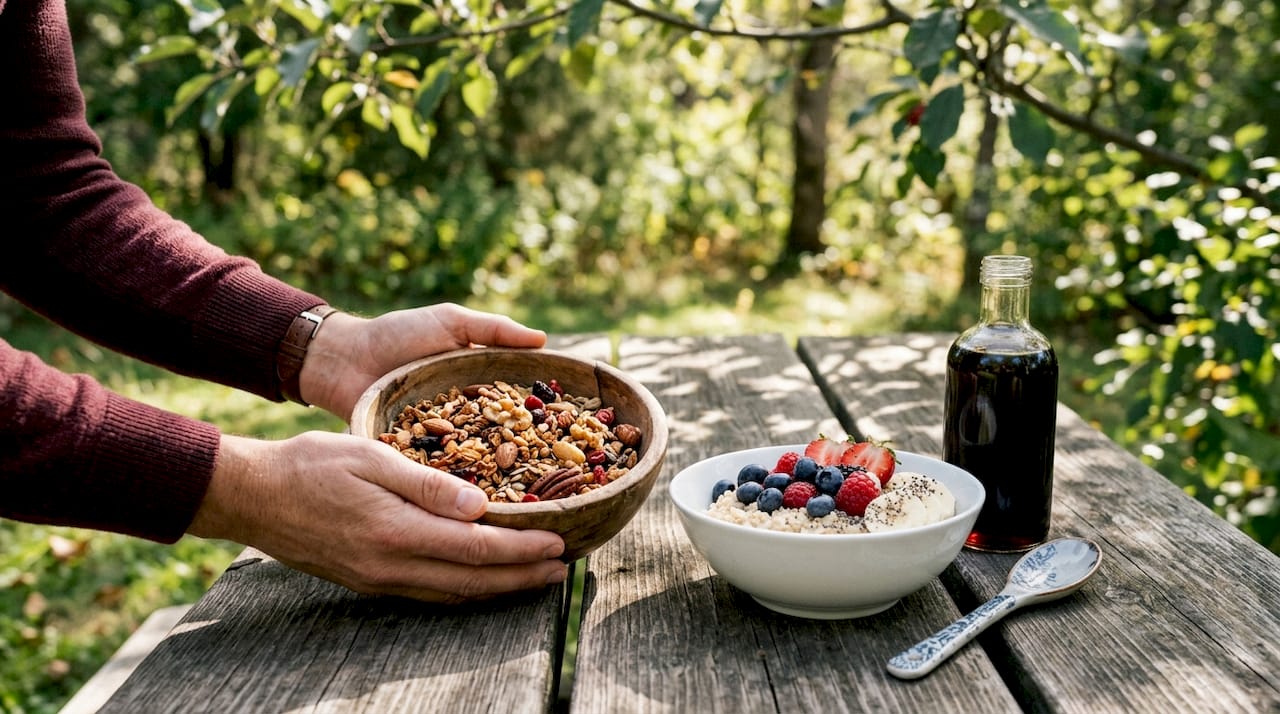
High-protein overnight oats. Combine steel-cut or rolled oats with plain Greek yogurt, chia seeds, and a splash of milk. Aim for roughly 20g of protein and at least 9g of fiber per jar. Overnight oats prepared this way support fullness and steady blood sugar through the morning.
-
No-cook backup jars. On days when prep did not happen, a jar of plain Greek yogurt with pre-portioned walnuts and a few berries keeps blood sugar steady without any cooking. Keep the nuts in a small bag in the pantry so the assembly takes thirty seconds.
-
Low-carb wraps, ready to fill. Whole-grain or low-carb tortillas stored with pre-cooked scrambled eggs and roasted vegetables make a fast, satisfying wrap. Reheat the filling, roll, and go.
Pro Tip: Drizzle Yakonow yacon syrup over your overnight oats or morning pancakes instead of honey or maple syrup. With a glycemic index of just 1 compared to 54 for maple syrup, it adds natural sweetness without the blood sugar spike. It also carries prebiotic fiber, which supports gut health alongside blood sugar management.
Meal prepping reduces what researchers call decision fatigue. When you have already decided what breakfast looks like, you remove the moment of weakness that sends most people toward the cereal box. Make-ahead breakfasts also make it easier to maintain consistent protein and fiber intake across the week, which matters more than any single perfect morning.
3. What role does breakfast timing play in blood sugar control?
Timing is the quiet variable most pre-diabetic breakfast guides skip. Eating breakfast by 8:30 a.m. aligns with the body’s natural circadian rhythm and has been linked to lower blood sugar, improved insulin sensitivity, and reduced inflammation markers. That is a meaningful return for simply eating earlier.
The science behind this is called chrononutrition. A chrononutritional approach means timing carbohydrate intake to match the body’s metabolic peaks, which occur earlier in the day. Eating most of your carbohydrates at breakfast rather than dinner works with your biology, not against it.
A few morning habits that support this:
- Eat within one hour of waking, even if the meal is small
- Pair carbohydrates with protein and fat at every breakfast to slow glucose absorption
- Limit fruit juice to half a cup; whole fruit with its fiber is always the better choice
- Keep the morning calm. Stress raises cortisol, and cortisol raises blood sugar
“Small, sustainable adjustments and eating within an hour of waking help calm inflammation and promote good morning metabolic tone. The ritual of breakfast matters as much as the food on the plate.”
The ritual piece is real. Sitting down, even for ten minutes, with a warm plate and a quiet moment changes the hormonal context of the meal. Rushed eating raises stress hormones. A slower morning, with food you prepared and a table you set with care, is not just pleasant. It is metabolically different.
4. What are practical breakfast ideas that fit a pre-diabetic meal plan?
The following meals each meet the core checklist criteria: adequate protein, at least 3g of fiber, healthy fat, and limited refined carbohydrates. They also work for families, not just the person managing blood sugar.
- Veggie omelet with avocado. Two or three eggs with spinach, mushrooms, and bell pepper, served with half an avocado. Fast, filling, and naturally low in carbohydrates.
- Steel-cut oatmeal with cinnamon and walnuts. Cook a batch on Sunday. Reheat each morning and top with a small handful of walnuts, a pinch of cinnamon, and a drizzle of Yakonow yacon syrup for sweetness without the sugar load.
- Protein smoothie with spinach and berries. Blend plain Greek yogurt, a handful of spinach, frozen berries, and a tablespoon of chia seeds. The yogurt provides protein; the spinach and chia add fiber; the berries keep it bright and appealing for kids too.
- Scrambled egg and veggie wrap. Whole-grain or low-carb tortilla, scrambled eggs, roasted peppers, and a spoonful of salsa. Prep the eggs the night before for a two-minute assembly.
- Greek yogurt bowl with chia and walnuts. Plain Greek yogurt, one tablespoon of chia seeds, a small handful of walnuts, and fresh berries. No cooking required. Pairing carbs with protein and fat like this slows glucose absorption and improves the insulin response after the meal.
| Breakfast Idea | Protein Source | Fiber Source | Prep Time |
|---|---|---|---|
| Veggie omelet with avocado | Eggs | Spinach, bell pepper | 10 minutes |
| Steel-cut oats with walnuts | Greek yogurt (optional) | Oats, walnuts | 5 minutes (reheated) |
| Protein smoothie | Greek yogurt | Spinach, chia, berries | 5 minutes |
| Egg and veggie wrap | Scrambled eggs | Whole-grain tortilla, peppers | 5 minutes |
| Greek yogurt bowl | Greek yogurt | Chia seeds, walnuts | 2 minutes |
Every one of these options works for the whole table. The children eat the same food. The morning feels shared, not medicalized.
Key takeaways
A pre-diabetic breakfast built on protein, fiber, and healthy fat, eaten early and prepared ahead, is the most reliable way to keep blood sugar steady through the morning.
| Point | Details |
|---|---|
| Follow the balanced plate ratio | Build every breakfast with 50% non-starchy vegetables, 25% lean protein, and 25% complex carbs. |
| Eat within one hour of waking | Breakfast by 8:30 a.m. improves insulin sensitivity and lowers inflammation. |
| Prep ahead to stay consistent | Egg muffins, overnight oats, and no-cook yogurt jars remove the temptation of refined convenience foods. |
| Sequence your food | Eat protein or vegetables before carbohydrates to measurably reduce post-meal blood sugar spikes. |
| Choose whole-food sweeteners | Low-glycemic options like Yakonow yacon syrup add sweetness without the glucose spike of honey or maple syrup. |
What I have learned from rebuilding breakfast one morning at a time
The first thing most people do when they get a pre-diabetes diagnosis is panic about food. I understand that. The list of what to avoid feels longer than the list of what to eat, and the morning, which used to be automatic, suddenly feels like a test.
What I have seen work, again and again, is not a dramatic overhaul. It is one small shift at a time. Swapping the flavored oatmeal packet for steel-cut oats. Adding an egg to a breakfast that used to be just toast. Sitting down instead of eating standing over the sink.
The timing piece surprised me most. Eating earlier, calmly, and with some protein on the plate changes how the whole day feels. Blood sugar that starts steady tends to stay steadier. And when the morning has a ritual to it, even a simple one, it is easier to repeat.
The families I have seen do this well are not the ones who follow a perfect plan. They are the ones who made breakfast worth showing up for. A beautiful bowl, a good drizzle of something sweet, a few minutes together before the day starts. That is the habit that sticks.
— Celeste
A sweeter morning, without the spike
Changing what you eat at breakfast does not mean giving up the things that make the table feel warm. Pancakes on a slow Saturday, oatmeal with something sweet drizzled over it, yogurt that tastes like a treat rather than a prescription. Those moments matter.

Yakonow yacon syrup is hand-harvested from yacon root in Peru and bottled in an FDA-compliant facility in Texas. It carries a glycemic index of just 1 and up to 50g of prebiotic fiber per 100g, with zero added sugar and no artificial sweeteners. It drizzles beautifully over oatmeal, pancakes, and yogurt bowls, the same breakfasts on your checklist, without undoing the work you put into them. For families who want a steady supply, the pack of two bottles keeps the pantry ready for the week ahead. The table can still be a place of pleasure. Yakonow just makes that easier.
FAQ
What is the best breakfast for pre-diabetes?
The best breakfast for pre-diabetes combines lean protein, fiber-rich vegetables or whole grains, and a small amount of healthy fat. A veggie omelet with avocado or plain Greek yogurt with chia seeds and walnuts both meet these criteria.
How much fiber should a pre-diabetic breakfast include?
A pre-diabetic breakfast should include foods with at least 3g of fiber per serving. Steel-cut oats, chia seeds, and non-starchy vegetables are reliable sources that help slow glucose absorption.
Does eating breakfast early really affect blood sugar?
Yes. Eating breakfast by 8:30 a.m. aligns with the body’s circadian rhythm, which improves insulin sensitivity and reduces inflammation markers compared to eating later in the morning.
Can I use a sweetener on a pre-diabetic breakfast?
Low-glycemic sweeteners are a better choice than honey, maple syrup, or table sugar. Yakonow yacon syrup has a glycemic index of 1 and contains prebiotic fiber, making it a family-friendly option for oatmeal, pancakes, and yogurt.
How does meal prep help with pre-diabetes management?
Meal prepping removes the morning decision of what to eat, which reduces the chance of reaching for refined, high-carb convenience foods. Make-ahead breakfasts like egg muffin cups and overnight oats maintain consistent protein and fiber intake across the week.