

One Tablespoon of Yacon Syrup Has a Glycemic Load of 3 to 4
Yacon syrup carries a measured glycemic index of about 40, which puts it firmly in the low-glycemic category, and a single serving’s glycemic load is low enough that it is less likely to spike blood sugar compared to maple syrup or honey. That’s the acute, single-dose picture. Longer-term effects are murkier: a recent systematic review found no consistent overall change in fasting glucose across pooled trials, though some subgroups did see benefits over extended use. Yakonow’s own syrup fits into that low-GI category, which is worth knowing before you reach for the bottle at breakfast.
TL;DR:
- Yacon syrup has a measured glycemic index of about 40, classifying it as low-glycemic, and a typical serving has a glycemic load of around 3 to 4, making it unlikely to spike blood sugar.
- Clinical trials show that a single dose can reduce blood glucose and insulin levels within the first hour after eating, but long-term benefits are inconsistent across studies.
- Its high content of fructooligosaccharides means most of its fiber ferments in the gut, producing SCFAs that may support insulin sensitivity over weeks or months.
- The glycemic impact of yacon varies depending on the amount consumed, food pairing, and individual gut bacteria, so effects differ between individuals.
- Yacon syrup is safe for most but should be introduced gradually, especially for those with digestive sensitivities or on blood sugar medication, to minimize gastrointestinal discomfort.
Table of Contents
- What Is Yacon Syrup’s Glycemic Load, Exactly?
- Do Clinical Trials Confirm Yacon Lowers Blood Sugar?
- How Does the Fiber in Yacon Syrup Affect Blood Sugar?
- How Much Yacon Syrup Should You Use, and How Do You Calculate the Glycemic Load?
- What Are the Side Effects and Who Should Be Cautious?
- Publisher Perspective: How Yakonow Fits Into This Research
- The Editorial Take: What This Research Actually Means for Your Table
- Bring Yacon Syrup to Your Family’s Table
- Sources
What Is Yacon Syrup’s Glycemic Load, Exactly?
Glycemic index (GI) tells you how fast a food raises blood sugar compared to pure glucose, on a scale where glucose itself sits at 100. Glycemic load (GL) takes that number and multiplies it by how many actual grams of carbohydrate you’re eating in a real serving, then divides by 100. GI tells you the speed; GL tells you the dose. A food can have a high GI but a low GL if you only eat a small amount of it, which is exactly the situation with yacon syrup.
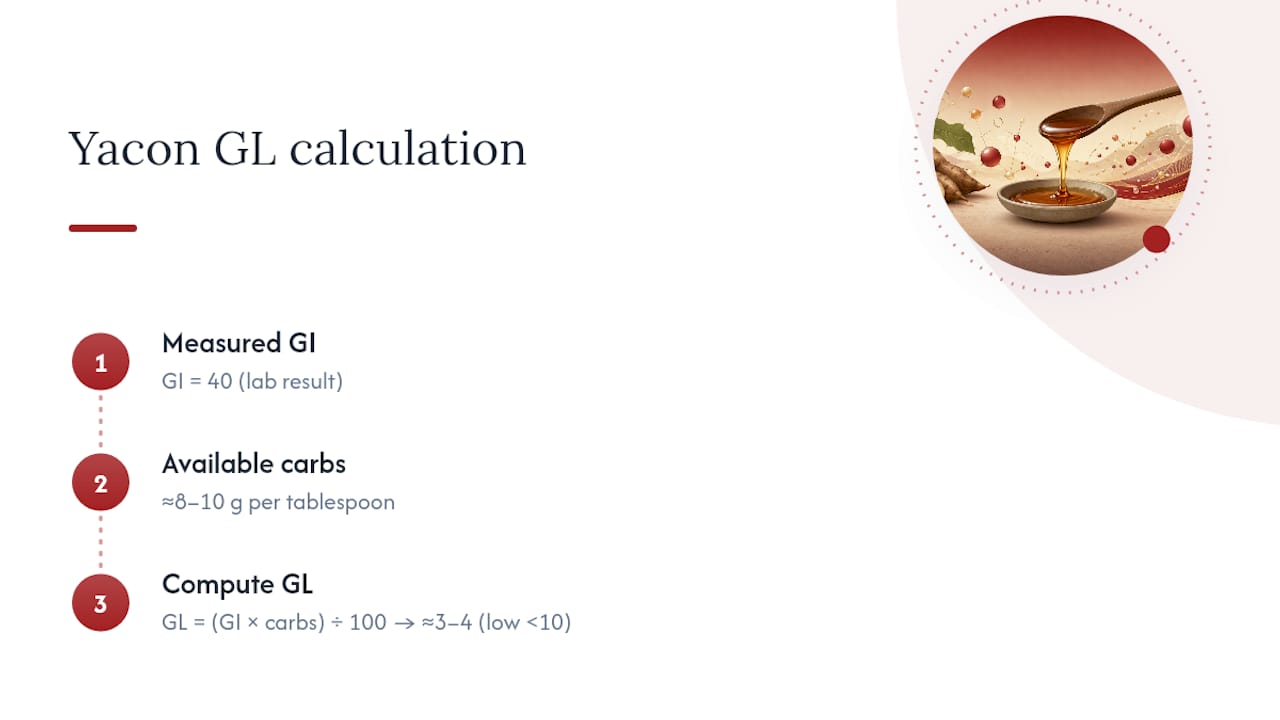
Laboratory testing has measured yacon concentrate at a GI of 40 ± 0.22, classifying it as low-glycemic under standard reference thresholds (low is typically anything under 55). This contrasts with other common sweeteners that typically have higher glycemic index values
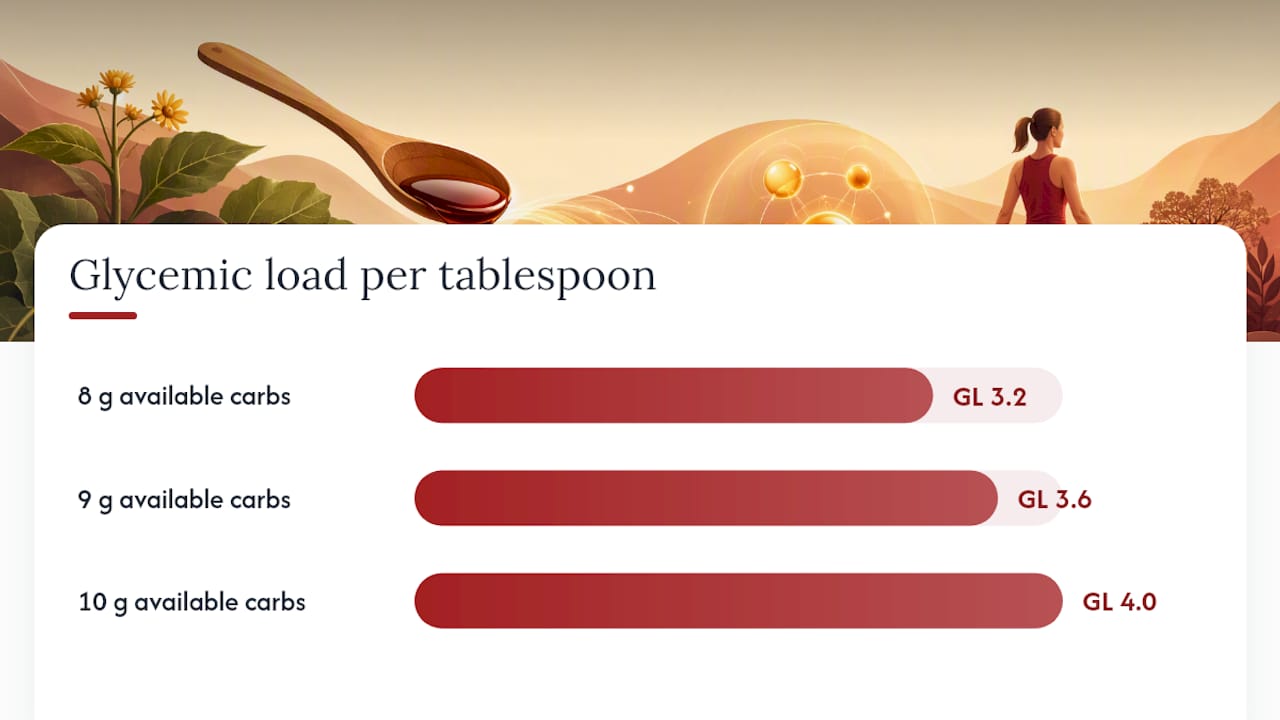
Here’s where GL matters more than GI alone. A tablespoon of yacon syrup (about 20 grams) contains roughly 13 grams of carbohydrate, but a meaningful portion of that is fructooligosaccharides, or FOS, which your body doesn’t digest the way it digests table sugar. If you estimate the available (digestible) carbohydrate at around 8 to 10 grams per tablespoon and run the math, GL = (GI × available carbs) ÷ 100, you land at a glycemic load of roughly 3 to 4 for a single tablespoon. That’s low. For comparison, a tablespoon of honey with 17 grams of digestible sugar and a GI near 60 gives you a GL closer to 10.
Fast fact: A GL under 10 per serving is generally considered low, 11 to 19 is medium, and 20 or above is high. Yacon syrup’s typical serving lands well inside the low range, even before you account for its prebiotic fiber content.
One caveat worth sitting with: GI numbers are not fixed constants. They shift depending on the reference food used, the concentration of the syrup tested, and the lab protocol. Testing services like Sydney University’s Glycemic Index Research Service run standardized assays precisely because small differences in sample preparation can move a reported GI up or down. So when you see a yacon product advertised with a GI of “1” or “5,” treat that as a marketing simplification rather than a lab-verified figure unless the brand shows its testing source.
Do Clinical Trials Confirm Yacon Lowers Blood Sugar?
The clinical picture splits cleanly into two timeframes, and conflating them is where a lot of confusion about yacon syrup starts.
The acute picture: what happens right after you eat it. A randomized, double-blind crossover trial published in Food Research International gave participants a 40-gram single dose of yacon syrup alongside breakfast and tracked their blood glucose and insulin against a placebo. The results were specific and measurable: postprandial glucose was reduced at a timepoint during the first hour, and insulin was lower at multiple timepoints within the first hour compared to the placebo group. That’s a real, timed physiological effect from one dose, in one sitting, in that study’s cohort.
The chronic picture: what happens after weeks of regular use. This is where the evidence gets more nuanced. A 2024 systematic review and meta-analysis pooled seven RCTs and found no significant overall effect on fasting blood glucose, insulin, or HOMA-IR (a marker of insulin resistance) when you average across all the trials. That sounds like a letdown after the promising acute data, but the subgroup analysis suggests that interventions lasting longer than a couple of months may show reductions in fasting glucose and LDL cholesterol in some populations, particularly older adults and women. One trial cited in that review used a multi-week protocol using a dosage normalized by body weight in obese women, and it showed reductions in fasting insulin and HOMA-IR by the end.
So why the mismatch between “one dose helps immediately” and “average results across all long-term trials show nothing”? A few likely explanations:
- Dose variability. Trials used different amounts of yacon syrup and different FOS concentrations, so pooling them together can wash out real effects that exist in higher-dose protocols.
- Population differences. Healthy women in an acute trial respond differently than obese adults in a 120-day intervention. Baseline metabolic health changes how much room there is for improvement.
- Gut microbiota variation. Individual differences in gut bacteria composition and habitual fiber intake likely explain why some people show a strong response to FOS fermentation and others show almost none. This isn’t yet something you can predict from the outside.
- Duration threshold. The benefits that do show up tend to cluster in interventions running longer than eight weeks, suggesting a single serving is more about avoiding a spike than triggering a metabolic overhaul.
The practical takeaway for anyone reading nutrition labels at the breakfast table: yacon syrup’s low glycemic load makes it a sensible substitute for higher-GI sweeteners on any given morning, but don’t expect a bottle in your pantry to function like a medication with predictable long-term metabolic effects. The research supports a real acute benefit and a plausible, though inconsistent, long-term one. It doesn’t support treating yacon syrup as yacon syrup as a treatment for diabetes on its own.
How Does the Fiber in Yacon Syrup Affect Blood Sugar?
Yacon root is unusually rich in fructooligosaccharides, a type of soluble fiber that your small intestine mostly can’t break down or absorb. That single fact explains almost everything else you need to know about why yacon syrup behaves differently than table sugar or maple syrup in your body.
Instead of being absorbed into your bloodstream the way glucose or sucrose is, FOS travels largely intact into your large intestine, where resident gut bacteria ferment it. That fermentation produces short-chain fatty acids (SCFAs), primarily acetate, propionate, and butyrate. These SCFAs aren’t just fermentation byproducts sitting around; they’re linked to signaling pathways involving GLP-1 and PYY, two hormones involved in appetite regulation and insulin sensitivity. The mechanistic thread here suggests that regular FOS fermentation may support better long-term insulin sensitivity, which lines up with the subgroup findings from longer trials mentioned above.
Here’s the part that matters for your own experience with the syrup:
- FOS doesn’t register as absorbable carbohydrate in the same way sugar does, which is part of why a tablespoon of yacon syrup produces a lower glycemic load than its total carb count might suggest.
- Fermentation happens in your gut, not your bloodstream, so the metabolic benefits (if any) show up on a slower timeline than a blood sugar spike would.
- Your personal gut microbiome composition, along with how much fiber you already eat, changes how much SCFA production you get from the same dose of FOS. Two people eating the same tablespoon of syrup can have meaningfully different experiences.
Pro Tip: If you’re new to yacon syrup, don’t judge it after one pancake breakfast. The fermentation-driven effects build over weeks, not minutes, so give your gut bacteria time to adjust before deciding whether it’s working for you.
For a deeper look at how this fiber behaves and why it’s counted differently on nutrition labels than regular sugar, the science behind prebiotic FOS in yacon syrup is worth a closer read if you like understanding the mechanism, not just the outcome.
How Much Yacon Syrup Should You Use, and How Do You Calculate the Glycemic Load?
A typical serving is one tablespoon, roughly 20 grams. If a product’s label shows around 8 to 10 grams of available (digestible) carbohydrate per tablespoon, once you subtract out the FOS your body doesn’t absorb, here’s how to work out the glycemic load yourself:
- Find the GI. Use 40 as your working number, the measured value from lab testing, unless the specific brand you’re using publishes its own verified figure.
- Find the available carbs per serving. Check the label for total carbohydrate minus fiber, since FOS is usually counted within the fiber line. If it’s not broken out, labels can be misleading here, so estimate conservatively around 8 to 10 grams for a tablespoon.
- Run the formula. GL = (GI × available carbs) ÷ 100. With GI at 40 and available carbs at 9 grams, that’s (40 × 9) ÷ 100 = 3.6.
- Compare against the scale. Under 10 is low, 11 to 19 is medium, 20-plus is high. A GL of 3.6 sits comfortably in low territory, even for a generous pour.
Pairing matters almost as much as the syrup itself. Drizzling yacon syrup over a bowl of plain oatmeal or Greek yogurt with berries slows things down further, since the protein and fat in the yogurt, or the additional fiber in oats and berries, blunt the overall glycemic response of the whole meal, not just the syrup. The same logic applies to pancakes made with a whole-grain batter instead of white flour.
If you’re introducing yacon syrup to your family for the first time, start with a half tablespoon rather than a full pour, especially for kids or anyone with a sensitive stomach. FOS fermentation can cause mild gastrointestinal symptoms such as bloating in some people until their gut bacteria adjust, so easing in for the first week or two, then increasing to a full serving once you know how your body responds, is the more comfortable route.
What Are the Side Effects and Who Should Be Cautious?
Yacon syrup is generally well tolerated, but its fiber content means it isn’t entirely without side effects, especially for people with sensitive digestion.
- Mild gastrointestinal discomfort is the most commonly reported issue in clinical trials, typically bloating, gas, or looser stools, and it tends to be transient, easing as the body adjusts to regular FOS intake.
- FODMAP sensitivity is a real consideration. FOS falls under the “O” (oligosaccharides) in FODMAP, so people with IBS or diagnosed FODMAP intolerance should introduce yacon syrup cautiously and in small amounts, per clinical nutrition guidance on gradual introduction.
- Medication interactions matter for some readers. If you’re on insulin or a sulfonylurea medication for diabetes management, talk to your clinician before adding yacon syrup regularly. The insulin-lowering effect observed in the 2019 crossover trial is modest at a single 40-gram dose, but combining any glucose-lowering food with glucose-lowering medication is worth a conversation with the person managing your care.
- Pregnancy and children aren’t well studied specifically for yacon syrup at scale. When in doubt, a quick check with a pediatrician or OB is a reasonable, low-effort precaution rather than an alarm bell.
None of this makes yacon syrup risky for the average healthy household. It just means the same rule applies here as with any new fiber-rich food: start small, watch how your body responds, and loop in a professional if you’re managing a condition that involves blood sugar medication.
Publisher Perspective: How Yakonow Fits Into This Research
Yakonow bottles its yacon syrup from root hand-harvested in Peru, the plant’s native growing region, and finishes production in an FDA-compliant facility in the United States. That combination, Andean sourcing and domestic bottling oversight, is part of why we can speak plainly about what’s actually in the bottle: a single ingredient, no added glucose, no artificial sweeteners, and up to 50 grams of prebiotic FOS fiber per 100 grams.
We don’t market Yakonow as a treatment for any condition, and nothing in this article should be read as clinical advice for managing diabetes or blood sugar disorders. What we can say, grounded in the measured GI research cited throughout this piece, is that yacon syrup belongs in the low-glycemic category, and Yakonow’s own product reflects that same profile. If you want to go deeper on the fiber science before you pour your first tablespoon, the FOS research breakdown on our blog covers the mechanism in more detail than we have room for here.
This piece was written and edited by Celeste, whose full editorial take follows below.
The Editorial Take: What This Research Actually Means for Your Table
The conventional wisdom on yacon syrup tends to swing between two extremes: either it’s treated as a miracle sugar substitute, or dismissed because one meta-analysis didn’t find a blanket effect on fasting glucose. Both miss the point. The honest read of this research is that yacon syrup does something real and measurable in the short term, and something plausible but inconsistent over the long term, and that’s a perfectly good reason to keep it in your kitchen without needing it to be more than that.
What gets overrated is the idea that any single food should carry the weight of “managing” blood sugar on its own. What gets underrated is the simpler win: swapping a GI of 54 for a GI of 40 at breakfast, every single morning, adds up in ways no single study captures. If you’re monitoring blood sugar, prioritize consistency over drama. A tablespoon on Sunday pancakes matters less than what you pour every weekday.
— Celeste
Bring Yacon Syrup to Your Family’s Table
If the research above has you curious rather than convinced, the easiest way to find out how yacon syrup fits your family’s mornings is to actually taste it. Yakonow’s syrup comes from the same low-glycemic yacon root behind the studies referenced throughout this piece, hand-harvested in Peru and bottled in an FDA-compliant facility, with nothing added and nothing hidden.

For a single household just getting started, the 6oz bottle is the easiest way to see how it fits your weekend pancake ritual or weekday oatmeal bowl. Families who go through syrup faster, especially with kids asking for it by name, tend to reach for the 2-pack so mornings never run dry. And if yacon syrup becomes a permanent fixture on your table the way it has for many households drizzling it over yogurt, fruit, and waffles alike, the 4-pack keeps you stocked without another trip to the store. Pour a little, gather everyone around, and let the table do what it does best.
This article is general information, not a substitute for advice from a qualified doctor. Consult a qualified healthcare professional about your own circumstances before acting on anything here.
Sources
For readers who want to check the primary research rather than take our word for it:
- Glycaemic index report (ResearchBank)
- Yacon syrup reduces postprandial glycemic response to breakfast: A randomized, crossover, double-blind clinical trial (Food Research International, 2019)
- Impacts of Yacon Syrup (Smallanthus sonchifolius) on Human Health: A Systematic Review of Scientific Evidence from the Last Decade (PMC)