

Harvest Spice Blends: Top 10 for Fall Cooking
Harvest spice is a warm aromatic blend built around cinnamon, nutmeg, clove, ginger, and allspice that captures the full sensory weight of autumn in a single spoonful. These blends are the backbone of fall cooking across American kitchens, from pumpkin pies cooling on the counter to slow-braised pork shoulder filling the house with something that smells like a Sunday you never want to end. Autumn accounts for about 80% of annual pumpkin pie spice retail sales in the U.S. That number tells you everything about how deeply these flavors are woven into the American fall table. Whether you are baking, roasting, or stirring a pot of oatmeal on a slow morning, the right seasonal blend turns a simple recipe into a gathering moment.
1. Classic pumpkin pie spice
The most recognized harvest spice blend in American kitchens is pumpkin pie spice. The standard DIY ratio is 4 parts cinnamon, 4 parts nutmeg, 4 parts ginger, and 1 part allspice. That proportion gives you a blend that is warm and sweet without any single spice overpowering the rest. Use it in pie filling, pancake batter, muffins, or stirred into oatmeal with a drizzle of natural sweetener.
2. Harvest chai blend
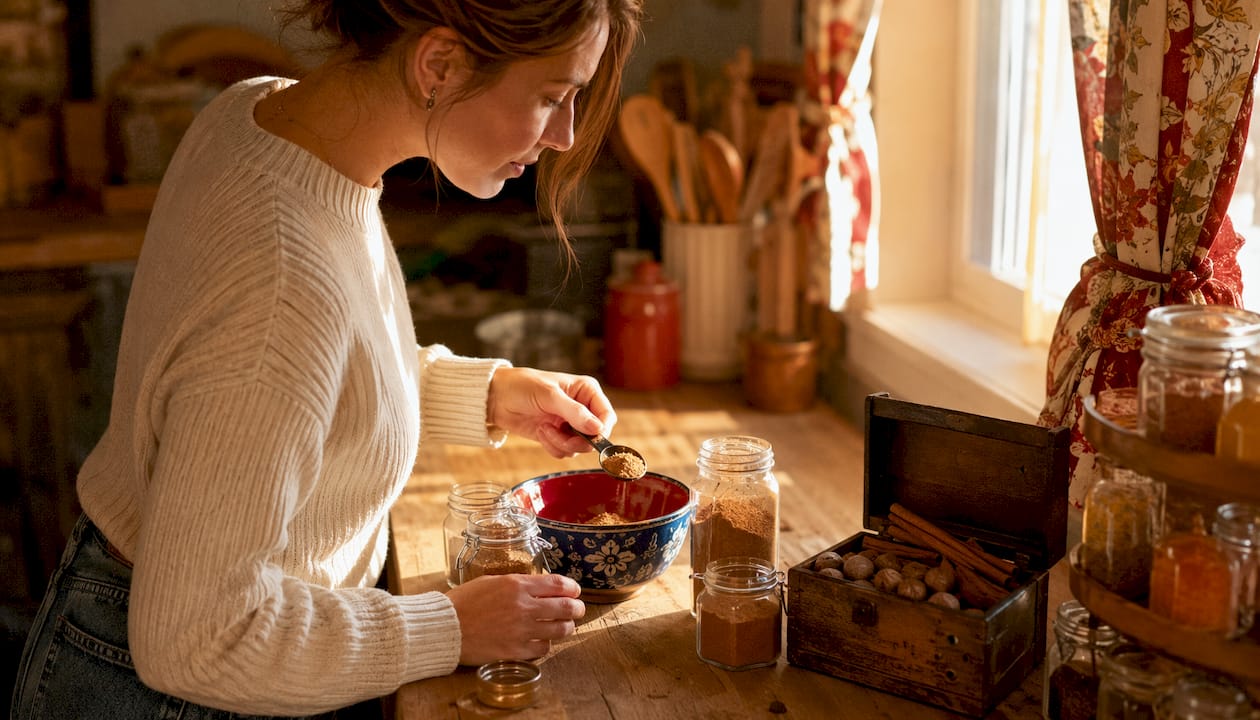
Chai-inspired harvest blends layer cardamom and black pepper on top of the classic cinnamon and ginger base. The result is a blend with more brightness and a gentle heat that works beautifully in both sweet and savory applications. Using 1 to 2 tablespoons of this style of blend as a dry rub on chicken or turkey adds warm complexity without sweetness. It also dissolves well into warm milk or cream for a spiced latte at home.
3. Apple pie spice
Apple pie spice is a close cousin to pumpkin pie spice but leans harder on cinnamon and cardamom while pulling back on clove. The flavor is lighter and brighter, which makes it ideal for fruit-forward recipes. Use it in apple crisps, pear tarts, or stirred into yogurt with sliced fruit for a slow weekend breakfast. It also works in savory glazes for roasted root vegetables.
4. Moroccan ras el hanout
Ras el hanout is a North African spice blend that shares DNA with harvest blends through its use of cinnamon, nutmeg, and clove, but adds cumin, coriander, and turmeric for a savory depth. It is the harvest blend for cooks who want to move beyond dessert. Rub it on lamb, stir it into lentil soup, or toss it with roasted butternut squash and olive oil. The result is earthy, warm, and deeply satisfying on a cold evening.
5. Speculaas spice (Dutch windmill cookie blend)
Speculaas is a Belgian and Dutch spice blend built from cinnamon, cardamom, clove, white pepper, ginger, and anise. It is the spice behind the thin, crisp windmill cookies sold across Europe in autumn and winter. The white pepper and anise make it more complex than standard American blends. Use it in shortbread, butter cookies, or stirred into a brown butter sauce for roasted carrots.
6. Garam masala (autumn-forward version)
Garam masala varies by region, but the autumn-forward versions built around cinnamon, cardamom, clove, and black pepper translate beautifully into fall cooking. Harvest spice blends have expanded well beyond desserts into savory foods, and garam masala is the clearest example of that shift. Add it to roasted cauliflower, lentil dal, or a slow-cooked chicken braise. The warmth it brings is the same warmth as pumpkin spice, just pointed in a different direction.
Pro Tip: When adapting a traditionally sweet harvest blend for savory cooking, reduce the cinnamon by half and increase the black pepper or cumin. That one adjustment shifts the whole flavor profile from dessert to dinner.
7. Mulling spice blend
Mulling spices are designed for liquid infusion. The blend typically includes whole cinnamon sticks, star anise, cloves, orange peel, and allspice berries. You simmer them in apple cider or red wine for 20 minutes and the result fills your kitchen with the most welcoming scent of the season. Strain and serve warm. The blend also works tucked into a sachet and simmered in a pot of water on the stove as a natural room fragrance.
8. Za’atar with warm spice additions
Traditional za’atar is an herb-forward blend of thyme, sumac, and sesame. When you add a pinch of cinnamon and allspice, it becomes a fall-ready blend that bridges the gap between herb and spice. Spread it on flatbread with olive oil, use it as a crust for roasted chicken, or stir it into hummus. The warm spice additions give it a depth that feels right for the season without losing the herbal brightness.
9. Baharat
Baharat is a Middle Eastern blend that combines black pepper, coriander, cinnamon, clove, cardamom, nutmeg, and paprika. It is one of the most complete harvest-season blends in the world because it covers every sensory note: warm, earthy, slightly sweet, and gently smoky. Use it in ground lamb dishes, stuffed peppers, or rice pilafs. A small amount goes a long way.
10. Custom home blend
The most useful harvest blend is the one you build yourself. Each spice plays a distinct sensory role: cinnamon anchors with sweet woody notes, ginger brightens with peppery sharpness, nutmeg adds earthy complexity, cloves add pungent intensity, and allspice harmonizes them all. Start with cinnamon as your base, then add the others in smaller amounts until the blend smells right to you. Write down your ratio so you can repeat it.
How harvest spices are sourced and harvested
Spice quality begins at the source. Cinnamon comes from the dried inner bark of the Cinnamomum tree, harvested by hand during the rainy season when the bark peels most cleanly. Cloves are the dried flower buds of the Syzygium aromaticum tree, picked before they open. Nutmeg is the seed inside the fruit of the Myristica fragrans tree, harvested when the fruit splits naturally. Each of these spices reaches peak aroma at a specific moment in its growth cycle, and harvest timing directly determines the potency you get in your kitchen.
The difference between whole and ground spices is significant. Ground spices lose potency faster than whole spices because grinding increases surface area and accelerates the loss of essential oils. That means a jar of pre-ground cinnamon sitting in your pantry for two years is giving you color and very little flavor. Whole spices, stored in a cool, dark place in airtight glass jars, hold their potency for years.
Grinding whole spices in small batches preserves essential oil potency and produces a noticeably more aromatic blend than any pre-ground commercial mix. A small electric spice grinder or a mortar and pestle handles the job in under a minute. The difference in aroma when you open a jar of freshly ground nutmeg versus a two-year-old pre-ground jar is immediate and unmistakable.
| Spice | Whole shelf life | Ground shelf life | Best storage method |
|---|---|---|---|
| Cinnamon | 3–4 years | 2–3 years | Airtight jar, away from heat |
| Cloves | 4–5 years | 2–3 years | Dark glass jar, cool pantry |
| Nutmeg | 4 years | 2 years | Whole nut, grind as needed |
| Ginger | 3–4 years | 2 years | Sealed container, low humidity |
| Allspice | 4 years | 2–3 years | Airtight, away from light |
How to use harvest spice blends effectively at home
The single most important technique for cooking with spice blends is blooming. Blooming spices in fat early in cooking releases their aromatic compounds far more effectively than adding them to water-based liquids. Warm a tablespoon of butter or oil in your pan, add the spice blend, and stir for 30 to 60 seconds before adding any other ingredient. The kitchen will tell you it’s working.
Timing matters as much as technique. Layering spices across cooking stages builds a more complex, balanced flavor than adding everything at once. Add a small amount early in cooking for depth, then finish with a pinch just before serving for brightness. This two-stage approach is the difference between a dish that tastes warm and a dish that tastes alive.
For cold applications, the approach changes. Hydrate dry spice blends for 10 to 20 minutes before serving when using them in yogurt dips, vinaigrettes, or cold dressings. The resting time lets the spices fully integrate and soften their raw edge. A spiced yogurt dip made this way tastes finished and intentional rather than dusty.
- Bloom spices in butter or oil before adding other ingredients
- Add a small amount early for depth, then finish with a pinch for brightness
- Hydrate blends in cold applications for 10–20 minutes before serving
- Start with less than you think you need; you can always add more
- Taste as you go, especially with high-intensity spices like clove and nutmeg
Pro Tip: For baked goods, mix your harvest spice blend into the dry ingredients first, then combine with wet ingredients. This distributes the spices evenly and prevents pockets of concentrated flavor.
Health and sensory benefits of harvest spices in seasonal recipes
Warm spices carry natural antioxidants and have been used in traditional food cultures across South Asia, the Middle East, and the Americas for centuries as digestive aids and flavor enhancers. The reassurance here is simple: cooking with real spices is cooking with ingredients that have a long, trusted history at the family table. No supplements needed. Just good food, made with intention.
The aroma of a harvest spice blend does something specific to a room. It signals warmth, safety, and gathering. The smell of cinnamon and clove simmering on the stove is one of the fastest ways to make a house feel like a home. That sensory effect is not incidental. It shapes how people experience a meal before they even sit down.
“Pumpkin pie spice blends are inherently sugar-free; the perceived sweetness comes from warming spices like cinnamon, which means you can reduce added sugar in a recipe without losing the sense of sweetness. The spice does the work the sugar used to do.”
That insight changes how you bake. A well-spiced apple crisp needs less sugar than a plain one. A spiced oatmeal needs less syrup than an unspiced bowl. The warmth of the blend carries the sweetness forward, which means you get more flavor and less of what you were trying to cut back on anyway.
Key Takeaways
The most effective harvest spice blends combine cinnamon, nutmeg, ginger, clove, and allspice in balanced ratios, and their flavor depends as much on freshness and cooking technique as on the blend itself.
| Point | Details |
|---|---|
| Blend ratios matter | A 4:4:4:1 ratio of cinnamon, nutmeg, ginger, and allspice is the reliable starting point for any harvest blend. |
| Freshness is flavor | Whole spices outlast ground by 1–2 years; grind small batches for the best aroma. |
| Bloom in fat | Warming spices in butter or oil before adding other ingredients releases far more flavor than adding them to liquid. |
| Spices reduce sugar needs | Warming spices like cinnamon create perceived sweetness, letting you cut added sugar without losing flavor. |
| Cold applications need rest | Hydrate spice blends for 10–20 minutes in cold dishes so flavors fully integrate before serving. |
What I’ve learned from a decade of cooking with harvest spice blends
By Celeste
The thing nobody tells you about harvest spice blends is that the ratio matters less than the freshness. I spent years adjusting proportions, convinced I was missing some secret formula. Then I bought whole cinnamon sticks and a small grinder, and the first batch I made from scratch was better than anything I had blended before. The spice was just alive in a way the pre-ground version never was.
My favorite blend right now is a simple one: 3 parts cinnamon, 2 parts ginger, 1 part nutmeg, and a small pinch of clove. I use it in everything from Saturday morning pancakes to a weeknight butternut squash soup. The clove is the one to watch. Too much and it takes over. Just enough and it gives the whole blend a warmth that feels like the best version of autumn.
The deeper lesson is about slowing down. When you toast a cinnamon stick in a dry pan before grinding it, you are doing something that takes 90 seconds and changes the whole dish. That kind of attention is what separates a meal from a moment. The spice is just the invitation to pay attention.
— Celeste
Yakonow and the harvest spice table
Autumn mornings call for something warm, spiced, and unhurried. Yakonow yacon syrup fits that moment naturally. It is a single-ingredient Andean sweetener, hand-harvested from yacon root in Peru, with a glycemic index of just 1 compared to 54 for maple syrup. Drizzled over spiced pancakes or cinnamon-dusted waffles, it brings a gentle, caramel-like sweetness that lets the harvest spice blend stay at the center of the flavor.

If you are already baking with warm spices this season, Yakonow is the natural next step for the sweetener side of the equation. The yacon syrup recipes on the Yakonow site pair beautifully with autumn spice profiles, and the baking substitution guide walks you through swapping it into your favorite fall recipes. A single 6oz bottle is the easiest way to bring it to your table this season.
FAQ
What is harvest spice made of?
Harvest spice is a warm aromatic blend built from cinnamon, nutmeg, ginger, clove, and allspice. The standard ratio is 4 parts cinnamon, 4 parts nutmeg, 4 parts ginger, and 1 part allspice.
What is the best way to store harvest spice blends?
Store blends in airtight glass jars away from heat and light. Whole spices last 3–5 years; ground blends are best used within 2–3 years for full potency.
Can harvest spice blends be used in savory dishes?
Yes. Harvest spice blends work well as dry rubs on chicken, turkey, and pork, and add warm depth to roasted vegetables and grain dishes. Use 1 to 2 tablespoons for wet batters or dry rubs.
Do harvest spice blends contain sugar?
No. Classic harvest spice blends are sugar-free. The perceived sweetness comes from warming spices like cinnamon, which means you can reduce added sugar in recipes without losing the sense of sweetness.
How do I use harvest spice in cold recipes?
Mix the blend into cold yogurt, dressings, or dips and let it rest for 10 to 20 minutes before serving. That resting time allows the spices to fully integrate and soften their raw edge.