

Build Gut-Healthy Pantry Staples for the Whole Family
A gut-healthy pantry is defined by three things: fiber-rich whole foods, fermented staples, and enough variety to feed a broad spectrum of beneficial gut bacteria. Nutritional guidelines recommend 25–38 grams of fiber daily, plus 1–2 servings of fermented foods, to support microbiome diversity and regular digestion. The good news is that the best foods for gut health are also the most ordinary ones: oats, beans, onions, garlic, yogurt, and sauerkraut. You do not need a supplement cabinet or a specialty grocery store. You need a pantry stocked with intention, and a little know-how about what goes where.
How to build gut-healthy pantry staples that actually work
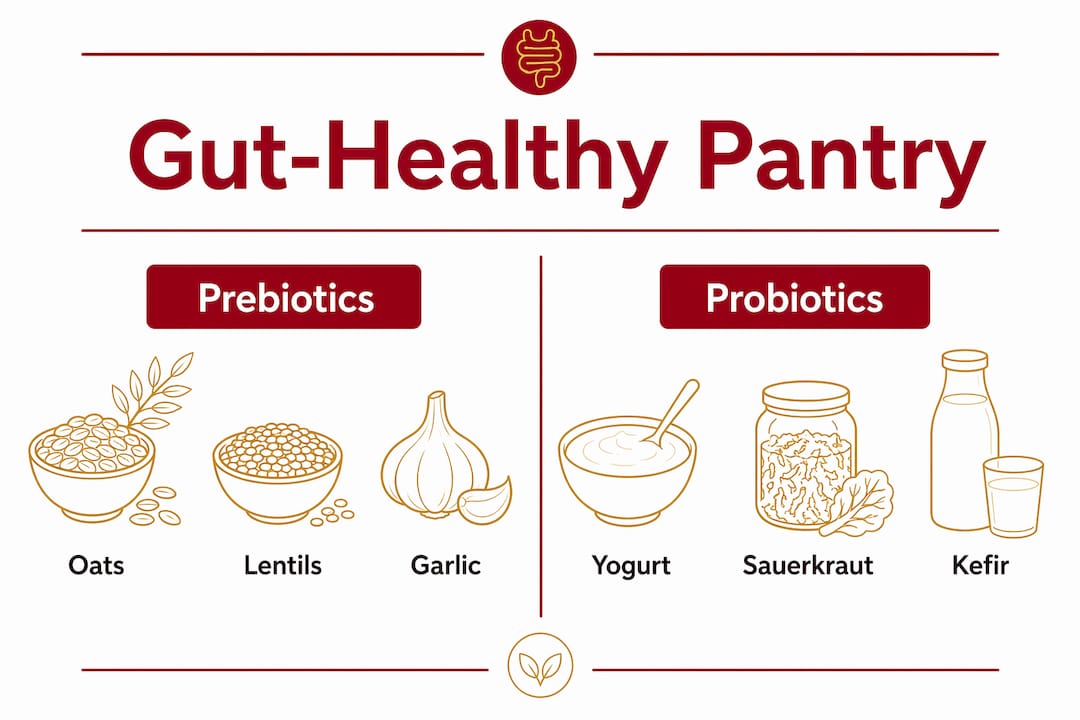
The foundation of a gut-supporting pantry rests on prebiotics and probiotics working together. Prebiotics are the fibers that feed your beneficial gut bacteria. Probiotics are the live cultures found in fermented foods that add to that bacterial community. Think of it as feeding the garden and planting new seeds at the same time.

The gut microbiome diet thrives on variety. Rotating legumes, grains, and colorful plants nurtures gut resilience far more than relying on a handful of the same foods every week. A pantry built around diversity is a pantry that works.
What pantry staples provide the best prebiotic fiber?
Prebiotic fiber feeds the bacteria already living in your gut. Without it, those bacteria have nothing to thrive on. The richest prebiotic sources are also the most affordable items in any grocery store.
The top prebiotic staples to stock:
- Oats: Rich in beta-glucan fiber, which feeds Lactobacillus and Bifidobacterium strains
- Onions and garlic: Among the highest sources of inulin, a prebiotic fiber that feeds beneficial bacteria directly
- Bananas: Especially slightly underripe ones, which contain resistant starch
- Beans and lentils: High in both soluble fiber and resistant starch
- Barley: One of the most fiber-dense grains available
- Asparagus: A concentrated source of inulin and fructooligosaccharides (FOS)
- Green bananas: A standout source of resistant starch, which acts as a prebiotic
Resistant starch deserves special attention. Cooling cooked grains and starches increases their resistant starch content, which enhances their prebiotic effect. That means leftover rice, potatoes, or pasta eaten cold or reheated gently gives your gut more to work with than the same food eaten fresh off the stove.
Pro Tip: Cook a big pot of lentils or rice on Sunday, refrigerate overnight, and use throughout the week. The cooling process increases resistant starch content without any extra effort.
Whole-food sources like onions, garlic, and oats provide fiber and vitamins that isolated prebiotic supplements simply cannot replicate. Skip the powders and spend that money on a larger bag of rolled oats instead.
How do fermented foods support gut microbiome balance?
Fermented foods deliver live bacterial cultures directly to your digestive system. These cultures, known as probiotics, help maintain the balance of your gut microbiome and support digestion, immunity, and even mood.
The best fermented staples to keep on hand:
- Yogurt: Look for labels that say “live and active cultures.” Plain, unsweetened varieties work best for everyday use.
- Kefir: A drinkable fermented milk with a broader range of bacterial strains than most yogurts
- Sauerkraut: Fermented cabbage that is inexpensive, long-lasting, and easy to add to any meal
- Kimchi: A spiced Korean fermented vegetable dish with strong probiotic activity
- Miso: A fermented soybean paste that adds depth to soups, dressings, and marinades
- Tempeh: Fermented soybeans pressed into a firm cake, high in protein and probiotics
- Kombucha: A fermented tea that works well as a light, fizzy alternative to soda
Yogurt, kefir, and fermented vegetables like sauerkraut and kimchi are the most practical probiotic sources to stock regularly. Aim for 1–2 servings of fermented foods daily, as tolerated. If you are new to fermented foods, start with a small spoonful of sauerkraut or a half cup of yogurt and build from there. People with histamine sensitivity may need to limit high-histamine ferments like kimchi and kombucha and focus on fresh yogurt or kefir instead.
What does a budget-friendly gut-healthy pantry actually cost?
A gut-supporting pantry does not require a premium grocery budget. A pantry built on oats, dry beans, lentils, and onions can cost under $50 per month per person when bought in bulk. That figure covers the core fiber and prebiotic staples that do the most work for your microbiome.
| Staple | Form to buy | Approximate monthly cost |
|---|---|---|
| Rolled oats | Bulk dry | $4–6 |
| Dry lentils and beans | Bulk dry | $6–8 |
| Onions and garlic | Fresh, loose | $4–5 |
| Bananas | Fresh | $3–4 |
| Plain yogurt or kefir | Store brand | $6–8 |
| Sauerkraut | Jarred, refrigerated | $4–5 |
| Barley or brown rice | Bulk dry | $4–6 |
Buying dry beans and lentils instead of canned cuts costs by roughly half and reduces sodium. Store brands of yogurt and kefir carry the same live cultures as premium labels. Psyllium husk, sold in bulk at most health food stores, is one of the most concentrated fiber sources available and costs very little per serving.
Pro Tip: Batch cook a large pot of beans on the weekend and freeze in two-cup portions. You get the cost savings of dry beans with the convenience of canned, and your gut gets the full fiber benefit.
Whole foods provide complex nutrients that prebiotic sodas and supplement powders cannot match, and at a fraction of the price. The plant-based prebiotic ingredients with the strongest research behind them are the same ones you find in the produce aisle and the bulk bins.
How should you organize a gut-healthy pantry for daily use?
The way your pantry is arranged shapes what your family actually eats. Keeping gut-healthy staples front and eye-level in your pantry increases how often you reach for them and reduces reliance on processed foods. This is not a willpower issue. It is a design issue.
Practical organization habits that make a real difference:
- Place oats, lentils, and nuts in clear glass jars at eye level so they are the first thing you see
- Store fermented foods like sauerkraut and yogurt at the front of the refrigerator, not buried in the back
- Keep a bowl of bananas and onions on the counter where they are visible and easy to grab
- Use airtight containers for dry goods to extend shelf life and keep pests out
- Label containers with the date opened so you rotate stock and reduce waste
Rotating your staples matters as much as stocking them. Dietary diversity promotes microbiome resilience. Eating the same five foods every week, even healthy ones, limits the range of bacteria your gut can support. Swap barley for farro one week, black beans for chickpeas the next.
Pro Tip: Introduce high-fiber staples gradually. Adding fiber over 3–4 weeks with adequate water intake prevents bloating and digestive discomfort. Start with cooked lentils, which are easier on the gut than raw onions or large portions of beans.
Treating your kitchen as an ecosystem, where pantry layout supports habit formation, is one of the most underrated shifts a family can make. You are not relying on motivation. You are designing for the choice you want to make.
Simple meal ideas using gut-friendly pantry staples
Pairing prebiotic and probiotic foods in the same meal creates what nutrition researchers call a synbiotic effect. You feed the bacteria already present and add new ones at the same time. These combinations do not require complicated recipes.
- Morning oat bowl: Rolled oats cooked with sliced banana, a spoonful of Yakonow yacon syrup, and a dollop of plain yogurt on top. The oats and banana feed gut bacteria. The yogurt delivers live cultures.
- Lentil soup with miso: A simple red lentil soup finished with a spoonful of white miso stirred in off the heat. The lentils provide prebiotic fiber. The miso adds fermented depth and live cultures.
- Grain bowl with sauerkraut: Cooked-then-cooled brown rice topped with roasted vegetables, a scoop of sauerkraut, and a drizzle of olive oil. The cooled rice increases resistant starch. The sauerkraut brings probiotics.
- Afternoon snack plate: Sliced apple with almond butter, a small cup of kefir, and a handful of walnuts. Simple, satisfying, and genuinely good for digestion.
- Tempeh stir-fry: Cubed tempeh cooked with garlic, onion, and seasonal vegetables over barley. Every element in this dish feeds or supports your gut microbiome.
The sensory pleasure of these meals matters as much as their nutritional profile. A slow Saturday morning with oat bowls and yogurt on the table, kids reaching for fruit, the smell of garlic softening in a pan on a weeknight: these are the moments a well-stocked pantry makes possible. Gut health is not a separate project from family life. It is woven into it.
Key Takeaways
A gut-healthy pantry built on fiber-rich whole foods, fermented staples, and dietary variety supports your microbiome more effectively than any supplement.
| Point | Details |
|---|---|
| Fiber targets matter | Aim for 25–38 grams of fiber daily from oats, beans, lentils, and vegetables. |
| Fermented foods are non-negotiable | Include 1–2 servings of yogurt, kefir, or sauerkraut daily for live probiotic cultures. |
| Budget is not a barrier | Core gut-healthy staples cost under $50 per month per person when bought in bulk. |
| Pantry design drives behavior | Placing healthy staples at eye level increases how often your family reaches for them. |
| Introduce fiber gradually | Add high-fiber foods over 3–4 weeks with plenty of water to avoid digestive discomfort. |
What I’ve learned from building a gut-friendly pantry with my family
The shift that changed everything for us was not buying a new supplement or following a strict protocol. It was reorganizing the pantry so that the good stuff was impossible to miss. When the jar of oats sits at eye level and the lentils are in a clear container right next to it, breakfast and dinner practically plan themselves.
What surprised me most was how quickly the kids adapted. Once sauerkraut became a regular fixture on the dinner table, it stopped being strange. It became just another condiment, like mustard. The same happened with kefir in the morning. Familiarity is the real secret to building lasting food habits.
The harder lesson was patience with fiber. I added too much too fast in the beginning, and the bloating was real. Slowing down, starting with cooked lentils and well-cooked oats, and drinking more water made all the difference. The gut adjusts, but it needs time.
Yakonow yacon syrup found its place on our breakfast table almost by accident. I was looking for something to drizzle over oatmeal that would not spike anyone’s blood sugar, and the naturally sweet, caramel-like flavor was exactly right. It fits the pantry philosophy I had already built: one ingredient, real food, nothing added. That is the kind of detail that makes a slow morning feel complete.
— Celeste
Yakonow yacon syrup: a prebiotic addition to your pantry

A gut-healthy pantry is built on ingredients that do more than taste good. Yakonow yacon syrup is made from a single ingredient: yacon root, hand-harvested in Peru and bottled in an FDA-compliant facility in Texas. It contains up to 50g of prebiotic FOS fiber per 100g, carries a glycemic index of just 1, and has zero added sugar. Drizzled over oatmeal, yogurt, or fresh fruit, it fits naturally alongside the fermented and fiber-rich staples already in your kitchen. For families who want a breakfast syrup that supports digestion without sacrificing flavor, Yakonow is the detail that earns its place on the table.
FAQ
What are the best foods for gut health?
The best foods for gut health are fiber-rich whole foods like oats, beans, lentils, onions, and garlic, paired with fermented foods like yogurt, kefir, and sauerkraut. Together, they feed and replenish beneficial gut bacteria.
How much fiber do you need daily for gut health?
Nutritional guidelines recommend 25–38 grams of fiber per day for adults to support microbiome diversity and regular digestion. Most Americans fall well short of this target, making whole grains and legumes the most practical place to start.
Can you build a gut-healthy pantry on a tight budget?
A core gut-healthy pantry built on oats, dry beans, lentils, onions, and store-brand yogurt costs under $50 per month per person when bought in bulk. Dry legumes and bulk grains offer the best value per gram of fiber.
How do you introduce fermented foods without digestive upset?
Start with one small serving of a mild fermented food, such as plain yogurt or a spoonful of sauerkraut, and increase gradually over several weeks. This gives your gut time to adjust to the new bacterial input.
Is yacon syrup a prebiotic food?
Yakonow yacon syrup contains prebiotic fructooligosaccharides (FOS), the same fiber type found in onions, garlic, and asparagus. It works as a gentle, low-glycemic sweetener that also feeds beneficial gut bacteria.