

Agave Inulin: A Natural Prebiotic Fiber for Families
Agave inulin is a soluble prebiotic fiber drawn from the blue agave plant, Agave tequilana, and it works by quietly nourishing the good bacteria already living in your gut. Unlike a probiotic, it does not introduce new bacteria. It simply feeds what is already there. High-quality powdered forms contain 88–92% inulin content, making it one of the more concentrated plant-based fiber sources available. For families who want to eat a little more thoughtfully without overhauling the pantry, agave inulin fits naturally into the rhythm of everyday meals.
What is agave inulin, and how does it work?
Agave inulin is classified as a fructan polysaccharide. That means it is a chain of fructose molecules that your small intestine cannot break down. It travels intact to your colon, where beneficial bacteria like Lactobacillus and Bifidobacterium ferment it as fuel. The result is a more balanced gut environment without any outside bacteria being added.
The distinction between prebiotics and probiotics matters here. Probiotics are live bacteria found in fermented foods like yogurt or kefir. Prebiotics are the food those bacteria eat. Agave inulin is firmly in the prebiotic category. It does not colonize your gut. It supports the community already there.
For people reading ingredient labels, inulin from blue agave often appears as “organic agave inulin” or “inulin agave powder.” Both refer to the same long-chain fructan. The prebiotic ingredient label on packaged foods can help you spot it quickly.
- Source plant: Agave tequilana (blue agave), native to Mexico
- Fiber type: Soluble, long-chain fructan polysaccharide
- Inulin content: 88–92% in high-quality powdered forms
- Mechanism: Fermented by colonic bacteria, not absorbed in the small intestine
- Classification: Prebiotic, not probiotic
Pro Tip: Look for “organic agave inulin powder” on labels. The organic certification signals lower pesticide exposure during cultivation, which matters when you are adding something to your family’s daily routine.
What are the health benefits of agave inulin fiber?
Agave inulin supports digestive regularity by feeding the bacteria that keep your gut lining healthy and your bowel movements consistent. This is not a dramatic effect. Think of it as a quiet, daily contribution to how your body feels after meals. Families who support gut microbiome health through food rather than supplements tend to find this kind of fiber easy to sustain.

One of the more practical benefits is blood sugar moderation. Agave inulin slows sugar absorption and does not convert into glucose itself. That means it does not cause the kind of spike you might get from a refined carbohydrate. For a family breakfast table, this is a gentle reassurance rather than a medical claim.
Inulin also promotes a feeling of fullness. It absorbs water and expands slightly in the digestive tract, which helps you feel satisfied longer after eating. This is not about restriction. It is about eating slowly and feeling content, which fits naturally into a relaxed morning at home.
“The gut is where so much of daily wellbeing begins. Feeding it well does not require a complicated protocol. It just requires consistency and good ingredients.”
Here is a summary of the key benefits:
- Digestive regularity: Supports consistent gut motility through bacterial fermentation
- Blood sugar balance: Slows glucose absorption without spiking insulin response
- Satiety: Expands in the digestive tract to extend feelings of fullness
- Immune support: A balanced gut microbiome indirectly supports immune function
- Palatability: Mild, slightly sweet flavor makes it easy to add to food without changing taste
How does agave inulin compare with chicory and Jerusalem artichoke?
Inulin appears in several plants, but the source matters for both purity and function. A comparative study on ultrasound-assisted extraction found that agave inulin contains approximately 78.99% inulin content, compared to 93.53% for Jerusalem artichoke and 90.39% for chicory. At first glance, agave appears to trail. The fuller picture is more interesting.
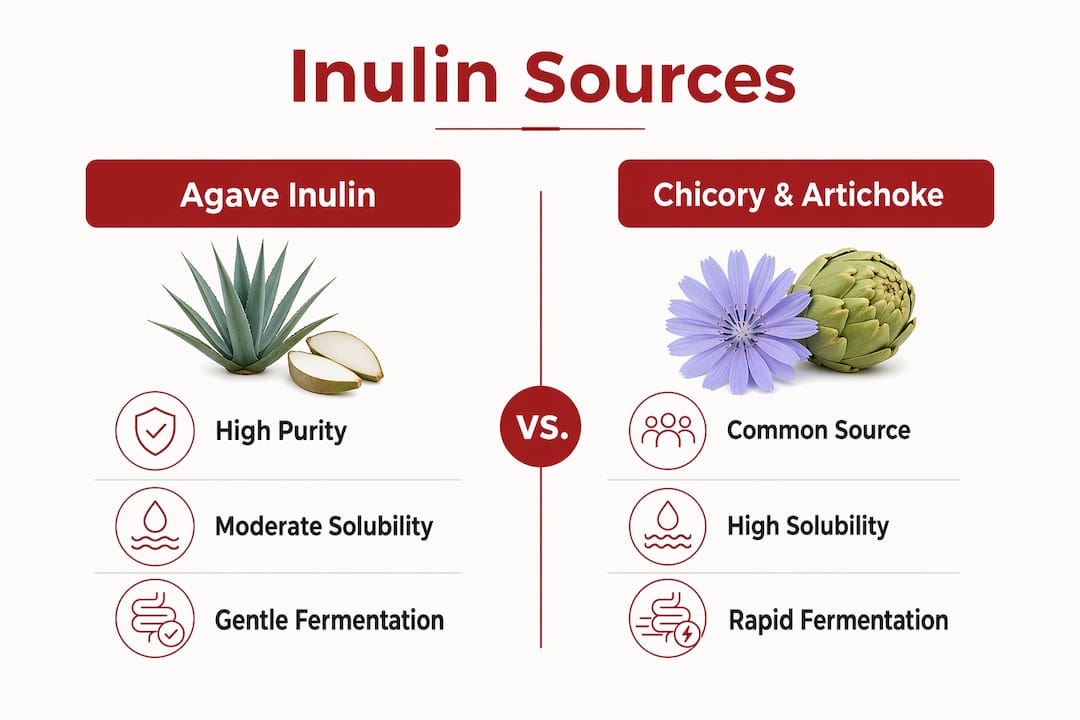
Agave inulin delivers a dry matter content of 92.86% and a moderate solubility of 74.32 g/L. Those numbers matter in food preparation. Higher dry matter means more structural stability in baked goods and powdered blends. Moderate solubility means it dissolves well in warm liquids without clumping, which is exactly what you want when stirring it into oatmeal or a morning smoothie.
| Source | Inulin content | Dry matter | Solubility |
|---|---|---|---|
| Agave (Agave tequilana) | 78.99% | 92.86% | 74.32 g/L |
| Chicory | 90.39% | Not specified | Higher |
| Jerusalem artichoke | 93.53% | Not specified | Higher |
Chicory inulin is the most common commercial form and appears in many fiber supplements and protein bars. Jerusalem artichoke inulin is potent but can cause more digestive discomfort at higher doses. Agave inulin sits in a gentler middle ground, with strong structural properties and a flavor profile that is almost neutral.
Pro Tip: If you are new to prebiotic fibers, agave inulin is a forgiving starting point. Its moderate fermentation rate means fewer digestive side effects than higher-potency chicory-based inulin powders.
How can you use agave inulin in everyday meals?
Experts recommend a daily serving of 5–15 grams of agave inulin powder for most adults. That range is wide enough to let you start small and build gradually, which your gut will appreciate. A teaspoon stirred into your morning coffee or blended into a smoothie is a natural place to begin.
The flavor is the real advantage here. Organic agave inulin powder is mildly sweet and almost tasteless in most recipes. It does not compete with the flavors around it. It dissolves cleanly in warm liquids and blends into batters without changing texture in a noticeable way.
- Morning beverages: Stir 5 grams into coffee, tea, or warm lemon water before breakfast.
- Smoothies: Blend with fruit, yogurt, and a splash of milk for a fiber-rich start.
- Oatmeal or porridge: Sprinkle over the top or stir in while cooking for a subtle sweetness boost.
- Yogurt bowls: Mix into plain yogurt alongside fruit and granola for a prebiotic-rich snack.
- Baked goods: Substitute a portion of sugar in muffins or pancake batter to add fiber without changing the rise.
Agave inulin also plays a structural role in food. Its long-chain fructan molecules improve texture and mouthfeel, preventing the thin or hollow sensation common in low-sugar recipes. Food formulators call this approach “fiber stacking,” using inulin not just for fiber content but for texture and structural improvement that makes food feel more satisfying.
Pro Tip: Add agave inulin powder to pancake batter on slow weekend mornings. It dissolves into the mix without any fuss, and the pancakes hold together beautifully. No one at the table will notice anything different except that everyone feels full a little longer.
Key Takeaways
Agave inulin is a long-chain prebiotic fiber from blue agave that feeds beneficial gut bacteria, moderates blood sugar, and blends easily into everyday family meals without changing flavor.
| Point | Details |
|---|---|
| Prebiotic, not probiotic | Agave inulin fuels existing gut bacteria rather than introducing new ones. |
| Inulin content | High-quality powders contain 88–92% inulin, making them concentrated and effective. |
| Gentle on digestion | Moderate fermentation rate makes it a good starting fiber for sensitive stomachs. |
| Versatile in the kitchen | Dissolves in warm liquids and blends into baked goods, yogurt, and smoothies. |
| Blood sugar friendly | Does not convert to glucose and slows sugar absorption at the meal level. |
Why I think slow mornings are the best time to start
I have noticed that the families who actually stick with small nutrition habits are the ones who tie them to a ritual rather than a goal. Stirring a spoonful of inulin agave powder into morning oatmeal is not a wellness protocol. It is just part of making breakfast. The kettle is on, someone is setting the table, and the powder dissolves quietly into whatever is in the bowl.
What I appreciate about agave inulin specifically is that it does not announce itself. There is no chalky texture, no strong flavor, no dramatic change to the recipe. It simply makes the food a little more nourishing without asking anything extra from you. That kind of ingredient fits a real family morning.
The comparison with chicory inulin is worth keeping in mind. Chicory is effective, but it can cause bloating at higher doses, which is not what you want on a Tuesday morning before school drop-off. Agave’s gentler fermentation curve makes it a more forgiving choice for families just beginning to pay attention to gut health.
The bigger picture is this: prebiotic fiber is not a supplement category. It is a food category. Blue agave has been cultivated in Mexico for centuries. The fiber it produces is not new. What is new is how easily it fits into a modern pantry, and how little it asks of you to make a real difference.
— Celeste
A natural pairing for your family breakfast table
Agave inulin brings quiet nourishment to the foods you already love. Yakonow yacon syrup works the same way. Hand-harvested from yacon root in Peru and bottled in Texas, Yakonow carries up to 50g of prebiotic FOS fiber per 100g and has a glycemic index of just 1. It is the kind of syrup you drizzle over pancakes on a slow Saturday morning without a second thought.

Yakonow fits naturally alongside agave inulin in a family kitchen that values real ingredients and unhurried mornings. Try the single 6oz bottle and see how well it settles into your table.
FAQ
What is agave inulin made from?
Agave inulin is extracted from the blue agave plant, Agave tequilana, the same species used to produce tequila. High-quality powdered forms contain 88–92% inulin content.
Is agave inulin the same as a probiotic?
No. Agave inulin is a prebiotic fiber, meaning it feeds existing gut bacteria rather than introducing new live bacteria. Probiotics contain live microorganisms; prebiotics are the fuel those organisms need.
How much agave inulin should you take daily?
A daily serving of 5–15 grams is the standard recommendation for adults. Starting at the lower end gives your gut time to adjust before increasing the amount.
Can you cook with organic agave inulin powder?
Yes. Its mild sweetness and high solubility make it easy to blend into baked goods, smoothies, yogurt, and warm beverages without changing the flavor or texture of the recipe.
How does inulin from blue agave differ from chicory inulin?
Agave inulin has slightly lower inulin content than chicory but offers superior dry matter content and a gentler fermentation rate, which causes less digestive discomfort for people new to prebiotic fibers.