

Prebiotic Ingredient Label Reading Guide for Families
Prebiotic ingredient label reading is the process of identifying clinically effective prebiotic fibers on product packaging to confirm real gut health benefits. Most labels bury the details you actually need behind marketing language and vague fiber claims. This guide gives you a practical, step-by-step framework for decoding what you see, recognizing which ingredients matter, and spotting the red flags that signal an ineffective product. Whether you are shopping for a supplement, a fortified food, or a whole-food syrup like Yakonow, knowing how to read the label puts you in control.
What does a prebiotic ingredient label reading guide actually cover?
Prebiotic ingredient label reading covers more than scanning for the word “fiber.” It means understanding which specific compounds feed beneficial gut bacteria, where those compounds appear on the label, and whether the listed amounts are clinically meaningful. The FDA regulates what can appear on a Nutrition Facts panel, but the rules around the word “prebiotic” are less strict than those for nutrients. That gap is where confusion enters.
The standard industry term for the compounds you are looking for is prebiotic dietary fiber, a category that includes specific fermentable carbohydrates shown in clinical research to selectively feed beneficial gut bacteria. Not every fiber qualifies. Psyllium husk, for example, is a fiber but not a recognized prebiotic. Inulin, fructooligosaccharides (FOS), galactooligosaccharides (GOS), resistant starch, and partially hydrolyzed guar gum (PHGG) are the clinically recognized prebiotic fibers to look for on any label.

Understanding this distinction is the foundation of smart label reading. Once you know the names, you can find them anywhere on a label and assess whether the product delivers a real dose.
Which prebiotic ingredients should you look for on labels?
The five prebiotic fibers with the strongest clinical backing are inulin, FOS, GOS, resistant starch, and PHGG. Each feeds gut bacteria differently, and each appears under specific names on ingredient lists.
| Prebiotic Fiber | Common Label Names | Typical Clinical Dose |
|---|---|---|
| Inulin | Inulin, chicory root extract | 5–10g per day |
| FOS (fructooligosaccharides) | FOS, oligofructose, short-chain FOS | 3–8g per day |
| GOS (galactooligosaccharides) | GOS, galactooligosaccharides | 3–5g per day |
| Resistant starch | Hi-maize, green banana flour | 15–20g per day |
| PHGG | Partially hydrolyzed guar gum, Sunfiber | 5–6g per day |
Ingredient order on a label signals quantity. Manufacturers list ingredients from highest to lowest weight. A prebiotic fiber listed near the end of the ingredient list is almost certainly present in too small an amount to produce a meaningful effect. If inulin appears after salt or natural flavors, the product likely contains a token dose added for marketing purposes.
The “Dietary Fiber” line on the Nutrition Facts panel is also unreliable for prebiotic assessment. Isolated fermentable fibers like inulin may not always be counted in the dietary fiber total due to regulatory classification issues. That means a product could contain 5g of inulin and still show 0g of dietary fiber. Always cross-reference the Nutrition Facts panel with the ingredient list itself.
Pro Tip: Search the ingredient list for the specific names in the table above. If you find one in the first half of the list, the product likely contains a functional dose. If it appears in the second half or inside a proprietary blend, treat the prebiotic claim with skepticism.
Intrinsic vs. added prebiotics: what is the difference on a label?
Whole foods and fortified products both appear on grocery shelves, but their labels tell very different stories. Whole foods like chicory root, garlic, and onions contain intrinsic prebiotics, meaning the fiber is naturally packaged alongside vitamins, minerals, and polyphenols that work together in the gut. A product made from yacon root, for example, delivers FOS fiber in its natural matrix alongside other plant compounds.
Added prebiotic fibers are isolated extracts blended into a product after processing. They can be effective, but the dose and source matter. A yogurt labeled “with added prebiotic fiber” may contain a small amount of isolated inulin that was mixed in during manufacturing. That is not the same as eating a food that naturally contains inulin throughout its structure.
Watch for these whole-food prebiotic sources when they appear as primary ingredients on labels:
- Chicory root / chicory root extract: The most common natural source of inulin and FOS
- Yacon root / yacon syrup: Naturally rich in FOS, with up to 50g of prebiotic FOS fiber per 100g
- Jerusalem artichoke: High in inulin, often listed as topinambur
- Green banana flour: A concentrated source of resistant starch
- Garlic powder or garlic extract: Contains FOS in meaningful amounts
Front-of-pack terms like “gut-friendly,” “supports digestive health,” or “natural” are marketing claims, not verified nutrient content claims. They tell you nothing about the type, amount, or effectiveness of the prebiotic inside. Rely on the ingredient list and Nutrition Facts panel, not the front of the package. For a broader look at whole food prebiotic sources, the Yakonow gut microbiome guide covers the most relevant staples in detail.
How do you evaluate prebiotic health claims and ingredient transparency?
The front of a package is marketing. The Supplement Facts or Nutrition Facts panel is legally binding. Vague front-of-pack claims should raise immediate skepticism. A product that says “prebiotic” on the front but lists no specific prebiotic fiber in the ingredient panel is making an unsubstantiated claim.
Proprietary blends are a common transparency problem. When a label groups multiple ingredients under a single blend name with one combined weight, you cannot tell how much of each ingredient is present. Proprietary blends often mask ineffective low doses of active ingredients behind a credible-sounding name. A blend labeled “Prebiotic Complex 500mg” could contain 490mg of maltodextrin and 10mg of inulin.
Regulatory guidance from Health Canada’s prebiotic monograph sets a useful benchmark. High-quality prebiotic products include explicit usage instructions, such as consuming the product with a minimum amount of fluid. A label that gives no guidance on how or when to take the product is incomplete. That absence is a red flag.
Pro Tip: Look for three things on any prebiotic product: a named prebiotic fiber in the first half of the ingredient list, a specific gram amount per serving, and usage instructions that mention fluid intake or gradual dose increase. All three together signal a well-formulated, transparent product.
Step-by-step guide to reading a prebiotic label
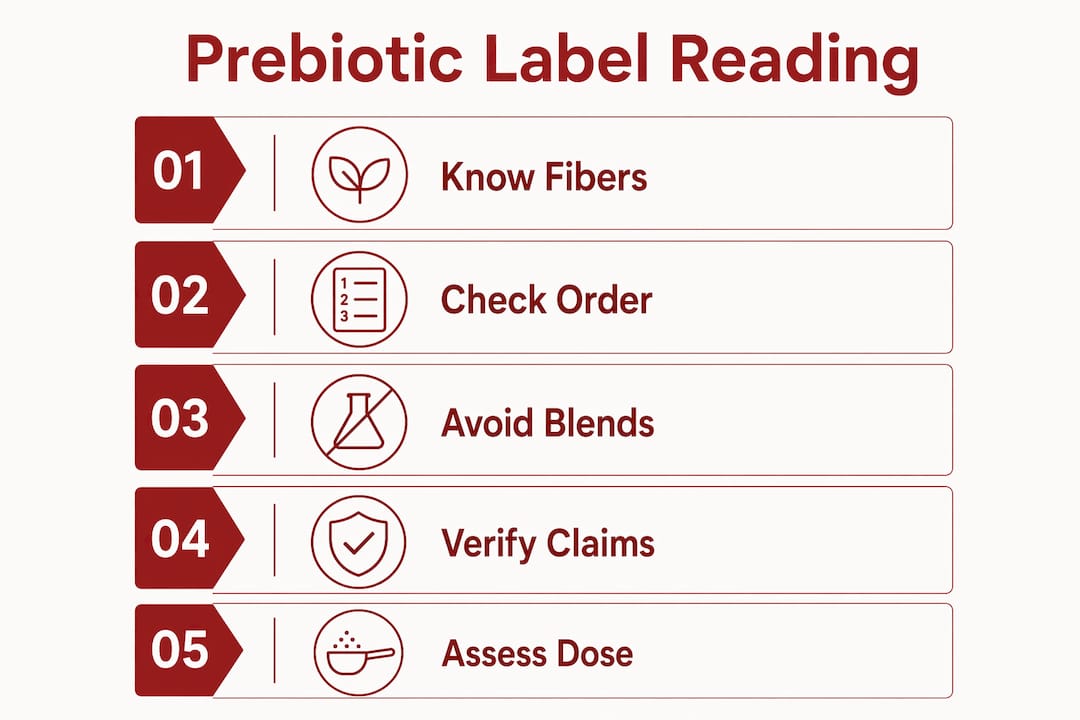
Reading a prebiotic label well takes about 90 seconds when you know the sequence. Follow these steps every time.
-
Check the serving size first. A product with 8g of fiber per serving sounds impressive until you see the serving size is 100g. Serving size directly determines whether the fiber content fits realistically into your daily diet. Ask yourself whether you will actually consume that amount in one sitting.
-
Read the Dietary Fiber line, then go deeper. Note the dietary fiber total, but do not stop there. Because isolated fermentable fibers may not appear in that total, the number can undercount actual prebiotic content. The ingredient list is more reliable.
-
Scan the ingredient list for the five key prebiotic fibers. Look for inulin, FOS, GOS, resistant starch, and PHGG by name. Note where each appears in the list. Ingredients in the first half of the list are present in meaningful amounts.
-
Check for proprietary blends. If you see a blend name with a combined weight, treat the prebiotic content as unverified. A transparent label lists each ingredient with its individual amount.
-
Read the usage instructions. A well-labeled prebiotic product tells you how much to take, when to take it, and how much fluid to drink with it. Labels that lack usage guidance increase the risk of digestive side effects like gas or bloating.
-
Compare the front-of-pack claim to the ingredient panel. If the front says “prebiotic” but the ingredient list contains no recognized prebiotic fiber, the claim is unsupported. Move on.
Common traps to avoid include tiny serving sizes that make fiber content look higher than it is, prebiotic fibers buried after inactive ingredients like silicon dioxide, and products that list “chicory root extract” without specifying whether it is standardized for inulin content.
| Label Element | What to Look For | Red Flag |
|---|---|---|
| Serving size | Realistic daily amount | Unrealistically large serving |
| Dietary Fiber line | Cross-reference with ingredient list | Fiber total does not match ingredients |
| Ingredient list position | Prebiotic fiber in first half | Prebiotic fiber after salt or flavors |
| Proprietary blends | Individual ingredient amounts listed | Single combined weight for multiple ingredients |
| Usage instructions | Dosing guidance and fluid recommendation | No instructions at all |
Key takeaways
Effective prebiotic label reading requires checking the ingredient list for named fibers, verifying their position in the list, and confirming that usage instructions are present.
| Point | Details |
|---|---|
| Know the five key fibers | Look for inulin, FOS, GOS, resistant starch, and PHGG by name on every label. |
| Ingredient order signals dose | Prebiotic fibers listed in the second half of the ingredient list are likely present in ineffective amounts. |
| Dietary Fiber totals can mislead | Isolated fibers like inulin may not appear in the Dietary Fiber count; always check the ingredient list directly. |
| Proprietary blends hide doses | A combined blend weight makes it impossible to verify whether any single ingredient reaches a clinical dose. |
| Usage instructions signal quality | A well-formulated product tells you how much to take, when, and with how much fluid. |
What I have learned from reading prebiotic labels for years
Reading prebiotic labels is genuinely harder than it should be. The gap between what a product claims on the front and what the ingredient panel actually shows is wider than most people expect. I have picked up products at natural grocery stores that put “prebiotic” in large type on the front, only to find chicory root extract listed tenth in the ingredient list, well after multiple sweeteners and thickeners.
The thing that changed how I shop is treating the front of the package as completely irrelevant. I go straight to the ingredient list and the Nutrition Facts panel. If I cannot find a named prebiotic fiber in the first half of the list, I put the product back. That single rule eliminates most of the noise.
I also think the processing and dosage matter far more than whether something is labeled “natural.” A naturally sourced inulin at 1g per serving does nothing meaningful for your gut. A single-ingredient product like Yakonow yacon syrup, where the prebiotic FOS is the primary component of the food itself, is a different category entirely. The fiber is not added. It is the product.
Starting slow matters too. High doses of prebiotic fiber introduced quickly cause real discomfort. A label that guides you to start with a small amount and increase gradually is not being cautious for legal reasons. It reflects genuine formulation knowledge. If a label skips that guidance, I question whether the brand understands its own product.
— Celeste
Yakonow and transparent prebiotic labeling
Yakonow yacon syrup is a single-ingredient product, which means the label reading process is straightforward. The only ingredient is yacon root syrup, hand-harvested in Peru and bottled in an FDA-compliant facility in Texas. The prebiotic FOS fiber is intrinsic to the yacon root itself, not added after processing.
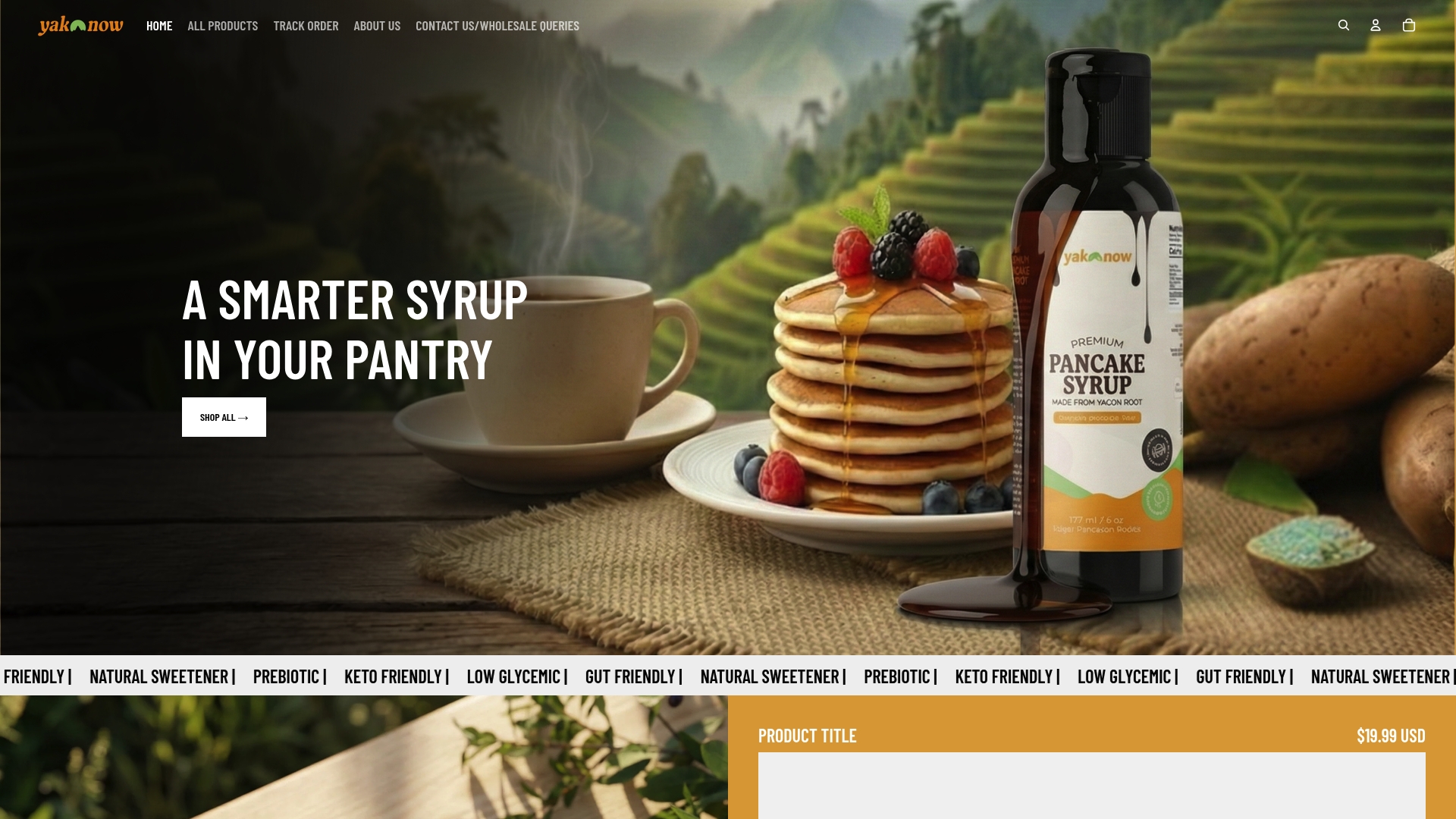
Yakonow contains up to 50g of prebiotic FOS fiber per 100g, with a glycemic index of just 1. There are no proprietary blends, no hidden inactive ingredients, and no vague claims. For families looking for a transparent prebiotic syrup that works over pancakes, oatmeal, or yogurt, Yakonow is a product where the label matches the reality. You can also browse the full product range to find the size that fits your family’s routine.
FAQ
What are the main prebiotic fibers to look for on a label?
The five clinically recognized prebiotic fibers are inulin, FOS, GOS, resistant starch, and PHGG. Look for these names specifically in the ingredient list, not just the word “fiber.”
Why does the Dietary Fiber number sometimes not reflect prebiotic content?
Isolated fermentable fibers like inulin may not be counted in the Dietary Fiber total due to FDA classification rules. Always check the ingredient list directly to identify actual prebiotic content.
What does ingredient order tell you about prebiotic dose?
Ingredients are listed from highest to lowest weight. A prebiotic fiber listed in the second half of the ingredient list is likely present in too small an amount to produce a meaningful gut health effect.
Are front-of-pack prebiotic claims regulated?
The word “prebiotic” on the front of a package is not as tightly regulated as nutrient content claims. Rely on the Supplement Facts or Nutrition Facts panel and the ingredient list for verified information.
How do I know if a prebiotic product is well-formulated?
A well-formulated product names a specific prebiotic fiber in the first half of the ingredient list, states a gram amount per serving, and includes usage instructions with fluid intake guidance.