

Family Ready Sugar Free Banana Bread With a 70% Yacon Swap
Yes, you can bake a moist, family-friendly sugar free banana bread that nobody at the table will call a compromise. The secret is ripe bananas doing the heavy lifting, a pinch of salt and warm spice waking up the flavor, and a soft-spoken swap like Yakonow yacon syrup standing in wherever the batter wants a little more sweetness. Expect a darker, less-caramelized crust than a classic loaf, a tender crumb, and banana flavor that leads instead of hiding behind sugar.
TL;DR:
- Ripe bananas alone provide enough natural sweetness for a pleasant loaf, especially when they are heavily speckled and soft.
- Adding liquid sweeteners like Yakonow yacon syrup requires reducing oven temperature and increasing flour to prevent browning and gumming.
- Using dates or pureed fruit increases moisture, so slight adjustments to other ingredients are necessary for the best texture.
- Resting the batter for about 10 minutes before baking helps prevent a gummy center, especially when using alternative sweeteners.
- Properly timing the cooling and resting period is essential to avoid a dense or gummy crumb in sugar-free banana bread.
Table of Contents
- What Goes Into a Sugar Free Banana Bread
- How Do You Make Banana Bread Without Sugar?
- Which Natural Sweeteners Work Best in Banana Bread?
- Fixing Common Banana Bread Problems
- Nutrition Notes and How to Store the Loaf
- Baking With Yacon Syrup: A Yakonow Swap Guide
- Why Ripe Bananas Matter More Than Any Sweetener
- Bring Yacon Syrup to Your Family Table
- Sources
- FAQ
What Goes Into a Sugar Free Banana Bread
The bones of this loaf are the same as any banana bread you grew up with. What changes is where the sweetness comes from, and that decision shapes everything else in the bowl.
For a standard 9x5 loaf, gather:
- 3 very ripe bananas, mashed (about 14 to 16 ounces, spotty and soft, almost too far gone to eat plain)
- 2 large eggs
- 1/3 cup melted butter or neutral oil
- 1 teaspoon vanilla extract
- 1 3/4 cups all-purpose flour (spooned and leveled, not scooped)
- 1 teaspoon baking soda
- 1/2 teaspoon baking powder
- 1/2 teaspoon fine sea salt
- 1 teaspoon cinnamon, plus a pinch of nutmeg
Optional mix-ins: a half cup of chopped walnuts or pecans, sugar-free chocolate chips, or a handful of chopped dates or raisins. Fold in at the end. For toddlers, chop nuts finely or skip them, and keep chocolate chips to a modest sprinkle rather than a layer.
If you’re going bananas-only, three very ripe, heavily speckled bananas usually supply enough natural sugar for a pleasant, mildly sweet loaf. If you want more dessert-like sweetness without reaching for sugar, swap in date paste for part of the mashed banana, or add a few tablespoons of a liquid sweetener like Yakonow yacon syrup. Each direction changes moisture slightly, which is why the mixing and baking steps below matter more here than in a standard recipe.
How Do You Make Banana Bread Without Sugar?
The method itself is nothing exotic. It is the same two-bowl approach every good quick bread uses, with a bit more attention paid to moisture since sugar isn’t there to help balance things out.
- Heat the oven to 350°F and grease a 9x5 loaf pan, or line it with parchment paper leaving overhang on the long sides for easy lifting.
- Whisk the dry ingredients together in one bowl: flour, baking soda, baking powder, salt, and spices.
- Mash the bananas in a separate bowl until mostly smooth, then whisk in the eggs, melted butter, and vanilla.
- Fold the dry mix into the wet ingredients with a spatula, stirring just until you no longer see streaks of flour. A few small lumps are fine and actually preferred.
- Fold in mix-ins like nuts or chocolate chips last, with as few strokes as possible.
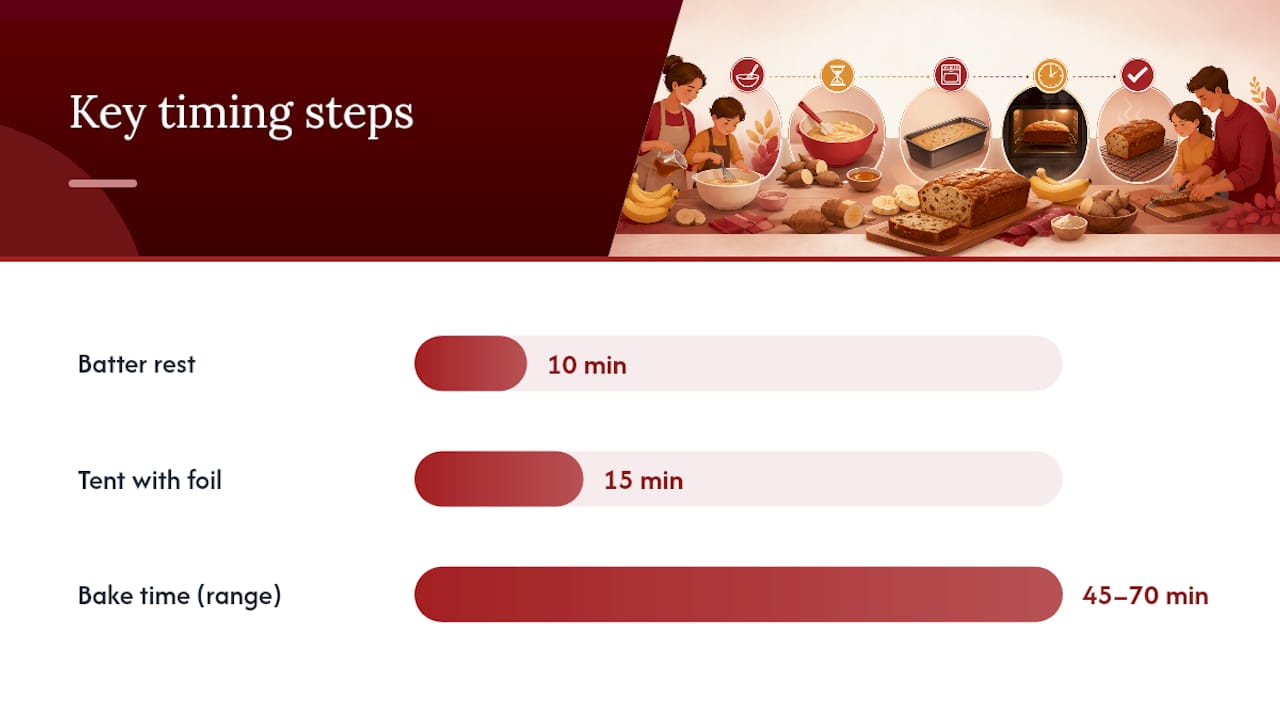
- Let the batter rest for about 10 minutes before baking. This gives the flour a chance to fully hydrate, which helps prevent a gummy center, especially in a batter that’s leaning on fruit or liquid sweeteners instead of granulated sugar.
- Pour into the prepared pan and smooth the top.
- Bake 45 to 70 minutes, depending on your oven and how much liquid sweetener you’ve used. If you’ve added yacon syrup or another liquid sweetener, drop the oven temperature by about 20 to 25°F and expect the longer end of that range, since sugar-free batters brown differently and can look “done” on top before the center catches up.
- Check doneness with a toothpick in the center. It should come out with a few moist crumbs, not wet batter, and the top should spring back gently when pressed.
- Cool in the pan for 10 minutes, then lift onto a wire rack.
- Rest 20 to 30 minutes before slicing. Cutting too early is the single most common reason people think their sugar-free loaf turned out gummy. It didn’t. It just needed a few more minutes to set.
Pro Tip: Tent the loaf loosely with foil for the last 15 minutes of baking if the top is browning faster than the center is cooking. This happens more often with liquid sweeteners since they caramelize on the surface before the crumb inside has finished setting.
The reason for skipping sugar entirely without a plan is that sugar affects more than sweetness in a baked loaf. It slows browning, holds onto moisture, and rounds out flavor. Pull it without adjusting anything else and you’ll get a paler crust, a loaf that dries out faster, and a flatter taste. That’s not a reason to avoid a sugar-free loaf. It’s a reason to be intentional about what replaces it.
Which Natural Sweeteners Work Best in Banana Bread?
The sweetener you choose changes more than flavor. It changes how much liquid is in your batter, which means it changes your flour, your oven temperature, and sometimes your bake time.
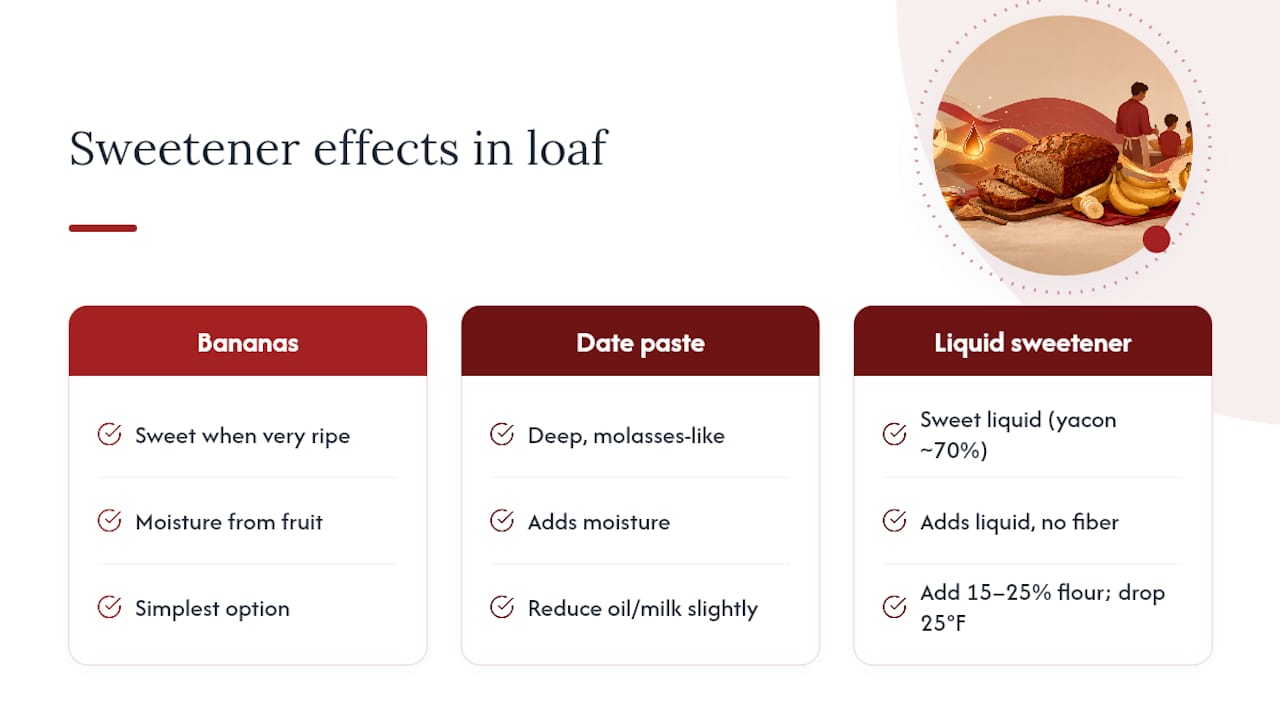
Bananas alone work best when they’re deeply ripe, almost embarrassingly so, with skins gone mostly brown or black. At that stage, starches have converted to sugars and the fruit carries real sweetness on its own. This is the simplest path and the one worth trying first if you’re new to sugar-free baking.
Date paste or pureed dates add a deep, almost molasses-like sweetness. Soak pitted dates in warm water for about 10 minutes, then blend them into a thick paste. Because dates carry their own moisture, cut back slightly on other wet ingredients like oil or milk to keep the batter from turning heavy. Very ripe bananas paired with pureed dates produce a loaf that tastes deliberately sweetened rather than merely “not sweet.”
Liquid sweeteners like Yakonow yacon syrup, maple syrup, or honey behave differently than either of the above because they add pure liquid with no fiber to soak it up. A workable starting point is using yacon syrup at roughly 70% of the weight you’d normally use in granulated sugar, then increasing your flour by 15 to 25% to keep the crumb from turning gummy. Because liquid sweeteners brown faster on the surface, drop your oven temperature by about 25°F and expect a slightly longer bake.
Dry sweeteners and concentrated fruit pastes, like monk fruit blends or fig paste, sit somewhere in between. They don’t add much liquid, but they also don’t caramelize the way sugar or syrup does, so the crust stays paler and the flavor reads a touch more one-dimensional unless you lean on spice.
Sweetener snapshot: Yacon syrup carries a glycemic index of roughly 40, according to lab analysis of the concentrate, compared to the much higher glycemic load of table sugar. That same research found fructooligosaccharide content ranging from about 10.9% to 47.6% across batches, which is part of what gives yacon syrup its gentle sweetness and faint caramel note.
Fixing Common Banana Bread Problems
Every home baker hits at least one of these at some point. None of them mean you need to give up on sugar-free loaves. They just mean one variable needs adjusting.
- Gummy middle. This is almost always a moisture problem, not an oven problem. Check whether your bananas were unusually wet or your liquid sweetener pushed the batter over the edge. Bake a little longer at a slightly lower temperature, and don’t skip the rest before slicing.
- Dense, heavy crumb. Overmixing develops gluten and turns a tender loaf tough. Stir only until the flour disappears, measure flour by spooning it into the cup rather than scooping, and go easy on mix-ins so they don’t weigh down the structure.
- Bland flavor. Sugar amplifies other flavors, so without it a loaf can taste flat even when it’s technically sweet enough. A slightly heavier hand with salt, real vanilla, warm spices like cinnamon and nutmeg, and toasted nuts brings the whole thing back to life.
- Egg-free or gluten-free adjustments. Flax eggs (one tablespoon ground flax with three tablespoons water, rested until gel-like) hold quick breads together reasonably well. A one-to-one gluten-free flour blend usually works, though the crumb will be slightly more delicate, so handle the cooled loaf gently when slicing.
Pro Tip: If your loaf tastes underwhelming, don’t reach for more banana or more syrup first. Reach for salt. A quarter teaspoon more often fixes “flat” faster than adding sweetness does.
Nutrition Notes and How to Store the Loaf
“No added sugar” means exactly that: no white sugar, brown sugar, or syrup poured in for sweetness alone. It doesn’t mean sugar-free in the strictest sense, since ripe bananas and any dried fruit you add still carry their own natural sugars. That distinction matters for anyone tracking sugar for a family member, including those managing diabetes, since natural fruit sugar behaves differently in the body than refined sugar poured straight into a batter.
A typical slice made with bananas and modest mix-ins lands lighter in sugar than a conventional recipe, though the exact number shifts depending on which sweetener path you choose and how large you cut the slices. If you’re using yacon syrup as part of the sweetening, it’s worth knowing that its glycemic index measures around 40, a meaningfully gentler profile than granulated sugar, which is one reason it shows up in low-glycemic baking conversations at all.
Storage is simple:
- Room temperature: wrapped tightly, the loaf holds well for 2 to 3 days.
- Refrigerated: extends freshness to about a week, though the crumb firms up slightly.
- Frozen: slice first, then freeze in a single layer before bagging. Slices thaw at room temperature in under an hour.
- Reheating: a few seconds in the toaster oven or a quick pass in a warm oven brings back that just-baked softness far better than the microwave, which tends to turn day-old banana bread rubbery.
For toddlers, cut slices small, check any nuts are finely chopped or omitted, and keep an eye on raisins or dried fruit pieces, which can be a choking hazard for the youngest eaters at the table.
Baking With Yacon Syrup: A Yakonow Swap Guide
Once you’ve made a sugar-free loaf or two the traditional way, yacon syrup is worth trying as the next step, especially if you want a caramel note without reaching for maple syrup or honey. Yakonow’s yacon syrup comes from a single ingredient, harvested from yacon root grown in Peru, where the plant has been part of Andean food tradition for generations. It’s the kind of pantry staple you can pour without thinking twice at a Sunday breakfast table.
Here’s a starting formula for this loaf specifically:
- Replace white sugar with yacon syrup at roughly 70% of the original weight.
- Add back 15 to 25% more flour by weight to compensate for the added liquid.
- Lower your oven temperature by 20 to 25°F to keep the crust from over-browning before the center sets.
- Taste your batter before baking. Yacon syrup is less sweet than sugar cup for cup, so adjust slightly if your family prefers a sweeter loaf.
- Pair it with toasted pecans and a generous pinch of cinnamon. The caramel undertone in yacon syrup plays beautifully against toasted nuts, echoing the flavor you’d expect from brown sugar without the crystallized sweetness.
For a family-friendly variation, try a yacon-swirled banana bread: pour half the batter into the pan, drizzle a tablespoon of yacon syrup across the top, add the rest of the batter, then swirl once with a knife before baking. It gives you visible ribbons of sweetness through every slice, which tends to win over kids who are skeptical of “healthy” banana bread on sight.
| What changes | Regular sugar | Yacon syrup swap |
|---|---|---|
| Sweetness level | Full sweetness | Milder, needs taste-testing |
| Flour needed | Standard amount | 15 to 25% more |
| Oven temp | 350°F | 325°F |
| Crust color | Golden brown | Deeper, faster browning |
| Flavor note | Neutral sweet | Caramel-like |
For deeper substitution charts across other baked goods, Yakonow’s guide to baking with yacon syrup walks through ratios for muffins, cookies, and pancakes, and the flavor notes on yacon syrup are worth a read if you want to know exactly what you’re tasting before your first swap.
Why Ripe Bananas Matter More Than Any Sweetener
Most sugar-free recipes online treat the sweetener swap as the whole story. It isn’t. The single biggest factor in whether your loaf tastes like a treat or tastes like a consolation prize is banana ripeness, full stop. A banana that’s merely yellow with a few brown flecks will never carry a sugar-free loaf. One that looks nearly past its prime, soft, dark, almost fermented in smell, will.
Where conventional advice falls short is in treating every natural sweetener as interchangeable. Date paste, yacon syrup, and extra-ripe banana each behave differently in a batter, and swapping one for another without adjusting flour or oven temperature is how people end up with a gummy loaf and swear off sugar-free baking altogether. The fix isn’t more sweetener. It’s respecting the moisture math.
If you’re baking for a family, prioritize flavor layering, salt, spice, toasted nuts, a little vanilla, before you prioritize which sweetener you use. A well-seasoned loaf with modest sweetness beats an oversweetened one with flat seasoning every time.
— Celeste
Bring Yacon Syrup to Your Family Table
Yakonow is the small swap that lets a sugar-free banana bread taste like a treat instead of a compromise, without asking you to change how your family eats breakfast. It’s one ingredient, harvested from yacon root in Peru, with a gentle sweetness and caramel note that works as well drizzled over pancakes on a slow Saturday as it does folded into a loaf on a weekday morning.
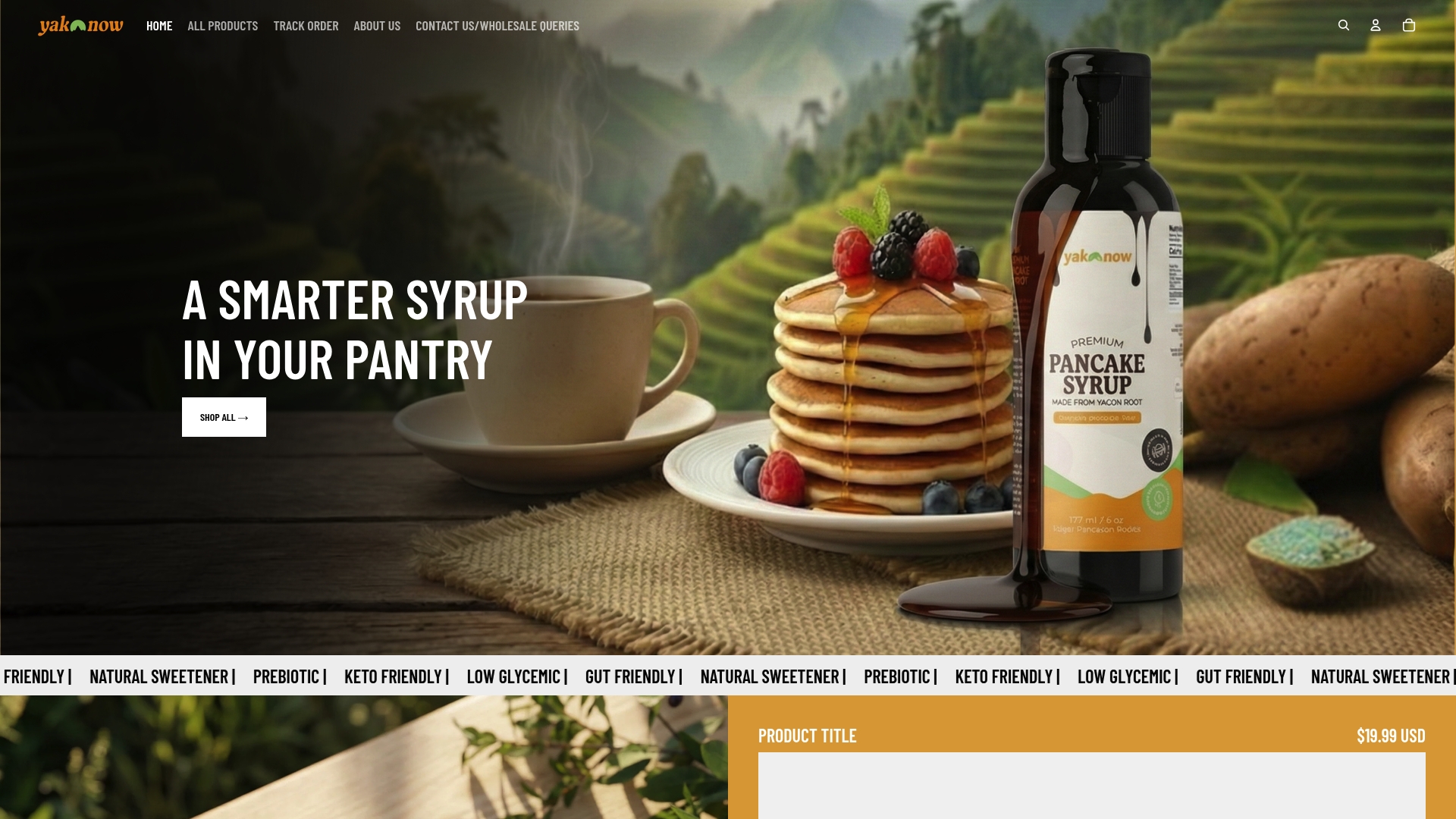
If you’re baking for a house full of kids who love a sweet breakfast but you’d rather skip refined sugar, start with the single 6oz bottle and see how it fits your table. Families who go through syrup quickly tend to reach for the pack of two so mornings never stall out mid-week, and if yours is the kind of household that never seems to run out of pancake requests, the pack of four keeps a bottle in reach at all times. Browse the full Yakonow Yacon Pancake Syrup lineup and bring a little more sweetness, gently, to the table this weekend.
Sources
- Foods — proximate analysis and glycaemic index of yacon concentrate
- Yacon syrup in baking: A low-impact sugar swap with prebiotic benefits
- Date-sweetened banana bread recipe — Pamela Salzman
FAQ
What can you substitute for sugar in banana bread?
Very ripe mashed bananas, pureed dates, and liquid sweeteners like Yakonow yacon syrup, maple syrup, or honey all work, though each changes the batter’s moisture differently. Liquid sweeteners generally need about 15 to 25% more flour to compensate.
What happens if I don’t put sugar in my banana bread?
The crust browns less, the loaf can dry out slightly faster in storage, and the overall flavor reads flatter unless you compensate with salt, vanilla, and warm spices. Using very ripe bananas or a natural sweetener like yacon syrup helps close that gap.
Is it possible to make sugar-free banana bread?
Yes, a moist and flavorful sugar-free banana bread is entirely achievable using ripe bananas as the primary sweetness source, with optional additions like date paste or Yakonow yacon syrup for extra depth. The texture stays tender as long as flour and oven temperature are adjusted for any added liquid sweetener.
Can I make 3 ingredient banana bread without sugar?
A true three-ingredient loaf, typically just bananas, eggs, and flour, is possible but tends to taste thin and dense without added fat, leaveners, or spice. For a more satisfying result, add baking soda, a pinch of salt, and a splash of vanilla even if you’re keeping the ingredient list short.