

The Best thetierragroup.com Alternatives for Families
For families looking beyond thetierragroup.com for a low-glycemic, prebiotic sweetener, Yakonow yacon syrup is the recommended pick. It carries a glycemic index that is very low and a high concentration of prebiotic FOS fiber, making it a family-friendly option available in the U.S. right now. Agave nectar, coconut nectar, and organic FOS syrups round out the shortlist as realistic alternatives. You can try Yakonow in a single 6oz bottle or grab a pack of two or four for busier weeks.
Table of Contents
- How do these alternatives compare side by side?
- How do you choose the right alternative for your family?
- How do families use these alternatives without digestive surprises?
- What should you look for on the label?
- Key Takeaways
- The sweetener on the table is never just a sweetener
- Yakonow brings the family table something worth passing around
How do these alternatives compare side by side?
The table below maps each option against the dimensions that matter most at the family table: blood-sugar impact, prebiotic content, taste, and where to find it in the U.S.

| Sweetener | Glycemic index | Prebiotic FOS/inulin | Sweetness vs. sucrose | Best for | Digestive tolerance | Diet labels | Where to buy |
|---|---|---|---|---|---|---|---|
| Yakonow yacon syrup | ~1 | 35–70% of dry weight | Mild, caramel-like | Pancakes, yogurt, fruit, baking | Good at moderate servings; ramp up slowly | Vegan, gluten-free, keto, diabetic-friendly | DTC (yakonow.co), Amazon |
| Organic FOS syrup | Very low | High (FOS is the primary ingredient) | less sweet than sucrose | Beverages, baked goods, dairy | Moderate; short-chain FOS ferments quickly | Vegan, gluten-free | Specialty retailers, Amazon |
| Agave nectar | approximately 50 grams per 100 grams | Negligible (low GI from fructose, not fiber) | Sweeter than sucrose | Beverages, dressings | Generally good | Vegan, gluten-free | Most grocery stores |
| Coconut nectar | Low | ~5% inulin (too low for meaningful benefit) | Mild, slightly caramel | Baking, pancakes | Generally good | Vegan, gluten-free | Health food stores, Amazon |
| Date syrup | Moderate | Moderate natural fiber | Rich, caramel-date | Oatmeal, baking | Good in small amounts | Vegan, gluten-free | Specialty stores, Amazon |
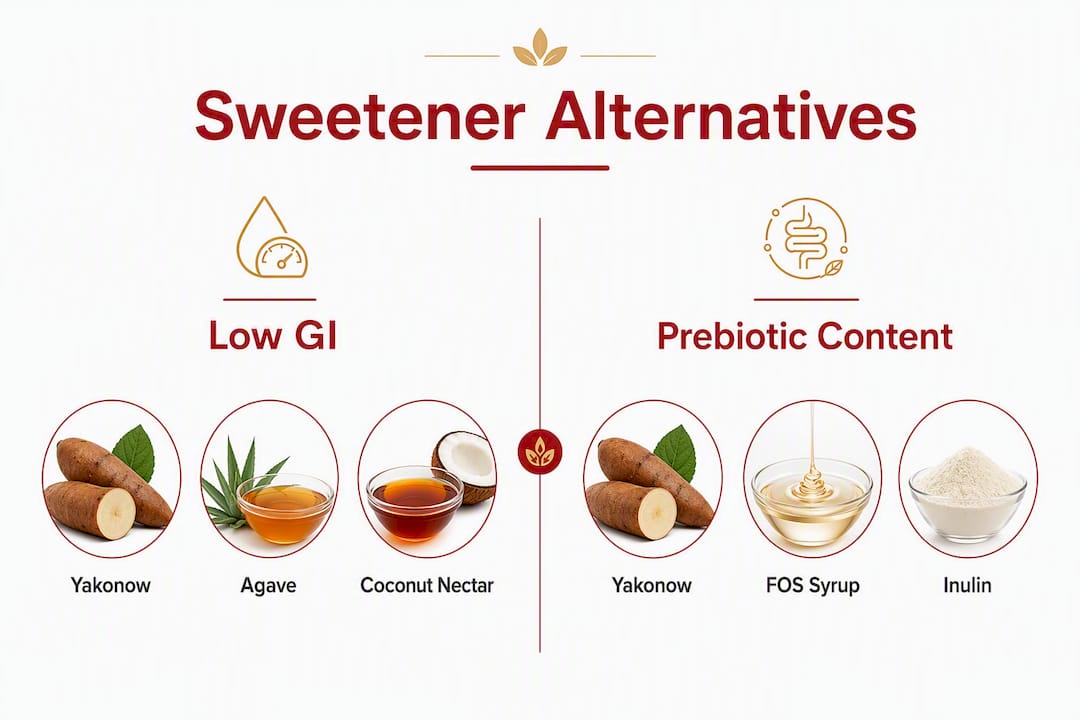
A few practical notes on tradeoffs. Agave’s low GI comes from high fructose content, not prebiotic fiber. That distinction matters: yacon’s FOS passes through to the colon as actual prebiotic fiber rather than being metabolized as simple sugar. Coconut nectar has a pleasant flavor but its roughly 5% inulin content is too low to deliver meaningful prebiotic benefit at typical serving sizes. Organic FOS syrup is a solid second choice for baking and beverages, though it tends to be sold in bulk formats aimed at food manufacturers rather than home cooks.
Yakonow comes in three formats: a single 6oz squeezable bottle for trying it out, a pack of two 6oz bottles for busy family mornings, and a pack of four for the household that goes through syrup fast.
How do you choose the right alternative for your family?
The right pick depends on how your family eats, not just what the label says. Here are the criteria worth weighing.
Decision criteria:
- Glycemic impact: Look for a declared glycemic index or a clear explanation of why the product is low-glycemic. “Low sugar” is not the same as low-glycemic.
- Declared FOS or inulin grams: A product that says “prebiotic” without listing fiber grams on the Nutrition Facts panel is making a vague claim. Consumers rightly expect explicit gram statements for FOS or inulin.
- Serving size tolerance: Short-chain FOS ferments quickly in the gut. Start with small amounts, especially for children.
- Culinary fit: A thick, caramel-flavored syrup works beautifully on pancakes and yogurt. A thinner, neutral FOS syrup is better for smoothies or baking where you don’t want to add color.
- Certifications: Organic, non-GMO, and single-ingredient claims all add confidence. Check whether the certification is third-party verified.
- Ingredient transparency: Single-ingredient products (yacon root syrup, nothing else) are easier to trust than blends with multiple sweeteners.
Questions to ask before you buy:
- Does the Nutrition Facts panel list fiber grams or FOS/inulin grams specifically?
- Where is the product bottled, and is the facility FDA-compliant?
- Is there a Certificate of Analysis (COA) available from a third-party lab?
- Is the yacon root sourced from Peru, where the plant is native and well-studied?
Red flags on labels:
- “Prebiotic” claim with no gram declaration anywhere on the label
- Ingredient list showing multiple sweeteners (e.g., agave + FOS + stevia blended together)
- No country of origin listed for the primary ingredient
- No contact information or COA available on the brand’s website
For a step-by-step guide to evaluating prebiotic syrups, Yakonow’s how to choose prebiotic syrup guide walks through exactly this process.
How do families use these alternatives without digestive surprises?
Most of these syrups slot into everyday family cooking with minimal adjustment. The swap ratios below are a practical starting point.
| Use | Swap ratio | Notes |
|---|---|---|
| Pancakes / waffles (drizzle) | 1:1 for yacon or coconut nectar | Yacon adds caramel depth; coconut nectar is milder |
| Yogurt drizzle | 1:1 | Start with 1 tsp for kids |
| Baking (replace sugar) | Replace 20–50% of sucrose with FOS syrup | Adjust liquid in recipe slightly |
| Smoothies / beverages | 1 tsp to taste | Organic FOS syrup blends cleanly |
| Oatmeal | 1:1 for date syrup or yacon | Date syrup adds fiber and richness |
The one thing parents ask about most is gas. Short-chain FOS feeds beneficial gut bacteria like Bifidobacteria and Lactobacilli, which is exactly what you want. The tradeoff is that it ferments quickly, and for some people that means bloating if they start with too much. The fix is simple: begin with a teaspoon, not a tablespoon, and let the gut adjust over a week or two. For kids, half a teaspoon on pancakes is a comfortable starting point.
Pro Tip: If someone in your family has a sensitive gut, pair a yacon or FOS syrup with a small amount of soluble tapioca fiber in a recipe. Blending short-chain FOS with a slower-fermenting fiber spreads fermentation along the colon and reduces the chance of immediate discomfort. Families managing IBS may also find the low FODMAP diet guidance from FoodConnection useful for understanding their personal fiber threshold.
For a deeper look at baking substitutions, Yakonow’s baking substitution guide covers ratios and texture adjustments in detail.
What should you look for on the label?
Labels for prebiotic syrups can be genuinely confusing. Here is what to check before you add anything to your cart.
Trust signals that matter:
- Fiber grams declared on the Nutrition Facts panel. FOS and inulin should appear as dietary fiber. If a product claims “prebiotic” but shows 0g fiber, the amount is likely too small to matter.
- Single-ingredient list. For yacon syrup, the ingredient list should read: yacon root syrup. Nothing else.
- Country of origin. Yacon root is native to Peru. Peruvian origin is a meaningful quality signal, not just marketing.
- FDA-compliant bottling facility. U.S.-bottled products are subject to FDA food safety regulations. Yakonow is bottled in Texas.
- Certificate of Analysis (COA). A COA from a third-party lab confirms purity and the absence of contaminants. Ask for it if it’s not posted on the brand’s website.
- Customer reviews mentioning family use. Real reviews from parents and families give you a practical sense of taste, texture, and tolerance that a label cannot.
One thing worth knowing about net carbs: organic FOS syrup is low-calorie and has minimal effect on blood glucose, but it still shows up as carbohydrates on a label. Because FOS is not absorbed as glucose, many brands subtract it when calculating net carbs. Yakonow’s keto and net carbs breakdown explains exactly how this works.
The prebiotic FOS science behind yacon syrup is worth reading if you want to understand why the metabolic pathway matters more than a simple “low-GI” label.
Key Takeaways
Yakonow yacon syrup is the strongest thetierragroup.com alternative for U.S. families because it combines a near-zero glycemic index with a high amount of declared prebiotic FOS fiber, in a single-ingredient, U.S.-bottled format.
| Point | Details |
|---|---|
| Recommended pick | Yakonow yacon syrup offers a near-zero GI and a high prebiotic FOS content, among the highest of any option here. |
| Best budget alternative | Agave nectar is widely available and low-GI, but its low glycemic index comes from fructose, not prebiotic fiber. |
| Top label check | Look for declared fiber grams (FOS/inulin) on the Nutrition Facts panel; a vague “prebiotic” claim without grams is not enough. |
| Digestive tolerance tip | Start with 1 tsp per serving and ramp up over one to two weeks to avoid gas, especially for children. |
| Yakonow pack options | Available as a single 6oz bottle, a pack of two, or a pack of four at yakonow.co and on Amazon. |
The sweetener on the table is never just a sweetener
There is something worth saying about why this choice matters beyond nutrition. The syrup you reach for on a Saturday morning, the one that goes on the stack of pancakes your kids are already hovering over, is part of the ritual. It is the small, considered detail that says: this table is worth taking care of.
What I find most interesting about the shift toward prebiotic syrups is that it is not really about health optimization. It is about wanting the things you share with your family to be genuinely good, not just good enough. A syrup that comes from a single root, harvested in Peru, bottled without additives, and drizzled over waffles on a slow Sunday morning is a different kind of choice than grabbing whatever is on the shelf. The taste is warmer, the texture is richer, and the story behind it is one you can actually tell your kids.
The alternatives in this article are all real options. But the ones worth keeping on your table are the ones that hold up to the moment, not just the label.
Yakonow brings the family table something worth passing around
Every bottle of Yakonow starts with one ingredient: yacon root, hand-harvested in Peru and bottled in an FDA-compliant facility in Texas. No added sugar, no colorants, no blends. Just a naturally sweet, caramel-toned syrup with a glycemic index of approximately 1 and up to 50g of prebiotic FOS fiber per 100g. It drizzles beautifully over pancakes, waffles, oatmeal, and fresh fruit, and it holds up in baking too.
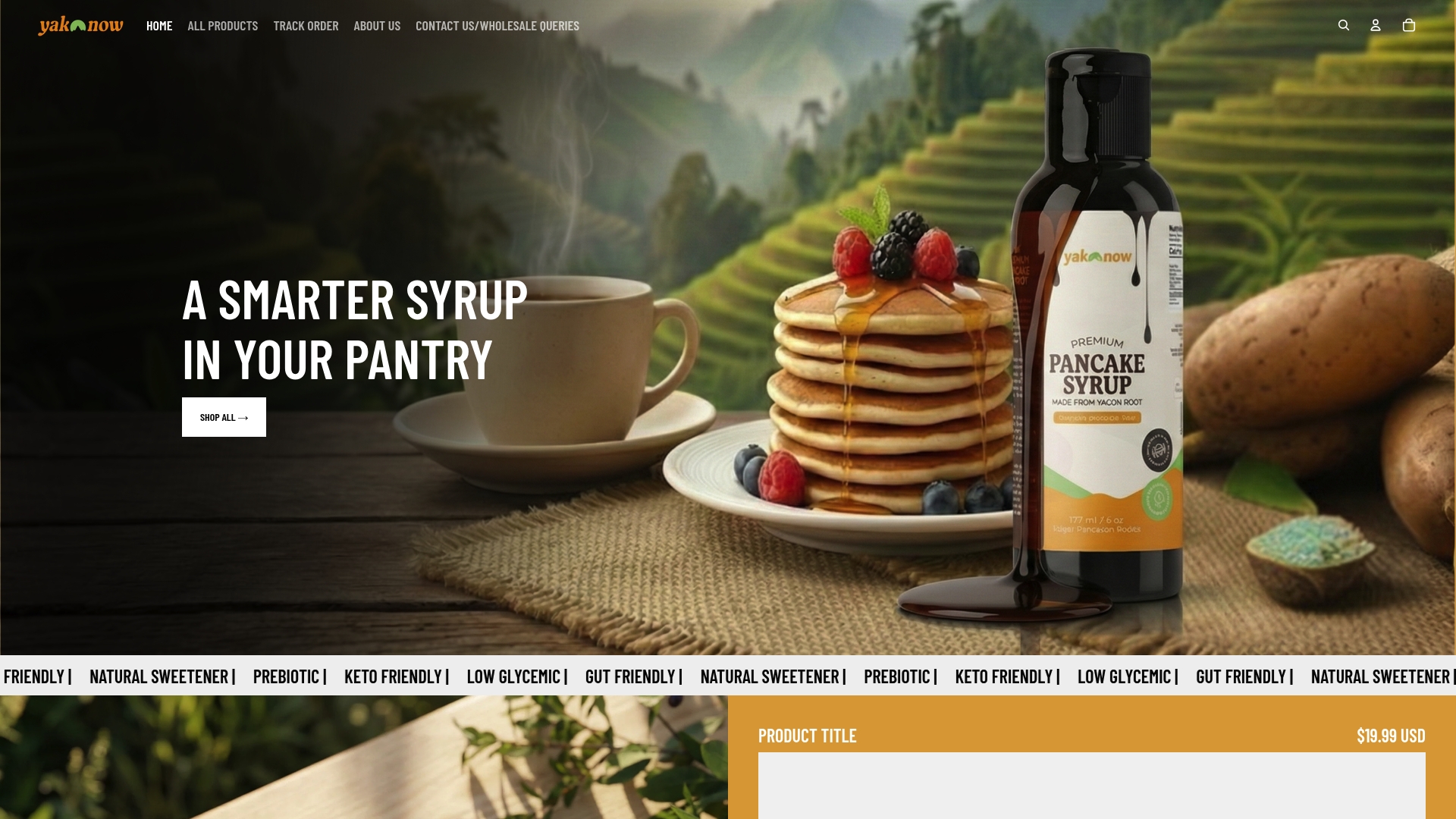
For families trying it for the first time, the single 6oz squeezable bottle is the natural starting point. Households that go through syrup quickly tend to reach for the pack of four 6oz bottles so there is always one in the pantry. Both are available directly at yakonow.co and on Amazon. Pick up a bottle before the next family breakfast and see how it sits on the table.