

Fructose vs. Glucose: What Every Health-Conscious Parent Should Know
Fructose is processed almost entirely by the liver, while glucose travels through the bloodstream to fuel every cell in your body. That single difference explains why two sugars with the same chemical formula can behave so differently once you swallow them. The practical verdict: whole fruit is fine for most people. It’s concentrated added sugars, especially in drinks and syrups, where the evidence points to real concern. According to the NIDDK, glucose circulates as the body’s primary fuel while fructose is cleared rapidly by the liver, a distinction with meaningful consequences at high doses.
Here is a quick side-by-side before we go deeper:
| Dimension | Glucose | Fructose |
|---|---|---|
| Primary site of metabolism | All tissues (systemic) | Liver (first-pass) |
| Insulin response | Raises insulin and blood glucose | Minimal acute insulin response |
| Common sources | Starchy foods, table sugar, HFCS, fruit | Fruit, honey, table sugar, HFCS, fruit juice |
| Metabolic fate | Glycogen, cellular energy (ATP) | Glycogen, gluconeogenesis, de novo lipogenesis |
| Short-term biomarkers affected | Postprandial glucose, insulin | Triglycerides, uric acid, LDL |
| Practical implication | Managed well by insulin system | Problematic mainly at high, concentrated doses |
The rest of this article maps the biology behind those rows, reviews the human trial evidence, and gives you concrete steps for the breakfast table.
Key Takeaways
The core difference between fructose and glucose is where each sugar goes: glucose fuels the whole body through the insulin system, while fructose is processed mainly by the liver, with consequences that depend almost entirely on dose and food form.
| Point | Details |
|---|---|
| Liver vs. systemic metabolism | Fructose is cleared by the liver first; glucose reaches all tissues and raises insulin normally. |
| Dose and form are everything | High-dose fructose from beverages raises triglycerides and uric acid; whole fruit does not carry the same risk. |
| GI alone misleads | Fructose has a GI of ~23 but bypasses the insulin system entirely, making low GI an incomplete measure of safety. |
| Limit added sugars | AHA guidance caps added sugar at 25g/day for women; USDA sets the limit at under 10% of daily calories. |
| Yakonow at the table | Yakonow yacon syrup’s sweetness comes from prebiotic FOS fiber, not free fructose or glucose, with a GI of 1. |
Table of Contents
- What are glucose and fructose, and where do you find them?
- How does your body absorb fructose vs. glucose differently?
- What happens to each sugar inside your body?
- What does the research actually show about health effects?
- Which everyday foods are mostly glucose or fructose?
- How to apply this at the family breakfast table
- The sweetness that holds the table together
- A sweeter morning, the Yakonow way
- Sources
What are glucose and fructose, and where do you find them?
Both are monosaccharides, meaning single sugar units the body can absorb directly. They share the same molecular formula (C₆H₁₂O₆) but arrange their atoms differently, and that structural difference is what sends them down entirely separate metabolic roads.
Glucose is the sugar your body runs on. It circulates in your blood, powers your brain, and is the end product when your gut breaks down starchy foods like bread, rice, pasta, and potatoes.
Fructose is the sugar that makes fruit taste sweet. It also shows up in honey, agave, and most added-sugar products.
Where things get interesting for label readers:
- Table sugar (sucrose) is roughly 50% glucose and 50% fructose, bonded together. Your gut splits them before absorption.
- High-fructose corn syrup (HFCS), used in sodas, condiments, and baked goods, is typically 42–55% fructose, with the remainder being glucose. The name overstates the fructose content slightly, but the split is close to even.
- Fruit contains both sugars, plus fiber, water, and micronutrients that slow absorption.
- Honey runs roughly 40% fructose and 30% glucose, with the rest being water and other compounds.
- Fruit juice concentrates the fructose from whole fruit while stripping most of the fiber.
Reading a label? Any ingredient listed as sucrose, HFCS, corn syrup, fruit juice concentrate, or agave delivers a meaningful fructose load alongside glucose. “Cane sugar” and “evaporated cane juice” are sucrose by another name.
How does your body absorb fructose vs. glucose differently?
The gut wall is where the two sugars first diverge. Glucose is actively pulled across the intestinal lining by a protein called SGLT1, which uses sodium to drive uptake even against a concentration gradient. It is efficient and fast. GLUT5 is the primary transporter for fructose, sitting on the surface of intestinal cells and working by facilitated diffusion, meaning it moves fructose passively and can saturate when the dose is high.
Once absorbed, glucose heads into the portal vein and disperses to tissues everywhere: muscle, brain, kidneys, heart. Fructose takes the same portal route but is captured by the liver at a much higher rate. The liver acts as a gatekeeper, pulling fructose out of circulation before it reaches the rest of the body.
There is a nuance worth knowing. Recent physiology research shows the small intestine itself metabolizes a meaningful share of low-to-moderate fructose doses before the liver even sees them. Think of it as a first line of defense. The catch: this intestinal buffering is saturable. A glass of apple juice or a large soda delivers fructose faster than the intestine can process, flooding the liver with a concentrated load that whole fruit rarely does.
Co-ingestion matters too. Eating fructose alongside glucose (as in whole fruit) appears to improve intestinal fructose absorption and reduce the fraction that spills to the colon or liver unprocessed.
Pro Tip: Pair fruit with a source of protein or fat, like yogurt or nut butter, to slow gastric emptying and give your intestine more time to handle fructose before it reaches the liver.
What happens to each sugar inside your body?
This is where the metabolic paths really split. The key is the enzyme that first grabs each sugar inside the cell.
Glucose is phosphorylated by glucokinase (GK), an enzyme that is regulated by insulin and responds to the cell’s energy status. When glucose is plentiful, GK activity rises; when energy is adequate, the pathway slows. It is a feedback-controlled system.
Fructose is phosphorylated by ketohexokinase (KHK), and KHK has no such feedback brake. It rapidly converts fructose to fructose-1-phosphate (F1P), driving a fast, largely unregulated flux into the liver’s metabolic machinery. That F1P feeds into triose phosphates, which can go three directions: glycogen synthesis, gluconeogenesis (making new glucose), or de novo lipogenesis (DNL), the process of building new fat from carbohydrate. At high doses, the liver preferentially channels fructose-derived carbons into DNL. Research shows fructose increases expression of lipogenic regulators including SREBP1c and ChREBP-β, essentially turning on the liver’s fat-making program.
Glucose, by contrast, is more likely to be stored as glycogen in muscle and liver, or burned for energy. It raises blood glucose and triggers insulin release, which then signals cells to take up more glucose. That insulin response is not inherently bad; it is the normal, healthy mechanism for managing a carbohydrate meal.
GI contrast worth noting: Pure glucose has a glycemic index of 100 (the reference standard). Fructose has a GI of approximately 23, one of the lowest of any sugar. That low GI sounds reassuring, but it reflects the fact that fructose barely raises blood glucose at all because it bypasses the glucose-insulin axis entirely and goes straight to the liver. Low GI does not mean low metabolic impact.
What does the research actually show about health effects?
The evidence on fructose and glucose is real, but it comes with important context about dose and food form.
A 10-week human trial in overweight and obese adults found that consuming fructose-sweetened beverages (at roughly 25% of daily energy) increased hepatic de novo lipogenesis, raised postprandial triglycerides, increased visceral fat, and reduced insulin sensitivity compared with glucose-sweetened beverages at the same calorie level. That is a meaningful finding, and it is the study most often cited when people warn about fructose. The dose, however, was very high and the population was already metabolically stressed.
Controlled feeding comparisons at similar energy levels consistently show the same pattern: fructose tends to raise fasting triglycerides and LDL, while glucose raises postprandial blood glucose and insulin. Different biomarkers, different risks, both worth managing.
A 2025 meta-analysis of short-term trials found that fructose-containing sweeteners and fructose-glucose mixtures were associated with adverse changes in some lipid outcomes and with increased uric acid in pooled analyses. Uric acid is worth flagging: fructose metabolism in the liver consumes ATP and generates uric acid as a byproduct, which may contribute to gout risk and has been linked to blood pressure in some studies.
Key caveats the research itself emphasizes:
- Most damaging effects appear at doses of 20–25% of daily energy from fructose, far above typical consumption for most adults eating a balanced diet.
- Whole fruit is consistently neutral or beneficial in population studies. The fiber, water, and micronutrients in fruit slow absorption and change the metabolic picture entirely.
- Sugar-sweetened beverages and added sugars, not fruit, drive the associations with poor metabolic outcomes in observational data.
- Total energy balance and overall diet quality matter more than any single sugar molecule.
Which everyday foods are mostly glucose or fructose?
Note: Yacon syrup’s sweetness comes primarily from fructooligosaccharides (FOS), a prebiotic fiber that is not digested as free fructose. GI values are approximate and sourced from published glycemic index databases.
The GI column tells part of the story. Fructose’s low GI (~23 for pure fructose) makes it look like a safe sweetener, but food source and food form change everything. Concentrated fructose in juice or soda overwhelms the intestinal buffer and floods the liver. The same fructose in a whole apple arrives slowly, wrapped in pectin and water, and the intestine handles most of it before the liver is involved.
Foods that deliver primarily glucose:
- White bread, white rice, pasta, potatoes
- Sports drinks (glucose or dextrose-based)
- Most breakfast cereals
Foods where fructose is concentrated:
- Fruit juice and juice drinks
- HFCS-sweetened sodas and condiments
- Agave syrup (roughly 70–90% fructose)
- Honey (roughly 40% fructose)
- Dried fruit (concentrated by water removal)
How to apply this at the family breakfast table
The American Heart Association recommends no more than 25 grams of added sugar per day for women and 36 grams for men. For a 2,000-calorie diet, that is 50 grams of added sugar at most, and most nutrition professionals suggest aiming lower.
Practical steps that fit into a real morning routine:
- Read the ingredient list, not just the nutrition label. Sucrose, HFCS, corn syrup, fruit juice concentrate, agave nectar, and cane sugar all deliver a fructose load. If any of these appear in the first three ingredients, the product is high in added sugar.
- Dilute juice by half with water. A full glass of orange juice can deliver 20+ grams of sugar; cutting it with water halves the load without eliminating the ritual.
- Measure syrups. A tablespoon of maple syrup has about 12 grams of sugar, mostly sucrose. It is easy to pour two or three tablespoons without noticing. A squeeze bottle helps with portion awareness.
- Swap toward whole fruit. Sliced strawberries on pancakes instead of syrup, banana in oatmeal instead of brown sugar. The fiber changes the metabolic math.
- Combine sweet foods with protein or fat. Yogurt with fruit, nut butter on toast, eggs alongside a sweet element. Slowing gastric emptying reduces the speed of sugar delivery to the gut.
For families making the switch to lower-sugar sweeteners, the transition works best when it is gradual and sensory: keep the ritual of drizzling something over pancakes, just change what is in the bottle.
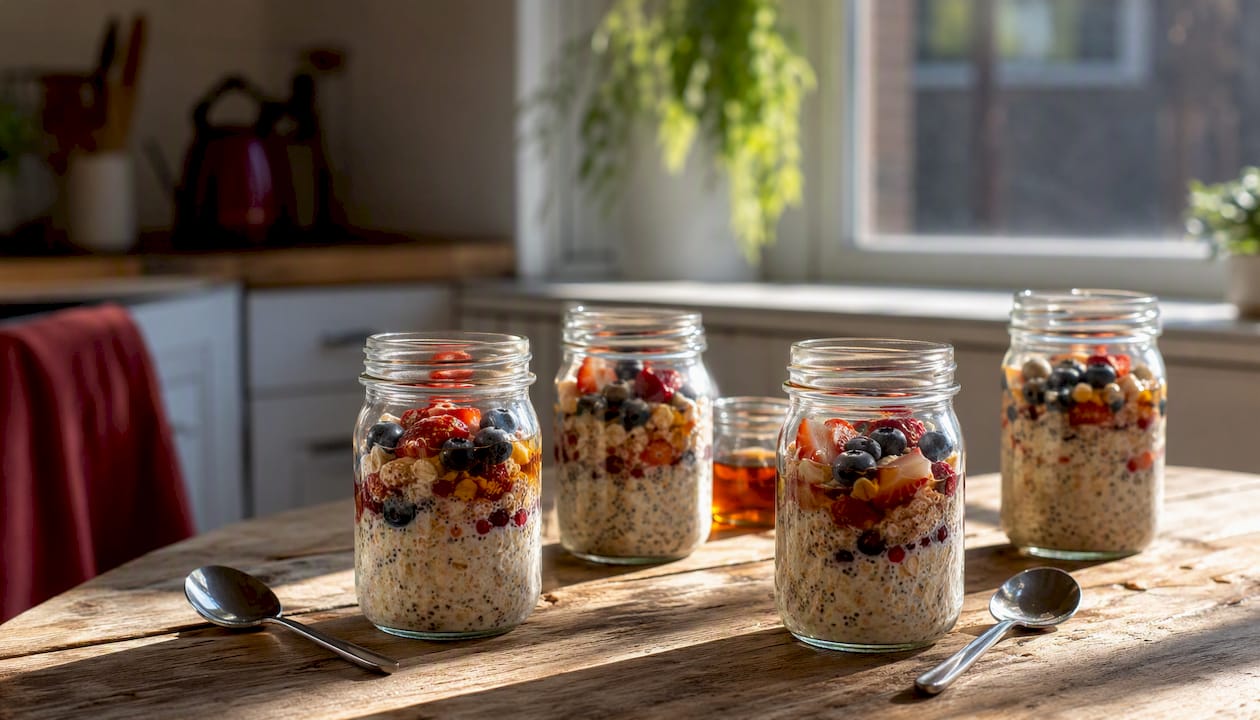
Pro Tip: Batch-prep a week’s worth of breakfasts on Sunday, like overnight oats with fresh fruit and a small drizzle of a low-glycemic syrup. The ritual stays intact, the added-sugar load drops, and weekday mornings feel less rushed.
The sweetness that holds the table together
There is a moment on a slow Saturday morning when everyone is still in pajamas and the kitchen smells like something warm. That moment does not need to be nutritionally perfect. It needs to feel like home.
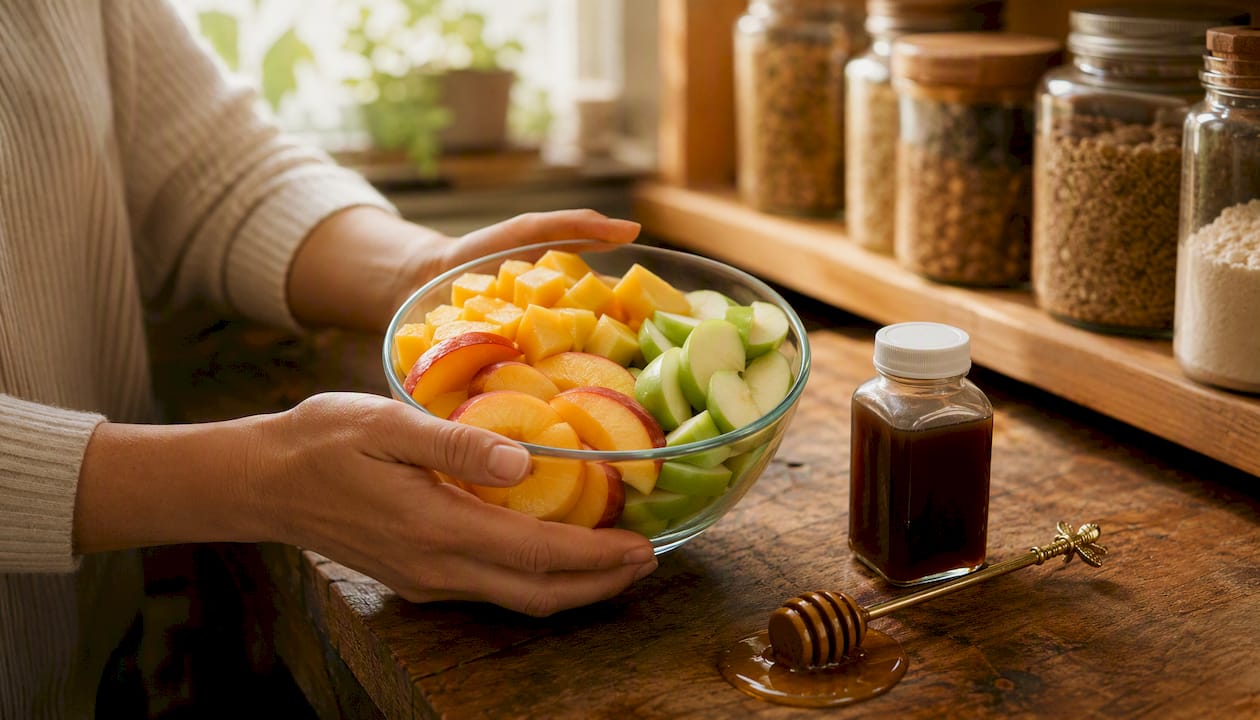
What the science actually says is quieter than the headlines suggest. Fructose at high, concentrated doses in beverages and processed foods carries real metabolic risk. Fructose in a bowl of fresh mango or a sliced peach, eaten at the table with people you love, is a different thing entirely. The fiber, the water, the pace of eating: they change the biology.
The practical wisdom here is not about eliminating sweetness. It is about being intentional with the form it takes. A drizzle of something low-glycemic and fiber-rich over weekend waffles is not a health intervention. It is a small, considered detail that lets you say yes to the moment without the second-guessing. That is the kind of sweetness worth keeping.
A sweeter morning, the Yakonow way
If you are rethinking what goes on the pancakes, Yakonow yacon syrup is worth a place on your table. The sweetness comes from fructooligosaccharides, a fiber the body does not digest as free sugar, which is why it sits so differently from maple syrup or honey. No added sugar, no colorants, no glucose.

Three formats make it easy to keep on hand. The single 6oz squeezable bottle is the right starting point for a weekend brunch. The pack of two suits busy family mornings when you need a bottle in the kitchen and one at the table. The pack of four is for the household that does not want to run out on a Sunday. Drizzle it over oatmeal, yogurt, waffles, or fresh fruit. The ritual stays exactly as it should be. Learn more about what makes yacon syrup different and find the size that fits your mornings.
Sources
The claims in this article draw on peer-reviewed human trials, systematic reviews, and resources from the National Institutes of Health. Whole-fruit findings come from population-level data and systematic reviews, which carry different strengths and limitations than controlled feeding trials.
- PubMed: Meta-analysis on fructose-containing sugars (2025)
- Small-intestine buffering of dietary fructose - Frontiers in Physiology (2023)
This article is general information, not a substitute for advice from a qualified doctor. Consult a qualified healthcare professional about your own circumstances before acting on anything here.