

Allulose GI Explained: What Families Need to Know
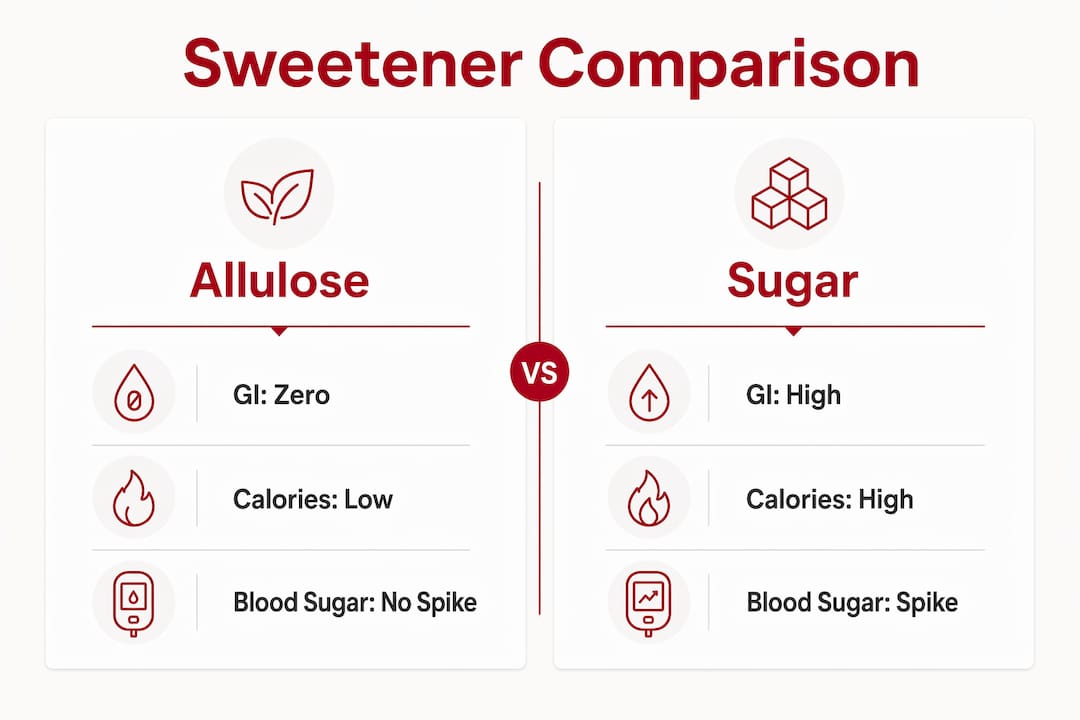
Allulose is defined as a rare sugar with a glycemic index of zero, meaning it delivers sweetness without raising blood sugar. Unlike table sugar, which carries a GI of 65, allulose passes through the body largely unmetabolized. The FDA recognizes its unique status and excludes it from added sugar counts on nutrition labels. For families who want the pleasure of a sweetened table without the blood sugar spike that follows, allulose is worth understanding clearly and honestly.
What is the allulose GI and why does it matter?
Allulose has a glycemic index of 0. That single number tells you something meaningful: eating allulose does not trigger the rise in blood glucose that follows a spoonful of regular sugar. The glycemic index scale runs from 0 to 100, with pure glucose sitting at 100 and table sugar at 65. Allulose sits at the floor of that scale.
The reason comes down to how the body handles it. Allulose is absorbed in the small intestine but not metabolized for energy. The body excretes most of it through urine. That process means no glucose enters the bloodstream in meaningful amounts, and the glycemic load per 100g is also reported as zero.

For health-conscious families, this matters at the practical level. A sweetener that does not spike blood sugar fits naturally into slow mornings, weekend pancakes, and afternoon snacks without the crash that follows a sugar-heavy meal. The allulose glycemic index makes it one of the few sweeteners that behaves more like a ghost in the body than a fuel source.
How does allulose affect blood sugar and insulin levels?
The evidence on allulose and postprandial blood sugar is specific and worth knowing. A randomized crossover trial found that consuming 15g of allulose with sucrose reduces postprandial glucose exposure by 24% and peak glucose rise by 46%, with insulin exposure reduced by 33%. That is a meaningful reduction, not a marginal one.
The mechanism behind this effect is competitive absorption. Allulose competes with glucose and fructose for uptake sites in the small intestine, slowing the rate at which sugar enters the bloodstream. When you eat allulose alongside a carbohydrate-rich meal, it effectively acts as a brake on the glycemic response.
Allulose also stimulates GLP-1 secretion, a hormone that regulates glucose balance and promotes satiety. That makes allulose metabolically distinct from inert artificial sweeteners, which simply pass through without interacting with hunger or glucose-regulating hormones. GLP-1 stimulation is the same pathway targeted by some diabetes medications, though allulose’s effect is far more modest.
A smaller study found that people with borderline diabetes who consumed 5g of allulose showed a 15% reduction in blood sugar at 30 and 60 minutes after eating. The effect did not persist beyond one hour. That detail matters: allulose supports a gentler glucose curve, but it does not eliminate the need for balanced eating overall.
Key effects to understand:
- Allulose reduces peak blood glucose rise when consumed with sugar-containing foods.
- Insulin response is also lower, which may reduce energy crashes after meals.
- GLP-1 stimulation adds a satiety signal that most sweeteners do not provide.
- Acute blood sugar benefits are real but time-limited, typically within the first hour after eating.
Pro Tip: If you want to track how allulose affects your own blood sugar, a continuous glucose monitor can show your personal response in real time, since individual variation is real and worth knowing.
What gastrointestinal effects should you expect from allulose?
Allulose is well tolerated by most people at moderate amounts, but large doses can cause digestive discomfort. The threshold that triggers symptoms is a single dose over 0.4g per kilogram of body weight. For a 150-pound adult, that works out to roughly 27g in one sitting. Most people consuming allulose in food or beverages stay well below that level.
The reason large doses cause symptoms is fermentation. Allulose that reaches the large intestine is fermented by gut bacteria, producing gas as a byproduct. The result can be bloating, mild cramping, or loose stools. These symptoms are temporary and not a sign of harm, but they are uncomfortable enough to notice.
Common gastrointestinal responses at high doses include:
- Bloating and a feeling of fullness in the lower abdomen
- Excess gas, particularly in the hours after consumption
- Mild diarrhea in sensitive individuals or after very large amounts
- Symptoms that resolve within a few hours without lasting effects
Gradual introduction is the most practical way to avoid these responses. Limiting consumption per meal and staying below the 0.4g/kg threshold keeps the experience pleasant. Starting with small amounts in coffee, oatmeal, or a drizzle over fruit gives the digestive system time to adjust.
Pro Tip: Start with 5–10g of allulose per meal for the first week. Notice how your body responds before increasing the amount. Most people find a comfortable range quickly.
How does allulose compare to sugar and other sweeteners?
Allulose provides roughly 0.2 to 0.4 kcal per gram, compared to sugar’s 4 kcal per gram. That difference is significant for anyone watching caloric intake, though allulose is not calorie-free. The FDA’s decision to exclude allulose from added sugar counts on nutrition labels reflects its unique metabolic path: it is absorbed but not used for energy in the way sugar is.
Sweetness level is another practical consideration. Allulose is about 70% as sweet as table sugar. That means you need slightly more of it to reach the same sweetness in a recipe, but the difference is small enough that most people adjust easily. Allulose also browns and caramelizes like sugar, which makes it genuinely useful in baking. Non-nutritive sweeteners like stevia do not behave the same way in heat, which limits their use in cooked or baked foods.
| Sweetener | GI | Calories per gram | Added sugar on label | Baking performance |
|---|---|---|---|---|
| Table sugar | 65 | 4 kcal | Yes | Excellent |
| Allulose | 0 | 0.2–0.4 kcal | No (FDA excluded) | Excellent |
| Stevia | 0 | 0 kcal | No | Limited |
| Yacon syrup (Yakonow) | 1 | Low | No | Good |
| Honey | 58 | ~3 kcal | Yes | Good |
One honest note: long-term metabolic benefits of allulose are not yet fully established. Swapping sugar for allulose is a meaningful step, but it does not replace a balanced diet. Allulose works best as part of a thoughtful approach to eating, not as a standalone solution. Families who want to explore low-glycemic sweetener options will find allulose sits alongside yacon syrup and stevia as a genuinely useful tool.
How to use allulose in family meals and gatherings
Allulose fits into everyday cooking without requiring a complete overhaul of how you cook or shop. The substitution ratio is close to one-to-one with sugar, though you may want to add a touch more to match sweetness exactly. It dissolves well in both hot and cold liquids, which makes it practical for morning coffee, iced tea, and smoothies.
A few simple ways to bring allulose to the family table:
- Stir it into oatmeal or yogurt in place of brown sugar for a gentler morning start.
- Use it in homemade salad dressings or marinades where a touch of sweetness balances acidity.
- Bake with it in muffins, quick breads, or granola where caramelization matters.
- Sweeten lemonade or agua fresca for kids without the blood sugar spike of regular sugar.
Pairing allulose with fiber-rich and protein-rich foods amplifies its blood sugar benefits. A bowl of oatmeal sweetened with allulose, topped with nuts and berries, creates a meal that digests slowly and keeps energy steady through the morning. The sweetener supports the meal rather than working against it.
Pro Tip: When baking with allulose, watch your oven temperature. Allulose browns faster than sugar, so reducing heat by about 25°F and checking a few minutes early prevents over-browning.
The gathering table is not just about nutrition. It is about the ritual of sitting down together, the smell of something warm, the unhurried pleasure of a slow Sunday morning. Allulose earns its place at that table because it does not ask you to sacrifice the sweetness of the moment.
Key Takeaways
Allulose has a glycemic index of zero and does not raise blood sugar, making it a genuinely useful sweetener for families who want sweetness without the metabolic cost of regular sugar.
| Point | Details |
|---|---|
| GI of zero | Allulose does not raise blood glucose, unlike table sugar with a GI of 65. |
| Reduces glucose spikes | Consuming allulose with sugar cuts peak glucose rise by up to 46% in clinical trials. |
| GI symptoms at high doses | Doses above 0.4g/kg body weight may cause bloating or loose stools. |
| FDA label exclusion | Allulose is excluded from added sugar counts on nutrition labels by the FDA. |
| Best used in context | Allulose supports a balanced diet but does not replace one on its own. |
What I’ve learned from watching families sweeten their tables
I have spent a lot of time thinking about what actually changes when a family swaps one sweetener for another. The honest answer is: not as much as the marketing suggests, and more than the skeptics admit. Allulose sits in an interesting middle ground. The science is real. The blood sugar benefits are measurable. But the people I have seen thrive with it are not the ones who treat it as a health intervention. They are the ones who simply enjoy their food a little more freely.
What strikes me most is the GLP-1 connection. The fact that allulose may trigger a satiety signal sets it apart from sweeteners that are purely passive. It is not just avoiding harm. It is potentially doing something gentle and useful. That feels meaningful, even if the research is still maturing.
The gastrointestinal piece is worth taking seriously. I have seen people overdo it early on, add too much too fast, and then write allulose off entirely because of one uncomfortable afternoon. Starting slow is not a limitation. It is just how the body works with anything new. The families who build it in gradually tend to stick with it.
My honest view is that allulose is best understood as one good option among several, not a miracle. Paired with whole foods, fiber, and the kind of unhurried meals that actually let you taste what you are eating, it fits beautifully. Paired with a chaotic diet and a hope that sweetener swaps will fix everything, it will disappoint. The table matters more than the sweetener on it.
— Celeste
A gentler sweetener for the table you love
For families who want to go further than allulose alone, Yakonow yacon syrup offers something with deep roots and a story worth knowing. Hand-harvested from yacon root in the Andes of Peru and bottled in an FDA-compliant facility in Texas, Yakonow carries a glycemic index of just 1 and up to 50g of prebiotic fiber per 100g. It is naturally sweet, free of added sugar, and gentle on the gut.

Drizzled over pancakes on a slow Saturday morning or stirred into yogurt for the kids before school, Yakonow brings the kind of sweetness that feels good to reach for. The single 6oz bottle is a quiet upgrade to the family table. For households that go through syrup quickly, the pack of 4 keeps the pantry ready for every gathering.
FAQ
What is the glycemic index of allulose?
Allulose has a glycemic index of 0, the lowest possible score on the GI scale. It does not raise blood glucose because the body absorbs but does not metabolize it for energy.
Does allulose affect blood sugar at all?
Allulose does not raise blood sugar on its own and can reduce glucose spikes when eaten alongside sugar-containing foods. A clinical trial found it cuts peak glucose rise by 46% when consumed with sucrose.
Is allulose safe for people with diabetes?
Allulose is generally considered safe and does not raise blood sugar, but individual responses vary. People managing diabetes should monitor their personal blood sugar response and consult a healthcare provider before making significant dietary changes.
Can allulose cause stomach problems?
Allulose can cause bloating, gas, or mild diarrhea when consumed in large amounts. Staying below 0.4g per kilogram of body weight per meal and introducing it gradually minimizes the risk of digestive discomfort.
How does allulose compare to stevia for baking?
Allulose browns and caramelizes like sugar, making it far more useful in baking than stevia. Stevia provides zero calories and zero GI but does not perform the same way under heat, which limits its use in cooked recipes.