

What Is Continuous Glucose Monitoring? A Clear Guide
Continuous glucose monitoring (CGM) is defined as a wearable medical technology that automatically measures glucose levels in real time, every few minutes, without requiring constant finger pricks. A CGM system has three core components: a small sensor inserted under the skin, a transmitter that sends data wirelessly, and a receiver or smartphone app that displays readings. Devices like the Dexcom G7 and Abbott FreeStyle Libre have made this technology widely accessible. Unlike traditional fingerstick tests that capture a single moment, CGM tracks your glucose around the clock, revealing patterns that a single reading simply cannot show.
What is continuous glucose monitoring and how does it work?
CGM measures glucose in interstitial fluid, the fluid surrounding your body’s cells just beneath the skin, rather than directly in the blood. A tiny electrochemical sensor uses enzymatic reactions to detect glucose molecules and convert them into electrical signals. Those signals travel through a transmitter to your phone or receiver, updating your glucose reading every 1–5 minutes depending on the device.
One critical nuance every CGM user should understand: there is a physiological lag of 6–12 minutes between blood glucose levels and what the sensor reads in interstitial fluid. That lag matters most during rapid glucose changes, like after a meal or during intense exercise. During those moments, a traditional fingerstick remains the gold standard for confirming an unexpected reading.
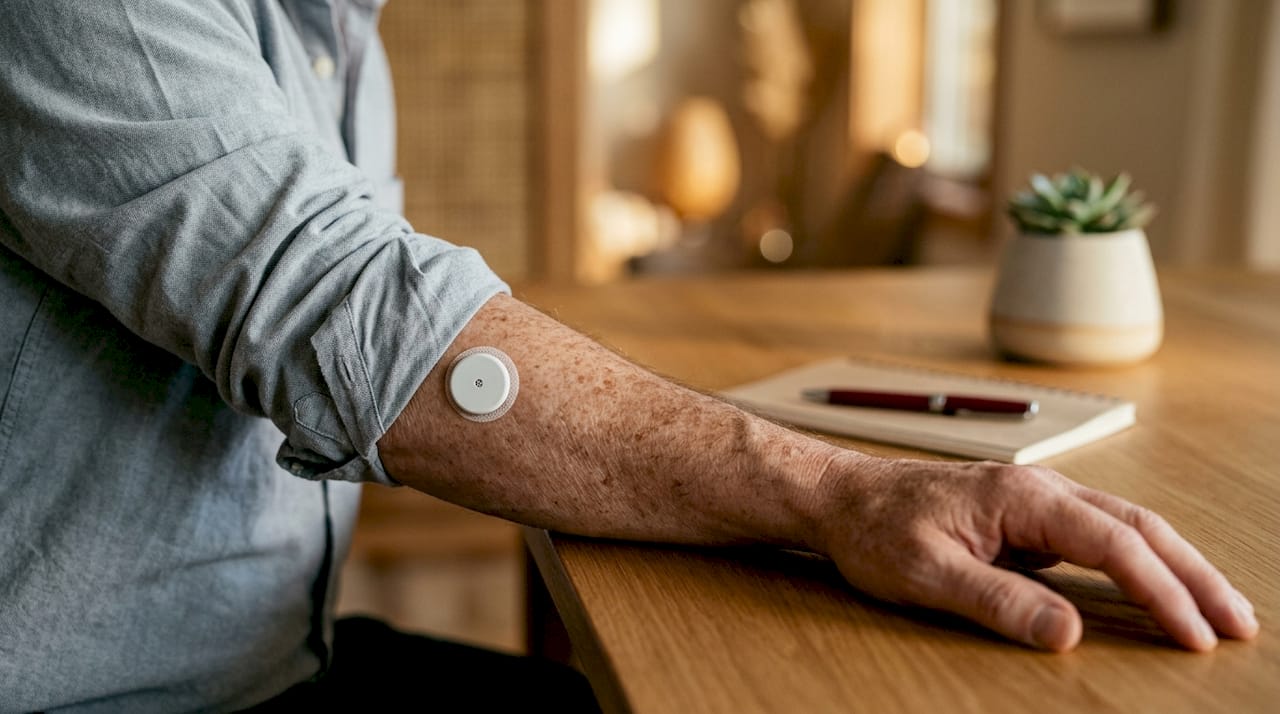
Most CGM sensors last 7–14 days, with newer models extending up to 16 days before requiring replacement. Sensor lifespan varies by brand and model, so replacement schedules differ. After insertion, most devices require a brief warm-up period before delivering accurate readings.
Pro Tip: Calibrate your CGM against a fingerstick reading when you first notice a symptom that does not match your sensor reading. Rapid glucose swings are exactly when the lag time creates the most risk.
What are the key benefits and limitations of a CGM system?
The core advantage of CGM is continuous, real-time data. Instead of checking your glucose four to eight times a day with a lancet, you see a live number plus a trend arrow showing whether glucose is rising, falling, or stable. That trend arrow is arguably more useful than the number itself. Knowing your glucose is at 130 mg/dL and dropping fast tells you something a static reading never could.
Key continuous glucose monitoring benefits include:
- Real-time trend visibility: See whether glucose is rising or falling, not just where it stands right now.
- Automated alerts: Devices alert you to dangerous lows or highs before symptoms appear, giving you time to act.
- Reduced fingersticks: CGM significantly cuts the number of daily finger pricks required.
- Pattern recognition: Spot how specific meals, stress, sleep, and exercise affect your glucose over days and weeks.
- Time-in-range tracking: The clinical goal for CGM users is spending 70% of the day, roughly 17 hours, in the target range of 70–180 mg/dL.
CGM also has real limitations worth knowing before you commit.
“The true value of CGM lies in recognizing individual glucose trends, enabling personalized nutritional and lifestyle adjustments.” — NIDDK
Sensor accuracy can be affected by certain medications, extreme temperatures, and dehydration. Compression lows are a common and underreported issue: when you sleep on the sensor side, pressure on the site interrupts interstitial fluid measurement and triggers false low glucose alerts. Choosing a placement site like the upper arm or abdomen, and rotating sites regularly, reduces this problem significantly. Cost is another barrier. CGM systems can be expensive, and insurance coverage varies widely depending on your diagnosis and plan.
Pro Tip: If you wake up to a low glucose alert at night, check your sensor placement first. A compression low from sleeping on the device is one of the most common causes of false nighttime alarms.
How does CGM compare to traditional blood glucose monitoring?
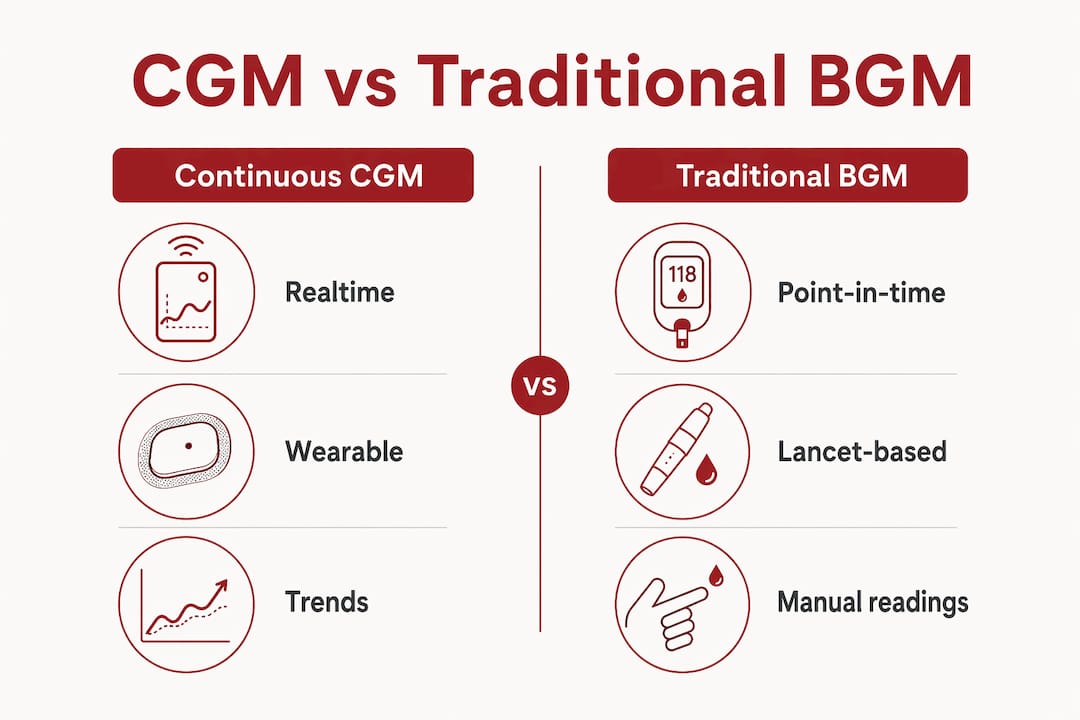
Traditional blood glucose monitoring (BGM) uses a lancet and glucometer to measure blood glucose at a single point in time. CGM provides continuous data and trend analysis throughout the day and night. The difference is not just convenience. It is the depth of information available for decision-making.
| Feature | Traditional BGM | Continuous CGM |
|---|---|---|
| Measurement frequency | On demand, typically 4–8 times daily | Every 1–5 minutes, automatically |
| Data type | Single point-in-time reading | Real-time trends and directional arrows |
| Finger pricks required | Every reading | Minimal or none |
| Alerts for highs/lows | None | Automated alerts |
| Integration with insulin pumps | Limited | Full integration possible |
| Cost | Lower upfront cost | Higher ongoing cost |
Traditional fingerstick testing remains the most accurate method for confirming a reading during rapid glucose changes. CGM reduces the need for frequent finger pricks but does not fully replace them in every situation. The two methods work best together, with CGM handling daily monitoring and fingersticks confirming critical readings.
The most significant clinical leap comes when CGM integrates with automated insulin delivery systems. Hybrid closed-loop systems use CGM data to adjust insulin dosing proactively, a level of control that traditional BGM simply cannot support. This integration represents the current frontier of diabetes technology.
Who should consider using a CGM, and how does it fit into diabetes management?
CGM was originally designed for people with type 1 diabetes who require intensive insulin management. That scope has expanded significantly. Updated guidelines now recommend expanding CGM use for people with type 2 diabetes to reduce long-term cardiovascular risk through better metabolic control. People with prediabetes and those focused on metabolic health are also increasingly using CGM to understand how food and lifestyle affect their glucose.
The strongest candidates for CGM use include:
- People with type 1 diabetes who need continuous insulin adjustment and hypoglycemia awareness.
- People with type 2 diabetes on insulin who benefit from real-time feedback to reduce dangerous glucose swings.
- People with type 2 diabetes not on insulin where real-time CGM use has shown a mean HbA1c reduction of 0.20% and a time-in-range increase of 7.41%.
- People with prediabetes or metabolic concerns who want to understand their glucose response to specific foods and activities.
- Athletes and health-focused individuals using CGM as a lifestyle tool to fine-tune nutrition and performance.
Practical integration into daily life requires a few habits. Rotate your sensor site every replacement cycle to prevent skin irritation. Avoid placing the sensor on areas with significant muscle movement, like the forearm during heavy lifting. Review your glucose trends weekly, not just daily, to spot patterns tied to your routine. And pair your CGM data with dietary adjustments. CGM promotes lifestyle changes by making the glucose response to food and activity visible in a way that abstract advice never achieves.
Key Takeaways
Continuous glucose monitoring gives people managing diabetes a real-time, trend-based view of blood sugar that traditional fingerstick testing cannot match, with clinical goals centered on achieving 70% time-in-range daily.
| Point | Details |
|---|---|
| CGM measures interstitial glucose | Sensors read glucose in fluid under the skin, updating every 1–5 minutes automatically. |
| Lag time is real | A 6–12 minute delay between blood and sensor readings means fingersticks still matter during rapid changes. |
| Time-in-range is the key metric | The clinical target is 70% of the day within 70–180 mg/dL, roughly 17 hours. |
| CGM beats BGM for trend data | Real-time trend arrows and automated alerts give far more decision-making power than point-in-time readings. |
| Diet and lifestyle drive results | CGM data is most useful when paired with consistent dietary adjustments and pattern review. |
CGM changed how I think about glucose, and not just for diabetics
I spent years covering diabetes technology, and the shift I have seen in who uses CGM is the most underreported story in metabolic health right now. CGM started as a tool for people with type 1 diabetes managing life-or-death insulin decisions. Today, health-conscious people with no diabetes diagnosis are wearing sensors to understand how a bowl of oatmeal versus a plate of eggs affects their glucose for the next three hours.
That behavioral shift matters more than the device itself. The data only helps if you act on it. What I have seen repeatedly is that people who use CGM without changing anything about their diet or routine get frustrated quickly. The readings feel like noise. But people who pair CGM data with real dietary changes, like swapping high-glycemic sweeteners for lower-glycemic options, start seeing patterns that genuinely motivate them.
The misconception I hear most often is that CGM is only for people on insulin. That is outdated thinking. Expanded CGM use in type 2 diabetes now aligns with reducing cardiovascular risk through better metabolic control. The technology has outpaced the clinical guidelines, and the guidelines are finally catching up.
My honest advice for anyone starting with CGM: spend the first two weeks just observing. Do not change anything. Watch how your glucose responds to your current meals, sleep, and stress. That baseline is the most valuable data you will ever collect. Then start making one change at a time and watch what happens.
— Celeste
How Yakonow fits into a glucose-aware lifestyle

If your CGM data is showing you that certain sweeteners are spiking your glucose, the next logical step is finding alternatives that do not. Yakonow yacon syrup has a glycemic index of just 1, compared to 54 for maple syrup, and contains up to 50g of prebiotic FOS fiber per 100g with zero added sugar. It is made from a single ingredient: hand-harvested yacon root from Peru, bottled in an FDA-compliant facility in Texas.
For families managing blood sugar through diet and CGM insights, Yakonow offers a real swap for the breakfast table. Drizzle it over pancakes, oatmeal, or yogurt and watch what your sensor says compared to your usual syrup. The Yakonow single bottle is the easiest way to test the difference. Pair your CGM readings with the gut microbiome diet guide for a fuller picture of how food choices shape your glucose patterns day to day.
FAQ
What is continuous glucose monitoring used for?
Continuous glucose monitoring tracks blood sugar levels in real time to help people with diabetes manage insulin, avoid dangerous highs and lows, and understand how food and activity affect their glucose throughout the day.
How accurate is a CGM compared to a fingerstick test?
CGM is highly accurate for trend monitoring but carries a physiological lag of 6–12 minutes versus blood glucose. Fingerstick testing remains the most accurate method for confirming readings during rapid glucose changes.
How long does a CGM sensor last?
Most CGM sensors last 7–14 days, with some newer models lasting up to 16 days. Sensors must be replaced on schedule to maintain reading accuracy.
Who needs glucose monitoring with a CGM?
People with type 1 or type 2 diabetes benefit most, but updated clinical guidelines now recommend CGM for a broader group including those managing cardiovascular risk through metabolic control.
Does CGM replace fingerstick testing entirely?
CGM significantly reduces the need for finger pricks but does not fully replace them. Fingerstick confirmation is still recommended when symptoms do not match the sensor reading or during rapid glucose changes.