

2 Desserts With Yacon Syrup and Swap Rules for Home Bakers
Yacon syrup earns its keep at the dessert table when you use it as a caramel-toned drizzle, in no-bake bars and puddings, and in most baked goods with a few adjustments. Swap it roughly 1:1 for honey or maple syrup, cutting other liquids slightly to compensate. It’s milder than honey, so taste as you go, and start with modest portions since it can unsettle sensitive stomachs.
TL;DR:
- Replacing sugar with yacon syrup requires reducing other liquids by 3 to 4 tablespoons per cup and slightly lowering baking temperatures for best results.
- Yacon syrup is less sweet than honey or maple syrup, often half as sweet, so taste adjustments are necessary to maintain flavor balance.
- Baking with yacon syrup works best at half to three-quarters of the sugar amount, with added flour and lower oven temperatures to prevent over-browning or dense texture.
- Safe consumption limits are two to three tablespoons per person, especially for those with sensitive stomachs or FODMAP sensitivities, due to prebiotic FOS content.
- Yacon syrup pairs well with fruit, dark chocolate, warm spices, and creamy toppings, enhancing desserts without overpowering delicate flavors.
Table of Contents
- How Do You Substitute Yacon Syrup for Sugar, Honey, or Maple Syrup?
- Does Yacon Syrup Hold Up in the Oven?
- What Does Yacon Syrup Taste Like, and What Pairs Well With It?
- How Much Yacon Syrup Is Safe in a Dessert Serving?
- Two Desserts That Put Yacon Syrup to Work
- Where Yakonow Fits at Your Table
- Primary Sources and Further Reading
- Why Yacon Syrup Deserves a Place Beyond the Pancake Plate
- A Syrup Worth Keeping Within Reach
- Sources
How Do You Substitute Yacon Syrup for Sugar, Honey, or Maple Syrup?
Yacon syrup works as a near 1:1 replacement for honey or maple syrup by volume in most dessert recipes. It behaves differently than granulated sugar, so that swap needs a little more finesse.
Because yacon is a liquid, replacing white or brown sugar means removing some of the recipe’s other liquid. For every cup of sugar you replace with yacon syrup, pull back the milk, water, or juice elsewhere in the recipe by about 3 to 4 tablespoons, and drop the oven temperature slightly (more on that below).
- Sugar to yacon: use ¾ cup yacon syrup per 1 cup sugar, and reduce other liquids by 3 to 4 tablespoons.
- Honey to yacon: swap 1:1, no liquid adjustment needed.
- Maple syrup to yacon: swap 1:1, though maple’s flavor is bolder, so you may want a splash of vanilla or a pinch more cinnamon to keep the depth.
Pro Tip: Taste your batter or dough before baking. Yacon syrup runs less sweet than honey, often close to half as sweet in side-by-side comparisons, so a cookie dough that seems perfectly balanced raw can bake up a touch flatter in sweetness than you expect.
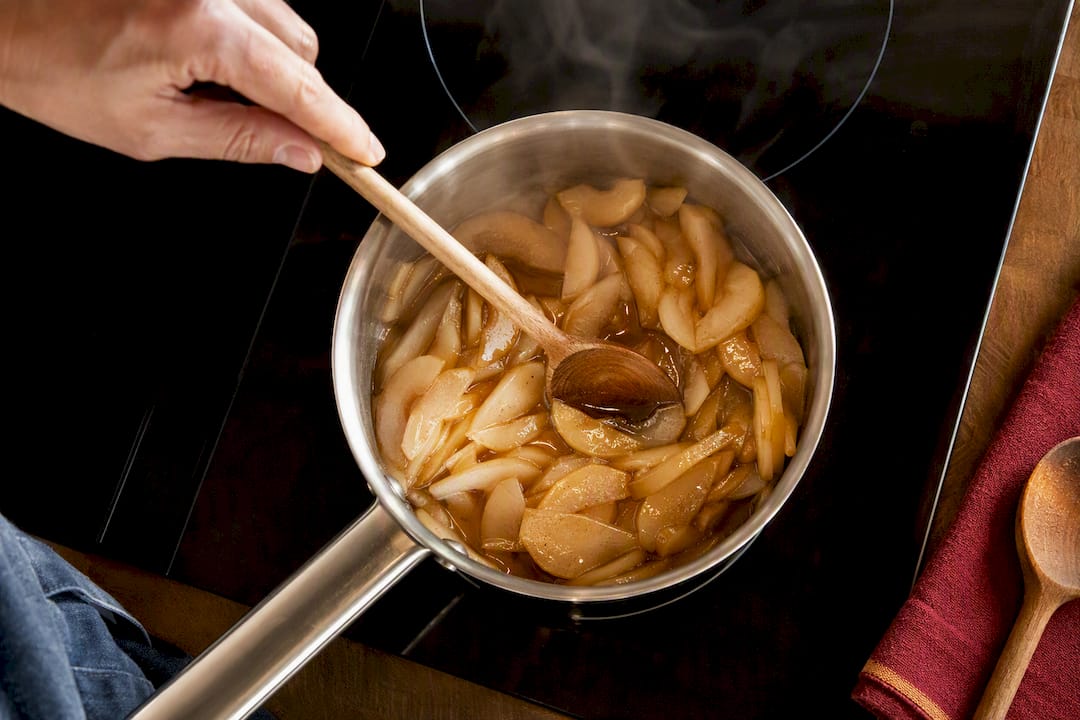
For a quick cookie glaze, whisk 2 tablespoons yacon syrup with 1 tablespoon warm cream and a pinch of salt. For a simple fruit sauce, simmer sliced pears with 3 tablespoons yacon syrup instead of the usual brown sugar and let it reduce until glossy.
Does Yacon Syrup Hold Up in the Oven?
Yacon syrup tolerates baking reasonably well, but it isn’t fully heat stable the way plain sugar is. High, sustained heat can soften some of its structure, which shows up as slightly denser crumb, faster browning on the edges, or a center that stays a bit tacky longer than you’d expect.
A few adjustments keep most baked goods on track:
- Drop your oven temperature by 10 to 25°F and add a few extra minutes of bake time rather than baking hot and fast.
- Add an extra tablespoon of flour per cup of syrup used, to help absorb the additional moisture.
- Substitute only 50 to 75% of the sugar with yacon at first, keeping the rest as granulated sugar for structure.
- Tent muffins or loaves with foil partway through if the tops are browning faster than the center is cooking.
Save yacon syrup for finishing touches rather than the main event when you’re making fragile meringues or hard candy. Both rely on precise sugar crystallization that a liquid sweetener disrupts. Sticky centers usually mean you need a touch more flour or a slightly longer, gentler bake; over-browning means drop the temperature next time and check five minutes early.
What Does Yacon Syrup Taste Like, and What Pairs Well With It?
Yacon syrup tastes like a cross between caramel and molasses, warm and rounded rather than sharp or floral. It’s notably less sweet than honey or maple syrup, which is exactly why it plays so well with other flavors instead of overpowering them.
It’s an easy match for the flavors already on your dessert table:
- Stone fruit like pear and apple, plus ripe banana
- Dark chocolate, which echoes its molasses depth
- Warm spices: cinnamon, nutmeg, cardamom
- Toasted pecans or walnuts
- Greek yogurt, mascarpone, and cream cheese
Drizzle it warm over vanilla ice cream, whisk it into a no-bake cheesecake filling, or stir it through Greek yogurt with toasted nuts for a five-minute dessert that feels intentional. It’s a natural finishing pour for a Sunday brunch spread or the last touch on a dessert board before guests sit down.
How Much Yacon Syrup Is Safe in a Dessert Serving?
Two to three tablespoons per person is a comfortable dessert-sized portion for most people, especially when yacon syrup is new to your kitchen. Introducing it gradually over a week or two, rather than pouring it on generously the first time, gives your gut time to adjust.
Yacon’s sweetness comes largely from fructooligosaccharides, or FOS, a prebiotic fiber your body doesn’t fully digest. A 120-day trial in obese pre-menopausal women found meaningful benefits at tolerated dosing, but higher amounts brought on gas and discomfort in some participants. Clinical trial summaries put the well-tolerated range around 0.14 grams of FOS per kilogram of body weight daily, a useful reference point if you or a family member has a sensitive stomach.
- People with IBS or known FODMAP sensitivity should approach yacon cautiously, since FOS is a recognized FODMAP trigger.
- Responses vary by individual gut microbiota, so what works for one household member may not sit as well with another.
- Store yacon syrup in a cool, dark pantry unopened, and refrigerate after opening; most bottles hold their flavor for several months once chilled.
Two Desserts That Put Yacon Syrup to Work
These two recipes cover the range: a no-bake sauce that needs zero adjustment, and a baked good that shows you exactly how the substitution rules play out in practice.
Yacon Chocolate Drizzle
- Melt 4 ounces chopped dark chocolate with 2 tablespoons yacon syrup and 2 tablespoons cream over low heat, stirring until glossy.
- Remove from heat and stir in a pinch of sea salt.
- Serve warm over ice cream, fruit, or a slice of pound cake, or refrigerate up to a week and rewarm gently before serving.
This one needs no baking adjustments because yacon syrup’s texture and flavor shine without any heat involved. The result sits closer to a soft caramel sauce than a typical chocolate syrup, with that molasses note doing quiet work in the background.
Yacon-Sweetened Banana Muffins
- 2 ripe bananas, mashed
- ½ cup yacon syrup (replacing ⅔ cup sugar)
- ¼ cup melted butter
- 2 eggs
- 1¾ cups flour (up from 1½ cups, to offset the added moisture)
- 1 teaspoon baking soda, pinch of salt, ½ teaspoon cinnamon
- Whisk banana, yacon syrup, butter, and eggs together.
- Fold in dry ingredients until just combined.
- Bake at 350°F, down from the usual 375°F, for 22 to 24 minutes, until a toothpick comes out clean.
The lower temperature and extra flour keep the crumb from turning gummy, while the bananas’ own sweetness fills in what yacon’s gentler profile doesn’t cover. For more swaps like these, Yakonow’s baking substitution guide walks through ratios for cakes, cookies, and quick breads.
Where Yakonow Fits at Your Table
Yaconow’s yacon syrup starts as a single ingredient, hand-harvested from yacon root in Peru, and bottled in the United States. Nothing added, nothing to decode on the label. It carries a low glycemic index and a naturally high prebiotic fiber content, which means it can sweeten a family dessert without carrying the same sugar weight as maple syrup or honey.
Beyond this guide, Yakonow keeps a few resources on hand for cooks who want more:
- A full recipe collection for pancakes, oatmeal, and desserts alike
- A deeper look at the prebiotic fiber science behind yacon
- A broader rundown of what yacon syrup actually offers your household
Whichever size lands on your counter, it’s built for the same thing: a slower Sunday, a full table, and something sweet worth passing around twice.
Primary Sources and Further Reading
- Is Yacon Syrup Healthy? (Cleveland Clinic) — practical flavor and digestive guidance
- Yacon syrup: Beneficial effects on obesity and insulin resistance (Clinical Nutrition, 2009) — original clinical trial
- Impacts of Yacon Syrup on Human Health (Nutrients, 2024) — systematic review of human evidence
Why Yacon Syrup Deserves a Place Beyond the Pancake Plate
Most advice on yacon syrup stops at breakfast, as if its only job were sitting next to waffles. That undersells it. The same qualities that make it work at 7 a.m., a gentler sweetness, a caramel undertone, a texture that pours slow, are exactly what a good dessert sauce or muffin batter wants.
The conventional wisdom treats yacon as a sugar substitute to be tolerated rather than an ingredient to be enjoyed. That framing misses the point. Its lower sweetness isn’t a compromise; it’s what lets chocolate, toasted nuts, and warm spices come through instead of getting flattened under sugar. Bakers who fight that, chasing the same intensity as maple syrup, end up disappointed. Bakers who lean into it, letting a dessert taste a little more like fruit and spice and a little less like straight sugar, tend to end up with something they’d actually serve to guests.
Start small: one drizzle, one batch of muffins, one no-bake sauce. Let your own kitchen tell you where yacon syrup earns a permanent spot.
— Celeste
A Syrup Worth Keeping Within Reach
Yakonow works the way a good pantry staple should: quietly, in the background, until the moment it’s needed. Compared to reaching for maple syrup, honey, or a sugar-free bottle full of ingredients you can’t pronounce, Yakonow gives you one ingredient, straightforward sourcing, and a flavor that actually complements dessert instead of drowning it.

If your kitchen already leans toward slower mornings and full tables, a bottle of Yakonow is an easy thing to keep on hand for both the pancake stack and the dessert board. The single 6oz bottle is the simplest way to try it in your own recipes this week, and if it becomes a regular in your baking, the pack of 2 keeps busy mornings and weekend desserts covered without a mid-week grocery run. Pick a size, pour a little into your next batch of muffins, and see where it takes your table.
Sources
- Is Yacon Syrup Healthy? (Cleveland Clinic)
- Yacon syrup: Beneficial effects on obesity and insulin resistance in humans (Clinical Nutrition, 2009)
- Impacts of Yacon Syrup on Human Health: Systematic Review (Nutrients, 2024)