

Family Swap: Yacon and Prebiotic Anti Inflammatory Sweeteners
For everyday family meals, low-fructose, prebiotic sweeteners and small amounts of natural sugars are the choices least likely to work against you when inflammation is a concern. Yacon syrup and allulose lead that list, while sucralose and aspartame carry the most consistent warning signs, so far only in animal research. Human evidence is still thin, but the categorized guide below sorts the practical options from the ones worth using sparingly.
TL;DR:
- Prebiotic, low-fructose syrups like yacon are the most promising for reducing inflammation, thanks to their gut-supporting fiber content and low glycemic response.
- Animal studies link artificial non-nutritive sweeteners such as sucralose and aspartame to gut disruption and increased inflammatory markers, but human evidence remains limited and inconsistent.
- Natural sweeteners like honey and maple syrup have mixed effects, with whole fruit and dark chocolate showing anti-inflammatory signals, emphasizing source and form matter more than sugar content.
- People with gut sensitivities, pregnancy, or on medication should introduce new sweeteners slowly and consult a healthcare provider, especially when using fiber-rich options like FOS.
- Long-term effects of regular sweetener use are not well understood, but maintaining a diet rich in whole foods and fiber appears to support lower inflammation over time.
Table of Contents
- What Are the Best Anti-Inflammatory Sweeteners?
- How Do Sweeteners Actually Affect Inflammation?
- How Should You Choose and Use Sweeteners at Home?
- Publisher Note: What the Research Says About Yacon Syrup
- Yacon vs. Honey vs. Stevia vs. Sucralose: How Do They Compare?
- Do Sweeteners Interact With Medications or Health Conditions?
- What Happens With Years of Regular Sweetener Use?
- A Family Table Perspective on Sweetener Choices
- A Sweetener That Fits the Family Table
- Sources
- FAQ
What Are the Best Anti-Inflammatory Sweeteners?
Not every sweetener earns a place on the breakfast table, and the differences between categories matter more than most labels let on. Here’s how the main options stack up when inflammation is part of the conversation.
- Prebiotic, low-fructose syrups (yacon): Yacon syrup carries a naturally sweet taste, a very low glycemic index, and a meaningful dose of fructooligosaccharides (FOS), a fiber that feeds beneficial gut bacteria. This fiber is the plausible link to lower inflammation. FOS ferments into short-chain fatty acids (SCFAs), compounds that appear to calm gut inflammation and support the intestinal lining, based on systematic-review evidence drawn largely from preclinical models.
- Natural nutritive sweeteners (honey, maple syrup): These aren’t sugar-free, but the picture isn’t all bad. A large review of controlled trials found that fructose-containing foods don’t behave uniformly. Sugar-sweetened beverages raised CRP, a marker of inflammation, while whole fruit and dark chocolate were tied to reductions over roughly six weeks. Source and form matter more than the sugar itself.
- Low-fructose alternatives (allulose): Allulose behaves like a sugar in your mouth but is mostly not absorbed the same way, producing a low glycemic response. Human data are still growing, but nothing so far flags it as inflammatory.
- Sugar alcohols (erythritol, xylitol): These deliver sweetness with fewer calories, but tolerance varies widely. Some people get bloating or loose stools at moderate doses, and the inflammation data is mixed rather than reassuring or damning.
- High-intensity sweeteners (stevia, monk fruit): Both are popular sugar-free options with minimal glycemic impact. Human anti-inflammatory data remains limited for steviol glycosides, and they shouldn’t be confused with artificial non-nutritive sweeteners that carry more concerning animal signals.
The practical rule of thumb: lean on prebiotic, low-fructose options for daily use, and treat the rest as occasional players rather than everyday staples.
How Do Sweeteners Actually Affect Inflammation?
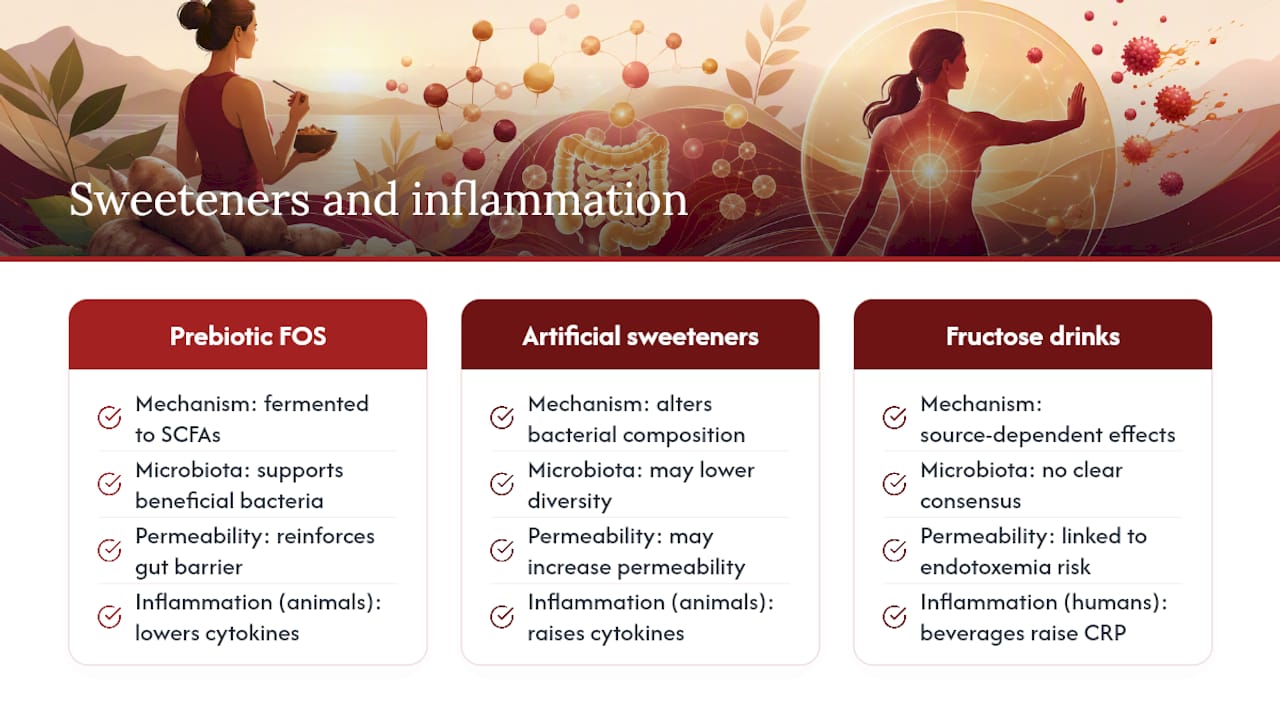
Prebiotic fiber is the mechanism worth understanding first. When FOS reaches the colon undigested, gut bacteria ferment it into SCFAs like butyrate. Those compounds help regulate immune signaling and reinforce the gut lining, which keeps bacterial fragments from leaking into the bloodstream and triggering an inflammatory response.
The opposite pathway shows up with certain non-nutritive sweeteners. Research on gut microbiota suggests some artificial sweeteners can shift bacterial populations and increase gut permeability, allowing more lipopolysaccharide (LPS), a bacterial toxin, to enter circulation. That process is linked to low-grade systemic inflammation in animal work.
A 2025 systematic review of animal studies found that sucralose and aspartame consistently raised pro-inflammatory cytokines and disrupted gut integrity in multiple animal models, though this effect remains unconfirmed in humans at typical consumption levels.
Human evidence tells a more nuanced story. The controlled-trial review on fructose-containing sugars found that source dictates outcome: beverages raised CRP, whole foods didn’t. Separately, research on metabolic endotoxemia found that sucralose and steviol glycosides were associated with lower gut microbiota diversity, though the effect depended heavily on whether the diet also included saturated fat.
The biomarkers researchers track most often are CRP, interleukin-6 (IL-6), and tumor necrosis factor-alpha (TNF-α), all signals of low-grade inflammation. Most studies measuring these markers use short durations, small sample sizes, or doses far above what a family would use in a kitchen, so treat every claim, including this one, as directional rather than final.
How Should You Choose and Use Sweeteners at Home?
Start with a simple filter: reach for prebiotic, low-fructose sweeteners most days, treat honey or maple as occasional flavor, and use sucralose or aspartame rarely if you use them at all.
- Introduce FOS-rich sweeteners gradually. Start with a teaspoon and build to a tablespoon or two over one to two weeks. This gives gut bacteria time to adjust and cuts down on gas or bloating, especially in kids.
- Watch portion size, not just sweetener type. A drizzle over pancakes or yogurt does the job; a puddle does not add benefit.
- Reduce added sugar by about a quarter when substituting. If a recipe calls for a cup of sugar, dropping to three-quarters and adding a natural sweetener usually keeps the result balanced.
- Know who should go slower. People with IBD or IBS, anyone pregnant, and those managing blood sugar with medication should introduce new fiber-rich sweeteners cautiously and talk to a clinician before making a big change, since fiber fermentation can affect GI symptoms and some medications interact with rapid dietary shifts.
Pro Tip: Keep a small notebook of what you serve and how your kids react for the first two weeks of any new sweetener. Gut adjustment is real, and a little bloating in week one usually settles by week three.
Publisher Note: What the Research Says About Yacon Syrup
Yacon syrup’s case rests mostly on what it feeds in the gut rather than what it lacks. Its FOS content supports SCFA-producing bacteria, and in preclinical colitis models, that translated to lower colon inflammation, including reduced IL-23 and leukocyte infiltration. Small human studies have shown improvements in bowel regularity and colonic transit time, though responses vary by baseline microbiota, meaning two people can try the same syrup and notice different things.
What Yakonow brings to that research:
- A single ingredient: 100% pure Peruvian yacon, nothing added.
- Bottled in an FDA-compliant facility in Texas.
- A very low glycemic index, far below typical maple syrup.
- A significant amount of prebiotic FOS fiber per 100 grams.
Human trial data on yacon remain limited in scale, and individual gut response varies. For dosing specifics and family-use notes, Yakonow’s guide on yacon syrup benefits and its piece on prebiotic FOS science go deeper.
Yacon vs. Honey vs. Stevia vs. Sucralose: How Do They Compare?
Line these four up side by side and the differences get clearer fast. Yacon syrup and stevia both keep blood sugar impact low, but only yacon brings meaningful prebiotic fiber to the table, which is the piece most directly tied to gut-mediated anti-inflammatory activity. Honey has some antioxidant compounds and showed neutral-to-positive signals in whole-food form in the controlled-trial review mentioned earlier, but it’s still added sugar with a real glycemic load, so portion matters more than with yacon.
Stevia and monk fruit sit in a middle category: minimal calories, minimal glycemic impact, but thin human data on inflammation specifically. They’re reasonable occasional choices, not proven anti-inflammatory tools.
Sucralose is the outlier in a concerning direction. The animal research reviewed above ties it to disrupted gut integrity and higher inflammatory cytokines, and separate work on metabolic endotoxemia links it, along with steviol glycosides in certain contexts, to reduced microbiota diversity. Aspartame shows a similar animal-study pattern. Neither has been confirmed to cause the same effect in humans at normal intake, but the direction of the signal is consistent enough to warrant caution rather than dismissal.
The practical takeaway for comparison purposes: prebiotic content beats glycemic index alone as a predictor of gut-friendly behavior, and whole-food sugars beat sweetened beverages regardless of the sugar source.
Do Sweeteners Interact With Medications or Health Conditions?
Sugar alcohols like erythritol and xylitol can cause GI symptoms, gas, bloating, cramping, that overlap with symptoms some medications already produce, so people on drugs with known GI side effects sometimes notice the combination more than either factor alone. Anyone managing diabetes with insulin or oral medication should track how a new sweetener affects blood sugar readings, since even “low glycemic” options behave differently person to person.
People with inflammatory bowel disease or IBS deserve special attention here. A narrative review of natural sweeteners and IBD-related outcomes found that functional sweeteners and prebiotic fibers show promise for regulating inflammatory mediators in preclinical models, but most of that evidence comes from cells or animals, not people with active disease. Fermentable fibers, including FOS, can also worsen symptoms during an IBD or IBS flare before they help, which is why slow introduction matters more for this group than for a generally healthy household. Yakonow’s FODMAP guidance covers this in more detail for anyone managing IBS specifically.
Pregnant readers and anyone on new medications should treat sweetener changes the way they’d treat any other dietary shift: introduce one variable at a time, watch for reactions, and loop in a clinician if anything feels off. None of this is about fear. It’s about giving your gut, and your prescriptions, a fair chance to adjust.
What Happens With Years of Regular Sweetener Use?
Short-term studies dominate this field, which is exactly the gap worth naming. Most of the sucralose and aspartame research showing inflammatory signals comes from animal models run over weeks, not years, and often at doses well above typical human culinary use. That doesn’t clear those sweeteners, but it does mean nobody can currently say with confidence what daily sucralose use looks like at year ten across a diverse population.
The human data that does exist, largely from the fructose and inflammation research, suggests that consistency of source matters more over time than any single serving. A household that regularly reaches for sugar-sweetened beverages will likely see a different long-term inflammatory profile than one that regularly reaches for whole fruit or a prebiotic syrup, even if both households technically “eat sugar.”
Diverse populations also respond differently based on baseline gut microbiota, a variable that barely gets mentioned in mainstream sweetener advice. Someone with lower bifidobacteria levels may see a stronger SCFA response from a prebiotic sweetener than someone with an already diverse gut, which helps explain why human trials on yacon and similar fibers show such variable results. Long-term inflammation risk isn’t just about which sweetener sits in the pantry. It’s about how consistently a household’s overall sugar pattern skews toward whole foods and fiber versus processed, sweetened liquids.
A Family Table Perspective on Sweetener Choices
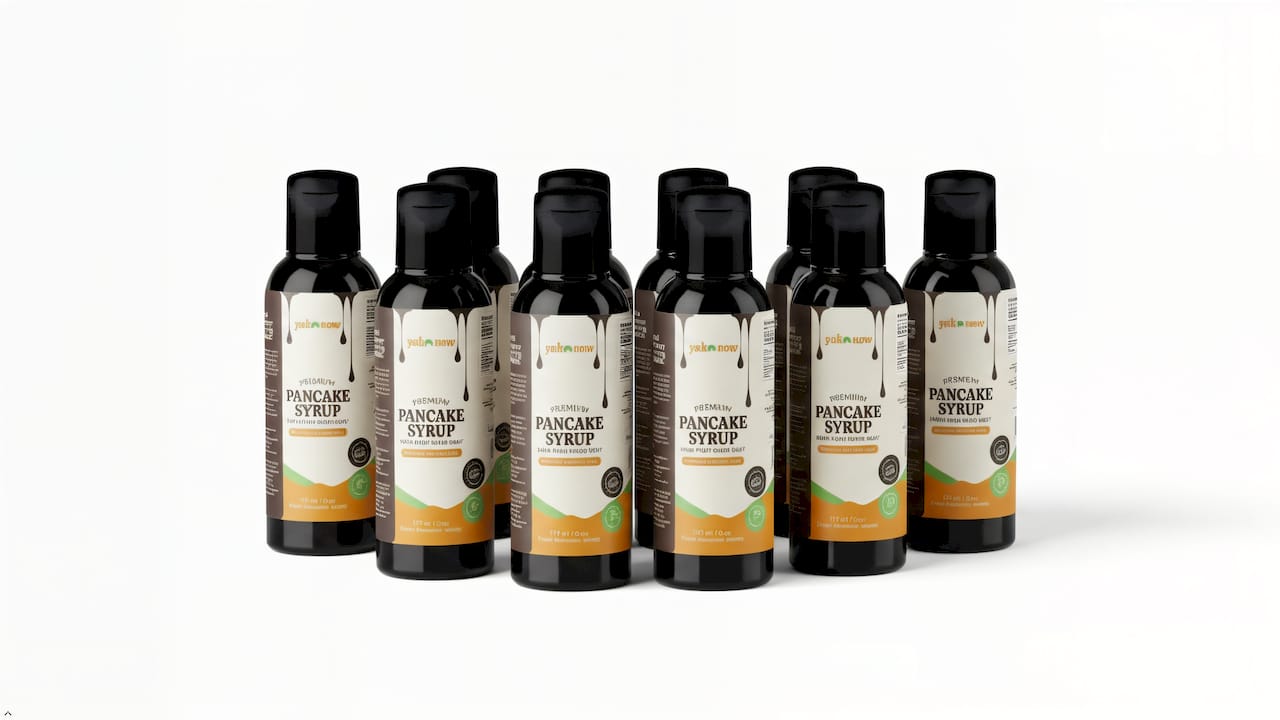
There’s a particular kind of Sunday where the pancakes are already on the griddle before anyone’s fully awake, and the sweetener reach happens on autopilot. That’s usually the moment worth slowing down for, just once, to swap in something gentler.
The habit that actually sticks isn’t an overhaul. It’s one swap at a time, tasted before it’s judged, with an eye on how kids’ bellies handle it over a week or two. Small, patient changes protect both the health of the people at your table and the ease of the morning itself.
— Celeste
A Sweetener That Fits the Family Table
Yaconow is single-ingredient yacon syrup, hand-harvested in Peru and bottled in a compliant facility, with nothing added to dilute what the root already does well. It carries a glycemic index far below maple syrup’s, and a significant amount of prebiotic FOS fiber per 100 grams, the same fiber tied to gut-supportive SCFA production throughout this guide. For a first try, start with a small drizzle, about a teaspoon over pancakes or yogurt, and build up over a couple of weeks the way you would with any new fiber source.
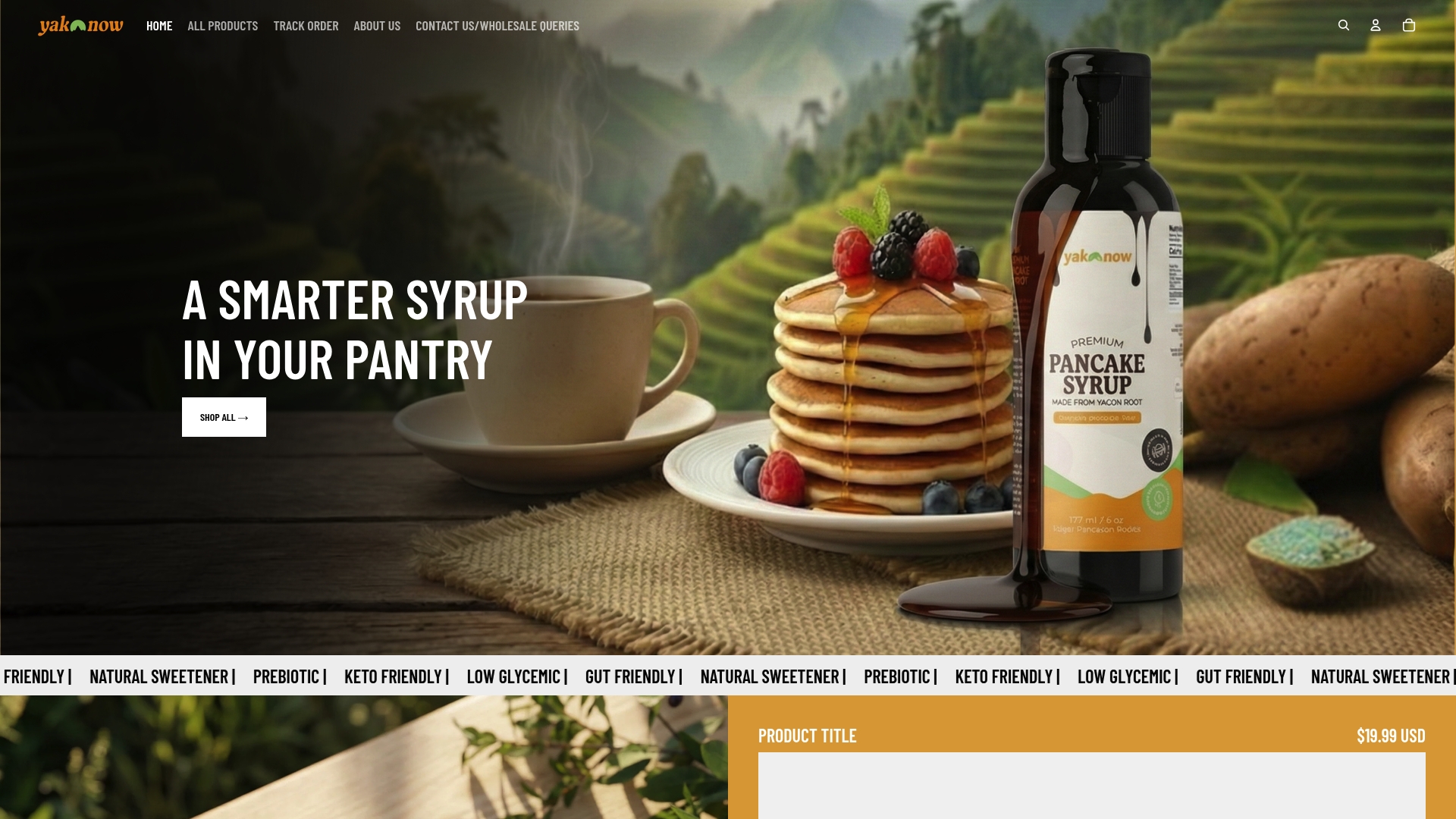
If your table sees pancakes most weekends, the pack of 2 keeps you covered without a grocery run every other week, and the pack of 12 suits a household that never wants to run dry. For a first taste, the single 6oz bottle is the easiest place to start. Whichever size fits your kitchen, it’s a small, gentle addition to a morning that was already worth gathering for.
This article is general information, not a substitute for advice from a qualified doctor. Consult a qualified healthcare professional about your own circumstances before acting on anything here.
Sources
- Effect of fructose-containing sugars on markers of inflammation: systematic review and meta-analysis of controlled trials
- Impacts of Yacon Syrup (Smallanthus sonchifolius) on Human Health: A Systematic Review of Scientific Evidence from the Last Decade
- Impact of Artificial Sweeteners on Inflammation Markers: A Systematic Review of Animal Studies
- The development of metabolic endotoxemia is dependent on the type of sweetener and the presence of saturated fat in the diet
FAQ
Is Stevia Inflammatory or Anti-Inflammatory?
Stevia isn’t linked to the inflammatory signals seen with sucralose or aspartame in animal research, but human evidence of an active anti-inflammatory benefit is still limited. Current research on steviol glycosides shows promising mechanistic signals without firm clinical confirmation, so it’s reasonable as an occasional sweetener rather than a proven anti-inflammatory tool.
What Is the Healthiest Sweetener to Use Instead of Sugar?
There’s no single universal answer, but prebiotic, low-fructose options like yacon syrup stand out for combining a very low glycemic index with fiber that supports gut bacteria. Allulose is another low-glycemic option with growing human data. The healthiest choice generally depends on how it’s used, in what amount, and how a person’s gut responds.
What Kills Inflammation Naturally?
No single food eliminates inflammation, but whole-food sources of fiber and antioxidants, along with reduced intake of sugar-sweetened beverages, are consistently linked to lower inflammatory markers in human trials. The fructose and inflammation review found whole fruit and dark chocolate reduced CRP over about six weeks, while sweetened beverages raised it, which points to whole foods and moderation as the more reliable levers than any single sweetener swap.
Is Monk Fruit Sweetener Inflammatory?
Monk fruit hasn’t shown the pro-inflammatory signals seen with sucralose or aspartame in animal studies. Human data specific to monk fruit and inflammation markers remains sparse, so it’s best treated as a low-glycemic, likely neutral option rather than one with confirmed anti-inflammatory benefits.
How Should You Introduce a Prebiotic Sweetener Like Yacon Syrup?
Start with about a teaspoon and increase gradually to a tablespoon or two over one to two weeks, which gives gut bacteria time to adapt to the added fiber. This slower approach helps limit bloating or gas, particularly in children or anyone with a sensitive gut. Current pricing for Yakonow yacon syrup is available on the Yakonow site.