

Daily Prebiotics for a Healthier Family Gut Routine
Every morning your family sits down together is a small act of care. And tucked inside that bowl of oatmeal, those weekend pancakes, or a simple banana sliced for a toddler’s plate is something quietly powerful: prebiotic fiber. The role of daily prebiotics in a gut routine is straightforward — they feed the beneficial bacteria already living in your family’s digestive system, so those microbes can produce protective compounds that support digestion, strengthen the gut lining, and help keep immune responses steady. According to ISAPP, aiming for a moderate daily intake of prebiotics supports a thriving microbial community.
The benefits families notice most:
- More comfortable, regular digestion
- Steadier appetite cues in children and adults
- Stronger gut barrier function
- Supportive immune signaling throughout the day
Table of Contents
- Why does feeding your gut microbiome every day matter?
- Which whole foods give your family the best prebiotic boost?
- How to add prebiotics to breakfast and snacks without extra effort
- When does a prebiotic supplement or sweetener actually help?
- What should you realistically expect, and when?
- How do you introduce prebiotics safely for children?
- What sources and expertise back this guide?
- Key Takeaways
- The table is already doing the work
- Yakonow yacon syrup: a prebiotic sweetener for the family table
- Useful sources for further reading
Why does feeding your gut microbiome every day matter?
Prebiotics are specific fibers that your body cannot digest. They pass through the stomach and small intestine intact, reach the colon, and become fuel for beneficial bacteria. Those bacteria ferment the fiber and produce short-chain fatty acids (SCFAs) — compounds that feed colon cells, support mucus production, regulate immune signaling, and influence appetite hormones. Think of it as a simple chain: food → microbes → metabolites → a gut that works for your family, not against it.
Different prebiotic types produce different SCFA profiles. Resistant starch, for example, tends to increase butyrate, which supports colonocyte health and anti-inflammatory responses in the colon. Inulin and FOS (fructooligosaccharides) favor Bifidobacteria growth. Diversifying the prebiotic sources on your table creates a broader benefit profile across digestion, inflammation, and appetite.
“Prebiotics help strengthen your gut microbiome and its existing good bacteria — unlike probiotics, which introduce new bacteria.” — Nutritionist Milena Kaler, as cited by The Independent
The Children’s Hospital of Philadelphia recommends a food-first approach for families and suggests appropriate daily fiber targets for children, including meaningful amounts from prebiotic sources when possible. That is a target most families can reach through ordinary meals, no supplements required.
Which whole foods give your family the best prebiotic boost?
The best first step is always the grocery store, not the supplement aisle. These prebiotic-rich whole foods are easy to fold into meals your family already loves:
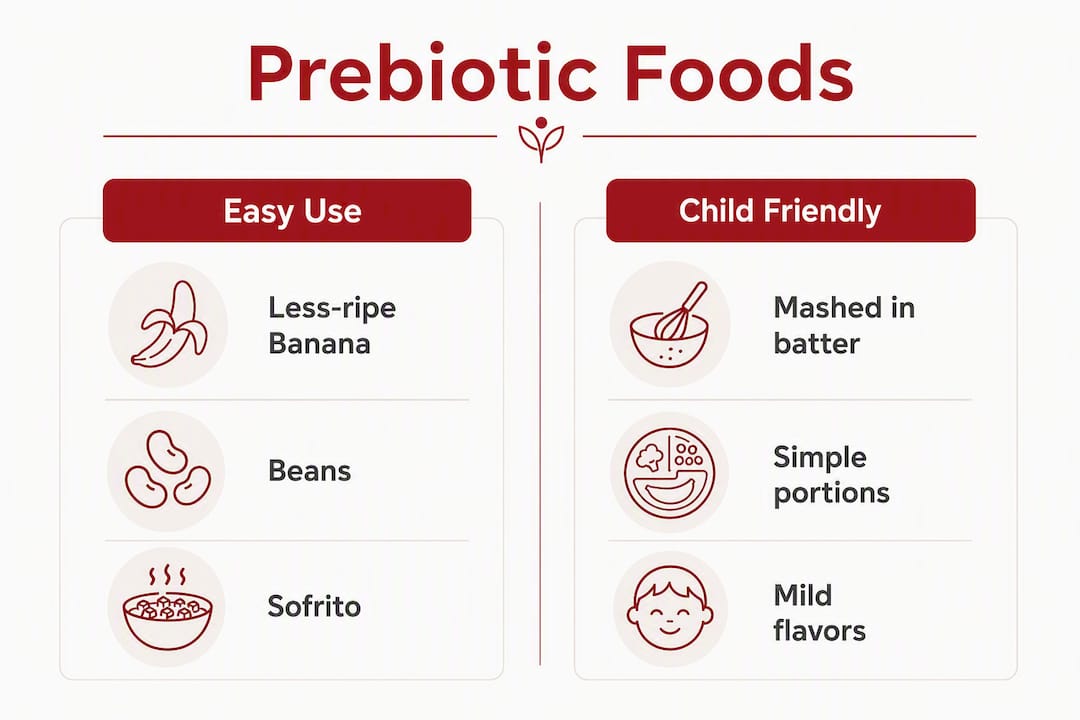
| Food | Easy family use | Child-friendly portion |
|---|---|---|
| Less-ripe banana | Mashed into pancake batter or smoothies | Half a banana |
| Garlic | Stirred into bean stews, sofrito, rice | 1 small clove cooked |
| Onion | Sautéed into scrambled eggs or quesadillas | 2 tbsp cooked |
| Leeks | Folded into soups or egg dishes | 2 tbsp cooked |
| Cooked legumes | Arroz con frijoles, lentil soup, hummus | 2–3 tbsp |
| Oats (whole rolled) | Oatmeal, overnight oats, pancake base | ¼–½ cup cooked |
| Apples (with skin) | Sliced for snacks, baked with cinnamon | Half a medium apple |
One prep note worth remembering: less-ripe bananas contain significantly more resistant starch than very ripe ones. A slightly green banana mashed into weekend pancakes does more for the gut than a spotty-brown one, even if the kids prefer the sweeter version. Blend both to meet everyone halfway.
For Hispanic families, the good news is that many traditional staples — frijoles, sofrito with onion and garlic, whole-grain tortillas, fresh fruit — are already prebiotic-rich. The gut microbiome diet staples your abuela kept in the kitchen were ahead of their time.
How to add prebiotics to breakfast and snacks without extra effort
Easy swaps are the whole game here. You do not need new recipes; you need small additions to the ones you already make.
Three quick recipe ideas:
-
Prebiotic oatmeal bowl: Cook ½ cup rolled oats, top with half a less-ripe banana (sliced), a drizzle of yacon syrup, and a spoonful of almond butter. Ready in five minutes, and the fiber from oats plus banana covers a meaningful portion of a child’s daily prebiotic target.
-
Merienda apple plate: Slice one apple (skin on), fan it on a small plate, and add a light drizzle of yacon syrup. Pair with a handful of roasted chickpeas for crunch. The pectin in apple skin and the resistant starch in chickpeas make this snack genuinely useful, not just pretty.
-
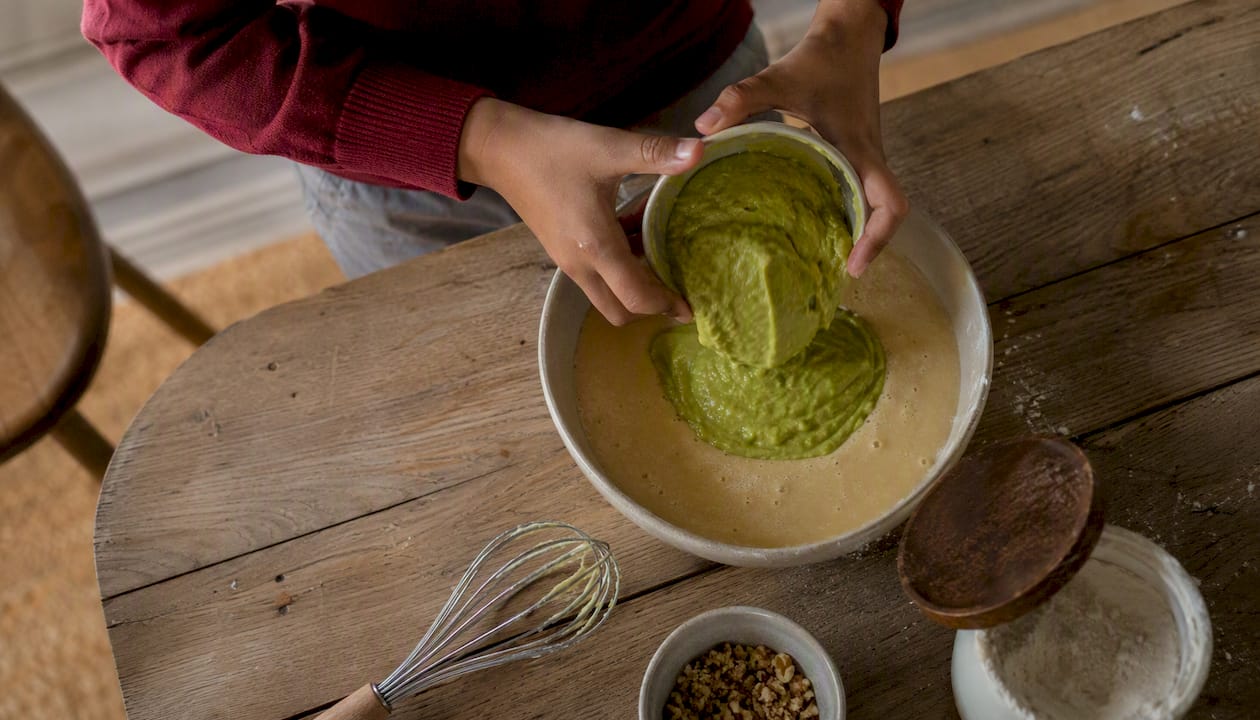
Weekend pancakes with a prebiotic twist: Swap ¼ cup of all-purpose flour for oat flour, mash half a less-ripe banana into the batter, and finish with yacon syrup instead of maple syrup. The kids taste sweetness; the gut gets fiber.
Pro Tip: When introducing a new prebiotic food to a picky eater, mix it into something familiar rather than serving it alone. Cooked leeks folded into scrambled eggs disappear completely. Garlic in refried beans is invisible. Let the flavor hide until the habit forms, then gradually increase the amount.
For more family meal ideas with prebiotics, the Yakonow blog has practical recipes built around real weeknight schedules.
When does a prebiotic supplement or sweetener actually help?
Whole foods are the foundation. Mayo Clinic and Cleveland Clinic both recommend food-first, with supplements as a complement rather than a replacement, especially for children. That said, a prebiotic sweetener or supplement can be genuinely useful when:
- A child is a very selective eater and high-fiber foods are consistently refused
- Travel or a busy week makes vegetable-heavy meals hard to pull off
- You want a simple, measurable way to add prebiotic fiber to a meal already on the table
When reading supplement labels, look for functional ingredient names: inulin, FOS, GOS (galactooligosaccharides), or acacia gum. Not all fiber is prebiotic — a fiber must reach the colon intact and be fermentable by gut bacteria to count. The prebiotic ingredient label guide on the Yakonow blog walks through exactly what to look for.
- Pros of supplements/prebiotic sweeteners: convenient, measurable dose, easy to add to existing meals
- Cons: miss the vitamins and minerals that come bundled in whole foods; higher risk of gas if dose is too large too fast
Pro Tip: Always start children on a smaller amount than the label suggests — about a quarter of the recommended serving — and increase slowly over one to two weeks. Discuss regular supplement use with your child’s pediatrician before making it a daily habit.
What should you realistically expect, and when?
Families may notice small digestion changes within the first week or two, and more consistent effects over several weeks to months. Here is a rough timeline:
- Days 1–7: Possible mild gas or bloating as gut microbes adapt to more fermentable fiber. This is normal and usually fades.
- Weeks 2–6: More regular stools, less constipation, and generally easier digestion. Studies show that 3.5–5 g/day is linked to symptom improvement for some people with constipation.
- Weeks 6–12+: Steadier appetite cues, fewer complaints about stomachaches, and potential immune-related improvements over time.
Track these simple signs: stool frequency and consistency, how mealtimes feel (less fussiness, less discomfort), sleep quality, and whether picky-eating episodes ease up. Progress is quiet and gradual, which is exactly how it should be.
How do you introduce prebiotics safely for children?
Gradual is the only approach that works without side effects. Here is a step-by-step starting guide:
- Begin with ¼ of a typical serving of a new prebiotic food (e.g., 1 tbsp of cooked lentils, a few bites of banana).
- Hold that amount for 3–5 days and watch for gas, bloating, or changes in stool.
- If tolerated, increase to half a serving and repeat the observation window.
- Aim for variety across the week rather than large amounts of one single food.
- Keep a simple two-week symptom log — even just a note on your phone — so you can spot patterns.
If your child has been diagnosed with IBS, SIBO, or a FODMAP sensitivity, high-prebiotic foods can sometimes worsen symptoms rather than help. A pediatric dietitian or gastroenterologist can help you identify which prebiotic sources are appropriate and at what amounts.
Stop and consult your pediatrician if you see severe abdominal pain, persistent diarrhea, blood in stool, or significant appetite loss. For most children, though, the adjustment is mild and brief.
What sources and expertise back this guide?
This guide draws on peer-reviewed and clinical sources. Key references:
- ISAPP — definition of prebiotics, daily target of 3–5 g, and fermentability criteria
- Harvard Health — SCFA mechanisms and gut lining support
- Children’s Hospital of Philadelphia (CHOP) — child fiber targets, food-first guidance, and gradual introduction strategy
- Mayo Clinic — whole-food-first recommendation and supplement caution for children
- Cleveland Clinic — butyrate and resistant starch fermentation profiles
- Medical News Today — dosing ranges and side-effect thresholds
- Dr. Renee Korczak — practical food-first guidance and prep notes (ripeness, prebiotic content)
This article is written by Celeste, Yakonow’s blog author on prebiotics and family nutrition. The guidance here is general information for healthy families and is not a substitute for advice from your child’s healthcare provider. Always confirm specific recommendations with a qualified professional for your family’s situation.
For deeper reading on prebiotic foods for kids’ gut health, Yakonow’s blog covers the evidence in family-friendly language.
Key Takeaways
Daily prebiotics work best when they come from whole foods eaten consistently, making every shared family meal a small investment in long-term gut health.
| Point | Details |
|---|---|
| Feed microbes daily | ISAPP recommends roughly 3–5 g of prebiotic fiber per day to support a thriving gut community. |
| Start with whole foods | Onions, garlic, less-ripe bananas, oats, and legumes deliver prebiotic fiber alongside vitamins and minerals. |
| Introduce gradually | Begin with ¼ of a typical serving and increase every 3–5 days to minimize gas and bloating. |
| Track simple signs | Watch stool regularity, mealtime comfort, and appetite cues over several weeks to months for meaningful changes. |
| Yakonow yacon syrup | A single-ingredient, low-glycemic prebiotic sweetener that adds FOS fiber to pancakes, oatmeal, and yogurt. |
The table is already doing the work
There is something I keep coming back to when I think about gut health and family routines: the best prebiotic habits are not the ones that require a new product or a new schedule. They are the ones already woven into the way a family eats together. The sofrito simmering on a Tuesday night. The oatmeal your daughter insists on every single morning. The banana your son grabs on the way out the door. These are not health interventions. They are just breakfast, lunch, and dinner, doing quiet, steady work.
The only shift worth making is a small one: choose the less-ripe banana, keep the beans in the rotation, let the garlic stay in the pan a little longer. And if a drizzle of yacon syrup makes Sunday pancakes feel more special and more nourishing at the same time, that is a swap worth keeping.
Yakonow yacon syrup: a prebiotic sweetener for the family table
For families who want a prebiotic sweetener that fits naturally into daily meals, Yakonow yacon syrup is a single-ingredient option made from hand-harvested Peruvian yacon root, bottled in Texas, with a glycemic index of just 1 and approximately 50 g of prebiotic FOS fiber per 100 g. No added sugar, no colorants, no artificial sweeteners.

A tablespoon over oatmeal, a drizzle on weekend pancakes, a touch stirred into yogurt with fruit: these are the moments where Yakonow fits. For children, start with a small drizzle and increase gradually, the same low-and-slow approach that applies to any new prebiotic food. The single 6oz squeezable bottle is a natural starting point for families trying it for the first time. Families who go through it quickly will find the pack of 2 keeps the pantry ready for busy mornings without a last-minute run to the store.
Useful sources for further reading
- ISAPP — What is a prebiotic? — Definitions, fermentability criteria, and the 3–5 g daily target used throughout this guide.
- Harvard Health — Prebiotics and gut health — SCFA mechanisms, colonocyte support, and immune signaling.
- Children’s Hospital of Philadelphia — Food as Medicine: Prebiotic Foods — Child fiber targets, food-first guidance, and gradual introduction strategy.
- Mayo Clinic — Probiotics and prebiotics — Whole-food-first recommendation and supplement caution for children.
- Cleveland Clinic — What are prebiotics? — Butyrate, resistant starch fermentation, and SCFA diversity.
- Medical News Today — Prebiotics: Health benefits and more — Dosing ranges, side-effect thresholds, and IBS considerations.
- Dr. Renee Korczak — The role of prebiotics in gut health — Practical food-first guidance, ripeness effects, and family meal applications.
- Yakonow — Plant-based prebiotic ingredients ranked by evidence — Evidence-ranked overview of common prebiotic foods for families.
- Yakonow — Build gut-healthy pantry staples for the whole family — Practical pantry checklist and meal prep tips for busy parents.