

Agave Granulated Sugar for Families: What to Know
Agave granulated sugar is a processed form of agave syrup, and your family’s pantry deserves the full picture before you swap it in. It carries a lower glycemic index than table sugar, but it still counts as an added sugar, and its high fructose content means the body handles it differently than sucrose.
- It’s manufactured, not harvested. Liquid agave nectar is converted to a dry form through freeze-drying or mixing with binders like maltodextrin.
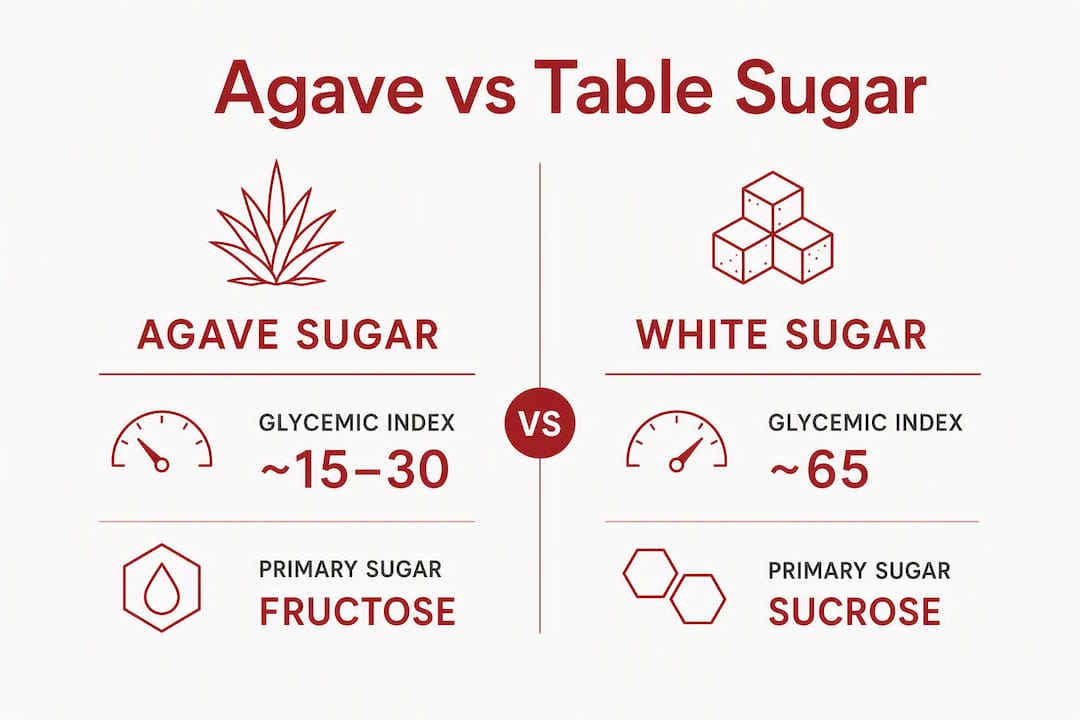
- Lower GI, higher fructose. The glycemic index runs roughly 15–30 versus ~65 for white sugar, but the fructose load shifts metabolic work to the liver.
- For parents: treat it like any added sugar. Read the label, watch portions, and keep the focus on the moment at the table, not the sweetener.
Pro Tip: “Natural” on the front of a package tells you the source, not the processing level. Flip to the ingredient list every time.
Table of Contents
- What is agave granulated sugar, and how is it made?
- How does agave granulated sugar compare nutritionally?
- Is agave granulated sugar safe for children and families?
- How do you use agave granulated sugar in cooking and baking?
- How does agave granulated sugar compare to honey, maple, and yacon syrup?
- Small changes that lower daily added sugar at family meals
- Key Takeaways
- The sweetener choice is really about the table
- Yakonow yacon syrup: a gentler drizzle for family mornings
- Sources and further reading
What is agave granulated sugar, and how is it made?
Most people picture a sun-dried crystal when they hear “granulated sugar.” Agave granulated sugar is nothing like that. It starts as liquid agave nectar, and getting it dry enough to pour from a sugar bowl requires real industrial effort.
Manufacturers use two main routes. The first is lyophilization, or freeze-drying, which removes moisture under vacuum at low temperatures and yields a lighter, more soluble powder. The second is spray-drying combined with binders: the liquid nectar is atomized into a hot chamber, and anticaking agents like maltodextrin, inulin, or silicon dioxide are added to keep the granules from clumping back together. A patent-based manufacturing process describes compositions with roughly 60% fructose and 18% fructooligosaccharides, stabilized with those same binders.
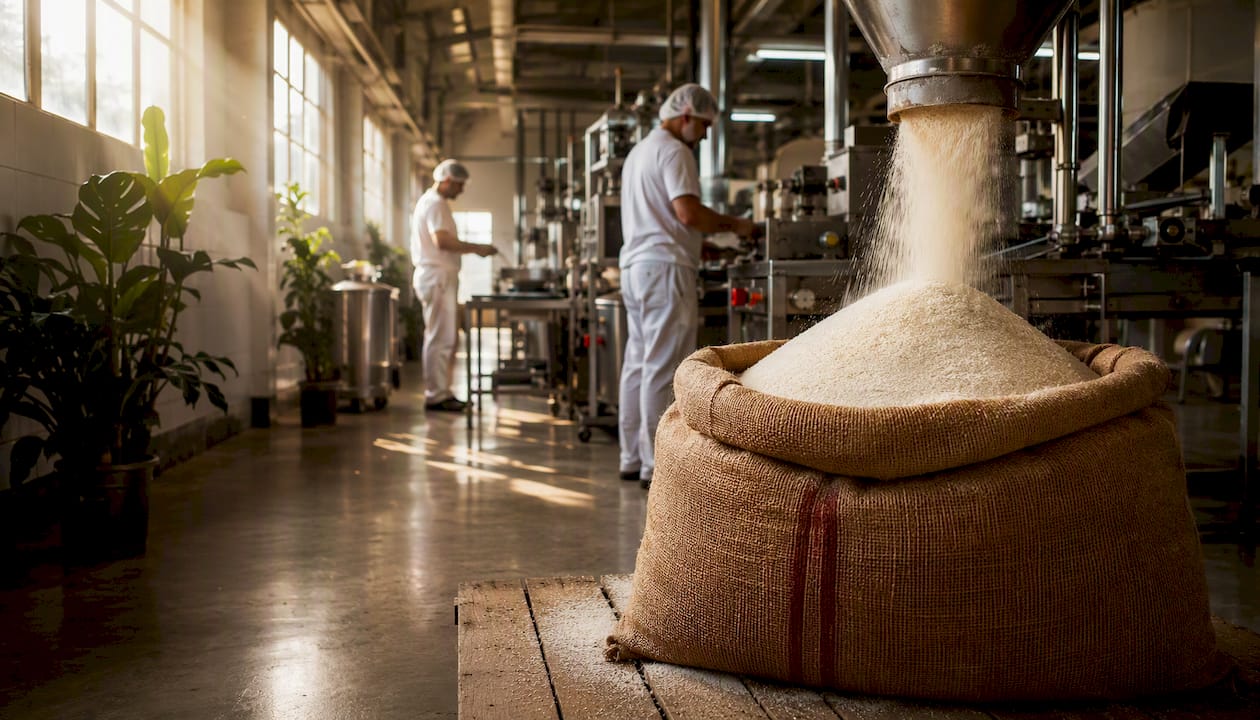
What that means for your grocery run: the ingredient list on a bag of granulated agave sweetener often reads “agave syrup, maltodextrin, silicon dioxide.” Maltodextrin is typically corn-derived, which matters if your family avoids corn-based additives. The product is also rarer than the label density in health-food aisles suggests. True shelf-stable granulated agave is uncommon in standard grocery stores; many products called “agave sugar” are blended or spray-dried formulations.
Storage note: because agave is hygroscopic (it pulls moisture from the air), the granulated form can clump or dissolve if stored near steam or humidity. Keep it sealed in a cool, dry cabinet, and it will stay pourable for up to a year.
Pro Tip: Check whether “organic agave sugar” lists a binder in the ingredients. Organic certification covers the agave source, not the processing aids added afterward.
How does agave granulated sugar compare nutritionally?
The lower glycemic index is real, but it tells only part of the story.
| Metric | Agave granulated sugar | White granulated sugar |
|---|---|---|
| Glycemic index | ~15–30 | ~65 |
| Primary sugar | Fructose (~56–60%) | Sucrose (50% fructose / 50% glucose) |
| Calories per tablespoon | ~60 kcal | ~48 kcal |
| Sweetness vs. sugar | about 1.25–1.5× sweeter | Baseline |
| Micronutrients | Trace B vitamins, vitamin C | Negligible |
Agave nectar has a GI of roughly 15–30 compared to granulated sugar’s ~65, so it produces a smaller short-term blood glucose spike. That sounds like a clear win, but the fructose concentration is where the tradeoff lives. Blue agave syrup contains 56–60% fructose, a proportion similar to high-fructose corn syrup. Fructose bypasses the normal glucose pathway and goes straight to the liver, where excess amounts can raise triglycerides over time, according to Harvard Health.
Agave is also slightly more caloric per tablespoon than table sugar, though its greater sweetness means you may use less volume. Trace micronutrients exist, but nutrition comparisons are clear: those amounts are too small to offset the added-sugar concern.
The American Heart Association and the American Diabetes Association both recommend limiting all added sweeteners, including agave, because of the metabolic risks tied to high fructose intake.
A lower GI does not mean “safe in large amounts.” It means the blood-sugar curve is gentler, not flat.
Is agave granulated sugar safe for children and families?
Yes, in small amounts, the same way any added sugar is safe in small amounts. The concern is not a single drizzle; it’s cumulative daily intake.
- Toddlers (ages 2–3): The American Heart Association advises no added sugar for children under 2, and minimal amounts for toddlers. A small pinch in a shared family recipe is different from a daily sweetened snack.
- Children (ages 4–8): Keep added sugars under 25 grams per day total across all sources.
- Adults: The AHA recommends no more than 25 grams (women) or 36 grams (men) of added sugar daily.
Label-reading checklist for the grocery aisle:
- Does the ingredient list include maltodextrin, silicon dioxide, or inulin? Those are processing aids, not nutrients.
- Does the front say “low glycemic” without specifying the GI number? Ask for the number.
- Is “organic” the only health claim? Organic agave is still high in fructose.
- Does the product contain added flavors or colorants? A pure granulated agave sweetener needs only agave and a minimal binder.
For families managing blood sugar or following a prediabetes diet, the lower GI of agave is worth noting, but portion discipline matters more than the sweetener choice itself.
Pro Tip: Granulated agave behaves like fine sand, not like coarse sugar crystals. Keep it away from toddlers who might inhale a dry powder; a syrup form is easier to control at the table.
How do you use agave granulated sugar in cooking and baking?
Swapping agave granulated sugar for regular sugar is straightforward in some recipes and genuinely tricky in others. The hygroscopic nature of agave fructose means baked goods come out softer and denser, and browning behaves differently because fructose caramelizes at a lower temperature than sucrose.
Practical substitution rules (when using agave syrup as the swap):
- Use about ¾ cup agave nectar for every 1 cup of granulated sugar called for.
- Reduce other liquids in the recipe by ¼ cup to compensate for the added moisture.
- Lower oven temperature by 25°F to prevent over-browning.
- Add a small pinch of baking soda to neutralize agave’s natural acidity.
Where it works well: moist cakes, quick breads, glazes, cold drinks, oatmeal, and yogurt toppings. The extra moisture is an asset in these.
Where to avoid it: meringues, brittle, spiced shortbread, or any recipe that depends on crystalline sugar for structure, snap, or precise caramelization. The soft crumb and pale surface agave produces will disappoint in those contexts.
For a simple family-morning swap, stir a small amount of granulated agave sweetener into oatmeal or use agave syrup as a pancake drizzle. The flavor is mild and slightly floral, which kids tend to accept easily.
How does agave granulated sugar compare to honey, maple, and yacon syrup?
| Sweetener | Glycemic index | Primary sugar | Processing level | Best uses | Family notes |
|---|---|---|---|---|---|
| Agave granulated sugar | ~15–30 | Fructose (~60%) | High (freeze-dried/binders) | Baking, cold drinks | Watch fructose load |
| Honey | roughly 50 | Fructose + glucose | Minimal | Drizzling, tea | Not for infants under 1 |
| Maple syrup | roughly 56–60 | Sucrose | Minimal (evaporation) | Pancakes, glazes | Trace minerals |
| Stevia | very low | None (glycoside) | Moderate (extraction) | Beverages, light baking | Bitter aftertaste for some kids |
| Monk fruit | very low | None (mogrosides) | Moderate | Beverages, desserts | Expensive; limited baking use |
| Yacon syrup (Yakonow) | ~1 | FOS (prebiotic fiber) | Minimal (cold-pressed) | Drizzling, oatmeal, yogurt | Prebiotic fiber; no glucose |
Agave granulated sugar fits best when you need a dry sweetener that dissolves easily in cold liquids or blends into a dry mix. Where it falls short is at the family table as a daily drizzle, because the fructose load adds up across a week of breakfasts.
That’s where yacon syrup earns its place. Yakonow yacon syrup is pressed from yacon root grown in Peru, with a glycemic index of approximately 1 and up to 50g of prebiotic FOS fiber per 100g. The sweetness comes primarily from fructooligosaccharides, which the body does not digest as sugar, making it genuinely different from agave at a metabolic level.
For families who want to compare drizzling options side by side, the yacon vs. honey comparison is worth a read before the next grocery run.
What to look for on a label when choosing family-friendly alternatives:
- Single-ingredient or minimal-ingredient list
- A stated GI number, not just a “low glycemic” claim
- No artificial sweeteners, colorants, or high-fructose corn syrup
- Prebiotic fiber content if gut health is a priority
Small changes that lower daily added sugar at family meals
Reducing added sugar at home does not require a pantry overhaul. A few consistent habits make the biggest difference.
- Serve sweet condiments on the side so each person controls their own portion, rather than pre-sweetening a shared dish.
- Swap sweetened yogurt for plain yogurt with a small drizzle of a low-glycemic syrup and fresh fruit on top.
- Use ripe bananas or unsweetened applesauce in quick breads and muffins; both add natural sweetness and moisture.
- Keep a pre-measured drizzle bottle at the table (a 6oz squeezable bottle works perfectly) so kids pour their own and naturally use less than a free-pour from a jar.
- Add cinnamon, vanilla, or cardamom to oatmeal before reaching for any sweetener; spices shift the perception of sweetness without adding sugar.
- At gatherings, set out a fruit platter alongside the syrup options. Most kids will reach for both, and the fruit offsets the sweet.
The goal is not to eliminate sweetness from the table. It’s to make the sweetness intentional, so the moment stays warm without the sugar quietly adding up.
Key Takeaways
Agave granulated sugar is a processed added sugar with a lower glycemic index than table sugar, but its high fructose content and manufacturing complexity make it a use-with-care ingredient for family kitchens.
| Point | Details |
|---|---|
| Still an added sugar | Agave granulated sugar counts as added sugar; treat portions the same as white sugar. |
| High fructose load | Blue agave contains ~56–60% fructose, which the liver processes differently than glucose. |
| Reserve for specific bakes | Use crystalline agave in cold drinks and moist cakes; avoid it in meringues or brittle. |
| Read labels carefully | Look for binders like maltodextrin and anticaking agents; “organic” does not mean unprocessed. |
| Yakonow for daily drizzling | With a GI of ~1 and prebiotic FOS fiber, Yakonow yacon syrup is a gentler daily option for family breakfasts. |
The sweetener choice is really about the table
There is something worth saying about the way we reach for a “healthier” sweetener and feel like we’ve solved the problem. Agave granulated sugar is a real product with real advantages over white sugar in certain contexts, but the marketing around it has outrun the science for years. The lower GI is genuine. The fructose concentration is also genuine. Both things are true at the same time, and neither one tells the whole story.
What I find more useful than ranking sweeteners is thinking about the ritual they serve. A Sunday morning with pancakes and kids still in pajamas does not need a perfect nutritional solution. It needs something that tastes good, sits lightly on the conscience, and does not require a chemistry lesson to justify. That’s a reasonable bar, and it’s one that a low-glycemic, single-ingredient syrup meets more honestly than a processed granulated blend with a “natural” claim on the front.
The families I think about most are the ones who are already paying attention, already reading labels, already trying. For them, the answer is not to stress over agave versus maple versus stevia. It’s to find one or two small swaps that feel right and stick with them, then get back to the table.
Yakonow yacon syrup: a gentler drizzle for family mornings
When the pancakes are ready and everyone is finally at the table, the last thing you want is to second-guess what you’re pouring. Yakonow yacon syrup is pressed from yacon root hand-harvested in Peru, bottled in an FDA-compliant facility in Texas, and contains exactly one ingredient. No binders, no maltodextrin, no added sugar.
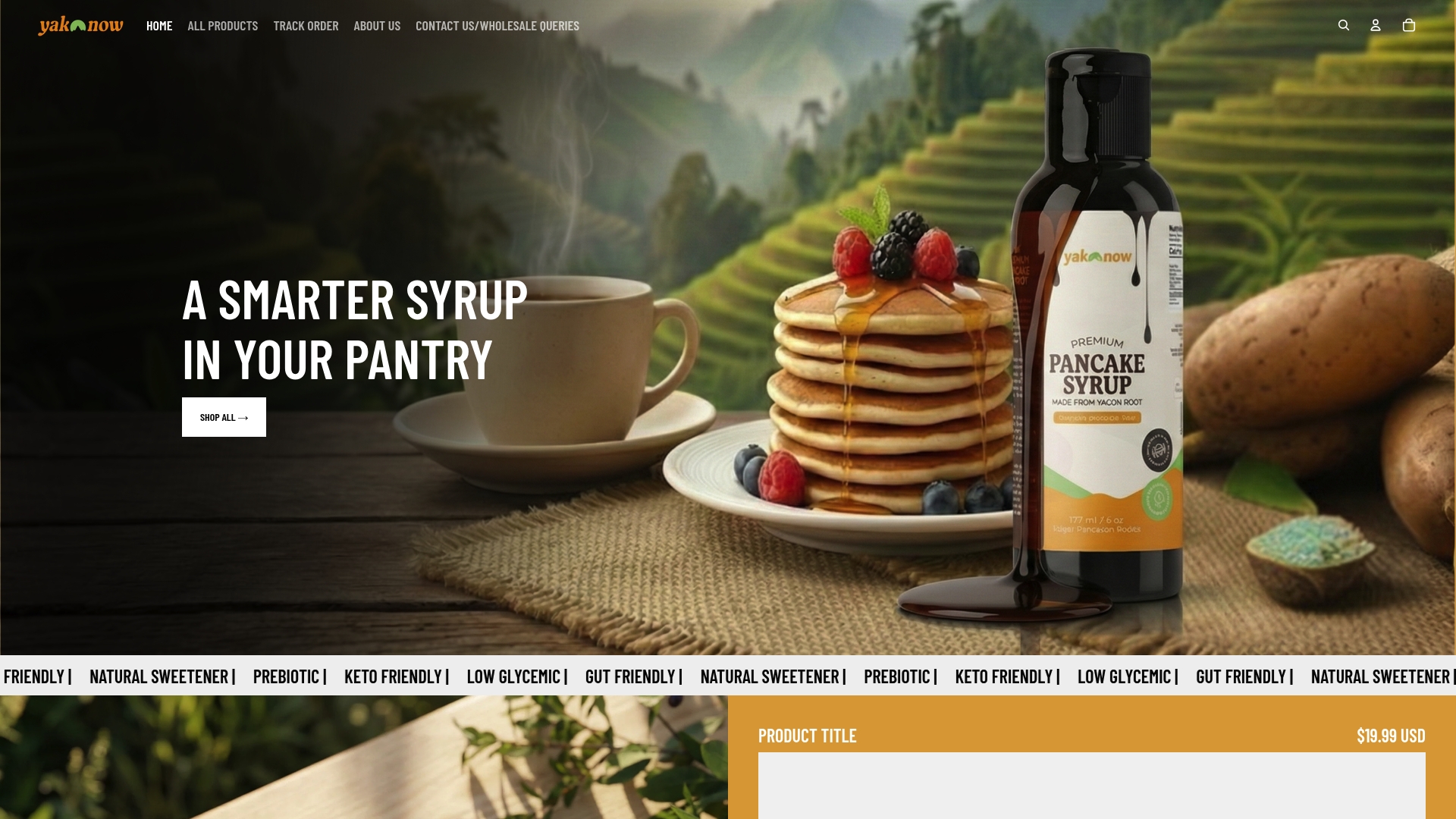
The single 6oz squeezable bottle is the right size to try it first, easy for kids to hold, and designed for the breakfast table. The pack of 2 keeps a backup in the pantry for busy weekday mornings when you don’t want to run out mid-pour. And the pack of 4 is what families who host brunches, slow weekend mornings, or holiday gatherings tend to reach for, because it’s always there when you need it.
Shop Yakonow at yakonow.co and bring something genuinely different to your table.
Sources and further reading
- US Patent US20140044858A1 — Stable solid form agave sweeteners: Primary manufacturing reference for lyophilization and binder-based granulation methods.
- FreePatentsOnline — Agave sweetener composition and crystallization process: Details on saccharide ratios and anticaking agents in granulated agave production.
- Harvard Health — Are natural sugar alternatives healthier?: Authoritative overview of fructose metabolism, triglyceride risk, and the “dose makes the poison” principle.
- Wikipedia — Agave syrup: Carbohydrate composition data for blue agave and A. salmiana varieties.
- WebMD — Agave: health benefits and nutrition: GI comparison and AHA/ADA guidance on limiting added sweeteners.
- Verywell Health — Are natural sugars healthier?: FDA “natural” labeling context and label-reading guidance for families.
- Trinjal — Agave nectar vs. granulated sugar: Calorie comparison and practical substitution ratios for home baking.
- Green Plate Pursuits — Agave nectar to sugar ratio and baking notes: Hygroscopic behavior, browning differences, and oven temperature adjustments.
- Foodstruct — Agave nectar vs. sugar: Micronutrient comparison showing trace vitamins do not offset added-sugar concerns.
- FoodConnection — Prediabetes diet and blood sugar management: Practical diet guidance for families managing blood sugar with low-GI food choices.
- Yakonow — Yacon syrup vs. agave, stevia, and monk fruit: Comparative guide on GI and nutritional differences between yacon and other common sweeteners.