

How Carbohydrates Rank on Glycemic Index: A Clear Guide
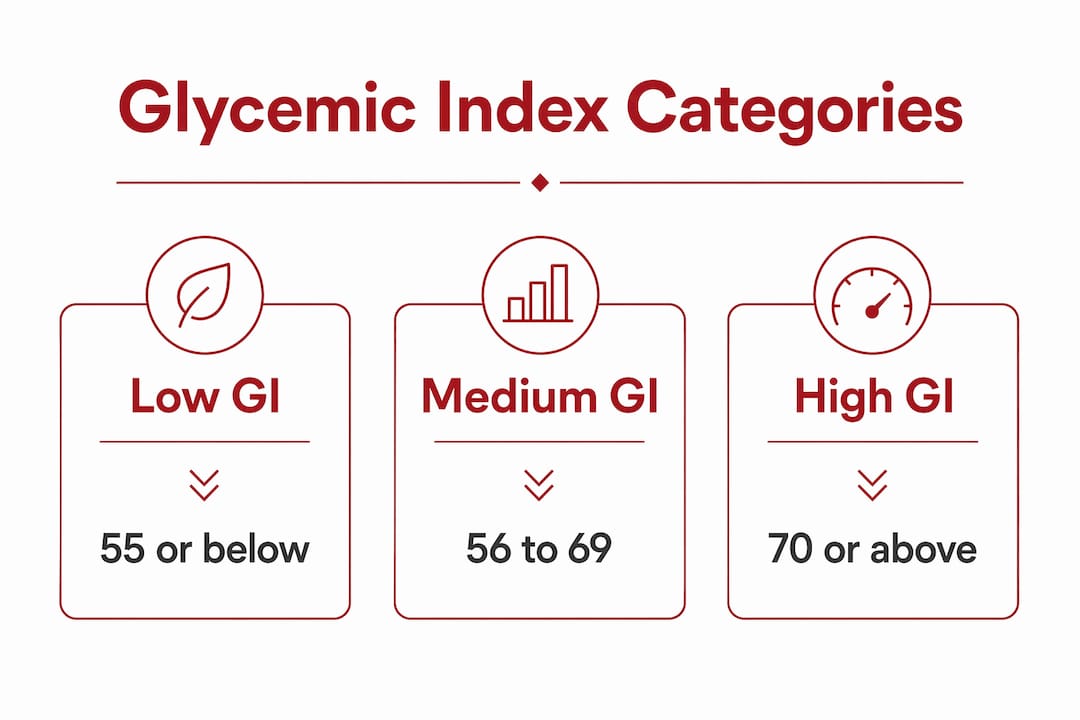
The glycemic index (GI) is a numerical scale from 0 to 100 that ranks carbohydrates by how quickly they raise blood glucose after eating. Understanding how carbohydrates rank on glycemic index helps you make smarter choices at the breakfast table, the farmers market, and every slow Saturday morning in between. Low GI foods score 55 or below, medium GI foods score 56 to 69, and high GI foods score 70 and above. Glycemic load (GL) is a related measure that accounts for portion size alongside GI, making it a more practical tool for real meals.
How carbohydrates rank on glycemic index: the measurement behind the numbers

The GI scale does not rank foods by opinion. It follows a standardized laboratory protocol that produces a consistent, comparable number for every carbohydrate food tested.
The process works like this:
- Feed ten people 50 grams of available carbohydrate from the test food, such as white bread or oatmeal.
- Measure blood glucose every 15–30 minutes over a two-hour window after eating.
- Calculate the incremental area under the blood glucose response curve (AUC) for the test food.
- Divide that AUC by the AUC of a reference food, either pure glucose or white bread, then multiply by 100.
The result is the GI score for that food. A score of 100 means the food raises blood sugar at exactly the same rate as pure glucose. A score of 40 means it raises blood sugar at 40% of that rate.
One important limit: GI measures the rate of carbohydrate absorption, not the total quantity of carbohydrates in a serving. A food can score high on the GI scale but still deliver very little carbohydrate per normal portion. That gap between rate and quantity is exactly why glycemic load exists as a companion measure. Individual responses also vary based on gut health, activity level, and even the time of day a food is eaten, so GI numbers are best understood as useful averages rather than fixed rules.
What factors influence a carbohydrate’s GI ranking?
A carbohydrate’s GI ranking is not fixed by its chemistry alone. Several practical factors shift a food’s score up or down, and knowing them changes how you cook and combine foods every day.
- Carbohydrate structure. Simple sugars like glucose digest rapidly and score high. Complex starches, especially those with a higher proportion of amylose (a tightly coiled starch molecule), digest more slowly and score lower. Legumes like lentils score low partly because of their dense starch structure.
- Fiber content. Soluble fiber slows digestion by forming a gel in the gut, which moderates how quickly glucose enters the bloodstream. Oats are a classic example: their beta-glucan fiber is a primary reason they score in the low-to-medium GI range.
- Fat and protein. Both slow gastric emptying, which reduces the rate of glucose absorption. A plain baked potato scores high; the same potato eaten with butter and sour cream delivers a gentler blood sugar response.
- Cooking method and processing. Overcooking pasta raises its GI by gelatinizing starch granules, making them easier for digestive enzymes to break down. Al dente pasta scores lower than soft, overcooked pasta. Adding vinegar or lemon juice to a meal can also lower the overall glycemic response by slowing starch digestion.
- Organic acids and food combinations. Fermented foods and sourdough bread score lower than standard white bread partly because of their organic acid content, which slows starch breakdown.
Meal composition changes glycemic response significantly. A bowl of white rice eaten alone spikes blood sugar faster than the same rice served alongside grilled chicken, avocado, and a side salad. The fat, protein, and fiber in the full meal moderate the rice’s impact. This is why GI numbers measured in isolation do not always predict what happens at a real family dinner.
Pro Tip: When you cook pasta or grains for the family, pull them off the heat while they still have a slight bite. Cooling cooked starches overnight also lowers their GI, because the starch partially recrystallizes into a form that digests more slowly.
How to interpret GI categories and glycemic load for everyday meals
Knowing the three GI categories gives you a working framework. Applying glycemic load alongside them gives you a practical one.
GI categories at a glance
GI categories divide into three bands: low (0–55), medium (56–69), and high (70 and above). Foods in the low category include most legumes, non-starchy vegetables, and many whole fruits. Medium GI foods include whole wheat bread and brown rice. High GI foods include white bread, most crackers, and many breakfast cereals.
What glycemic load adds to the picture
Glycemic load accounts for carbohydrate quantity in addition to quality. The formula is simple: GL = (GI × grams of carbohydrate per serving) ÷ 100. GL categories follow their own cutoffs: low is 10 or below, medium is 11–19, and high is 20 or above.
Watermelon illustrates the difference perfectly. Watermelon has a high GI of about 72 but a GL of only about 4 per standard serving, because a typical slice contains very little available carbohydrate by weight. Judging watermelon by GI alone would lead you to avoid a food that has a minimal real-world effect on blood sugar.
The table below shows how GI and GL work together for common carbohydrate foods:
| Food | GI | Carbs per serving (g) | GL per serving |
|---|---|---|---|
| White bread (1 slice) | 75 | 14 | 11 |
| Rolled oats (cooked, 1 cup) | 55 | 27 | 15 |
| Lentils (cooked, 1 cup) | 32 | 40 | 13 |
| Watermelon (1 cup diced) | 72 | 6 | 4 |
| Brown rice (cooked, 1 cup) | 68 | 45 | 31 |
| Apple (medium) | 36 | 15 | 5 |
Counting carbohydrate quantity matters as much as GI for managing blood sugar day to day. GL reflects both dimensions and gives a more accurate picture of how a food will actually affect you at the table. For most people, focusing on GL rather than GI alone leads to better, less stressful food decisions.
Common carbohydrate foods ranked by GI: what to choose and why
The carb glycemic ranking of everyday foods follows a clear pattern. Highly processed carbohydrates score high; whole, minimally processed foods score low.
High GI carbohydrates
White bread, crackers, and sugary cereals consistently score in the high GI range (70 and above). These foods have had most of their fiber and natural starch structure removed during processing, so digestion happens fast. Corn flakes, rice cakes, and instant mashed potatoes fall into the same category. Eating these foods alone, without fat or protein to slow digestion, produces the sharpest blood sugar spikes.
Low GI carbohydrates worth building meals around
Low glycemic index foods share a few traits: they are fiber-rich, minimally processed, and structurally dense. Good examples include:
- Legumes: lentils, chickpeas, black beans (GI in the 20s and 30s)
- Whole oats: rolled or steel-cut oats (GI around 55)
- Most whole fruits: apples, pears, berries, cherries (GI in the 20s to 40s)
- Non-starchy vegetables: broccoli, leafy greens, zucchini (GI below 20)
- Barley: one of the lowest-scoring grains, with a GI around 28
Choosing minimally processed, fiber-rich foods naturally supports balanced blood sugar without requiring strict GI tracking at every meal. The pattern is more useful than the number.
The most common mistake people make with GI is treating it as the only variable. A food’s GI ranking only tells part of the story. Portion size, meal composition, and cooking method all shift the actual glycemic impact of what lands on your plate. A pre-diabetic breakfast checklist built around whole foods, protein, and fiber will serve your family better than a spreadsheet of GI numbers. Combining low GI carbohydrates with healthy fats and protein is the most practical approach for steady energy through the morning.
Key Takeaways
Glycemic load, not GI alone, is the most practical tool for managing carbohydrates and blood sugar in real family meals.
| Point | Details |
|---|---|
| GI ranks carbs 0 to 100 | Low is 55 or below, medium is 56–69, and high is 70 and above. |
| GL adds portion size to the picture | Calculate GL as (GI × carb grams per serving) ÷ 100 for real-world impact. |
| Cooking method shifts GI | Al dente pasta and cooled cooked grains score lower than overcooked versions. |
| Whole foods naturally score low | Legumes, oats, and most fruits deliver fiber that slows glucose absorption. |
| Meal composition matters most | Combining carbs with fat, protein, and fiber lowers the overall glycemic response. |
The glycemic index is a guide, not a rulebook
I have spent enough time reading nutrition research and cooking for my own family to know that the glycemic index is genuinely useful, but only when you hold it loosely. The moment it becomes a rigid scoring system, it stops serving you and starts stressing you out.
What I find more valuable is the pattern the GI reveals. Whole foods score low. Processed foods score high. That pattern is consistent enough to guide your grocery cart without memorizing a single number. When you build a breakfast around oats, eggs, and fresh fruit, you are already eating in a way that supports steady blood sugar, whether or not you know the GI of every ingredient.
The detail that changed how I think about sweeteners was learning that not all sweet things behave the same way. Yakonow yacon syrup, for example, carries a glycemic index of just 1, compared to 54 for maple syrup. That is not a marketing claim. It reflects the fact that yacon’s sweetness comes primarily from fructooligosaccharides, a prebiotic fiber that the body does not digest as glucose. A drizzle over weekend pancakes becomes a genuinely different choice, not just a feel-good one.
The bigger lesson is this: slow down around food. A meal eaten quickly, standing at the counter, produces a different experience than the same meal eaten at the table with people you love. The ritual of gathering, the unhurried morning, the shared plate — these are not separate from nutrition. They are part of it.
— Celeste
A sweeter morning, without the spike
Choosing low-glycemic foods does not mean choosing flavorless ones. Yakonow yacon syrup brings natural sweetness to the family table with a GI of just 1, hand-harvested from yacon root in Peru and bottled in an FDA-compliant facility in Texas. It contains no added sugar, no colorants, and no artificial sweeteners, and it drizzles beautifully over pancakes, waffles, oatmeal, and fresh fruit.

For slow mornings when the whole family gathers around the table, Yakonow is the detail that makes the moment feel both indulgent and grounded. Try the Yakonow premium pancake syrup and taste what a low-glycemic morning actually looks like.
FAQ
What is the glycemic index of carbohydrates?
The glycemic index ranks carbohydrate-containing foods on a scale from 0 to 100 based on how quickly they raise blood glucose. Low GI foods score 55 or below, medium GI foods score 56–69, and high GI foods score 70 and above.
How is glycemic load different from glycemic index?
Glycemic load accounts for both the quality and quantity of carbohydrates in a serving, calculated as (GI × grams of carbs per serving) ÷ 100. It gives a more accurate picture of a food’s real blood sugar impact than GI alone.
What factors lower a carbohydrate’s GI ranking?
Fiber, fat, and protein all lower a food’s effective GI by slowing digestion and glucose absorption. Cooking method also matters: al dente pasta and cooled cooked starches score lower than their overcooked equivalents.
Why does watermelon have a high GI but low glycemic load?
Watermelon’s GI is about 72, but its GL per serving is only about 4 because a typical portion contains very little available carbohydrate. This is why GL is a more practical measure for everyday eating.
Which carbohydrates have the lowest glycemic index?
Legumes (lentils, chickpeas, black beans), rolled oats, most whole fruits, non-starchy vegetables, and barley consistently rank among the lowest GI carbohydrates. Their high fiber content and dense starch structure slow glucose release into the bloodstream.