

Prebiotics on a Ketogenic Diet: What You Need to Know
Prebiotic fibers can be included on a ketogenic diet to preserve beneficial gut bacteria and support metabolic resilience — the key is a gradual, mindful approach. Peer-reviewed animal research published on PMC shows that adding oligofructose-enriched inulin to a ketogenic formula increased gut microbial richness and raised populations of Bifidobacterium pseudolongum and Lactobacillus johnsonii, while a systematic human review confirms that keto diets commonly reduce Bifidobacterium and lower fecal short-chain fatty acids. Yakonow yacon syrup, rich in prebiotic fructooligosaccharides (FOS), offers a family-friendly way to bring that fiber to the breakfast table without a clinical overhaul.
At a glance:
- Benefits: increased microbial richness, support for short-chain fatty acid (SCFA) production, possible reductions in inflammation markers
- Trade-offs: potential modest lowering of circulating ketones, transient bloating or gas during adjustment
- Starting point: begin with a very small amount (around 1/2 teaspoon of a FOS-rich source), track how you feel, and increase slowly every 5–7 days
Key Takeaways
Prebiotic fibers like FOS can support gut microbial richness on a ketogenic diet, but the strongest evidence comes from animal models — gradual, small-dose introduction is the sensible approach for most families.
| Point | Details |
|---|---|
| KD reduces key gut bacteria | Systematic reviews confirm reduced Bifidobacterium and lower fecal SCFAs across multiple KD studies. |
| Animal data supports prebiotics on keto | A rodent KD+prebiotic study showed increased microbial richness and SCFA support, with modestly lower circulating ketones. |
| Start with 1/2 teaspoon FOS daily | Microdosing reduces GI side effects; increase by 1/2 teaspoon every 5–7 days based on tolerance. |
| Consult a clinician for therapeutic KD | Anyone using KD medically (epilepsy, medications) should not self-adjust without clinician guidance. |
| Yakonow as a practical FOS source | Yakonow yacon syrup (up to 50g FOS per 100g, GI of 1) fits the starter protocol as a family-friendly breakfast drizzle. |
Table of Contents
- How the ketogenic diet typically changes your gut microbiome
- What the studies actually show: animals, reviews, and human data
- How prebiotics act on your gut — and what that means for ketosis
- The real pros and cons of adding prebiotics while on keto
- How to include prebiotics on a ketogenic diet: a practical starter guide
- Safety notes: side effects and when to talk to your doctor
- What researchers still don’t know
- Using yacon syrup as a prebiotic FOS source in family meals
- What this science means for slow mornings at your table
- Yakonow yacon syrup: a small detail for the family table
- Selected studies and reviews to read next
- Sources
How the ketogenic diet typically changes your gut microbiome
Most people who start a ketogenic diet focus on what leaves the plate — bread, fruit, legumes. What they rarely think about is what leaves the gut. Removing fermentable carbohydrates also removes the primary food source for many beneficial bacteria, and the downstream effects are consistent enough across studies to be worth understanding.
Systematic reviews of KD and gut microbiota report a recurring pattern: reduced Bifidobacterium abundance, lower total bacterial counts in some populations, and measurable decreases in fecal SCFAs — particularly acetate and butyrate — across 2–12 week ketogenic interventions. Butyrate is the primary fuel for colonocytes (the cells lining your colon), so its decline is not a trivial footnote. Reduced butyrate production has been linked in broader gut-health literature to increased intestinal permeability and shifts in immune signaling, though the clinical significance of short-term KD-induced changes remains an active research question.
The table below contrasts what the evidence shows on a standard KD versus what prebiotic addition is hypothesized to support, based on animal and mechanistic data.
| Gut marker | Typical KD effect (human reviews) | Hypothesized effect with prebiotic addition |
|---|---|---|
| Bifidobacterium abundance | Reduced | Partially restored (animal data) |
| Total microbial richness | Often decreased | Increased in rodent KD+prebiotic model |
| Fecal butyrate | Decreased | Supported via SCFA fermentation |
| Fecal acetate | Decreased | Partially restored by FOS fermentation |
| Circulating ketones | Elevated (intended) | Modestly reduced in animal model |
Understanding this baseline is exactly why the role of prebiotics on a ketogenic diet has become a serious research question rather than a fringe supplement topic.
What the studies actually show: animals, reviews, and human data
The evidence here is real but uneven. Animal models are the strongest data we have for the KD-plus-prebiotic combination specifically; human data on prebiotics added to a ketogenic diet remains limited to small trials and synbiotic studies. That distinction matters when you are deciding what to do at your own table.
Key study highlights:
- Rodent KD + prebiotic trial (animal): Adding oligofructose-enriched inulin to a ketogenic formula in a rat model of infantile spasms increased gut microbial richness, raised B. pseudolongum and L. johnsonii, lowered circulating ketones, and raised blood glucose — but did not change seizure frequency. Metabolic gene expression also shifted. This is promising but cannot be directly extrapolated to adult humans eating a lifestyle KD.
- Systematic human review (human review): Across multiple KD intervention studies, reduced Bifidobacterium and lower fecal SCFAs were the most consistent findings. Human interventional data specifically combining KD with prebiotics are sparse.
- Mechanistic review (human review): A recent review in Advanced Science frames the gut as the central mediator of KD effects and identifies prebiotic, probiotic, and synbiotic strategies as the most promising tools for reducing KD side effects while preserving its benefits.
- Synbiotic clinical trial signal (human): At least one clinical trial combining a synbiotic supplement with a ketogenic diet reported reductions in C-reactive protein and LPS-binding protein, suggesting a possible anti-inflammatory pathway — though trial size limits generalizability.
- FOS fermentation pathway (mechanistic): FOS and inulin are nondigestible by human enzymes, reach the colon intact, and are fermented to SCFAs; gradual introduction reduces transient GI upset.
- Practical keto guidance (practical guide): Nutrition resources for keto audiences confirm that FOS-containing fibers are broadly keto-compatible in modest amounts, with negligible impact on blood glucose.
The honest summary: animal data are encouraging, mechanistic logic is sound, and human-specific RCT evidence combining KD with prebiotics is still catching up.
How prebiotics act on your gut — and what that means for ketosis
Picture your colon as a fermentation chamber. When you eat FOS, inulin, or oligofructose, your small intestine cannot break them down. They arrive in the colon largely intact, where resident bacteria — primarily Bifidobacterium and related species — ferment them into SCFAs: acetate, propionate, and butyrate.

That fermentation matters for a few reasons. Butyrate feeds colonocytes directly. Acetate and propionate enter systemic circulation and influence liver metabolism, appetite signaling, and inflammatory pathways. This is the core prebiotic benefit, and it operates whether or not you are in ketosis.
The interaction with ketosis adds a layer of complexity. Mechanistic evidence suggests that β-hydroxybutyrate (the main circulating ketone body) can directly suppress Bifidobacterium growth in vitro and in animal models — essentially, the ketone bodies your body produces on KD may be part of why Bifidobacterium declines. Providing fermentable substrate via prebiotics gives those bacteria a competitive foothold even in a high-ketone environment.
Mechanistic steps, simplified:
- FOS/inulin reaches the colon intact (not digested in the small intestine)
- Bifidobacterium and related microbes ferment FOS into acetate and lactate
- Acetate and lactate are cross-fed to butyrate-producing bacteria (Faecalibacterium prausnitzii, Roseburia species)
- Butyrate fuels colonocytes and supports gut barrier integrity
- Systemic SCFAs influence inflammation, appetite, and metabolic signaling
- Prebiotic substrate partially offsets the suppressive effect of β-hydroxybutyrate on Bifidobacterium
The gut-as-mediator framing from recent mechanistic reviews captures this well: the microbiome is not a passive bystander on a ketogenic diet. It is actively shaped by both the absence of fermentable carbohydrates and the presence of ketone bodies — and prebiotic fiber is one of the few levers that can push back on both simultaneously.
A practical visual to keep in mind: FOS enters the colon → bacteria ferment it → butyrate is produced → colonocytes are fed → gut barrier stays strong. That chain is what prebiotics are protecting on a low-carb plan.
The real pros and cons of adding prebiotics while on keto
Adding prebiotic fiber to a ketogenic diet is not a free lunch, but the trade-offs are manageable for most people. Here is an honest accounting.
Likely benefits:
- Increased gut microbial richness (demonstrated in animal KD+prebiotic model)
- Support for SCFA production, particularly butyrate, which keto diets tend to reduce
- Possible reduction in low-grade inflammation markers (suggested by synbiotic KD trial data)
- Improved stool consistency for some people who experience constipation on keto
- A practical way to close the fiber gap on low-carb plans without large glucose effects
Trade-offs to watch:
- Circulating ketones may decrease modestly (observed in the rodent model; human magnitude unclear)
- Blood glucose may rise slightly in some models when FOS is added — relevant if you track both
- Transient GI symptoms (bloating, gas, loose stools) are common during the first 1–2 weeks
- Lipid-handling changes were observed in animal metabolic data; human significance is unknown
- Some individuals with IBS or functional GI disorders may be more sensitive to FOS specifically
Pro Tip: If you track ketones with a meter, take a baseline reading for 3–5 days before adding any prebiotic, then recheck after 2 weeks at your target dose. A modest dip is normal and does not mean you have left ketosis — context matters more than a single number.
The animal data showing lower circulating ketones is worth noting but not alarming. In the rodent study, antiseizure effects were preserved even when ketones dropped, suggesting the metabolic benefits of KD are not entirely dependent on peak ketone levels.
How to include prebiotics on a ketogenic diet: a practical starter guide
The goal is not to overhaul your meals. It is to add a small, consistent source of fermentable fiber that your gut microbiome can actually use. Start low, go slow, and let the table be the easy part.
Keto-compatible prebiotic sources:
- Yacon syrup (FOS-rich): Up to 50g FOS per 100g; a small drizzle adds meaningful prebiotic fiber with a glycemic index near 1. Practical for yogurt, keto pancakes, and chia pudding.
- Inulin powder: Widely available, flavorless, mixes into coffee or smoothies. Look for chicory-root inulin on the label.
- Oligofructose powder: Slightly sweeter than inulin; often blended into prebiotic supplement products.
- Low-carb vegetables with prebiotic fiber: Asparagus, leeks, garlic (in small amounts), and Jerusalem artichoke chips (very small portions) contain inulin-type fructans. Net carbs vary — account for them if you track.
- Measured supplement powders: Products listing inulin, oligofructose, or FOS as the primary ingredient are the most straightforward for dose control.
Starter protocol:
- Days 1–7: Begin with roughly 1/2 teaspoon of a FOS source per day (around 1–2g FOS). A small drizzle of yacon syrup over morning yogurt works well.
- Days 8–14: If no significant GI symptoms, increase to 1 teaspoon per day. Split across two meals if possible (breakfast and a mid-afternoon snack).
- Days 15 onward: Increase by 1/2 teaspoon every 5–7 days based on tolerance. Most people find a comfortable range of 3–5g FOS daily without significant symptoms.
- Splitting servings: Two smaller doses across the day tend to produce less bloating than one larger dose.
Label-reading tip: On a nutrition panel, FOS and inulin typically appear under “dietary fiber” and do not count toward net carbs for most keto trackers. Look for “inulin,” “oligofructose,” “fructooligosaccharides,” or “chicory root fiber” in the ingredient list. A product labeled simply “prebiotic” without naming the fiber type is worth scrutinizing. For a deeper look at how FOS appears on nutrition labels, the accounting differs from standard carbohydrates in ways that matter for keto tracking.
Pro Tip: A morning drizzle habit is one of the highest-adhesion ways to build a daily prebiotic routine. Pair it with something you already do — coffee, yogurt, a slow Saturday pancake morning — and the habit attaches itself to a ritual rather than a task.
For a fuller list of plant-based prebiotic ingredients ranked by evidence, including how different fiber types compare for keto compatibility, that resource covers the options in more detail.
Safety notes: side effects and when to talk to your doctor
For most healthy adults, adding a small amount of prebiotic fiber to a ketogenic diet is low-risk. The side effects that do occur are almost always temporary and dose-related.
Common temporary side effects:
- Bloating and gas (most common, especially in the first week)
- Loose stools or increased stool frequency
- Mild abdominal cramping
All of these typically resolve within 1–2 weeks as gut bacteria adapt. The fix is almost always slower titration and smaller, split doses rather than stopping entirely.
When to consult a clinician before adding prebiotics on keto:
- Epilepsy managed with therapeutic KD: The rodent study showed that prebiotic addition lowered circulating ketones. For children or adults using KD as a medical seizure therapy, any change to the protocol should be reviewed by the supervising neurologist or dietitian. Do not self-adjust.
- Glucose-lowering or lipid-altering medications: FOS fermentation can modestly influence blood glucose and lipid handling in some models. If you take metformin, insulin, statins, or fibrates, discuss any new fiber supplement with your prescribing physician.
- Severe IBS, IBD, or recent GI surgery: FOS is a FODMAP and can worsen symptoms in people with functional GI disorders or active inflammatory bowel disease. A registered dietitian familiar with low-FODMAP protocols can help you navigate this.
- Persistent or severe symptoms: Bloating that does not improve after two weeks of low-dose use, or any rectal bleeding, significant pain, or unexplained weight changes, warrants a medical evaluation.
A note on animal data: Metabolic gene-expression changes and triglyceride shifts observed in rodent KD+prebiotic studies are hypothesis-generating findings. They suggest mechanisms worth studying in humans — they are not clinical prescriptions or warnings for healthy adults eating a lifestyle ketogenic diet.
What researchers still don’t know
The science here is genuinely early. That is not a reason to dismiss it, but it is a reason to hold conclusions loosely and stay curious.
Current evidence gaps:
- No large human RCTs have specifically tested a ketogenic diet combined with prebiotic supplementation as a primary intervention. Most human data comes from KD studies that did not include prebiotics, or from prebiotic studies that did not use KD.
- Long-term colon health outcomes on KD with or without prebiotics are largely unknown. The 2–12 week window of most studies does not tell us what happens at 6 months or 2 years.
- Dose-response relationships for FOS specifically on a ketogenic background have not been established in humans. The “start low” guidance is based on general prebiotic fermentation physiology, not KD-specific RCT data.
- Population variation is significant. Children on therapeutic KD for epilepsy, older adults, people with type 2 diabetes, and healthy adults pursuing lifestyle keto may respond very differently to prebiotic addition.
- Standardized fiber measurement across studies is inconsistent, making it hard to compare findings or translate animal doses to human equivalents.
- Systemic metabolic effects (triglycerides, lipid fractions, insulin sensitivity) observed in animal models need human replication before any clinical guidance can be drawn from them.
Researchers position the gut microbiome as a translator of dietary signals, and that framing from recent mechanistic reviews is compelling. But translating that signal clearly enough to give precise human dosing recommendations requires the kind of controlled human trials that have not yet been published. Interpret the animal metabolic findings as a research roadmap, not a clinical protocol.
Using yacon syrup as a prebiotic FOS source in family meals
The science does not have to live in a supplement bottle. Some of the most practical ways to add prebiotic FOS to a ketogenic family routine involve nothing more than a small squeeze of yacon syrup at the breakfast table.
Three family-friendly ideas:
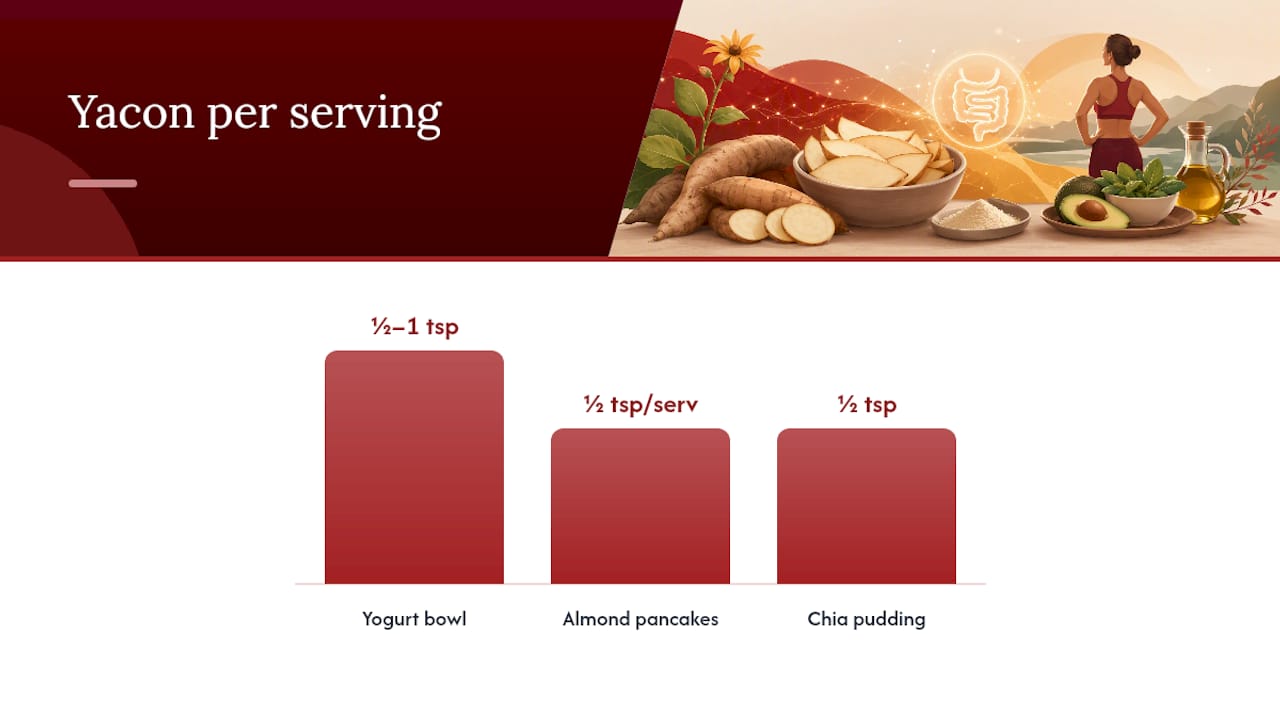
- High-fat yogurt with nuts and a drizzle: Spoon full-fat Greek or coconut yogurt into a bowl, scatter toasted pecans or walnuts, and add 1/2 to 1 teaspoon of yacon syrup. The syrup’s caramel-adjacent sweetness plays well with the tang of yogurt. This is a slow Saturday morning in a bowl.
- Keto pancake batter, small addition: Fold 1 teaspoon of yacon syrup into a two-serving batch of almond-flour pancake batter before cooking. The FOS content survives gentle heat, and the syrup adds a subtle depth that maple extract cannot quite replicate. Keep the amount small — this is a flavor note, not a sweetener load.
- Low-carb chia pudding: Stir 1 tablespoon of chia seeds into 1/2 cup of unsweetened coconut milk, let it set overnight, and drizzle 1/2 teaspoon of yacon syrup before serving. Add a few fresh berries if net carbs allow. It takes about two minutes the night before and feels like a considered breakfast rather than a rushed one.
Serving-size guidance: Start with 1/2 teaspoon per serving (roughly 1–2g FOS) and progress to 1 teaspoon after the first week if symptoms are minimal. At these amounts, the net-carb impact is negligible for most keto trackers — FOS is classified as dietary fiber and does not raise blood glucose the way digestible sugars do.
For more breakfast ideas that keep you in ketosis while adding prebiotic fiber, the keto breakfast staples checklist covers the full morning routine. And for family-centered meal planning that incorporates prebiotics in everyday meals, there is a guide built specifically for parents navigating this.
Store yacon syrup in a cool, dry place; refrigerate after opening to preserve flavor and FOS integrity. A 6oz bottle goes a long way when you are using it in 1/2-teaspoon increments.
What this science means for slow mornings at your table
The research on prebiotics and ketogenic diets is still finding its footing in human trials. But the mechanistic logic is clear, the animal data is encouraging, and the practical entry point is genuinely simple: a small drizzle of something naturally sweet and fiber-rich, added to a breakfast you were already going to make.
What strikes me most about this evidence is how well it maps onto the way families actually eat when they are paying attention. Not supplements measured in milligrams, not clinical protocols. A spoonful of yacon syrup over yogurt. A slow morning where the table is set and nobody is rushing. The gut microbiome responds to consistency more than intensity — and so do kids.
If you try one thing from this guide next week, make it the 1/2-teaspoon drizzle on Saturday morning yogurt. Note how everyone at the table responds. Keep the conversation going. The science will catch up to what good food has always known.
Yakonow yacon syrup: a small detail for the family table

Yakonow yacon syrup is hand-harvested from yacon root in Peru and bottled in an FDA-compliant facility in Texas. It contains up to 50g of prebiotic FOS fiber per 100g, carries a glycemic index of just 1, and has zero added sugar, no colorants, and no artificial sweeteners. It is vegan, gluten-free, and keto-compatible in the serving sizes described in this guide.
For families who want to try adding a prebiotic FOS source to their morning routine without buying a supplement, Yakonow is the practical starting point. A small squeeze over yogurt, a drizzle into pancake batter, a tablespoon stirred into chia pudding — these are the moments the syrup is made for.
Start with the single 6oz squeezable bottle to try it at your own pace. Families who go through it quickly tend to reach for the pack of 2 or the pack of 4 so the pantry never runs short on a slow Sunday morning. Follow the starter protocol from this guide: begin with 1/2 teaspoon, increase gradually, and let the table do the rest.
Selected studies and reviews to read next
These are the primary sources used throughout this guide. Each is labeled by study type so you can judge how directly it applies to your situation.
- [Systematic human review] The ketogenic diet: its impact on human gut microbiota and potential consequent health outcomes — PMC. Covers consistent microbiome shifts (reduced Bifidobacterium, lower SCFAs) across multiple KD studies.
- [Animal trial] Addition of Prebiotics to the Ketogenic Diet Improves Metabolic Profile but Does Not Affect Seizures in a Rodent Model of Infantile Spasms Syndrome — PMC. The core rodent KD+prebiotic study referenced throughout.
- [Mechanistic / practical guide] Prebiotic introduction and microbiome fermentation — MDPI Genes (2019). Covers FOS fermentation pathways and the rationale for gradual titration.
- [Practical guide] Fiber and the ketogenic lifestyle — Keto-Mojo. User-facing guidance on keto-compatible fiber sources and FOS serving strategies.
This article is general information, not a substitute for advice from a qualified doctor. Consult a qualified healthcare professional about your own circumstances before acting on anything here.
Sources
- The ketogenic diet: its impact on human gut microbiota and potential consequent health outcomes: a systematic literature review - PMC
- Addition of Prebiotics to the Ketogenic Diet Improves Metabolic Profile but Does Not Affect Seizures in a Rodent Model of Infantile Spasms Syndrome
- Published article on prebiotic introduction and microbiome fermentation (MDPI Genes 2019)
- Fiber and the ketogenic lifestyle — Keto-Mojo