

Sweetener Transition for Kids: A Step-by-Step Guide
A sweetener transition for kids is the gradual process of replacing added sugars in a child’s daily meals with lower-glycemic, more nourishing alternatives. It is not a diet. It is a quiet shift in what sits on your kitchen counter and what gets drizzled on the Saturday morning stack of pancakes. The American Academy of Pediatrics recommends zero added sugar for children under 2, and less than 6 teaspoons (25 grams) per day for children ages 2 through 18. Most kids in the US exceed that limit before lunchtime. The good news is that a sweetener transition kids step by step can be gentle, delicious, and something the whole family actually enjoys.
What do you need before starting a sweetener transition step by step?
Success starts in the kitchen, not the grocery store. Before you swap a single ingredient, you need to know exactly where the sugar is hiding.
Keep a 3-day food diary
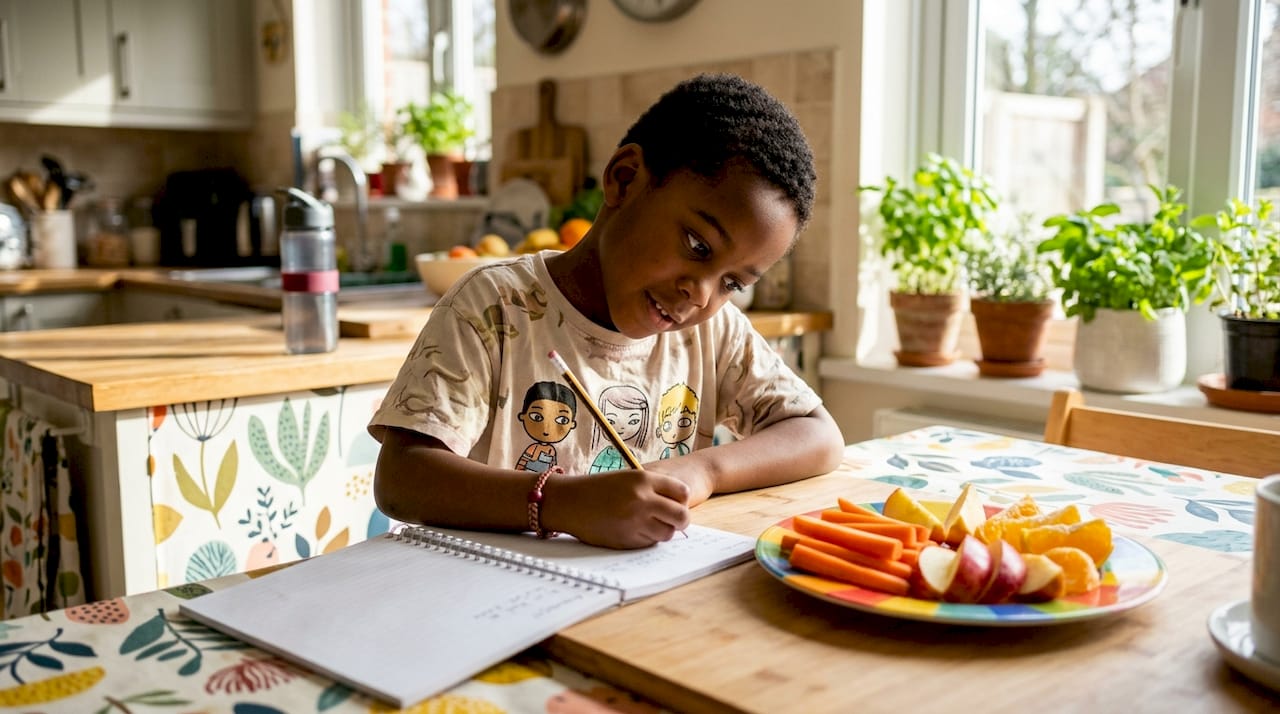
Write down everything your child eats and drinks for three days, including weekends. You are not looking for perfection. You are looking for patterns: the flavored yogurt at breakfast, the juice box at lunch, the granola bar after school. These are your highest-impact targets.
Spot the hidden sugars
Added sugar hides under many names on ingredient labels. Watch for these on the products your family uses most:
- High-fructose corn syrup
- Cane juice or evaporated cane juice
- Dextrose, maltose, and sucrose
- “Fruit concentrate” in packaged snacks
- Honey and agave in store-bought granolas
Pro Tip: Involve your kids in reading labels at the store. Children ages 4 and up can spot the word “sugar” on a package. Making it a game builds awareness without creating anxiety around food.
Gather your healthier sweetener options
Once you know your sugar sources, gather a small collection of healthy sweetener options to have on hand. Think fruit purees, mashed ripe banana, date paste, and low-glycemic syrups like Yakonow yacon syrup. Having these visible and accessible matters. Research from the Monell Chemical Senses Center confirms that changing home food availability reduces children’s added sugar intake even without changing their innate preference for sweetness.
| Sugar source | Healthier swap |
|---|---|
| Flavored yogurt | Plain yogurt + fruit puree or Yakonow drizzle |
| Fruit juice | Sparkling water + a splash of 100% juice |
| Pancake syrup | Yakonow yacon syrup (glycemic index of 1) |
| Granola bar | Oats + mashed banana + a pinch of cinnamon |
| Sweetened oatmeal | Plain oats + diced apple + Yakonow drizzle |
How to execute the sweetener transition step by step
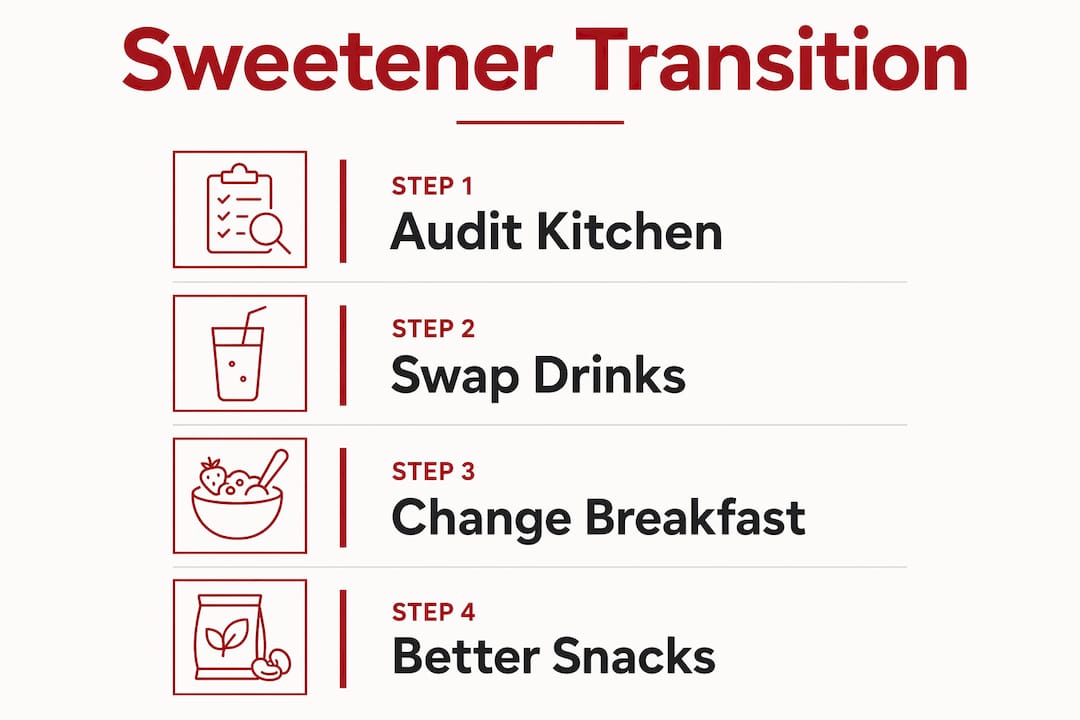
A four-week phased approach targets the highest-impact areas first and paces change so kids adapt without rebellion. Here is how each week works.
Week 1: Audit and prepare
- Complete your 3-day food diary and circle the top three sugar sources.
- Read labels on your five most-used pantry staples.
- Clear out one or two high-sugar items and replace them with a natural alternative.
- Place a fruit bowl at eye level and move sugary snacks to a higher shelf or out of sight.
The goal this week is awareness, not elimination. You are setting the stage.
Week 2: Tackle drinks first
Sugary drinks are the single fastest win in any step-by-step sugar swap. Juice, flavored milk, and sweetened drinks can account for a large share of a child’s daily added sugar. This week:
- Replace one juice serving per day with water or plain sparkling water.
- Offer a small slice of citrus or a few frozen berries to make plain water feel special.
- If your child drinks flavored milk, mix half plain and half flavored for two weeks before going fully plain.
Children’s taste buds adapt in 2–3 weeks once sugar is reduced. That timeline means the resistance you feel in week two is temporary, not permanent.
Week 3: Swap the breakfast table
Breakfast is where most families consume the most added sugar before 9:00 AM. Sweetened cereals, flavored yogurts, and commercial syrups are the main culprits. This week, make one swap per breakfast item:
- Replace sweetened cereal with oats, topped with fresh fruit and a small drizzle of Yakonow yacon syrup.
- Swap flavored yogurt for plain Greek yogurt with a spoonful of fruit puree.
- Use Yakonow instead of commercial pancake syrup on weekend waffles or pancakes.
Yakonow has a glycemic index of just 1, compared to 54 for maple syrup. That means the Saturday morning ritual stays warm and sweet without the sugar spike.
Pro Tip: Let your child pour the Yakonow syrup themselves. Ownership over the choice increases acceptance. A positive reinforcement approach with non-food rewards, like a sticker chart or extra story time, increases kids’ acceptance of less-sweet foods more effectively than pressure.
Week 4: Build better snacks and cook from scratch more
This is the week you address snacks and home cooking. Processed snacks are the most common source of hidden sugars in children’s diets. Replacing them with homemade versions drastically reduces sugar intake and gives you full control over what goes in.
- Make a batch of energy balls with oats, nut butter, and mashed banana instead of buying granola bars.
- Bake muffins sweetened with date paste or ripe banana rather than white sugar.
- When a recipe calls for sugar, start by reducing the amount by one-quarter. Most kids will not notice.
| Week | Focus area | Key action |
|---|---|---|
| 1 | Kitchen audit | Identify top 3 sugar sources, rearrange pantry |
| 2 | Drinks | Replace one juice serving daily with water |
| 3 | Breakfast | Swap sweetened cereal and syrup for lower-sugar options |
| 4 | Snacks and cooking | Make one homemade snack per week, reduce sugar in recipes |
What challenges should parents expect, and how do you handle them?
Resistance is normal. It does not mean the transition is failing.
Children have an inborn preference for sweet tastes. The goal is never to suppress that preference. The goal is to redirect it toward foods that satisfy it more gently. When your child pushes back on plain yogurt or asks for the old cereal, that is physiology, not defiance.
“Taste and appetite changes during toddler and early childhood years are normal. They should be met with patience and variety rather than pressure or added sweetness. Consistency from caregivers is the single most important factor in successful palate recalibration.”
Full palate adjustment can take up to 3 months. The first two weeks are the hardest. After that, the new normal starts to feel like just normal.
Here are the most common challenges and how to handle them:
- Fussiness at meals: Offer the new food alongside a familiar favorite. Do not replace everything at once.
- Energy dips: These can happen in the first week as blood sugar stabilizes. Add more whole grains and protein to meals during this period.
- Requests for old favorites: Avoid restrictive language. Instead of “we don’t eat that anymore,” try “we have something just as good.” Explaining the reasons for limits, rather than simply enforcing them, builds a healthier relationship with food over time.
- Inconsistency between home and school: Focus on what you can control. A consistent home environment is enough to shift the baseline.
Pro Tip: The 80/20 approach works well for children ages 4 through 7. Eighty percent of the time, the family eats the new way. Twenty percent of the time, there is flexibility. Clear visible rules, like one sweet treat per day, help kids understand limits without feeling deprived.
What are the healthiest sweetener options for kids?
The best child-friendly sweeteners share three qualities: they are minimally processed, they do not spike blood sugar sharply, and they taste good enough that kids actually eat them.
Natural options worth keeping in your kitchen include:
- Ripe banana or date paste: Whole-food sweeteners that also add fiber and potassium.
- Fruit purees (unsweetened applesauce, mango puree): Work well in baked goods and yogurt toppings.
- Yacon syrup: A low-glycemic syrup made from the yacon root, native to the Andes. It contains prebiotic FOS fiber, which feeds beneficial gut bacteria and supports digestion.
Yakonow yacon syrup stands apart from most sweeteners because it contains up to 50g of prebiotic fiber per 100g and has a glycemic index of 1. It is hand-harvested in Peru and bottled in an FDA-compliant facility in Texas, with zero added sugar, no colorants, and no artificial sweeteners. For a deeper look at how it compares to other low-glycemic options, the glycemic difference between common sweeteners is significant.
| Sweetener | Glycemic index | Prebiotic fiber | Best use for kids |
|---|---|---|---|
| White sugar | 65 | None | Minimize or replace |
| Maple syrup | 54 | None | Occasional, small amounts |
| Honey | 58 | None | Avoid under age 1 |
| Yakonow yacon syrup | 1 | Up to 50g per 100g | Daily drizzle on breakfast foods |
| Date paste | ~42 | Moderate | Baking and smoothies |
Yakonow works beautifully drizzled over oatmeal, stirred into plain yogurt, or poured over weekend pancakes. It tastes gently sweet, slightly earthy, and rich enough that kids do not miss the old syrup. That is the point: the swap should feel like an upgrade, not a loss.
Key Takeaways
A gradual, kitchen-first sweetener transition for kids succeeds when parents focus on availability, positive reinforcement, and consistent small swaps rather than restriction or sudden elimination.
| Point | Details |
|---|---|
| Start with a food diary | Identify your child’s top three sugar sources before making any changes. |
| Tackle drinks in week 2 | Replacing one juice serving daily is the fastest single win in reducing added sugar. |
| Taste buds adapt in 2–3 weeks | Early resistance is temporary; consistency through the first month is what creates lasting change. |
| Use positive reinforcement | Non-food rewards increase kids’ acceptance of less-sweet foods more effectively than pressure. |
| Yakonow fits naturally | With a glycemic index of 1 and prebiotic fiber, Yakonow replaces high-sugar syrups without changing the ritual. |
What I’ve learned from watching families slow down at the table
By Celeste
The families I admire most at the table are not the ones who banned sugar. They are the ones who made the alternatives so good that nobody missed it.
That is the real insight behind transitioning kids to healthier sweeteners. It is not about discipline. It is about making the new thing feel like a treat. When a child pours Yakonow over their Saturday waffles and calls it “the good syrup,” something has shifted. Not because you lectured them about glycemic index, but because the moment was warm and the syrup was genuinely delicious.
What I find most parents underestimate is how much the table itself does the work. When fruit is visible and the pantry is rearranged, children reach for what is there. The research backs this up, but so does every slow Sunday morning I have ever witnessed. The environment shapes the habit before the habit shapes the child.
The other thing I would tell any parent starting this process: do not wait for the perfect week. Start with the drinks. Start with one breakfast swap. The transition does not need to be complete to be working. Small, consistent changes at the family table add up to a food culture your kids will carry with them long after they leave your kitchen.
— Celeste
Yakonow at your family’s breakfast table
Yakonow yacon syrup was made for mornings exactly like the ones you are trying to protect: slow, warm, and gathered around something good.

Drizzled over pancakes, stirred into oatmeal, or spooned onto plain yogurt, Yakonow replaces high-sugar syrups with a single-ingredient syrup that is naturally sweet, low-glycemic, and full of prebiotic fiber your kids’ gut will thank you for. It is hand-harvested from yacon root in Peru and bottled in Texas with zero added sugar and nothing artificial. If you are ready to make the breakfast table a little more intentional, the Yakonow 6oz squeezable bottle is the easiest first step. One bottle. One swap. One sweeter morning.
FAQ
What is a sweetener transition for kids?
A sweetener transition for kids is the gradual process of replacing added sugars in a child’s diet with lower-glycemic, more nourishing alternatives. It focuses on small, consistent swaps rather than sudden elimination.
How long does it take for kids to adjust to less sugar?
Children’s taste buds begin adapting within 2–3 weeks of reducing sugar. Full palate adjustment can take up to 3 months, with temporary fussiness most common in the first two weeks.
What is the recommended daily sugar limit for children?
Children under 2 should have zero added sugar. Children ages 2 through 18 should consume less than 6 teaspoons (25 grams) of added sugar per day, according to pediatric nutrition guidelines.
Is yacon syrup safe for kids?
Yacon syrup is a natural, single-ingredient sweetener with a glycemic index of 1 and prebiotic fiber that supports gut health. It contains no added sugar, no artificial sweeteners, and no colorants, making it a gentle option for family meals.
What is the easiest first step in a step-by-step sugar swap?
Replacing one sugary drink per day with water or sparkling water is the fastest, highest-impact first step. Drinks are the most common source of excess added sugar in children’s diets and the easiest to swap without resistance.