

No Sweeteners Before Age 2: Toddler Swap Ideas for Parents
The rule is simple: no added sugars or nonnutritive sweeteners before age 2, and minimal exposure after that. The American Academy of Pediatrics sets that line because a toddler’s palate is still forming, and every sip or bite of something intensely sweet teaches their taste buds what “normal” tastes like. This week, that means checking labels before pouring anything into a sippy cup, and reaching for water, plain milk, or whole fruit instead of anything sweetened, natural or otherwise.
TL;DR:
- Parents should avoid added sugars and nonnutritive sweeteners in toddlers’ diets until age 2 to prevent establishing a preference for overly sweet flavors.
- Small, natural swaps like mashed banana or roasted sweet potatoes can satisfy a child’s sweet craving without relying on processed sweeteners.
- Food labels hide many names for added sugars and sweeteners, making it crucial to check for ingredients like cane syrup, sucralose, or fruit juice concentrate.
- Excessive exposure to sweet flavors, regardless of whether they come from sugar or substitutes, increases the likelihood of developing strong preferences for very sweet foods later.
- For children over two, moderation and portion control are key; avoiding frequent exposure to sweeteners helps prevent long-term health and taste preference issues.
Table of Contents
- Age-Based Rules for Sweeteners in Toddlers
- Why Pediatric Groups Advise Caution
- What’s Actually in the Bottle: Types of Sweeteners Explained
- Simple Swaps That Actually Work at Breakfast
- How to Spot Hidden Sweeteners on a Label
- Dental Health and Daily Sugar Habits
- When a Pediatrician Might Recommend a Different Approach
- Allergic Reactions and Sensitivities Worth Watching
- How Sweeteners Affect a Toddler’s Gut
- Sweeteners Across Cultural and Family Traditions
- Small Swaps, Bigger Mornings
- The Perspective Worth Taking Seriously
- Bringing a Gentler Sweetness to Your Table
- Sources
Age-Based Rules for Sweeteners in Toddlers
Here’s what to actually put on the table, broken down by age, so you’re not guessing at the grocery store.
Under 12 months: Breast milk or formula covers everything. No honey (botulism risk), no maple syrup, no fruit juice of any kind.
12 to 24 months: Water and plain whole milk become the default drinks. The AAP is direct on this point: added sugars and nonnutritive sweeteners like stevia or sucralose should still be avoided entirely, even in small amounts hidden in yogurt or flavored milk.
Ages 2 and up: This is where “minimize” replaces “avoid.” A little natural sweetness in food is realistic. The goal is limiting frequency and volume, not eliminating flavor from your toddler’s life.
- Serve water between meals instead of juice, even 100% juice
- Choose plain whole milk over chocolate or strawberry milk
- Skip drinks and yogurts sweetened with stevia, sucralose, or aspartame for young children
- Treat a fruit’s natural sweetness as the sweetener, not an add-on
- If measuring, think teaspoons: even one added teaspoon of syrup daily adds up fast at toddler-sized calorie budgets
Why Pediatric Groups Advise Caution
Nobody is claiming nonnutritive sweeteners are dangerous in the way an allergen is dangerous. The caution is about the unknown, not the alarming.
Long-term pediatric data on nonnutritive sweeteners simply doesn’t exist in the depth researchers want. The Pediatrics policy statement from the AAP reviews the available evidence and lands on a recommendation for individualized conversations between families and clinicians rather than a blanket green light.
Toddlers exposed early and often to intensely sweet flavors, whether from sugar or sugar substitutes, tend to develop a stronger preference for very sweet foods later. That preference is hard to walk back once it’s set.
That’s the real concern: not acute harm, but a flavor preference that gets locked in during a narrow developmental window.
The scale of the problem backs up the caution. Children ages 2 to 19 have historically consumed around 17 teaspoons of added sugar a day, according to CDC data, more than double the daily limit the American Heart Association recommends for kids. Add the Healthy Eating Research consensus advising against non-sugar sweetened beverages for children altogether, and the message from pediatric nutrition experts is consistent: when in doubt, choose less sweet, not a different kind of sweet.
What’s Actually in the Bottle: Types of Sweeteners Explained
Walk down any breakfast aisle and you’ll find four different categories wearing similar labels. Knowing which is which changes how you shop.
- Added sugars — table sugar, corn syrup, cane syrup, and yes, honey and maple syrup count here too. They contribute calories and sweetness but nothing else nutritionally, and pediatric guidance treats maple syrup and honey as added sugar, not a health upgrade from cane sugar.
- High-intensity sweeteners — stevia, monk fruit, aspartame, sucralose. These carry little or no calories but are the ones pediatric groups most consistently flag for young children, partly because the FDA doesn’t require manufacturers to list exact amounts on packaging.
- Sugar alcohols — xylitol and erythritol show up in “sugar-free” kids’ products. Xylitol has real dental research behind it, but only at controlled, consistent doses like gum, and it can cause stomach upset in children at ordinary serving sizes.
- Natural syrups — this is where yacon syrup stands apart from maple and agave. It’s a single ingredient, pressed from a root vegetable grown in the Andes, with a glycemic index of roughly 1 and naturally occurring prebiotic fiber, rather than concentrated sucrose dressed up as “natural.”
None of these are approved for use under age 1, and honey specifically carries a botulism risk for infants regardless of sweetness.
Simple Swaps That Actually Work at Breakfast
Small changes at the table beat overhauling everything at once, especially when you choose the best sweetener for smoothies to keep breakfast drinks healthy and tasty. Here’s where to start.
- Mash overripe banana into oatmeal instead of adding brown sugar. It sweetens and thickens at the same time.
- Blend a few dates into muffin batter in place of half the sugar called for in a recipe.
- Offer plain yogurt with fresh berries stirred in rather than pre-sweetened yogurt cups.
- Drizzle one teaspoon of a low-glycemic syrup, like yacon syrup, over pancakes instead of pouring on maple syrup, which lets a toddler experience “syrup” as a ritual without the sugar spike.
- Roast sweet potato wedges for a naturally sweet side that needs zero added sweetener.
- Freeze puréed mango into small cubes as a summer treat instead of popsicles loaded with corn syrup.
- Serve unsweetened applesauce as a dip for whole-grain waffle strips.
- Top rice cakes with mashed avocado and a few raisins for sweetness without syrup at all.
Pro Tip: Keep the “sweet moment” consistent, like a Sunday pancake ritual, and let the actual sweetener rotate to something gentle. Toddlers bond with the occasion more than the specific flavor, and repeated, low-key exposure to less-sweet foods (research suggests 8 to 10 tries) is what actually builds acceptance.
How to Spot Hidden Sweeteners on a Label
Ingredient lists hide sugar under dozens of names, and the order matters, since ingredients are listed by weight.
- Check the “Added Sugars” line under Total Carbohydrates first; anything above 0g in a toddler snack is worth a second look.
- Scan for sugar synonyms: cane syrup, corn syrup, dextrose, fruit juice concentrate, and rice syrup all count as added sugar.
- Watch for high-intensity sweetener names like steviol glycosides, sucralose, aspartame, and monk fruit extract, especially in “kid-friendly” flavored yogurts and drinks.
- When possible, choose products labeled unsweetened, 0g added sugar, or ones with a single recognizable ingredient.
A step-by-step guide to reading syrup labels can help you build this habit faster than memorizing every synonym.
Dental Health and Daily Sugar Habits
Frequency matters more than quantity when it comes to toddler teeth. Sipping a sweetened drink over an hour bathes teeth in sugar far longer than eating a dessert in ten minutes, which is why pediatric dentists push water between meals over grazing on juice or flavored milk.
The math backs up why this matters: kids average 17 teaspoons of added sugar daily, nearly triple the roughly 6 teaspoon limit many health groups recommend for children over 2. At home, that translates into a few workable habits: plan snack times instead of all-day grazing, keep flavored milk and juice as occasional treats rather than defaults, and let your toddler see you reaching for water first. Kids copy what’s on the table, not what’s in the lecture.
When a Pediatrician Might Recommend a Different Approach
Some toddlers have medical circumstances, like early-onset type 1 diabetes or a metabolic condition, where a pediatrician or registered dietitian may guide a more tailored approach to sweeteners as part of a broader care plan. That guidance should always come from a clinician who knows the child’s full history, not a label or a blog post.
If you’re heading into that conversation, come with specifics: what your toddler currently eats and drinks in a typical day, any family history of diabetes or dental issues, and which sweetener products you’re considering. A focused list gets you further than a general question about “what’s safe.”
Allergic Reactions and Sensitivities Worth Watching
True allergies to sweeteners are rare in toddlers, but sensitivities and intolerances show up more often than most parents expect. Sugar alcohols like xylitol and erythritol are the most common culprits, causing bloating, gas, or loose stools even in small amounts, since a toddler’s digestive system processes them less efficiently than an adult’s does.
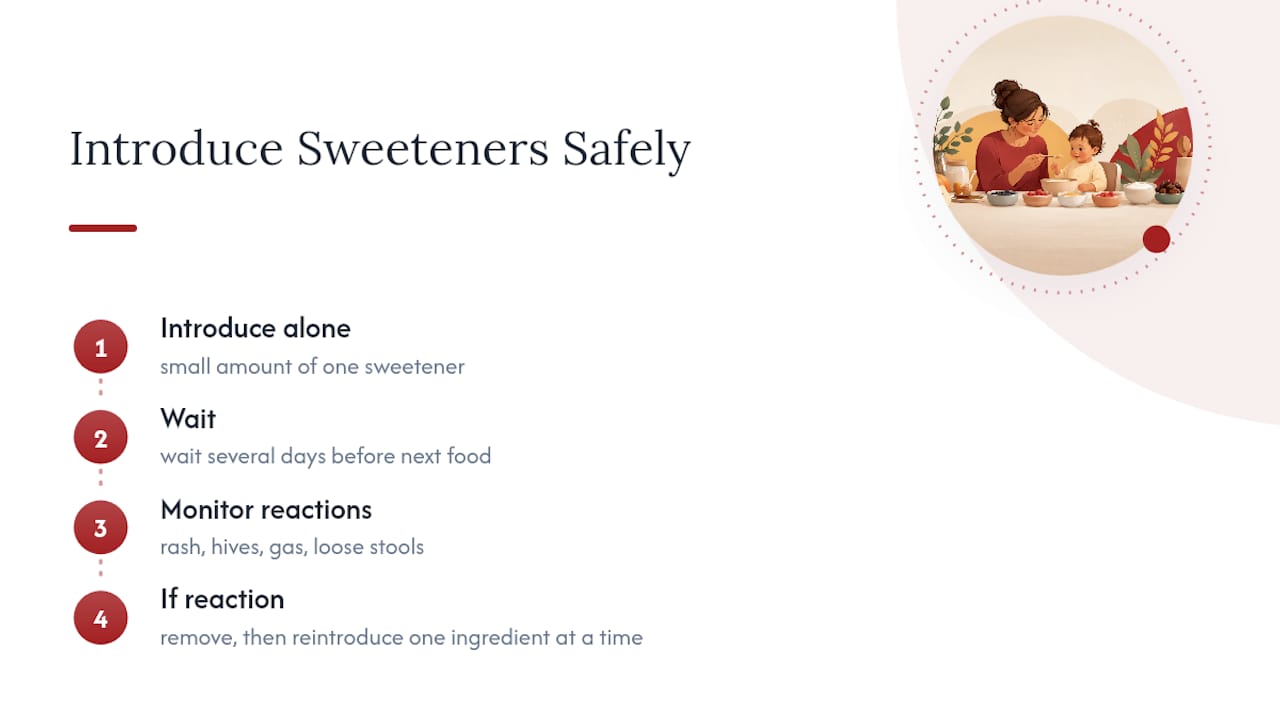
Stevia and monk fruit extract are generally well tolerated, but some children react to the other ingredients often blended in with them, like sugar alcohols added for bulk or flavor. If you notice a rash, hives, or digestive upset after introducing a new sweetened product, the smartest move is removing it entirely and reintroducing one ingredient at a time rather than guessing which component caused the reaction.
Artificial sweeteners like aspartame carry a specific warning for children with phenylketonuria (PKU), a rare metabolic condition, since aspartame breaks down into phenylalanine, which those children’s bodies can’t process safely. Most toddlers don’t have PKU, but it’s part of newborn screening in the United States, so parents typically already know if this applies to their child.
The safest approach with any new sweetener, natural or artificial, is introducing it alone, in a small amount, and waiting a few days before adding another new food. That way, if a reaction happens, you actually know the cause.
How Sweeteners Affect a Toddler’s Gut
A toddler’s gut microbiome is still developing well past their first birthday, and what they eat during these years shapes which bacteria thrive. Added sugars feed less favorable bacterial strains and have been associated with digestive discomfort when consumed in excess, including bloating and irregular stools in sensitive kids.
Sugar alcohols pose the most direct digestive challenge. Because the body absorbs them incompletely, they draw water into the intestines, which is exactly why xylitol and erythritol carry a reputation for causing gas and loose stools in children even at modest servings. High-intensity sweeteners like stevia and sucralose pass through differently, but their long-term effects on a young, developing gut simply haven’t been studied enough to draw firm conclusions, which is part of why pediatric groups recommend caution rather than confidence.
Fiber tells a more encouraging story. Prebiotic fibers, the kind found naturally in foods like bananas, oats, and yacon root, feed beneficial gut bacteria rather than working against them. That’s a meaningfully different relationship with digestion than sugar alcohols or intensely sweet substitutes offer, and it’s one reason a naturally fiber-rich sweetener looks different on paper than a stripped-down sugar substitute. None of this makes any single sweetener a gut health fix. It just means not all sweet options affect digestion the same way.
Sweeteners Across Cultural and Family Traditions
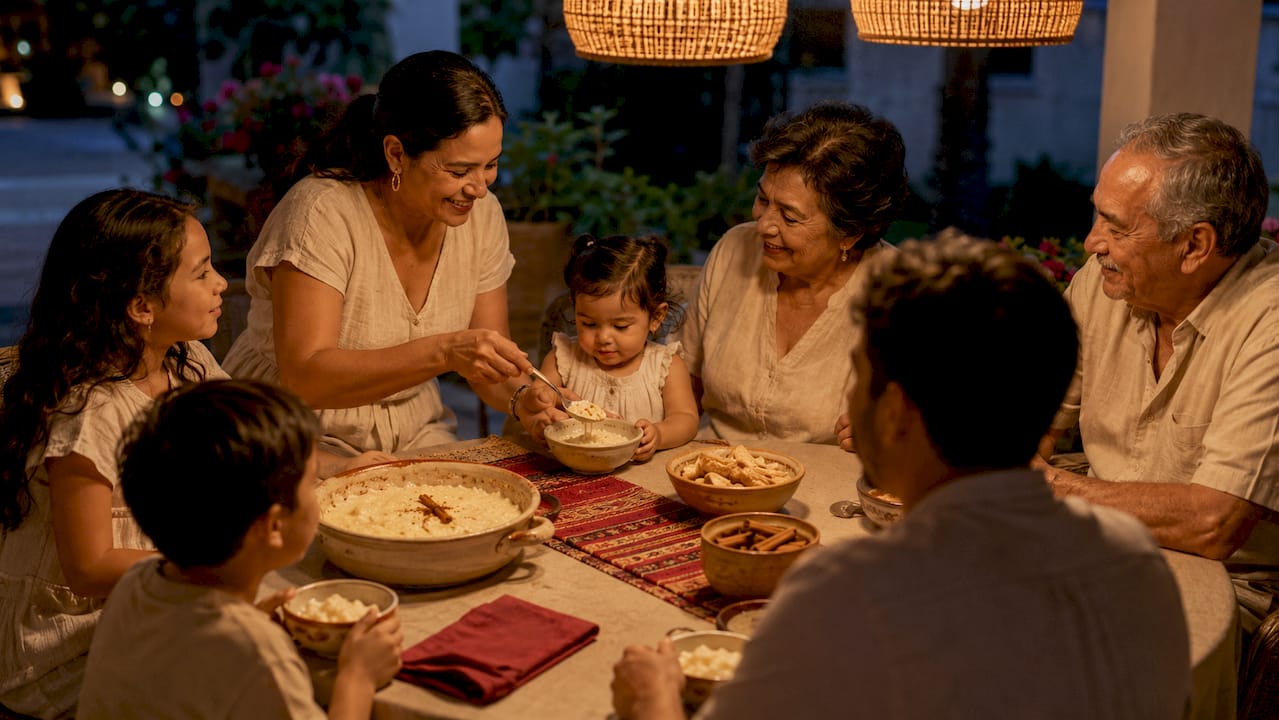
Sweet traditions vary widely across households, and pediatric guidance doesn’t ask families to abandon them, just to apply the same age-based caution regardless of which sweetener is culturally familiar. A Mexican family’s champurrado, an Indian family’s kheer, or a Southern family’s sweet tea all carry the same practical consideration: added sugar is added sugar, whatever dish it’s wrapped in.
The advice that matters most is adaptation, not elimination. A grandmother’s recipe doesn’t need to disappear; it can be made with less added sugar, or introduced later, past the second birthday, rather than skipped from the family table entirely. Many culturally rooted sweeteners, like date syrup, jaggery, or piloncillo, are still classified as added sugar under pediatric guidelines, even though they carry generations of tradition behind them. That distinction is worth knowing, not as a judgment on the tradition, but as information for deciding when and how much to serve a toddler.
For gatherings that mix generations, the easiest path is offering the traditional sweet dish in a smaller, occasional portion for toddlers while keeping the ritual itself intact: the same recipe, the same table, just a lighter hand for the smallest guest.
Small Swaps, Bigger Mornings
Saturday morning at our house used to mean a bottle of supermarket syrup that nobody read the label on. Swapping it for something with one ingredient on the label didn’t change the ritual. It just meant that when my daughter asked for “more syrup, please,” I wasn’t wincing.
That’s really what this whole conversation is about. Not eliminating sweetness from a toddler’s life, but choosing sweetness that doesn’t require you to look away from the label.
Yakonow is a single-ingredient yacon syrup, hand-harvested from yacon root in Peru and bottled in an FDA-compliant facility in Texas. It carries a glycemic index of just 1, along with up to 50g of prebiotic fiber per 100g and zero added sugar, which makes it easy to keep a small drizzle part of a slow Sunday breakfast without a second thought.
The Perspective Worth Taking Seriously
Most advice on toddler sweeteners treats the topic like a chemistry problem: memorize which additive is “safe” and which isn’t. That misses what pediatric researchers are actually saying. The concern isn’t a single scary ingredient. It’s the pattern of exposure, the sheer frequency with which sweetness, in any form, shows up in a young child’s day.
The conventional advice oversells the difference between “natural” and “artificial” sweeteners. Honey and maple syrup get a pass in a lot of parenting content simply because they sound wholesome, but pediatric guidance is clear that they’re added sugar just like anything else, and neither belongs anywhere near a child under 1.
What actually deserves a parent’s attention is frequency and portion, not label buzzwords. A toddler who tastes something sweet twice a day in small, deliberate amounts is in a completely different place than one grazing on sweetened snacks and drinks from morning to bedtime. Start there. The specific sweetener matters less than most articles suggest; the pattern around it matters more.
— Celeste
Bringing a Gentler Sweetness to Your Table
Yakonow isn’t trying to compete with sugar-free syrups engineered in a lab or artificially sweetened pancake toppers built for a diet trend. It’s a return to something simpler: one root, harvested in Peru, turned into a syrup your family can pour with confidence.

For toddlers past their second birthday, a measured teaspoon drizzled over pancakes or stirred into plain yogurt is plenty to make breakfast feel special without tipping into the kind of added sugar most pediatric guidance asks parents to limit. The single 6oz bottle is the easiest way to try it at your own table, and if mornings in your house move fast, the pack of 4 or the pack of 12 keeps a bottle within reach for every weekend, every waffle, every small ritual that brings everyone back to the table together. Order a bottle and see what a slower, single-ingredient breakfast feels like this weekend.
This article is general information, not a substitute for advice from a qualified doctor. Consult a qualified healthcare professional about your own circumstances before acting on anything here.
Sources
- Healthychildren
- Healthy Beverage Consumption in School-Age Children and Adolescents
- The Use of Nonnutritive Sweeteners in Children | Pediatrics
- Added sugars data and research - CDC