

A Simple Guide to Low Sugar Family Breakfast Mornings
A low sugar family breakfast comes down to three things on the table: protein, fiber, and healthy fat, all working together to keep kids full past 10 a.m. That combination, paired with a naturally sweet finishing touch like Yakonow instead of syrup loaded with added sugar, turns a rushed morning into something closer to a ritual worth showing up for.
TL;DR:
- Using fiber-rich foods like oats, beans, and bananas helps feed gut bacteria and supports digestion, reducing the need for supplements.
- Swapping flavored yogurts for plain Greek yogurt and checking labels for hidden sugars can significantly cut added sugar intake below 25 grams daily.
- Batch-cooking egg muffins and pancakes in advance saves time and preserves their texture and nutrient quality for busy weekdays.
- Offering kids options to customize their toppings and allowing them to participate in preparation increases their willingness to accept low-sugar breakfasts.
- A low-glycemic, prebiotic syrup like Yakonow can add sweetness to meals without causing blood sugar spikes, aligning with food-first approaches.
Table of Contents
- What Counts as a Low Sugar Family Breakfast?
- Why This Combination Keeps Kids Full Longer
- Getting Picky Eaters on Board Without a Fight
- Make-Ahead Tactics for Mornings That Actually Move
- Three Recipes Worth Keeping on Repeat
- Where a Food-First Sweetener Like Yakonow Fits In
- What I’ve Learned About Small Breakfast Swaps
- A Gentler Syrup for the Family Table
- Sources
What Counts as a Low Sugar Family Breakfast?
Ten breakfasts, all doable on a weekday, all built to keep everyone at the table full instead of hungry by 9:30.
- Savory egg muffins with spinach and cheese. Protein-forward and freezer-friendly, so mornings start with reheating, not cooking.
- Plain Greek yogurt with berries and a drizzle. Greek yogurt runs lower in sugar than most flavored cups and delivers real protein.
- Overnight oats with chia and banana. Bananas add natural sweetness and fiber, no added sugar required.
- Whole-grain toast with avocado and a fried egg. Healthy fat plus protein slows down digestion, which slows down hunger.
- Cottage cheese with sliced peaches. An underused option that’s quietly one of the highest-protein choices on this list.
- Whole-grain waffles with nut butter. Swap the syrup bottle for something low-glycemic and the whole plate shifts.
- Veggie scramble with black beans. Beans bring fiber and a prebiotic boost most breakfast plates skip entirely.
- Plain oatmeal with walnuts and cinnamon. No flavor packets means no hidden sugar; cinnamon does the flavor work instead.
- Smoothie with spinach, frozen berries, and protein powder. Skip the juice base, which is where most smoothie sugar hides.
- Whole-grain pancakes with a light yacon drizzle. For kids who need a “sweet” cue on the plate, without the sugar spike.
For dairy or nut allergies, swap Greek yogurt for a plain coconut or oat-based yogurt, and use seed butter instead of nut butter. Simple substitutions, same structure.
Why This Combination Keeps Kids Full Longer
The formula dietitians keep coming back to is whole grain, plus a protein or healthy fat source, plus a piece of fruit or vegetable, and it’s backed by dietitian-reviewed breakfast guidance for a reason: it works. Johns Hopkins Medicine frames it the same way. Protein and complex carbs slow digestion, so blood sugar rises gradually instead of spiking and crashing before lunch.
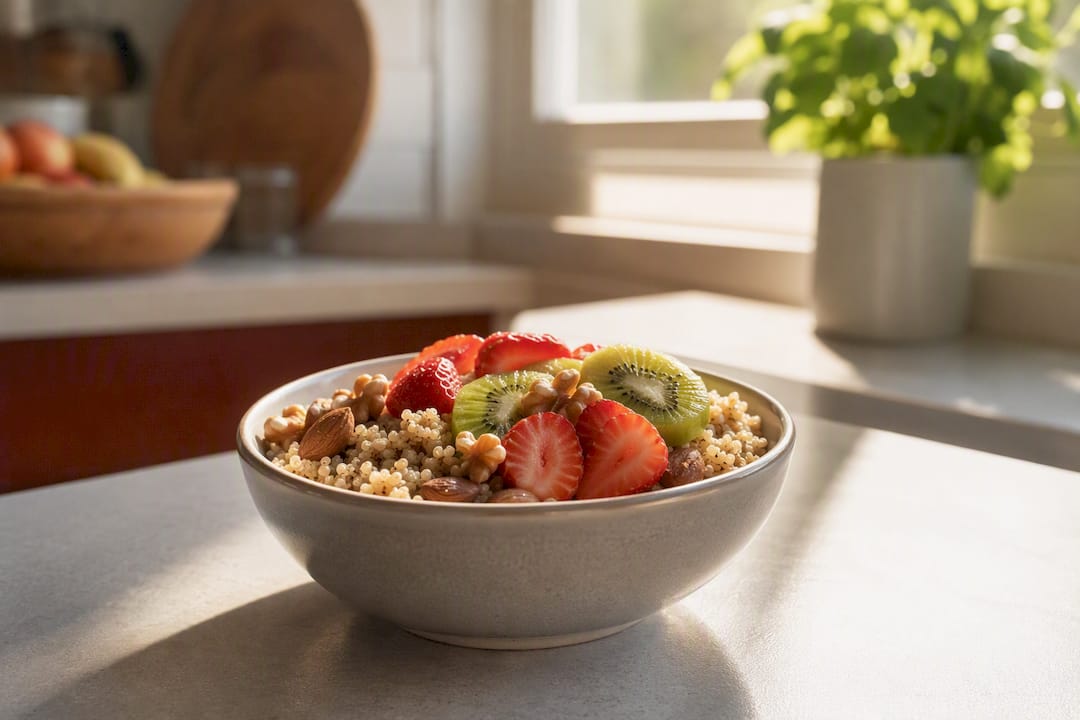
Food-first prebiotics matter here too. Oats, bananas, and beans feed the gut bacteria that support digestion, and pediatric guidance from CHOC’s parent’s guide to prebiotics recommends reaching for these foods before reaching for a supplement. On the sugar side, the American Heart Association recommends children keep added sugars under 25 grams a day, roughly six teaspoons, with none at all before age two. That’s the ceiling. Most sugary cereals and flavored yogurts blow past it before lunch.
Getting Picky Eaters on Board Without a Fight
Cold-turkey swaps rarely stick with kids. A gentler approach works better: mix a spoonful of the old favorite cereal into a bowl of the new lower-sugar one, then shift the ratio over a couple of weeks until the swap feels normal instead of like a punishment.
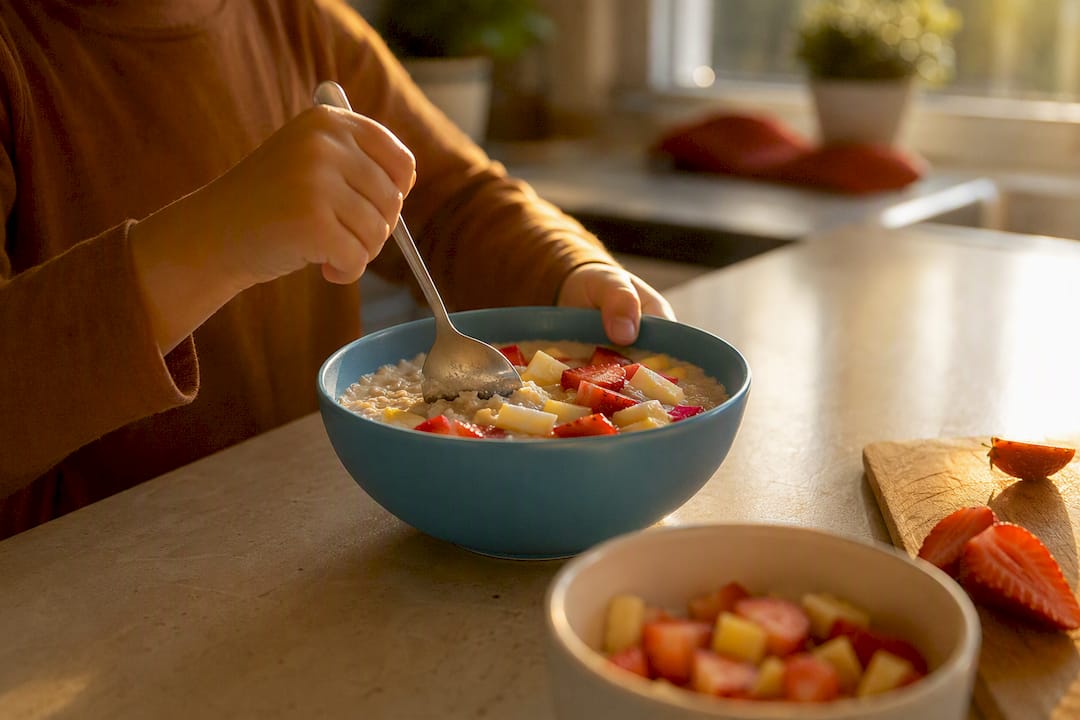
Texture matters as much as taste. A toddler might want oatmeal blended smooth, while a nine-year-old wants it chunky with mix-in control. Let age dictate portion and independence, not a rigid rule.
Pro Tip: Let kids stir their own oatmeal or build their own topping bowl. Kids are far more likely to eat what they had a hand in making, even if that “hand” was just adding the blueberries.
Make-Ahead Tactics for Mornings That Actually Move
Batch-cook on Sunday and the whole week gets easier. Egg muffins and pancakes both freeze well and reheat in under two minutes; cooked oats keep in the fridge for up to five days in mason jars, ready to eat cold or warmed.
Reading labels catches what recipes can’t. Before buying:
- Check the “added sugars” line specifically, not just total sugar, per Johns Hopkins guidance.
- Scan ingredient lists for hidden names: cane sugar, fruit juice concentrate, agave, honey, maple syrup.
- Watch for multiple sugar sources stacked in one product, a common trick in kid-marketed cereals.
A pre-set topping station, organized the night before, cuts down on morning decision fatigue and the sugary shortcuts that come with it. Pre-portion berries, nuts, and seeds into small containers so the healthy option is also the fastest one.
Three Recipes Worth Keeping on Repeat
- Savory egg muffins. Whisk six eggs with spinach, shredded cheese, and diced bell pepper. Bake at 350°F for 18 to 20 minutes in a muffin tin. Makes twelve, freezes for up to two months, and delivers roughly 6 grams of protein per muffin.
- Overnight oats, kid-customized. Combine rolled oats, milk, chia seeds, and mashed banana in a jar the night before. In the morning, top with berries and a small drizzle of Yakonow for the kids who want a sweeter bite without the sugar swing that comes with syrup.
- Whole-grain pancakes with a drizzle bar. Mix a whole-grain pancake batter as usual, then set out both nut butter and a low-glycemic drizzle so kids choose their own topping. It turns breakfast into a small ritual instead of a rushed plate.
Where a Food-First Sweetener Like Yakonow Fits In
Oats, bananas, and beans still do the heavy lifting for gut health, and that food-first approach comes first, always. But the table needs a little sweetness too, and that’s where a finishing touch matters. Yakonow is a single-ingredient yacon syrup from Peru, naturally low-glycemic, with prebiotic fiber built in rather than added. It’s not a treatment or a fix, just a small, honest swap for the syrup bottle already on the shelf. For more on the food-first side of things, Yakonow’s own guide to prebiotic foods for kids and its checklist for gut-friendly mornings go deeper.
What I’ve Learned About Small Breakfast Swaps
The family table doesn’t need a full overhaul to feel better. It needs one swap that sticks: the syrup bottle, the cereal box, the way toppings get set out. Progress over days and weeks matters more than any single perfect morning, a point FDA guidance on kids’ breakfasts makes plainly. Sustainable change looks less like willpower and more like teaching habits that actually last. Try one recipe from this list this week. Just one. Let it become the new normal before adding another.
— Celeste
A Gentler Syrup for the Family Table
Yakonow works the way real syrup should: drizzled over pancakes, stirred into yogurt, spooned over oatmeal, or dripped across sliced fruit, without the sugar crash that follows. Unlike maple syrup or honey, it comes from a single ingredient, the yacon root, hand-harvested in Peru and bottled in an FDA-compliant facility in Texas.

Families going through a bottle a week tend to reach for the pack of 2 or the pack of 4, while bigger households or anyone who hates running out lean toward the pack of 12. If you’re just testing the waters, the single 6oz bottle is the easiest place to start. Grab a bottle, try it on Saturday’s pancakes, and see if it earns a permanent spot next to the coffee maker.
Sources
- 2026 Dietary Guidance to Improve Cardiovascular Health: A Scientific Statement From the American Heart Association
- Healthy Breakfasts | Johns Hopkins Medicine
- A parent’s guide to prebiotics and probiotics
- Eat this, not that for breakfast | Scripps Health