

Gut-Friendly Kids Foods: Easy Ideas for Picky Eaters
The best gut-friendly foods for kids are ones already sitting in most family kitchens: plain yogurt with live cultures, kefir, oats, bananas, apples with skin, beans, lentils, sweet potatoes, whole-grain bread, mild sauerkraut, and yacon syrup as a prebiotic sweetener. You don’t need a new grocery list. You need a few small shifts at the table.
Here’s what that looks like in practice:
- Plain yogurt — stir 2 tablespoons into mashed fruit for babies and toddlers, or layer with berries for older kids.
- Kefir — blend with a frozen banana and a splash of vanilla for a smoothie that tastes like dessert.
- Oats — mash half a ripe banana into warm oats; the banana sweetens it naturally.
- Beans or lentils — blend into a tomato pasta sauce so they disappear completely.
- Apples with skin — slice thin and pair with almond butter or sunflower seed butter.
- Mild sauerkraut — start with one teaspoon alongside a familiar food, not as the main event.
- Yacon syrup — drizzle one teaspoon over pancakes or oatmeal as a lower-glycemic swap for maple syrup.
- Sweet potato — roast and mash with a tiny pinch of cinnamon; most kids eat it without complaint.
Safety note: Never give honey to children under 12 months. Introduce fermented foods in small amounts, especially for children under two, and check with your pediatrician if your child has a compromised immune system or known food allergies.
Table of Contents
- Gut-friendly foods across every meal of the day
- Fermented and probiotic foods: safe choices for kids
- Prebiotic foods you can add to kids’ meals starting today
- How to get picky eaters to actually try gut-friendly foods
- 10 quick recipe ideas that support kids’ gut health
- Portions, ages, and how often to serve these foods
- Safety, allergy notes, and foods to limit
- A gentle prebiotic swap worth trying: Yakonow yacon syrup
- Key Takeaways
- The table is where it all comes together
- Yakonow yacon syrup: a prebiotic addition for family breakfasts
- Useful sources for further reading
Gut-friendly foods across every meal of the day
Getting digestive-friendly meals into a busy family’s week is mostly about placement, not perfection. The goal is one gut-supporting food per meal, not a complete overhaul.
Breakfast
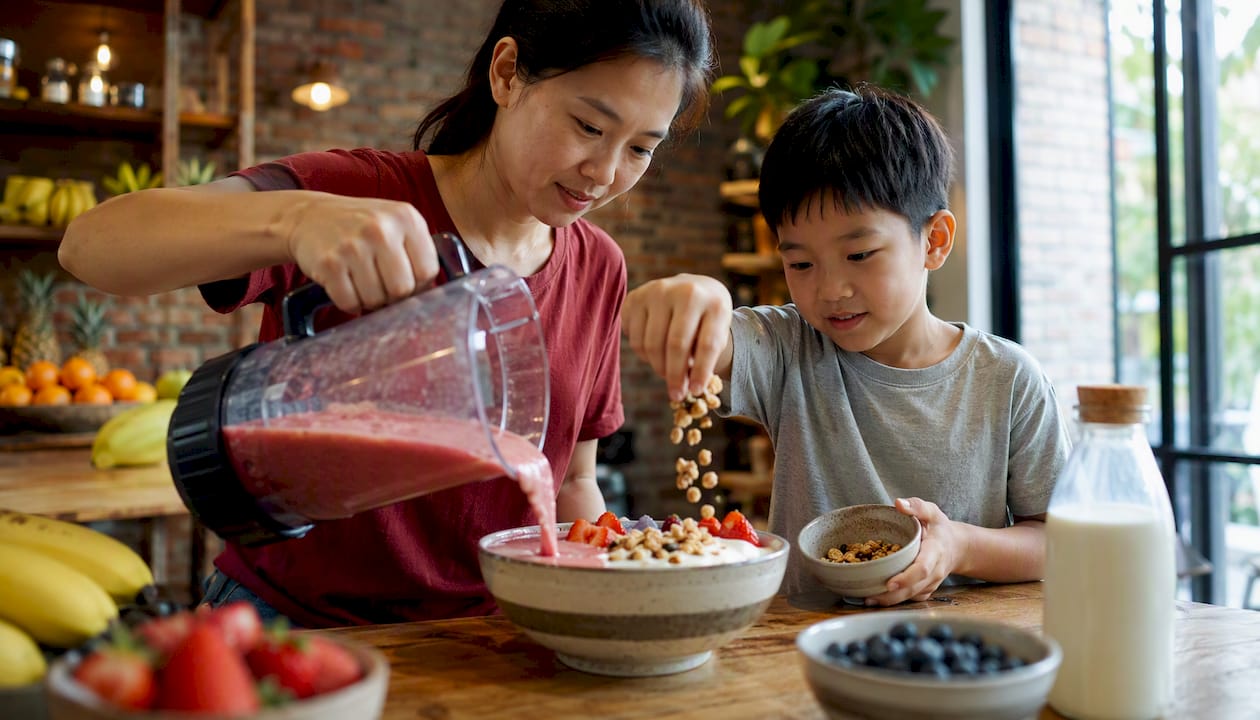
A yogurt parfait takes three minutes: plain whole-milk yogurt, a handful of berries, a spoonful of oats, and a light drizzle of yacon syrup. The yogurt brings live cultures, the oats add prebiotic fiber, and the berries contribute polyphenols that research links to microbiota changes in children. For mornings when even that feels like too much, a kefir-banana smoothie works: one cup of kefir, one frozen banana, a teaspoon of yacon syrup, and thirty seconds in the blender.
Quick swap: Replace sweetened flavored yogurt with plain yogurt and add your own fruit. You cut added sugar and keep the live cultures.
Lunch
Bean quesadillas are the easiest sell for school-age kids. Mash canned black beans with a fork, spread onto a whole-grain tortilla with mild shredded cheese, and toast in a dry pan. Lentil soup with a soft roll is another reliable option, especially in cooler months. For sandwiches, swap white bread for whole-grain and add a thin layer of hummus instead of mayo.
Dinner
Chili with beans is a crowd-pleaser that doubles as a gut-health win. A miso-glazed salmon fillet with roasted sweet potato on the side takes about twenty minutes and covers prebiotic, probiotic, and fiber bases in one plate. For mixed-veggie grain bowls, cook a batch of brown rice or farro on Sunday and build bowls through the week with whatever vegetables your kids will tolerate.
Snacks and drinks
Sliced apple with sunflower seed butter, whole-grain crackers with hummus, plain yogurt with a drizzle of honey (for children over one), and small cups of kefir all travel well in a lunchbox. For school-safe portable options, USDA Smart Snacks guidelines offer a useful framework for what qualifies as a nutritious, school-appropriate choice.
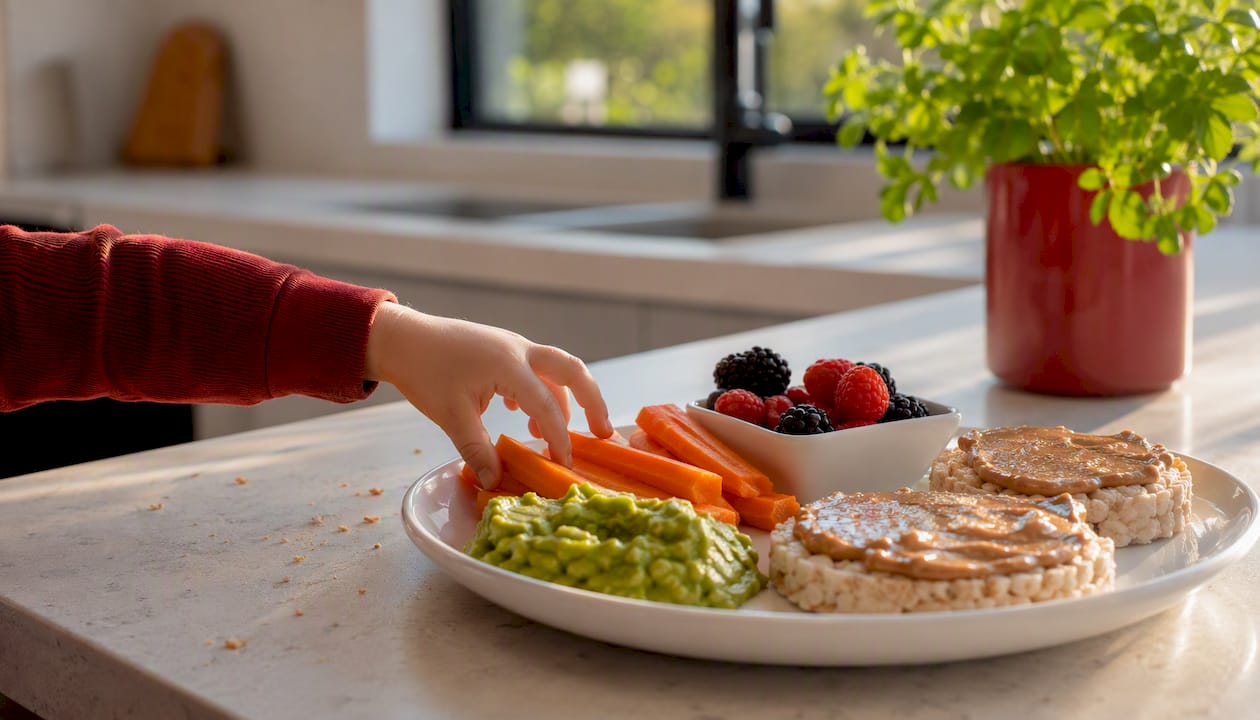
The swap worth making: Ultra-processed crackers and fruit snacks deliver almost no fiber and can crowd out the foods that actually feed beneficial gut bacteria. Swapping even one packaged snack per day for a whole-grain or fruit option adds up across the week.
Fermented and probiotic foods: safe choices for kids
Fermented foods provide both live microbes and bioactive postbiotics that support digestion and nutrient availability. For children, the most accessible options are plain yogurt with live cultures, kefir, mild miso paste, sourdough bread, and lightly fermented pickles or sauerkraut.
When reading labels, look for “live and active cultures” on yogurt and kefir. For sauerkraut and pickles, choose refrigerated versions made with just cabbage and salt, not vinegar-brined shelf-stable versions, which don’t contain live bacteria. Keep sodium in mind: children need far less salt than adults, so a small serving of sauerkraut (one to two teaspoons) is plenty.
How to introduce fermented foods:
- Start with one teaspoon alongside a food your child already accepts.
- Wait a few days before increasing the amount.
- Yogurt is typically introduced around six months as a first food; other fermented items like kefir and mild miso are generally appropriate after twelve months, but confirm timing with your pediatrician.
- Watch for signs of intolerance: unusual bloating, loose stools, or skin reactions.
For most healthy children, food-first probiotic sources are preferable to routine supplements. Probiotic supplements may have a role after a course of antibiotics or for specific conditions, but that’s a conversation for your child’s doctor, not a default purchase.
Cautions: Avoid raw milk cheeses and unpasteurized fermented products for children. If your child is immunocompromised or has severe food allergies, check with your pediatrician before introducing fermented foods.
Prebiotic foods you can add to kids’ meals starting today
Prebiotics are the fibers that feed beneficial gut bacteria. Common prebiotic foods include bananas, asparagus, garlic, onions, and leeks, all of which are easy to work into family meals without announcing themselves.
Here’s a practical list with one usage idea for each:
- Slightly green bananas — mash into oatmeal or blend into a smoothie; the greener the banana, the higher the resistant starch.
- Oats — use as a base for overnight oats, pancake batter, or a warm bowl with fruit.
- Apples with skin — slice for snacks or bake into oat muffins.
- Garlic and onion (cooked) — sauté into pasta sauce, soup, or taco filling; cooking softens the flavor so most kids don’t notice.
- Asparagus — roast with olive oil until tender; cut into small pieces for younger children.
- Beans and lentils — blend into sauces, mash into tacos, or serve as a side.
- Sweet potato — roast, mash, or use in pancake batter.
- Yacon syrup — stir one teaspoon into oatmeal, drizzle over pancakes, or mix into a yogurt bowl as a lower-glycemic sweetener with prebiotic FOS fiber.
Aiming for 20 or more different plant foods per week supports microbiome diversity more than loading up on a single superfood. That sounds like a lot, but herbs, spices, and different-colored vegetables each count. A simple rotation across the week, swapping one grain or vegetable for another, gets you there without complicated meal planning.
Pro Tip: Add cooked onion and garlic to every savory sauce you make. It’s the easiest invisible prebiotic upgrade, and most kids never taste the difference.
How to get picky eaters to actually try gut-friendly foods
Picky eating and constipation often reinforce each other: low fiber intake is linked to constipation, which can make children even more resistant to new foods. Breaking that cycle takes patience and a low-pressure approach, not a stricter dinner rule.
Behavioral strategies
Modeling and repeated neutral exposure are among the most effective tools for expanding what kids will eat. Research suggests it can take 8–10 exposures to a new food before a child accepts it, and those exposures don’t require the child to eat the food. Seeing it on the plate, touching it, smelling it, or watching a parent eat it all count.
Involving children in food prep helps too. A three-year-old who washes blueberries or stirs oatmeal is more likely to eat what’s in the bowl. Keep the invitation open and the pressure off.
Sensory strategies
Texture matters as much as taste for many children. A child who refuses whole beans may eat them pureed into a sauce. A child who won’t touch sauerkraut might accept a tiny amount mixed into a familiar dip. Changing the shape (thin slices vs. chunks), the temperature (warm vs. cold yogurt), or the presentation (dip vs. topping) can shift the whole experience.
Color and visual appeal work too. A yogurt bowl with colorful berries arranged in a pattern gets more traction than a plain white bowl. Small, no-pressure tastes on the side of the plate, never forced, give kids a sense of control.
Recipe swaps that hide the good stuff
- Blend white beans into a meat or tomato pasta sauce until smooth.
- Add pureed sweet potato or zucchini to pancake batter.
- Serve plain yogurt as a dip for fruit or veggie sticks.
- Mix a teaspoon of yacon syrup into oatmeal instead of brown sugar; the flavor is mild and caramel-like.
Pro Tip: Pace yourself. Introducing one new gut-friendly food per week, alongside something your child already loves, is more sustainable than a full menu overhaul. Small and consistent beats ambitious and short-lived.
10 quick recipe ideas that support kids’ gut health
These are simple enough for a weeknight and kid-tested enough to actually get eaten.
-
Yogurt-fruit parfait with oats and yacon syrup. Layer plain yogurt, mixed berries, and rolled oats in a cup. Drizzle with one teaspoon of yacon syrup. Prep: 3 minutes. The yogurt brings live cultures; the oats and berries add fiber and polyphenols. Dairy-free swap: use coconut yogurt with live cultures.
-
Kefir-banana smoothie. Blend one cup of kefir, one frozen banana, and a splash of vanilla. Prep: 2 minutes. Kefir delivers live cultures; the banana adds prebiotic resistant starch. Dairy-free swap: use coconut kefir.
-
Black bean quesadillas. Mash canned black beans with cumin, spread on a whole-grain tortilla with mild cheese, and toast. Prep: 8 minutes. Beans are one of the most fiber-dense foods available. Dairy-free: skip the cheese or use a plant-based version.
-
Miso-sweet potato mash. Roast sweet potato until soft, mash with a small amount of white miso and a drizzle of olive oil. Prep: 25 minutes. White miso is mild and lower in sodium than other varieties. Allergy note: check miso labels for soy if relevant.
-
Overnight oats with mashed banana. Combine rolled oats, kefir or milk, chia seeds, and half a mashed banana in a jar the night before. Prep: 5 minutes. Oats and banana together deliver both prebiotic fiber and resistant starch. Dairy-free swap: use oat milk.
-
Lentil sloppy joes. Cook red lentils with tomato sauce, onion, garlic, and a little Worcestershire sauce. Serve on whole-grain buns. Prep: 20 minutes. Lentils are rich in soluble fiber and blend seamlessly into the sauce. Nut-free and dairy-free as written.
-
Sauerkraut and mild sausage slider. Place a small chicken or turkey sausage on a whole-grain slider bun with one teaspoon of sauerkraut and mild mustard. Prep: 10 minutes. Start with a tiny amount of sauerkraut for younger children. Choose low-sodium sauerkraut.
-
Chickpea “tuna” salad. Mash canned chickpeas with a fork, mix with plain yogurt, celery, lemon, and a pinch of salt. Serve on whole-grain crackers. Prep: 5 minutes. Chickpeas are high in both soluble and insoluble fiber. Dairy-free: use avocado instead of yogurt.
-
Whole-grain blueberry pancakes with yacon syrup. Use a whole-grain pancake mix, fold in fresh or frozen blueberries, and drizzle finished pancakes with yacon syrup. Prep: 15 minutes. Blueberries and inulin-type fibers together show promising effects on gut microbiota in children. For yacon syrup recipe ideas beyond pancakes, Yakonow’s recipe guide covers twelve ways to use it. Nut-free as written.
-
Yogurt dip with sliced fruit. Stir plain yogurt with a teaspoon of yacon syrup and a pinch of cinnamon. Serve with apple slices, strawberries, or banana coins. Prep: 2 minutes. The apple skin adds pectin fiber; the yogurt adds live cultures. Dairy-free swap: use coconut yogurt.
Portions, ages, and how often to serve these foods
Age matters when it comes to how much fiber and how many fermented foods to introduce. The table below gives a simple framework.
| Age group | Fermented foods | High-fiber foods | Prebiotic additions |
|---|---|---|---|
| 6–12 months | Plain yogurt only (2–4 tbsp); other fermented foods after 12 months with pediatrician guidance | Pureed oats, sweet potato, mashed banana | Very small amounts; introduce one at a time |
| 1–3 years (toddlers) | 2–4 tbsp yogurt or kefir daily; 1–2 tsp sauerkraut or miso a few times per week | ¼–½ cup cooked beans, oats, or whole grains per meal | 1 tsp yacon syrup or mashed banana in oatmeal |
| 4–8 years (preschool/early school) | ½ cup yogurt or kefir daily; small servings of fermented veggies several times per week | ½ cup beans or lentils; 1 serving whole grain per meal | 1–2 tsp yacon syrup; rotate prebiotic vegetables |
| school-age | 1 cup yogurt or kefir daily; fermented foods several times per week | 1 cup beans or lentils; 2 servings whole grains per meal | 1–2 tsp yacon syrup; aim for variety across the week |
For frequency, incorporating one fermented food daily is a manageable starting point. Aim for two to three prebiotic-rich foods per day, rotating sources across the week. Different dietary fibers produce different beneficial effects on the gut microbiome, which is why variety matters more than volume.
One practical warning: increase fiber gradually. A sudden jump in beans, lentils, or whole grains can cause gas and discomfort. Add one new high-fiber food per week, make sure your child is drinking enough water, and slow the pace if bloating or stomach pain appears.
Safety, allergy notes, and foods to limit
A few rules that aren’t negotiable:
- No honey under 12 months. This includes honey in baked goods and honey-flavored products. The risk of infant botulism is real and serious.
- Check for choking hazards. Whole nuts, large grapes, raw carrot sticks, and large chunks of apple are choking risks for children under four. Cut grapes in half lengthwise; grate or cook hard vegetables.
- Avoid raw milk and unpasteurized products. Raw milk cheeses and unpasteurized fermented foods carry bacterial risks that are especially serious for young children.
- Introduce fermented foods in small amounts. Start with one teaspoon and increase slowly over days, not hours.
Foods to limit for gut health:
- High-sugar ultra-processed snacks and drinks (fruit pouches with added sugar, flavored yogurt with more than 10g added sugar per serving, sweetened cereals).
- Excessive fruit juice. Even 100% juice delivers sugar without the fiber of whole fruit.
- Heavily processed cereals with little fiber and high sugar.
- Frequent fried or fast food, which tends to crowd out the plant diversity the gut needs.
When to call the pediatrician: Persistent abdominal pain, blood in stool, severe bloating, vomiting after eating a new food, or any signs of an allergic reaction (hives, swelling, difficulty breathing) require prompt medical attention. This article is general information, not medical advice. Always confirm specific dietary changes with your child’s pediatrician.
A gentle prebiotic swap worth trying: Yakonow yacon syrup
Yacon syrup is made from the yacon root, a plant native to the Andes that has been cultivated in Peru for centuries. Yakonow’s version is single-ingredient: nothing but hand-harvested yacon root, bottled in an FDA-compliant facility in Texas. It’s naturally sweet, with a glycemic index of just 1 (compared to 54 for maple syrup), and it contains prebiotic fructooligosaccharides (FOS) fiber that feeds beneficial gut bacteria.
For kids, the most natural entry point is breakfast. A small drizzle over pancakes or waffles, a teaspoon stirred into oatmeal, or a swirl through a yogurt bowl. The flavor is mild and caramel-like, closer to molasses than maple, and most children accept it without hesitation. Small, consistent prebiotic additions like a teaspoon of yacon syrup in oatmeal tend to be more sustainable than short-term diet overhauls.
Start with half a teaspoon for toddlers and watch tolerance over a few days before increasing. Because yacon syrup is not honey, the 12-month honey rule does not apply, but as with any new food, introduce it gradually. For a deeper look at how it compares to other sweeteners, yacon syrup vs. honey is a useful read before making the swap.
Key Takeaways
The most sustainable way to support kids’ gut health is to rotate a variety of fermented and prebiotic-rich whole foods across the week, starting small and building slowly.
| Point | Details |
|---|---|
| Start with one fermented food | Add a small daily serving of yogurt or kefir; other fermented foods after 12 months with pediatrician guidance. |
| Rotate plant foods weekly | Aim for 20+ different plant foods per week; variety supports microbiome diversity more than any single food. |
| Use prebiotic swaps at breakfast | A teaspoon of yacon syrup in oatmeal or on pancakes adds FOS fiber without changing the meal. |
| Introduce new foods without pressure | Allow 8–10 neutral exposures before expecting acceptance; involve kids in prep to reduce resistance. |
| Yakonow at the breakfast table | Yakonow yacon syrup is a single-ingredient prebiotic sweetener that works as a lower-glycemic swap for maple syrup or honey in family breakfasts. |
The table is where it all comes together
There’s a particular kind of Saturday morning that stays with you. The kitchen smells like something warm. Someone is still in pajamas. The pancakes aren’t perfect, but they’re yours, and the syrup you drizzle over them came from a root grown in the Andes, which is a small and lovely thing to know.
Feeding children well doesn’t require a nutrition degree or a complicated meal plan. It requires showing up at the table, again and again, with foods that are a little more whole, a little more varied, a little more alive. A bowl of yogurt with berries. Oatmeal with a banana mashed in. A quesadilla with beans hidden inside. These are not grand gestures. They’re the texture of a family’s week.
The gut-friendly swaps in this article work best when they become rituals rather than rules. One new food alongside something familiar. One prebiotic drizzle on a slow Sunday morning. The table is the reason to gather. The food is just the invitation.
Yakonow yacon syrup: a prebiotic addition for family breakfasts
If you’ve been looking for a sweetener that does a little more than just sweeten, Yakonow is worth keeping on the breakfast table. It’s pure Peruvian yacon syrup, naturally rich in prebiotic FOS fiber, with a glycemic index of just 1. One squeeze over pancakes, oatmeal, or yogurt is all it takes.

Yakonow comes in three sizes to fit how your family actually eats. The single 6oz squeezable bottle is a good starting point if you’re trying it for the first time. The 2-pack suits families who’ve made it a weekly habit. And the 4-pack is for the households where the bottle disappears before Tuesday. All three are available directly through the Yakonow shop, hand-harvested in Peru and bottled in the US. Pick your size and add it to your next breakfast table.
Useful sources for further reading
These are the sources that informed this article, along with a note on what each one covers.
- Why Gut Health Matters for Kids — Colorado State University Extension’s accessible overview of the gut microbiome in children and why early diet shapes long-term health.
- The impact of dietary fibres on gut microbiome of young children — Research on how different fiber types (pectin, arabinoxylan) affect microbiome composition and short-chain fatty acid production in early life.
- Inulin and Freeze-Dried Blueberry Intervention Lead to Changes in the Microbiota and Metabolites — A pilot trial in children showing that inulin-type fibers and blueberries together can shift gut microbiota and metabolites.
- Help for the picky eater — CDC guidance on behavioral strategies for expanding dietary variety in children.
- Picky eating and fiber research — Research linking low fiber intake to constipation and the feedback loop with picky eating.
Always consult your child’s pediatrician before making significant dietary changes, especially for children with food allergies, digestive conditions, or immune concerns.