

What Is a Postprandial Blood Sugar Spike?
A postprandial blood sugar spike is the rise in blood glucose that follows a meal, typically peaking around 60 minutes after eating in healthy adults and closer to 120 minutes in people with type 2 diabetes. For most people without diabetes, that peak stays below 140 mg/dL before returning to baseline. A 2-hour reading at or above 200 mg/dL is used diagnostically to indicate diabetes. The single most practical first step you can take right now: a short walk after eating has been shown to measurably reduce the height and duration of that post-meal curve.
A few quick facts worth keeping in mind:
- Peak timing: roughly 60 minutes post-meal in healthy people; roughly 120 minutes in type 2 diabetes
- Normal range: post-meal peak below 140 mg/dL for non-diabetic adults
- Diagnostic threshold: a 2-hour oral glucose tolerance test (OGTT) reading of 200 mg/dL or higher indicates diabetes
- Immediate action: even a 5-minute walk after a meal smooths the glucose curve over the following 60–90 minutes
Stat: CGM research in healthy individuals shows that a meaningful share of people without diabetes still spend measurable time above 140 mg/dL after meals — spikes that fasting tests would never catch.
Key Takeaways
Post-meal glucose spikes are a normal part of digestion, but their height, frequency, and duration shape long-term metabolic and cardiovascular health in ways that fasting tests alone cannot capture.
| Point | Details |
|---|---|
| Normal post-meal peak | In healthy adults, blood glucose typically peaks below 140 mg/dL around 60 minutes after eating. |
| Diagnostic threshold | A 2-hour OGTT reading of 200 mg/dL or above is the clinical threshold for a diabetes diagnosis. |
| Spikes hide from averages | HbA1c and fasting glucose can look normal even when daily post-meal spikes are high and frequent. |
| Move after meals | A 5-minute walk after eating measurably reduces the post-meal glucose curve over the following 60–90 minutes. |
| Yakonow at the table | Yakonow yacon syrup has a glycemic index of 1 and up to 50g of prebiotic FOS fiber per 100g, making it a low-glycemic sweetener for family breakfasts. |
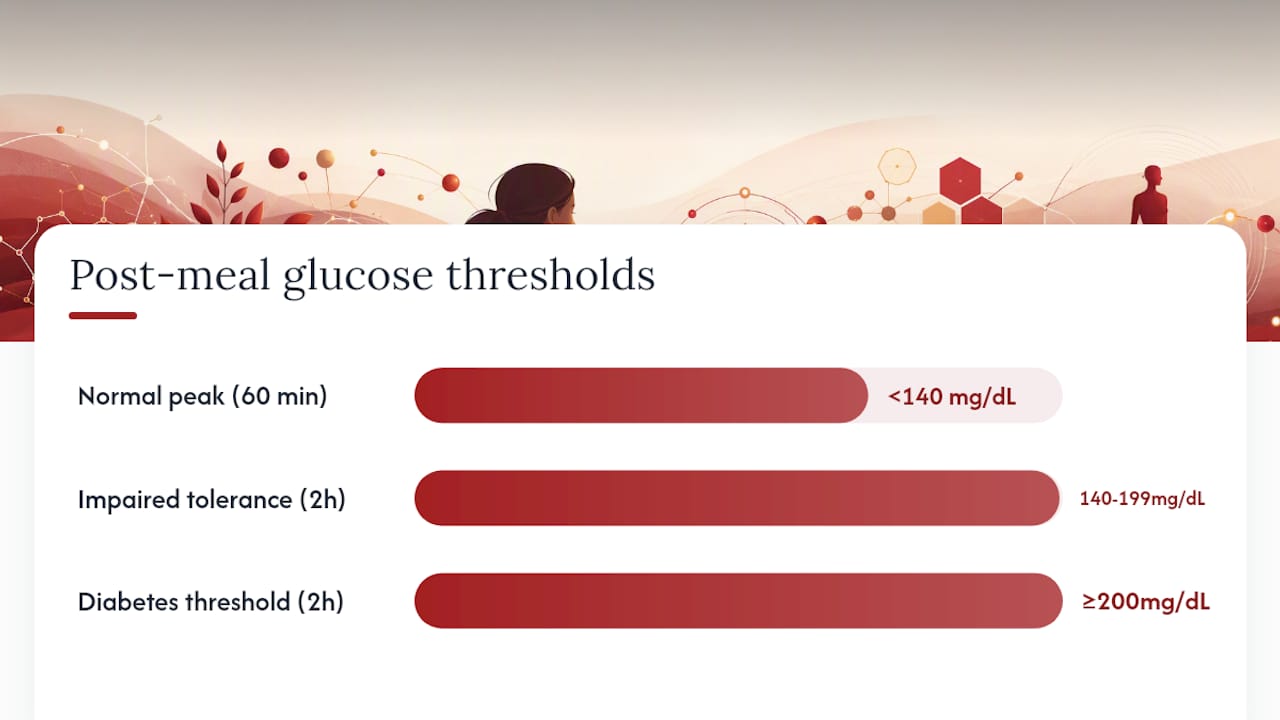
Table of Contents
- What actually happens in your body after you eat
- How to read your numbers: what’s normal and what’s not
- Why repeated spikes matter for your long-term health
- How to actually measure your post-meal glucose
- What drives your post-meal glucose up or down
- Practical steps to reduce post-meal glucose spikes
- What recent research is actually telling us
- A note from the table: science that fits into real mornings
- Sweeten the morning without the spike
- Sources
What actually happens in your body after you eat
The moment food reaches your stomach, a cascade begins. Your stomach starts breaking down the meal and passing it into the small intestine, where carbohydrates are rapidly digested into glucose and absorbed into the bloodstream. That absorption is what drives the postprandial glucose curve upward.
As glucose enters the blood, two things happen almost simultaneously. Your pancreas releases insulin to shuttle glucose into muscle, fat, and liver cells. At the same time, your gut releases incretin hormones, primarily GLP-1 (glucagon-like peptide-1) and GIP (glucose-dependent insulinotropic polypeptide), which amplify the insulin response and slow gastric emptying. Think of incretins as the body’s built-in moderators: they help calibrate how fast glucose floods the system.
The speed of that flood depends on several variables. A bowl of white rice empties from the stomach faster than a plate of lentils with olive oil. Liquid carbohydrates absorb faster than whole-food carbohydrates. A meal rich in fiber, protein, and fat slows gastric emptying, which flattens the curve. When insulin sensitivity is high, glucose disposal is efficient and the peak is lower. When it is blunted, glucose lingers longer.
The simple arc looks like this: meal → digestion → absorption → glucose peak → insulin response → return to baseline. In a healthy person, the whole cycle resolves within two to three hours. What varies is how high the peak climbs and how long it takes to come back down.
Key hormones and pathways that shape the post-meal curve:
- Insulin: primary driver of glucose uptake into cells
- GLP-1 and GIP (incretins): amplify insulin release, slow gastric emptying
- Glucagon: normally suppressed after a meal; if not, it raises glucose further
- Gastric emptying rate: faster emptying = steeper, earlier spike
How to read your numbers: what’s normal and what’s not
Understanding the numbers is where the science becomes genuinely useful. Clinical guidelines draw a few clear lines, though the exact targets differ slightly depending on the source and the clinical context.
For adults without diabetes, a post-meal peak below 140 mg/dL is the commonly cited reference point. The American Diabetes Association (ADA) and the American Association of Clinical Endocrinologists (AACE) both reference 2-hour postprandial targets, though their specific cutoffs vary slightly by population and clinical goal. For diagnostic purposes, a 2-hour OGTT reading of 200 mg/dL or higher confirms diabetes; a reading between 140 and 199 mg/dL at 2 hours indicates impaired glucose tolerance, sometimes called prediabetes.
Timing matters more than most people realize. In healthy individuals, the glucose peak typically arrives around 60 minutes after the first bite. In people with type 2 diabetes, that peak is often delayed to around 120 minutes and tends to be higher. Testing at the wrong time can make a problematic spike look normal, or make a normal response look concerning.
| Time after meal | Typical target (non-diabetic) | Clinical meaning |
|---|---|---|
| 60 minutes | Below 140 mg/dL | Normal peak window for healthy adults |
| 120 minutes | Below 140 mg/dL | Standard guideline reference point |
| 120 minutes | 140–199 mg/dL | Impaired glucose tolerance (prediabetes range) |
| 120 minutes | 200 mg/dL or above | Diagnostic threshold for diabetes (OGTT) |
Stat: Peak timing in healthy people commonly falls near the 60-minute mark, yet most standard glucose tests check at 2 hours — which means the actual highest point of the curve is often missed entirely in routine screening.
One nuance worth noting: two people can have identical 2-hour readings and very different glucose curves in between. That is exactly why continuous glucose monitoring (CGM) is changing how clinicians and health-conscious individuals think about post-meal glucose.
Why repeated spikes matter for your long-term health
A single post-meal spike is not a crisis. The concern is repetition. When blood glucose climbs sharply after every meal, day after day, the cumulative effect on blood vessels and metabolic health becomes significant.
Research on glycemic variability links repeated glucose swings, including postprandial spikes, to increased oxidative stress and endothelial dysfunction, the kind of vascular damage that precedes cardiovascular disease. The mechanism is thought to involve bursts of reactive oxygen species triggered by rapid glucose fluctuations, which damage the inner lining of blood vessels. It is worth being clear that much of this evidence is observational and experimental; intervention trials specifically targeting postprandial glucose have shown mixed results on hard cardiovascular outcomes. The association is real and biologically plausible, but causation is still an active area of research.
What makes postprandial spikes particularly tricky is that standard tests can miss them entirely. HbA1c reflects average glucose over roughly three months. Fasting glucose captures only the overnight baseline. Glycemic variability research has shown that two people with identical HbA1c values can have dramatically different daily glucose swings, and those swings may carry independent risk. Daily peaks matter even when the averages look fine.
People who may be most at risk from repeated postprandial spikes:
- Adults with prediabetes or impaired glucose tolerance
- People with type 2 diabetes, especially those with variable insulin sensitivity
- Individuals with a personal or family history of cardiovascular disease
- People who are sedentary, sleep-deprived, or under chronic stress
- Anyone whose diet is consistently high in refined carbohydrates and low in fiber
How to actually measure your post-meal glucose
Knowing your numbers requires choosing the right tool and testing at the right time. Three methods are in common use, each with a different purpose.
Continuous glucose monitoring (CGM) uses a small sensor worn on the skin to measure interstitial glucose every few minutes, around the clock. Devices like the Dexterity or the Abbott FreeStyle Libre provide a real-time curve of how glucose rises and falls after every meal, without any finger-prick timing. CGM technology makes it possible to see the full shape of the postprandial curve, including peaks that a single timed reading would miss. CGM is increasingly available to people without diabetes who want detailed metabolic insight, though cost and prescription access vary.
Self-monitored blood glucose (SMBG) with a fingerstick glucometer is the more accessible option. The key is timing: testing at 60 minutes captures the likely peak in healthy adults; testing at 120 minutes aligns with guideline reference points and is more useful for tracking trends over time. Testing at both points gives a fuller picture. Record what you ate, the approximate portion size, any activity before or after, and how you felt.
The 2-hour oral glucose tolerance test (OGTT) is a clinical lab test, not a home tool. You drink a standardized 75-gram glucose solution, then have blood drawn at 2 hours. It is the diagnostic gold standard for prediabetes and diabetes and is also used in pregnancy screening. It does not reflect real-meal conditions, but it gives a clean, comparable number.
Practical logging tips that make your data actually useful:
- Note the time of the first bite, not when you finished eating
- Record the rough carbohydrate content and portion size of the meal
- Log any physical activity in the 30 minutes before or after
- Note stress level and sleep quality the night before, since both affect glucose response
- Bring at least two weeks of readings to any clinical appointment, along with meal notes
Pro Tip: If you use a fingerstick meter, test at 60 minutes after your first bite for one week, then switch to 120 minutes the next week. Comparing the two gives you a rough sense of your personal peak timing without needing a CGM.
What drives your post-meal glucose up or down
Not all meals spike blood sugar equally. The drivers fall into two categories: what is on your plate and what is happening in the rest of your life.
Meal composition and food factors
- Total carbohydrate amount is the single strongest predictor of post-meal glucose rise. More digestible carbohydrate means more glucose entering the bloodstream.
- Glycemic index and glycemic load describe how quickly a food raises blood glucose and how much of that food you ate. White bread, sugary drinks, and processed snacks have high glycemic loads. Legumes, whole grains, and most vegetables have lower ones.
- Processing level matters significantly. Rolled oats spike blood sugar less than instant oats; whole fruit less than fruit juice. Processing removes fiber and breaks down cell walls, accelerating digestion.
- Liquid carbohydrates absorb faster than solid ones. A glass of orange juice raises glucose faster than eating an orange, even at the same carbohydrate content.
- Fiber content slows gastric emptying and blunts the absorption curve. Soluble fiber, found in oats, beans, and apples, is particularly effective.
- Protein and fat both slow gastric emptying, which flattens the glucose curve. A meal with eggs and avocado produces a gentler rise than the same number of carbohydrate calories eaten alone.
- Food sequencing is one of the more surprising findings in recent research. Eating vegetables and protein before carbohydrates, rather than mixing everything together, can reduce the post-meal peak. Controlled trials of the carbs-last protocol have reported per-timepoint reductions in the range of 28–37% compared to eating carbohydrates first, with some studies showing large reductions in the overall glucose area under the curve. Study sizes are small and conditions are controlled, so real-world effects will vary, but the direction of the evidence is consistent.
- Sweeteners and added sugars in syrups, condiments, and drinks contribute directly to glycemic load. Swapping a high-GI sweetener for a low-glycemic alternative like yacon syrup is one practical way to lower the glycemic impact of a breakfast without removing the pleasure of it.
Non-food drivers
- Physical activity before and after meals affects insulin sensitivity. A 20-minute walk before dinner or a 5-minute walk after breakfast both reduce the post-meal spike.
- Sleep quality has a direct effect on insulin sensitivity. One poor night of sleep can measurably blunt glucose disposal the following day.
- Stress raises cortisol, which signals the liver to release stored glucose and reduces insulin sensitivity simultaneously.
- Alcohol has a complex effect: it can initially lower glucose by blocking liver glucose output, then cause a rebound rise, and it impairs the body’s ability to recognize and respond to hypoglycemia.
- Medications including corticosteroids, some antipsychotics, and certain blood pressure drugs can raise post-meal glucose. If you take any of these regularly, it is worth discussing their glycemic effects with your prescriber.
- Gastric motility conditions like gastroparesis delay stomach emptying, which shifts the glucose peak later and makes it harder to predict or manage.
Practical steps to reduce post-meal glucose spikes
The research points to a handful of strategies that consistently work, and most of them fit naturally into a family meal routine without turning dinner into a clinical exercise.
Build your plate with sequence in mind
Start with vegetables and a protein source before touching the carbohydrates on the plate. This is the core of the carbs-last approach, and the evidence behind it is more solid than most single-meal interventions. You do not need to eliminate pasta or rice; you just eat them after the salad and the chicken. The fiber and protein you consume first slow gastric emptying, so the carbohydrates that follow absorb more gradually.
A practical plate example: a handful of roasted vegetables, then grilled salmon, then a small serving of brown rice. Same ingredients, same calories, meaningfully different glucose curve.
Add fiber, protein, and fat to every meal
A meal built around refined carbohydrates alone, think a bagel with nothing on it, produces a steeper spike than the same carbohydrates paired with cream cheese, smoked salmon, and cucumber. The fat and protein are not just flavor; they are physiological moderators. Beans, lentils, nuts, seeds, and non-starchy vegetables all add fiber that slows absorption. Aim to include at least one of each at every meal.
Move after eating
Even a 5-minute walk after a meal reduces the magnitude of the postprandial glucose excursion and smooths the curve over the following 60–90 minutes. This works because muscle contraction uses glucose independently of insulin, pulling it out of the bloodstream without waiting for the hormonal response. A 10–15 minute walk is better. Standing and light movement at the kitchen counter while clearing dishes counts. The threshold for benefit is low.

Pro Tip: Make the post-meal walk a family ritual rather than a health chore. A short walk around the block after Sunday brunch is a gathering moment that also happens to be one of the most evidence-backed things you can do for steady afternoon energy.
Choose lower-GI carbohydrates
Not all carbohydrates behave the same. Swapping white bread for sourdough, white rice for basmati or cauliflower rice, or a sugary syrup for a low-glycemic option like yacon syrup lowers the glycemic load of the meal without requiring you to count grams or follow a restrictive plan. Small swaps at the table, repeated consistently, add up.
Manage portions without obsessing over them
Portion size directly affects total carbohydrate load. A smaller serving of pasta with a larger serving of vegetables and protein produces a lower spike than the reverse. You do not need a food scale; a rough visual guide works. Fill half the plate with non-starchy vegetables, a quarter with protein, and a quarter with carbohydrates.
When to talk to a clinician
Repeated post-meal readings above 140 mg/dL, symptoms of reactive hypoglycemia (shakiness, sweating, or brain fog 2–3 hours after eating), or any single reading at or above 200 mg/dL are all reasons to schedule a conversation with your doctor. Bring your glucose log, meal notes, and a list of any medications you take.
Red flags that warrant prompt medical review:
- Any reading at or above 200 mg/dL, especially with symptoms like excessive thirst, frequent urination, or blurred vision
- Repeated 2-hour readings between 140 and 199 mg/dL (prediabetes range)
- Symptoms of hypoglycemia occurring 2–3 hours after meals
- Significant unexplained fatigue or mood changes tied to meal timing
What recent research is actually telling us
The most useful shift in recent years is not a new drug or a dramatic dietary discovery. It is the widespread use of CGM in people without diabetes, which has revealed that post-meal glucose behavior is far more variable than anyone expected.
Key findings from recent research:
- CGM studies in healthy populations show that a meaningful share of people without diabetes spend measurable time above 140 mg/dL after meals, particularly after high-carbohydrate or processed-food meals. These spikes are invisible to fasting tests and HbA1c.
- Individual glucose responses to the same food vary considerably from person to person. Two people eating identical breakfasts can have very different curves, driven by differences in gut microbiome, insulin sensitivity, sleep, and stress.
- Food sequencing trials (carbs-last) show consistent directional benefits across multiple small controlled studies, with some reporting reductions in post-meal peaks in the range of 28–37% at specific time points. The effect is real but the studies are small and controlled; real-world results will be more modest.
- Glycemic variability research continues to build the case that daily glucose swings carry independent risk beyond what HbA1c captures, though the field still lacks large randomized trials that directly test whether reducing variability improves hard outcomes like heart attacks or strokes.
- Post-meal walking remains one of the most consistently supported, lowest-barrier interventions across populations, with benefits seen in people with and without diabetes.
The practical takeaway from the research is that the interventions with the most consistent evidence are also the least complicated: eat fiber and protein before carbohydrates, move after meals, sleep well, and manage stress. The exotic tactics get more attention, but these fundamentals account for most of the benefit.
A note from the table: science that fits into real mornings
There is something grounding about realizing that the most evidence-backed habits for steadier blood sugar are also just good ways to eat with people you love. Eating slowly. Sitting down together. Starting with the salad. Taking a walk after brunch. None of these require a glucose monitor or a nutrition app. They are the rhythms of a meal that has always made sense.
What the science adds is a reason to stop apologizing for the slow Sunday morning, the long table, the second cup of coffee while the kids finish their waffles. Those unhurried moments are not indulgent. They are, it turns out, metabolically useful. A meal eaten at pace, with fiber and protein alongside the sweet things, with a walk to follow, is a meal that asks less of your body’s glucose response.
The goal is not a perfect glucose curve. It is a table worth gathering around, with choices that make everyone feel good through the afternoon. That is a standard most families can actually meet.
Sweeten the morning without the spike

If you are already thinking about the glycemic load of your family’s breakfast table, the sweetener you reach for matters more than most people realize. Yakonow yacon syrup is made from a single ingredient: pure yacon root, hand-harvested in Peru and bottled in an FDA-compliant facility in Texas. Its glycemic index sits at just 1 (compared to 54 for maple syrup), and it contains up to 50g of prebiotic FOS fiber per 100g, zero added sugar, no colorants, and no artificial sweeteners.
Drizzled over pancakes, waffles, oatmeal, or yogurt, it brings a gentle, caramel-like sweetness to the morning without the glucose spike that follows a pour of maple syrup or honey. It is the kind of small swap that fits naturally into a family breakfast without changing the ritual of it.
Try the single 6oz squeezable bottle to start, or stock up with the pack of 2 for regular family mornings. Families who go through it quickly tend to reach for the pack of 4. Explore recipes and learn more about yacon syrup’s benefits on the Yakonow site.
Sources
- The Role of Glycemic Variability in Cardiovascular Disorders
- Taking a walk after eating can help with blood sugar control | UCLA Health
- Peri-prandial glycaemia and influence of meals in healthy individuals (PMC11538917)
This article is general information, not a substitute for advice from a qualified doctor. Consult a qualified healthcare professional about your own circumstances before acting on anything here.