

Why Breakfast Choices Impact Glucose: What Parents Should Know
What you eat at breakfast, and when you eat it, directly changes the size and timing of your blood sugar rise for hours afterward. The three highest-impact levers are timing (earlier tends to work better for most people), composition (protein and fiber slow the glucose curve), and glycemic load (smaller portions of lower-GI carbs keep the curve flatter). For families managing blood sugar, those three levers are where the morning wins happen.
Quick moves that matter most:
- Swap a high-sugar, refined-carb breakfast for one with at least 20g of protein
- Add a fiber source (oats, berries, chia) before or alongside any starchy food
- Eat within a reasonable window after waking, rather than skipping and eating large later
- If you take glucose-lowering medication, never skip breakfast without checking with your clinician first
The goal is not a perfect glucose number. It is a morning that feels good and keeps everyone at the table a little longer.
Pro Tip: A small protein “preload” before the carbs, think a spoonful of almond butter or a few bites of Greek yogurt, can meaningfully blunt the glucose rise from the toast or pancakes that follow.
Key Takeaways
Breakfast composition and timing are among the most accessible levers for managing daily glucose, and the changes that work best are also the ones that fit a real family morning.
| Point | Details |
|---|---|
| Lead with protein and fiber | Adding protein and a fiber source at breakfast blunts the glucose rise and carries a second-meal benefit into lunch. |
| Timing shifts the curve | Earlier breakfasts align with peak circadian insulin sensitivity; mid-morning timing may reduce postprandial peaks for some people with T2D. |
| Test your own response | Paired pre-meal and 2-hour postprandial checks, repeated across 3–7 breakfasts, reveal your personal pattern. |
| Watch for red flags | Fasting glucose consistently above 130 mg/dL, or hypoglycemia symptoms, warrant a clinician conversation before changing meal timing. |
| Yakonow as a finishing touch | Yakonow yacon syrup (GI of 1, prebiotic FOS fiber) offers a naturally sweet drizzle for pancakes, oats, or yogurt without the sugar load of conventional syrups. |
Table of Contents
- Why breakfast choices impact glucose: what the research shows
- How your body actually responds to what you eat at breakfast
- Should you eat breakfast early, delay it, or skip it?
- What to actually eat: protein, fiber, and the swaps that work
- Three breakfast templates that work for busy family mornings
- How to test your own breakfast glucose response
- The table is where the change actually happens
- A low-glycemic finishing touch for the family table
- Sources
Why breakfast choices impact glucose: what the research shows
The evidence connecting breakfast composition to blood glucose is consistent across study types, from short controlled feeding trials to longer observational analyses.
A review published in Nutrients found that consuming breakfast, compared with skipping it, generally improved glucose and insulin responses across the day in many studies. The effect was strongest when breakfast included protein and fiber rather than refined carbohydrates alone. A separate controlled trial showed that a high-protein breakfast produced a substantially lower postprandial glucose response to a later white-bread challenge than high-carbohydrate or high-fat breakfasts, demonstrating a measurable “second-meal effect” that carries forward into lunch.
Timing matters too. A controlled feeding study found that a high-GI large evening energy load produced higher 24-hour glucose and insulin levels than the same load consumed in the morning, supporting the idea that distributing more calories earlier in the day aligns better with the body’s circadian insulin sensitivity. A cross-sectional study also linked earlier energy intake timing to higher insulin sensitivity, independent of total calories consumed.
Representative study findings at a glance:
| Study type | Main finding | Practical takeaway |
|---|---|---|
| Review (breakfast vs. skipping) | Breakfast generally improved daytime glucose and insulin profiles | Eating breakfast beats skipping for most people managing blood sugar |
| Controlled trial (protein at breakfast) | High-protein breakfast lowered glucose response to a later carb challenge | Lead with protein, not carbs, at the first meal |
| Feeding study (meal timing and GI) | High-GI evening load raised 24-hour glucose vs. the same morning load | Front-load calories and choose lower-GI foods later in the day |
| Randomized trial (breakfast timing in T2D) | Delaying breakfast to mid-morning reduced 2-hour post-breakfast glycaemia | Timing can be adjusted as a tool, not just composition |
| Cross-sectional study (energy timing) | Earlier energy intake associated with higher insulin sensitivity | A substantial morning meal supports metabolic health |
Breakfasts high in processed, high-GI carbs and low in fiber or protein are consistently associated with larger post-meal glucose spikes. The aim of changing composition is smoothing the glucose curve, not eliminating carbohydrates.
How your body actually responds to what you eat at breakfast
The glucose response to breakfast is not just about sugar content. Several overlapping mechanisms shape the curve.
- Second-meal effect. A protein-rich first meal triggers gut hormones, including GLP-1 and CCK, that slow gastric emptying and prime the pancreas for a more measured insulin response at the next meal. Practical implication: what you eat at 7 AM still influences how your body handles lunch at noon.
- Gastric emptying rate. Fiber, fat, and protein all slow how quickly food leaves the stomach, which spreads glucose absorption over a longer window and flattens the spike. A bowl of oatmeal with nut butter digests very differently than a plain bagel, even at the same calorie count.
- GLP-1 and incretin hormones. These gut-derived hormones are released in response to food and amplify insulin secretion. Protein and fiber are stronger GLP-1 triggers than refined carbohydrates. Adding Greek yogurt or eggs to a carb-heavy breakfast is not just about protein grams; it is about changing the hormonal signal.
- Circadian insulin sensitivity. The body’s insulin response is stronger in the morning than in the evening, driven by circadian rhythms. Eating a substantial, balanced breakfast works with that biology. A large, high-GI dinner fights against it.
- Dawn phenomenon. In people with diabetes, hepatic glucose production can rise in the early morning hours due to hormonal changes, pushing fasting glucose up before the first bite. A StatPearls clinical review describes this and notes that lifestyle strategies, including regular breakfast and evening protein, are part of managing it. Understanding the dawn phenomenon helps explain why some people wake with elevated glucose even after a careful dinner.
Individual responses vary considerably. Age, physical activity level, insulin sensitivity, gut microbiome composition, and medication status all shift where a person’s glucose curve lands after the same meal. Two people eating identical oatmeal can see meaningfully different numbers.
Pro Tip: If you want to understand your own response, test the same breakfast twice before changing anything. Consistency in the test meal is what makes the data useful.
Should you eat breakfast early, delay it, or skip it?
The honest answer is: it depends on your health status, and for anyone on glucose-lowering medication, this is a conversation to have with a clinician before experimenting.
The general pattern from trials: eating breakfast tends to produce better daytime glucose profiles than skipping, especially for people with type 2 diabetes or prediabetes. Skipping a meal and then eating a large lunch compresses caloric load into fewer hours, which can produce a sharper glucose spike and a less favorable insulin response across the day.
How timing shifts the curve:
- Early breakfast (before 8 AM). Aligns with peak circadian insulin sensitivity. Works well for most people, though those with a pronounced dawn phenomenon may see an elevated fasting number before eating.
- Mid-morning breakfast (9–10 AM). A small randomized trial in people with type 2 diabetes found that delaying breakfast to mid-morning or midday reduced 2-hour post-breakfast glycaemia compared with a 7 AM breakfast. A 20-minute walk after eating added a small further benefit.
- Skipping breakfast entirely. For people not on medication, occasional skipping may be tolerable. For those on insulin or sulfonylureas, skipping raises the risk of hypoglycemia and is generally not recommended without medical guidance.
Pros and cons by reader profile:
- Type 2 diabetes, diet-managed: An early, protein-forward breakfast is a safe default. Mid-morning timing may be worth trying if early postprandial numbers are consistently high.
- Prediabetes: Emerging observational data (currently available as a preprint) suggests a later eating start time associates with lower insulin sensitivity. An earlier, balanced breakfast is a reasonable first step.
- Insulin users: Meal timing must be matched to insulin dosing. Never adjust timing without coordinating with your care team.
- No diabetes, general health: Front-loading calories and choosing lower-GI foods at breakfast supports insulin sensitivity across the day.
Safety note: anyone taking glucose-lowering medication who is considering skipping or significantly delaying breakfast should consult their clinician first. Hypoglycemia is a real risk, and medication timing may need to be adjusted alongside any meal-timing change.
What to actually eat: protein, fiber, and the swaps that work
The biggest single composition effects come from adding protein and fiber, and from lowering high-GI carbs and concentrated sugars. This is not about restriction; it is about sequence and balance.
Include at breakfast:
- Eggs, Greek yogurt, cottage cheese, or nut butter (protein anchors)
- Oats, chia seeds, berries, or vegetables (fiber sources)
- Avocado, nuts, or olive oil (healthy fats that slow gastric emptying)
- Whole-grain or sourdough bread when bread is on the menu
Limit or swap out:
- Sweetened cereals and instant oatmeal packets with added sugar
- White bread, plain bagels, or pastries eaten without a protein or fat alongside
- Fruit juice (high sugar, no fiber)
- Syrups and toppings with high sugar content and no fiber
Understanding how to read nutrition labels makes these swaps faster at the store and at the counter.
Simple swaps for family mornings:
| Instead of this | Try this |
|---|---|
| Sweetened cereal with skim milk | Steel-cut oats with berries and a spoonful of almond butter |
| White toast with jam | Whole-grain toast with avocado and a soft-boiled egg |
| Flavored yogurt with fruit syrup | Plain Greek yogurt with fresh fruit and a drizzle of low-glycemic syrup |
| Pancakes with maple syrup | Protein pancakes with Yakonow yacon syrup (GI of 1) as a finishing touch |
| Fruit juice | Whole fruit with a handful of nuts |
Portion size matters alongside food choice. A large serving of even a moderate-GI food raises glycemic load significantly. A guide to how carbohydrates rank on the glycemic index can help you choose portions that keep the load manageable.
Pro Tip: Batch-cook a protein source on Sunday, hard-boiled eggs, a frittata, or a container of Greek yogurt portioned out, and the protein anchor for every weekday breakfast is already done.
Three breakfast templates that work for busy family mornings
Knowing the rules is one thing. Having a meal ready at 7:15 AM with two kids at the table is another. These three templates are built around the composition principles above and take under 10 minutes on a weekday.
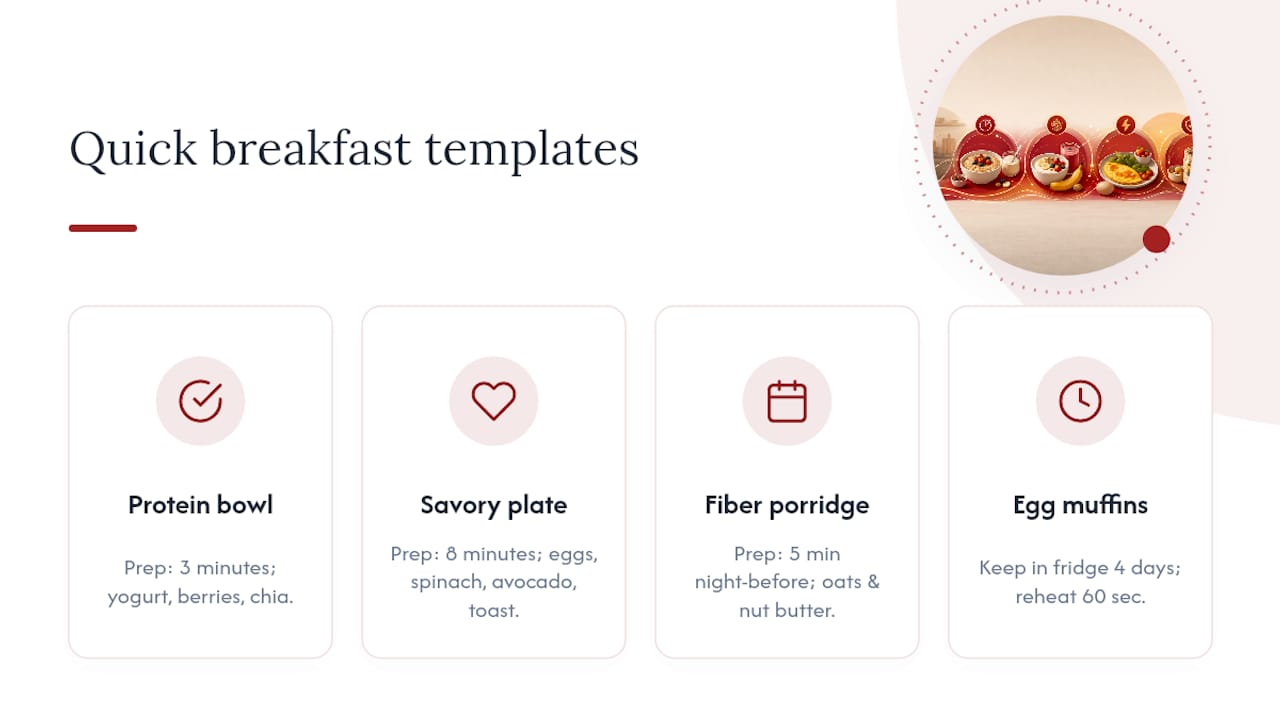
1. The protein-forward bowl Greek yogurt (plain, full-fat) layered with frozen berries thawed overnight, a tablespoon of chia seeds, and a drizzle of low-glycemic syrup. Why it works: protein and fat from the yogurt slow gastric emptying; chia adds soluble fiber; berries provide natural sweetness with a low glycemic load. Prep time: 3 minutes. Kid swap: add a small handful of granola for crunch, or let them drizzle the syrup themselves.
2. The savory plate Two scrambled eggs with sautéed spinach and half an avocado, served with one slice of whole-grain toast. Why it works: high protein, healthy fat, and fiber from the vegetables and avocado blunt the glucose rise from the toast. Prep time: 8 minutes. Kid swap: roll the eggs into a small whole-grain tortilla with cheese.
3. The fiber-rich porridge Overnight oats made with rolled oats, unsweetened almond milk, a tablespoon of nut butter, and sliced banana. Assembled the night before, ready in the fridge. Why it works: the resistant starch in cooled oats, combined with fat from the nut butter, produces a slower glucose release than hot instant oats. Prep time: 5 minutes the night before. Kid swap: stir in a small spoonful of cocoa powder and a drizzle of yacon syrup for a chocolate-banana version.
For a sweet breakfast that still fits a lower-glycemic morning, pancakes or waffles made with almond flour or oat flour, topped with fresh fruit and a light drizzle of low-glycemic syrup, keep the ritual without the sugar spike. The finishing touch is the detail that makes the table feel special, not the thing that undoes the meal.
Pro Tip: Make-ahead egg muffins (eggs whisked with vegetables and cheese, baked in a muffin tin) keep in the fridge for four days and reheat in 60 seconds. They are the fastest protein anchor for a rushed morning.
For more ideas built around steady morning glucose, the pre-diabetic diet breakfast checklist is a practical starting point.
How to test your own breakfast glucose response
The simplest useful test is a paired pre-meal and 1–2 hour postprandial check, repeated across several breakfasts. You do not need a continuous glucose monitor to get useful data, though one makes the picture richer.
Step-by-step monitoring plan:
- Record your fasting glucose before eating anything, ideally at the same time each morning.
- Eat your breakfast and note the exact time, what you ate, and the approximate portion.
- Test at 1 hour post-meal. This captures the peak for most mixed meals.
- Test again at 2 hours post-meal. A reading that has returned close to fasting suggests a well-managed response.
- Repeat the same breakfast 2–3 times before drawing conclusions. One data point is noise; three is a pattern.
- Compare across breakfasts. Swap one variable at a time (add protein, change the carb source, adjust timing) and observe the difference over the following week.
- Log everything in one place. A simple notes app or a paper log works. Patterns become visible faster when the data is in one column.
Red flags: when to contact your clinician
- Fasting glucose consistently above 130 mg/dL despite dietary changes
- A 2-hour postprandial reading above 180 mg/dL on most mornings
- Symptoms of hypoglycemia (shakiness, sweating, confusion) before or after breakfast, especially if you take medication
- A large, unexplained fasting rise that does not match what you ate the night before (this may be the dawn phenomenon and warrants a clinical conversation)
- Any medication timing question that arises from shifting your breakfast window
This is general information, not a substitute for medical advice. Always confirm monitoring plans and any medication adjustments with your healthcare provider.
The table is where the change actually happens
There is a version of this conversation that turns breakfast into a clinical protocol, a checklist of macros and testing windows that makes the morning feel like a lab. That is not what any of this needs to be.
The science is real and worth knowing: protein slows the curve, fiber smooths it, timing matters more than most people realize, and a small swap at the table can carry forward into how you feel at noon. But the way most families actually make lasting changes is not by overhauling everything on a Monday. It is by trying one thing, noticing it works, and building from there.
Maybe this week that means adding a spoonful of nut butter to the oatmeal. Or swapping the juice for the whole fruit. Or letting the kids drizzle something sweet that does not send everyone’s energy crashing before school. Small experiments, repeated at a table you actually want to sit at, are what stick.
A low-glycemic finishing touch for the family table

Yakonow yacon syrup is made from a single ingredient: yacon root, hand-harvested in Peru and bottled in an FDA-compliant facility in Texas. It is naturally sweet, with a glycemic index of just 1, and contains prebiotic FOS fiber that feeds the gut rather than spiking blood sugar. No added sugar, no colorants, no artificial sweeteners.
At the breakfast table, it works as a finishing drizzle over pancakes, waffles, oatmeal, or yogurt. The sweetness is real, the ritual is intact, and the glucose impact is minimal. For families who want the warmth of a syrup-topped breakfast without the sugar load, it is a small detail that changes the feel of the whole morning.
What makes it different:
- Single-ingredient, 100% pure yacon syrup
- Glycemic index of 1 (vs. 54 for maple syrup)
- Rich in prebiotic FOS fiber
- Vegan, gluten-free, no artificial sweeteners
Try the single 6oz squeezable bottle to start, or the pack of 2 for busy family mornings when one bottle disappears faster than expected. Families who go through it regularly tend to reach for the pack of 4.
Sources
- The Effects of Breakfast Consumption and Composition on …
- Dawn Phenomenon - StatPearls - NCBI Bookshelf
- Modifying the timing of breakfast improves postprandial glycaemia in people with type 2 diabetes: A randomised controlled trial