

Cut Gut Transit Time by a Third with Yacon Syrup for Families
Yes, yacon syrup can support gut health. The prebiotic fructooligosaccharides (FOS) it carries feed beneficial bacteria and can shorten intestinal transit time and increase stool frequency at studied doses, but the effect depends heavily on how much you take and how quickly you start.
TL;DR:
- Consuming about 20 grams of yacon syrup daily for two weeks can reduce colonic transit time by over a third, improving digestion.
- The effects of yacon syrup depend heavily on dose, duration, and individual gut microbiota, with tolerability varying from person to person.
- Higher doses of FOS from yacon syrup may cause bloating and gas initially, but these symptoms generally lessen with continued use.
- Long-term use of about 0.14 grams of FOS per kilogram of body weight daily may increase stool frequency and improve insulin sensitivity.
- Proper storage in a cool, dark place preserves FOS content, maximizing the prebiotic benefits of yacon syrup.
Table of Contents
- Does Yacon Syrup Support Gut Health?
- How Yacon Syrup Works In The Gut: FOS, Fermentation, And Outcomes
- What Do Clinical Trials Say About Yacon Syrup And Digestion?
- How Much Yacon Syrup Should You Take For Gut Health?
- Who Should Be Cautious With Yacon Syrup?
- Why Processing And Storage Affect Prebiotic Potency
- How To Use Yacon Syrup At The Family Table
- The Art Of Gathering With Mindful Sweetness
- A Simple Way To Start With Yakonow
- Sources
Does Yacon Syrup Support Gut Health?
The short answer is yes, with a caveat worth remembering before your first spoonful. Yacon syrup contains fructooligosaccharides, a type of prebiotic fiber your body can’t digest but your gut bacteria absolutely can. When bacteria in the colon ferment FOS, they produce short-chain fatty acids (SCFAs) that feed colon cells, support a healthier bacterial balance, and in several human trials, sped up transit time and increased how often people had bowel movements.
That’s the mechanism working as intended. The caveat is that results vary by dose, by person, and by how long someone sticks with it. Some people notice smoother digestion within days. Others need a slower introduction because their gut hasn’t yet adapted to fermenting this much fiber at once. Neither response is wrong. It just means yacon syrup rewards a little patience, not a leap.
How Yacon Syrup Works In The Gut: FOS, Fermentation, And Outcomes
Fructooligosaccharides are short chains of fructose molecules that slide past digestion in the small intestine untouched. They arrive intact in the colon, where resident bacteria, especially bifidobacteria, use them as fuel. Research on yacon’s FOS content describes this as a bifidogenic effect: the bacterial population that thrives on FOS tends to expand, which shifts the overall balance of the gut microbiome toward species associated with better digestive function.
Fermentation is the part that actually changes how you feel. As bacteria break down FOS, they produce short-chain fatty acids, mainly acetate, propionate, and butyrate. Butyrate in particular feeds the cells lining your colon and helps maintain the gut barrier. SCFAs also appear to interact with satiety hormones like PYY and GLP-1, which is part of why researchers have looked at yacon syrup in the context of appetite and metabolic health, not just regularity.
The transit and stool changes people notice are downstream of this fermentation. More SCFA production, plus the added bulk and moisture that fermented fiber pulls into the colon, tends to soften stool and move it through faster. That’s a mechanical effect as much as a bacterial one.
What explains why some people see dramatic changes and others notice almost nothing? A few things are usually happening:
- Baseline microbiota composition differs from person to person, and some guts simply have more bifidobacteria available to respond to FOS in the first place.
- Dose matters more than most people expect — a teaspoon won’t do what two tablespoons might.
- Existing fiber intake changes the response, since someone already eating a fiber-rich diet may have a more fermentation-ready gut than someone who isn’t.
- Duration of use plays a role, since single-day effects are smaller and less consistent than what shows up after two or more weeks of regular intake.
This variability is exactly why clinical trials on yacon syrup don’t always agree with each other, and why the next section is worth reading closely before you decide on a dose.
What Do Clinical Trials Say About Yacon Syrup And Digestion?
The clearest picture comes from a 2025 systematic review that pooled evidence from the past decade of human trials on yacon syrup. It’s not a single study promising miracles. It’s a synthesis of multiple randomized and crossover trials, and it gives a more honest sense of what yacon syrup reliably does versus what remains uncertain.
One of the standout findings involved healthy volunteers taking 20 grams of yacon syrup daily, delivering roughly 6.4 grams of FOS, for two weeks. Colonic transit time dropped significantly, by over a third, indicating a meaningful acceleration in how quickly food moves through the digestive tract, a meaningful acceleration in how quickly food moves through the digestive tract. For context, that’s the difference between food sitting in your system for nearly two and a half days versus a day and a half.
A separate, longer trial looked at obese premenopausal women taking a dose calibrated to 0.14 grams of FOS per kilogram of body weight daily over 120 days. That study, published in the Beneficial effects on obesity and insulin resistance research, found increased bowel movement frequency alongside improvements in fasting insulin. The longer timeframe matters here. Digestive changes showed up early, but the metabolic shifts took months to become measurable.
A third trial, this one a randomized, crossover, double-blind design, tested a single 40-gram dose (about 14 grams of FOS) consumed with breakfast. It found lower postprandial glucose and insulin in the 15 to 45 minute window after eating, compared to placebo. That’s a short-term, acute effect rather than a sustained digestive outcome, and it’s worth keeping those two categories separate when you read headlines about yacon syrup.
Here’s how the three trial types compare on dose, duration, and what they actually measured:
| Trial Design | Dose | Duration | Primary Outcome |
|---|---|---|---|
| Transit time study | 20 g/day (≈6.4 g FOS) | 2 weeks | Transit time reduced from 59.7 to 38.4 hours |
| Obesity/insulin study | 0.14 g FOS/kg/day | 120 days | Increased stool frequency, improved fasting insulin |
| Postprandial crossover trial | 40 g single dose (≈14 g FOS) | Single sitting | Lower glucose and insulin at 15 to 45 minutes |
The number that matters most: A two-week course of 20 grams of yacon syrup daily cut colonic transit time by more than a third, from 59.7 hours down to 38.4 hours, according to the pooled trial data in the MDPI systematic review.
None of these trials used identical doses, populations, or durations, and that heterogeneity is worth taking seriously rather than glossing over. A healthy adult in a two-week transit study isn’t the same population as obese premenopausal women tracked for four months. Differences in baseline gut health, body composition, and even how the syrup was processed likely explain some of the inconsistency between studies.
Adverse events were reported across these trials too, and they followed a predictable pattern. Bloating, gas, mild abdominal discomfort, and occasional loose stools showed up more often at higher doses, and tended to ease as people continued using yacon syrup regularly. That’s consistent with how the gut typically responds to any new prebiotic fiber: an adjustment period followed by better tolerance. It’s not universal, but it’s common enough that it deserves real attention in how you introduce this into your routine, which is exactly what the next section covers.
How Much Yacon Syrup Should You Take For Gut Health?
A commonly referenced dose in research is a moderate amount of FOS per kilogram of body weight per day, based on studies using long-term supplementation in specific populations. That figure isn’t an arbitrary guideline.
Turning that into a real-world number requires knowing two things: your body weight and the FOS content of your syrup. Yacon syrup can contain up to 50 grams of FOS per 100 grams, though actual concentration varies by product and processing method.
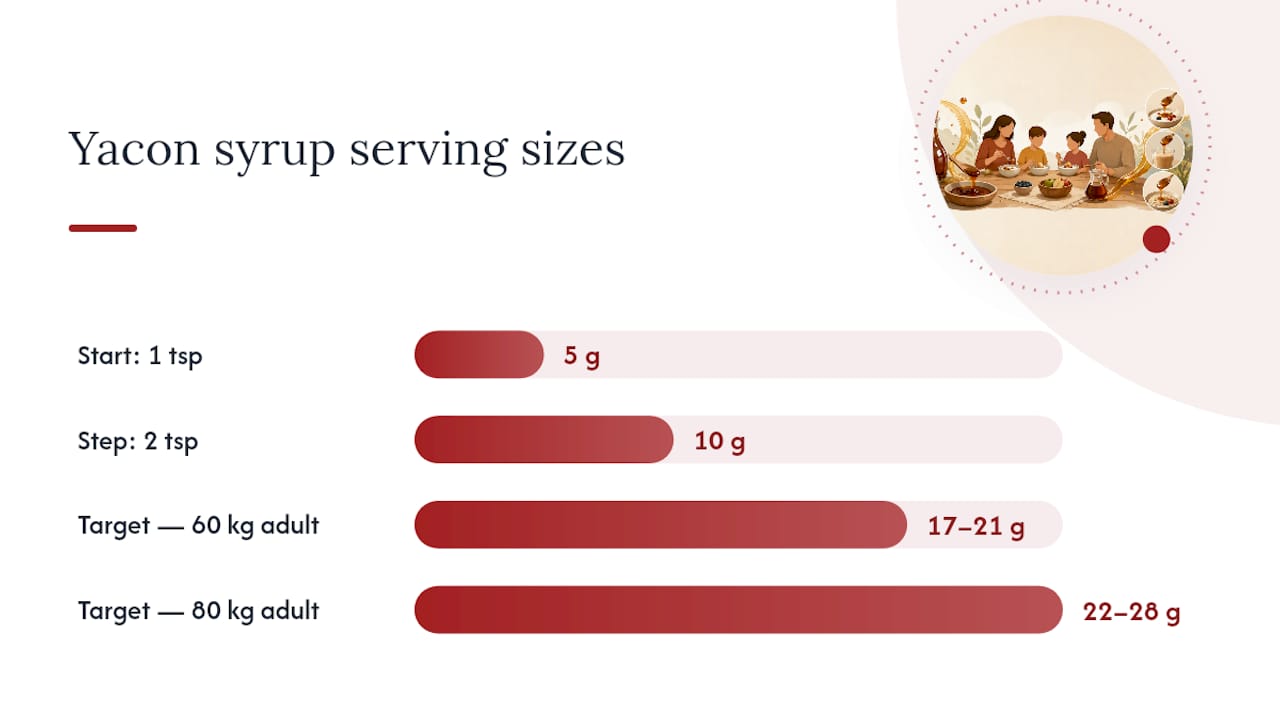
- A 60 kg (132 lb) adult targeting 0.14 g FOS/kg/day needs about 8.4 grams of FOS daily, which translates to roughly 17 to 21 grams of syrup (about one tablespoon).
- An 80 kg (176 lb) adult targeting the same benchmark needs about 11.2 grams of FOS daily, or roughly 22 to 28 grams of syrup (just under two tablespoons).
Jumping straight to that target dose on day one is where most people run into unnecessary bloating. A gentler approach mirrors what clinicians generally recommend for introducing any new prebiotic fiber. Start with a teaspoon (about 5 grams of syrup) once daily for the first three to four days, and pay attention to how your gut responds. If things feel comfortable, move to two teaspoons for days five through ten. By the second week, you can work toward your calculated target dose, split across one or two servings rather than taken all at once.
Give it two to three weeks of consistent use before expecting the transit and regularity changes seen in the clinical trials. If you notice excessive bloating, cramping, or diarrhea at any point, that’s your cue to drop back to the previous dose for a few more days rather than pushing through.
Pro Tip: Pair your yacon syrup with a meal that already contains some fat or protein, like yogurt or oatmeal, rather than taking it on an empty stomach. Food in the stomach slows fermentation slightly, which tends to reduce the gas and bloating that come from FOS breaking down too quickly.
Who Should Be Cautious With Yacon Syrup?
Prebiotic fiber is generally well tolerated, but it’s not universally appropriate, and a few groups should approach yacon syrup more carefully or skip it until they’ve talked with a clinician.
- People with IBS who follow a low-FODMAP diet often react poorly to fructans like FOS, since these are exactly the fermentable carbohydrates a low-FODMAP approach is designed to limit.
- Young children have less digestive reserve for fermentable fiber, so amounts should be small and introduced slowly, if at all, without a pediatrician’s input.
- Anyone with severe or active gastrointestinal disease, including inflammatory bowel disease during a flare, should check with their doctor before adding a new fermentable fiber source.
- Pregnant or nursing individuals don’t yet have robust dedicated safety data on yacon syrup specifically, so it’s worth a conversation with an OB or midwife rather than assuming it’s automatically fine.
- People on diabetes medications, particularly those that affect blood glucose directly, should talk to their care team before regular use, since some trial data shows yacon syrup can influence postprandial glucose and insulin response.
Stop and reach out to a doctor if you experience persistent diarrhea, severe cramping, or abdominal pain that doesn’t ease within a day or two of reducing your dose. Most digestive discomfort from FOS is mild and short-lived, but it shouldn’t be ignored if it escalates. If you’re managing IBS specifically, this deeper look at yacon syrup and FODMAP sensitivity walks through what to watch for in more detail, and this guide on yacon syrup for diabetics covers the glycemic considerations more thoroughly.
Why Processing And Storage Affect Prebiotic Potency
FOS is a fragile molecule in a way that surprises people who assume all syrups behave the same once bottled. Heat and prolonged storage can trigger hydrolysis, a chemical breakdown that converts FOS into simpler sugars like fructose and glucose. The result is a syrup that tastes just as sweet but delivers meaningfully less of the prebiotic fiber that makes yacon syrup worth choosing in the first place. Research on yacon processing has flagged this FOS degradation under heat and storage as a real factor in why not all commercial yacon products test the same.
This is where sourcing and bottling practices stop being marketing details and start mattering to the actual product in your pantry. Yakonow hand-harvests yacon root in Peru, where the plant has grown for generations, and bottles the syrup in an FDA-compliant facility in Texas rather than relying on long, uncontrolled supply chains that leave more room for heat exposure. The syrup carries up to 50 grams of FOS per 100 grams, and its glycemic index sits at just 1, compared to 54 for maple syrup, a difference that reflects how much of the natural sweetness is coming from fiber rather than glucose.
A few habits at home go a long way toward keeping that FOS content intact:
- Store the bottle in a cool, dark cabinet rather than near the stove or in direct sunlight, since heat is the main driver of hydrolysis.
- Reseal the cap tightly after each use to limit air exposure.
- Avoid leaving the bottle out on the counter for extended periods, especially in a warm kitchen.
- Once opened, use it within the timeframe printed on the label rather than letting it sit for months.
None of this requires special equipment or a dedicated pantry shelf. It’s the same common sense you’d apply to any product where freshness affects what you’re actually getting.
How To Use Yacon Syrup At The Family Table
The gentlest way to introduce yacon syrup is also the most enjoyable one: fold it into the meals your family already loves, without reaching for the oven. High heat isn’t kind to FOS, so the sweet spot is anything served warm rather than baked at length.
- Drizzle it over morning yogurt with fresh berries. Start with a teaspoon per bowl, let everyone taste it plain first, then add fruit for a Sunday-morning parfait that takes two minutes to build.
- Stir it into warm oatmeal off the heat. Cook the oats as usual, then swirl in the syrup once the pot is off the stove, preserving more of the prebiotic fiber than adding it during cooking.
- Use it as a pancake or waffle topping at your usual weekend pace. A tablespoon over a stack does the job maple syrup used to, with a gentler sweetness that doesn’t spike the way sugar-heavy syrups do. This pancake pairing is a simple place to start if brunch is already a ritual in your house.
If you’re introducing it to kids, start small. A half teaspoon mixed into something familiar, like applesauce or a favorite yogurt, lets you watch how their stomach responds without overwhelming a young digestive system. Most children tolerate it well, but the same gradual approach that works for adults applies here too. Over a few weeks, yacon syrup can become less of an experiment and more of a quiet fixture, the thing you reach for without thinking twice, the way maple syrup or honey once was in your kitchen.
The Art Of Gathering With Mindful Sweetness
There’s a particular kind of Saturday morning that sticks with you. Someone’s already up making coffee, the kids wander in still half asleep, and the table slowly fills with plates before anyone’s fully awake. That’s the moment worth protecting, and it’s also, quietly, where good habits take root without announcing themselves.
The research on yacon syrup is real and worth understanding, but it was never meant to turn breakfast into a science project. What it offers is reassurance: a sweetener that happens to carry prebiotic fiber, that happens to be gentle on blood sugar, that happens to support the kind of digestive comfort that makes mornings easier rather than harder. Those are quiet benefits, not headline ones. They belong in the background of the table, not the center of the conversation.
If you try it, pay attention the way you would with anything new at your table. Notice how your family responds, adjust as needed, and let it become part of your rhythm rather than a rule. The best changes at a family table are usually the small, patient ones nobody has to think too hard about.
— Celeste
A Simple Way To Start With Yakonow
If you’re ready to bring yacon syrup into your kitchen, start with what it actually is: a single ingredient, hand harvested from yacon root in Peru and bottled in an FDA-compliant facility in Texas, with no added sugar, no glucose, and no artificial anything. That simplicity is the whole point. You’re not adding a supplement to your pantry. You’re swapping one sweetener for one that happens to carry up to 50 grams of prebiotic FOS per 100 grams and a glycemic index of just 1.

For a first taste, the single 6oz bottle is the easiest way to test how your family responds before committing to more. Follow the gentle ramp-up from earlier in this guide: a teaspoon a day for the first few days, working up gradually as everyone gets comfortable. If it earns a permanent spot on your table, which most families find it does within a couple of weeks, the 2-pack keeps busy mornings covered without a mid-month scramble, and the pack of 12 means you’ll never be caught without it once it becomes part of your routine.
This article is general information, not a substitute for advice from a qualified doctor. Consult a qualified healthcare professional about your own circumstances before acting on anything here.
Sources
- Impacts of Yacon Syrup (Smallanthus sonchifolius) on Human Health: A Systematic Review of Scientific Evidence from the Last Decade
- Yacon syrup: Beneficial effects on obesity and insulin resistance in humans
- Yacon syrup reduces postprandial glycemic response to breakfast: A randomized, crossover, double-blind clinical trial