

Yacon Syrup Pancakes: A Gentle, Prebiotic Drizzle
Yes, yacon syrup makes a good pancake topping. Used the right way, it’s a low-glycemic, prebiotic-friendly drizzle that turns an ordinary stack into something a little more thoughtful. The catch is that it wants to be treated as a finishing syrup, not a high-heat ingredient stirred into a hot pan or boiled down for shine.
Three things to know before Saturday morning:
- Drizzle it warm over pancakes right off the griddle, the same way you’d finish a stack with butter melting on top.
- Start with a small amount, maybe a teaspoon, the first time anyone in the family tries it, since it behaves differently in the gut than maple syrup does.
- Expect a flavor closer to mild molasses, pourable and glossy, not the thin amber of maple.
If you’re folding it into batter instead of pouring it on top, a few recipe adjustments keep the texture right, which we’ll get into below.
Key Takeaways
Yacon syrup works best as a slow-poured finishing drizzle on warm pancakes, introduced gradually to build digestive tolerance while delivering a lower glycemic load than maple syrup.
| Point | Details |
|---|---|
| Use it as a finishing syrup | Drizzle over warm pancakes rather than boiling or reducing it on the stove. |
| Start small | Begin with about a quarter teaspoon per serving and build up over one to two weeks. |
| Watch for FODMAP sensitivity | People with IBS or sensitive digestion should introduce yacon syrup especially slowly. |
| Skip high heat in baking | If adding to batter, reduce other liquids by 10 to 15% and keep the pan at moderate heat. |
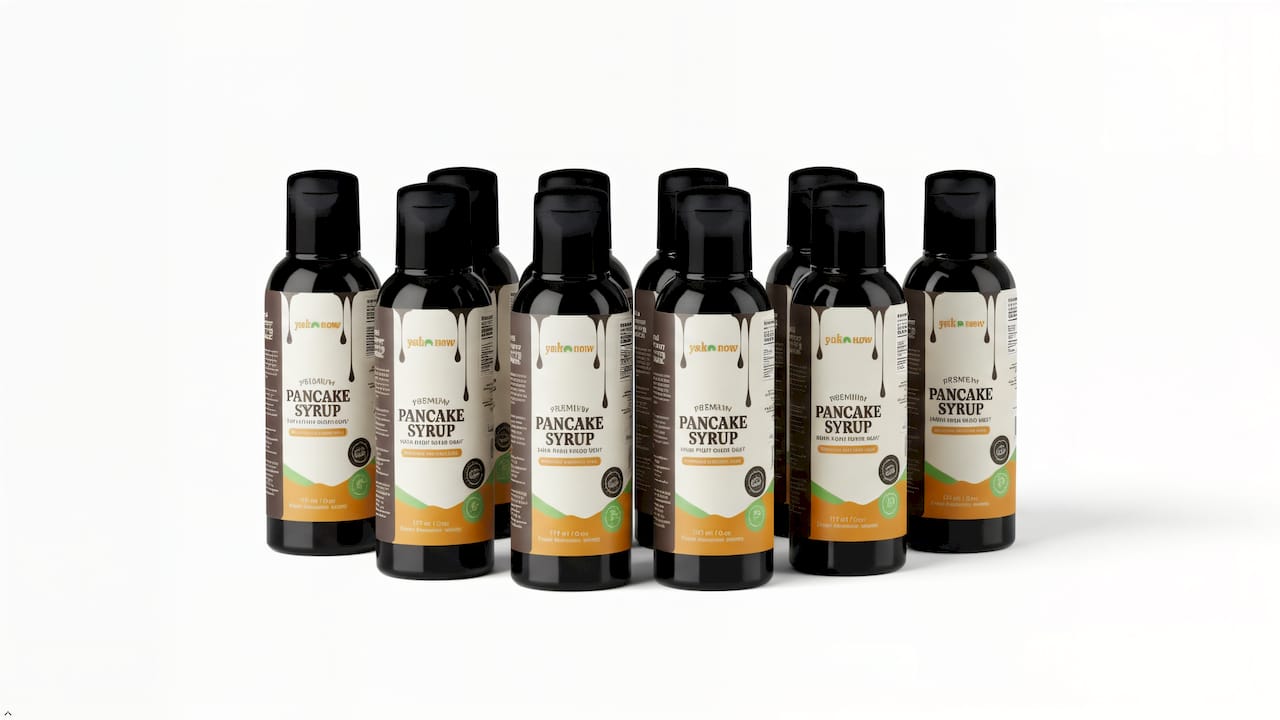
| Choose transparent sourcing | Yakonow offers single-ingredient Peruvian yacon syrup bottled in a Texas FDA-compliant facility, available in single and multi-pack sizes for regular family use. |
This article is general information, not a substitute for advice from a qualified doctor. Consult a qualified healthcare professional about your own circumstances before acting on anything here.
Table of Contents
- What Is Yacon Syrup for Pancakes, Exactly?
- Does Yacon Syrup Actually Help Your Gut?
- Who Should Be Careful With Yacon Syrup?
- Can You Cook With Yacon Syrup, or Only Drizzle It?
- How Much Yacon Syrup Should a Family Use?
- Easy Ways to Use Yacon Syrup on Pancakes This Week
- What Actually Matters More Than the Hype Around Yacon Syrup
- Bring Yacon Syrup Home for Family Mornings
- Sources
What Is Yacon Syrup for Pancakes, Exactly?
Yacon syrup comes from the yacon plant, a tuber grown high in the Andes and long used in Peruvian kitchens the way sweet potato is used here, though it tastes nothing like one. The syrup is pressed and reduced from the root’s juice, and what makes it interesting on a pancake isn’t sugar content. It’s fiber.
That fiber is mostly fructooligosaccharides, or FOS, a type of prebiotic that your body doesn’t digest but your gut bacteria happily ferment. Studies on yacon report FOS content ranging widely, from about 17% to 52% by weight, depending on the plant and how the syrup was processed. That range matters: two bottles labeled “yacon syrup” are not automatically the same product.
Here’s what that translates to at the table:
- A glycemic index that runs notably lower than maple syrup or table sugar, meaning it moves through the bloodstream more slowly.
- A taste profile closer to dark molasses or brown sugar syrup, with a faint earthy note underneath.
- A texture thick enough to cling to a pancake instead of sliding straight into the syrup well.
Quick fact: FOS content in yacon syrup can vary by more than double from one batch to another, so a syrup with a clear, tested FOS number on the label tells you more than one that simply says “prebiotic.”
Does Yacon Syrup Actually Help Your Gut?
The honest answer is: probably a little, for some people, and that’s worth something at a breakfast table where you’re already trying to sneak in better ingredients without anyone noticing.
The prebiotic fiber in yacon feeds bacteria already living in your gut rather than adding anything foreign, which is the same basic mechanism behind fiber-rich foods generally. A 2025 systematic review looking at seven small human trials and 161 participants found yacon syrup use linked to modest reductions in fasting insulin and LDL cholesterol, plus improvements in satiety and intestinal transit. The researchers were careful to flag that the studies varied a lot in design and that optimal dosing is still unclear.
Prebiotic effects from yacon appear real but individual. Some people notice smoother digestion and steadier hunger between meals; others notice very little. Responses seem tied to each person’s own gut bacteria, which is why one relative swears by it and another shrugs.
A few honest takeaways from the research:
- Regularity and satiety improvements showed up most consistently across the small trials reviewed.
- Metabolic changes, like insulin and LDL, were modest, not dramatic, and shouldn’t be mistaken for a treatment of anything.
- None of this replaces a genuinely balanced breakfast. Yacon syrup is a topping upgrade, not a nutrition plan.
Framed honestly, that’s what yacon syrup offers a family table: a drizzle that happens to be doing a little quiet work for the people eating it, on top of tasting good.
Who Should Be Careful With Yacon Syrup?
The same fiber that feeds good gut bacteria can cause trouble if you pour it on too heavy, too fast. FOS belongs to a category of carbohydrates called FODMAPs, and in sensitive digestive systems, FODMAPs ferment quickly and produce gas. Cleveland Clinic’s guidance on yacon syrup is direct about this: introduce it slowly, and expect some bloating if you overdo it early on.
Here’s a simple way to test tolerance before committing to it as a weekly staple:
- Start with about a teaspoon on one pancake, once, and note how you feel over the following day.
- If nothing unusual happens, try a slightly larger drizzle a few days later.
- Watch for gas, bloating, or looser stools, especially in anyone with IBS or a known FODMAP sensitivity.
- Pause and dial back if symptoms show up, rather than pushing through.
- Talk to a healthcare provider before regular use if you’re managing a digestive condition or a child’s diet closely.
Pro Tip: Introduce yacon syrup on a weekend morning rather than before a school or work day. If anyone’s stomach needs an adjustment period, you’ll have the time to notice it without the pressure of a schedule.
For a deeper look at how yacon interacts with FODMAP sensitivity, the FODMAP guide for people with IBS covers it in more detail than a pancake article needs to.
Can You Cook With Yacon Syrup, or Only Drizzle It?
Drizzle it. That’s the short version, and it’s the version consumer nutrition guidance keeps landing on for a reason: sustained high heat breaks down the FOS structure that makes yacon syrup worth reaching for in the first place, according to culinary guidance from Healthline.

That doesn’t mean it needs to be cold from the fridge. A quick warm in a small saucepan on low, or ten seconds in the microwave, brings out the flavor without pushing it toward a boil. What it does mean is skipping the reduction step some cooks use with maple syrup to thicken it further on the stovetop.
If you want yacon inside the batter itself, not just on top:
- Cut back other liquid in the recipe by roughly 10 to 15%, since yacon syrup is thicker than milk or water.
- Reduce any other sweetener by a comparable amount so the batter isn’t overly sweet.
- Keep the pan or griddle at a moderate temperature rather than cranking the heat to get faster browning.
The full swap ratios and troubleshooting live in the baking substitution guide if you want to take this further than a Sunday drizzle.
How Much Yacon Syrup Should a Family Use?
Clinical studies testing yacon syrup’s effects generally used daily amounts equivalent to 20 to 40 grams of syrup, which is a fair amount more than most people would want on a single pancake stack. For everyday topping use, think teaspoons, not tablespoons, at least at first.
A gentle two-week introduction that works well for most households:
- Days 1 to 2: a quarter teaspoon per serving, just enough to notice the flavor.
- Days 3 to 5: half a teaspoon, watching for any digestive changes.
- Days 6 to 10: build up to a full teaspoon or a light drizzle across the stack.
- After day 10: settle into whatever amount felt comfortable, generally one to two teaspoons per adult serving.
Kids should stay on the conservative end of that scale, since smaller bodies feel FODMAP effects sooner. Every gut responds a little differently to prebiotic fiber, so if a full drizzle feels like too much for someone in the family, there’s nothing wrong with keeping it at a half teaspoon indefinitely.
Easy Ways to Use Yacon Syrup on Pancakes This Week
Once tolerance is established, the fun part starts. Yacon syrup’s molasses-like depth pairs naturally with a handful of breakfast staples.
- Banana and walnut stack: warm yacon drizzled over sliced banana and toasted walnuts brings out a caramel note without any added sugar.
- Yogurt swirl: a spoonful stirred into plain Greek yogurt on the side of the plate softens its tang and gives kids something to dip pancake bites into.
- Berry and yacon compote: warm a handful of frozen berries with a spoonful of yacon syrup for two minutes on low heat, then spoon it over the stack.
For a batter-side option, swap one to two tablespoons of the sugar in your usual pancake recipe for the same amount of yacon syrup, and reduce the milk slightly to keep the batter from thinning out. More combinations, including dessert and yogurt pairings beyond pancakes, are in the full recipe collection.
A few small habits keep a bottle in regular rotation:
- Store it at room temperature in the pantry; refrigeration isn’t necessary for a sealed squeeze bottle.
- Keep it near the stove or breakfast station rather than tucked in a cabinet, so it’s an easy reach on a rushed morning.
- Give the bottle a shake before pouring if it’s been sitting a while, since natural syrups can settle slightly.
What Actually Matters More Than the Hype Around Yacon Syrup
Most of what gets written about yacon syrup treats it like a miracle ingredient or dismisses it entirely, and both takes miss the point. The honest read of the research is narrower and more useful: this is a syrup with real prebiotic fiber, a genuinely lower glycemic footprint than maple or honey, and a flavor that holds its own on a pancake. That’s already enough reason to keep a bottle around.
Where conventional advice falls short is treating dosage like an afterthought. FOS is not inert, and pouring a heavy hand of any prebiotic syrup onto a child’s plate without easing in is how you end up with a stomachache blamed on “something at breakfast.” The families who do best with yacon syrup are the ones who treat the first few weeks like a quiet experiment, not a switch flipped overnight.
If there’s one thing to prioritize, it’s sourcing. FOS content swings widely between products, so a syrup that’s transparent about what’s actually in the bottle, ideally a single ingredient with nothing added, is worth more than one making vague wellness claims on the label. That’s the detail that separates a genuinely better pantry staple from a trend riding on it.
— Celeste
Bring Yacon Syrup Home for Family Mornings
Yakonow is a single-ingredient Peruvian yacon syrup, nothing else in the bottle, bottled in an FDA-compliant facility in Texas so it reaches your kitchen the same way it left the farm. That matters more than it sounds. With FOS content and glycemic index varying so widely between yacon products, a syrup that’s transparent about what’s actually inside earns a place at a table where you’re already paying attention to what you serve.

It comes in a squeeze bottle built for a Tuesday morning, not a special-occasion pour. Grab the single 6oz bottle to try it for the first time, or if pancakes are a weekend fixture in your house, the pack of 2 or pack of 4 keeps you from running out mid-recipe. Families who go through syrup fast, holidays, house guests, weekly brunch traditions, tend to reach for the pack of 12 so it’s simply always there. Pour a small amount over the next stack you make and let the table decide the rest.
Sources
- Prebiotic and functional properties of yacon (Smallanthus sonchifolius) — PMC
- Impacts of Yacon Syrup (Smallanthus sonchifolius) on Human Health: A Systematic Review — Nutrients
- Is Yacon Syrup Healthy? — Cleveland Clinic
- Can Yacon Syrup Really Help You Lose Weight? — Healthline