

60% Report Gas: Yacon Syrup Side Effects Families Should Know
The most common yacon syrup side effects are gas, bloating, mild abdominal discomfort, and looser stools, occasionally with nausea if you pour it on heavy. They come from the syrup’s prebiotic fiber and they’re almost always dose-dependent, meaning they show up when you use too much too fast and tend to fade once your gut adjusts. Start with a small drizzle, not a flood, and watch how your body responds over a few days.
TL;DR:
- Most digestive issues caused by yacon syrup, such as gas and bloating, are dose-dependent and tend to improve as the gut adjusts over time.
- A safe starting dose is about 10 grams of FOS per day, achieved gradually through small servings, with symptoms subsiding within a few days of careful introduction.
- People with irritable bowel syndrome or FODMAP sensitivities should be especially cautious and consider consulting a healthcare provider before trying yacon syrup.
- Long-term research indicates that gastrointestinal symptoms decrease with continued use, but there are no studies confirming safety over multiple years.
- Yacon syrup’s consistent, single-ingredient composition allows for predictable dosing and safer gradual introduction into family diets.
Table of Contents
- What’s Actually in Yacon Syrup (And Why Your Gut Notices)
- What the Clinical Research Actually Shows
- Finding Your Right Amount: A Simple Adaptation Plan
- Who Should Be Cautious or Check With a Doctor First
- Serving Yacon Syrup Without Upsetting Anyone’s Stomach
- What Makes Yakonow’s Yacon Syrup Predictable to Dose
- Allergic Reactions and Hypersensitivity
- Does Yacon Syrup Interact With Medications or Supplements?
- What Long-Term Studies Say About Ongoing Use
- Pregnancy, Breastfeeding, and Yacon Syrup
- A Note on Moderation and the Family Table
- Trying Yacon Syrup at Home: Which Bottle Fits Your Table
- Sources
What’s Actually in Yacon Syrup (And Why Your Gut Notices)
Yacon syrup gets its sweetness partly from fructooligosaccharides, or FOS, a type of prebiotic fiber your small intestine can’t break down. Instead of being absorbed like table sugar, FOS travels intact to the colon, where the bacteria living there ferment it. That fermentation is exactly why yacon syrup has earned a reputation as a gut-friendly ingredient, and it’s also exactly why it can cause noticeable digestive symptoms if you pour it on too generously.
The Cleveland Clinic notes that yacon’s high FOS content is what causes gas, diarrhea, nausea, and general stomach upset in people who are sensitive to it. The mechanism is simple once you see it: gut bacteria break down FOS and release gas as a byproduct. At the same time, undigested fiber pulls water into the colon through osmosis, which can loosen stool if you’ve eaten more than your system is used to.
Here’s what that looks like at the table. A typical serving of yacon syrup contains a meaningful dose of FOS, though the exact amount varies by brand and how the syrup was processed. That’s part of why a detailed look at how FOS ferments in the colon matters more for yacon than for a sweetener like maple syrup, which contains essentially none of this fiber at all.
What this means in practice:
- FOS is not digested in the small intestine, so it survives all the way to the colon.
- Gut bacteria ferment it there, producing gas as a natural side effect.
- The same fiber draws water into the bowel, which can soften or loosen stool at higher intakes.
- Sensitivity to this process varies a lot from person to person, based on your existing gut bacteria.
None of this makes yacon syrup unusual among prebiotic foods. Chicory root, garlic, and onions all work the same way. Yacon just concentrates more of that fiber into a syrup you might pour with a heavier hand than you’d eat onion.
What the Clinical Research Actually Shows
Yacon syrup’s digestive effects aren’t guesswork. Several trials have measured them directly, and the pattern is consistent: symptoms scale with dose, they’re rarely serious, and they tend to ease as the gut adapts.
The numbers behind the gas: A systematic review of yacon research found that 60% of participants experienced flatulence after a standard meal containing yacon syrup, compared to 10% on placebo. That’s a real gap, but the same review notes these symptoms tended to lessen with continued use rather than worsening over time.
That adaptation pattern shows up across the literature. A randomized, placebo-controlled pilot trial gave healthy adults 20 grams of yacon syrup daily, containing about 6.4 grams of FOS, for two weeks. Colonic transit time dropped from roughly 59.7 hours to 38.4 hours, a substantial speed up in how quickly food moves through the gut. Some participants noticed mild gastrointestinal symptoms early on, but many found those symptoms resolved as the two weeks progressed.
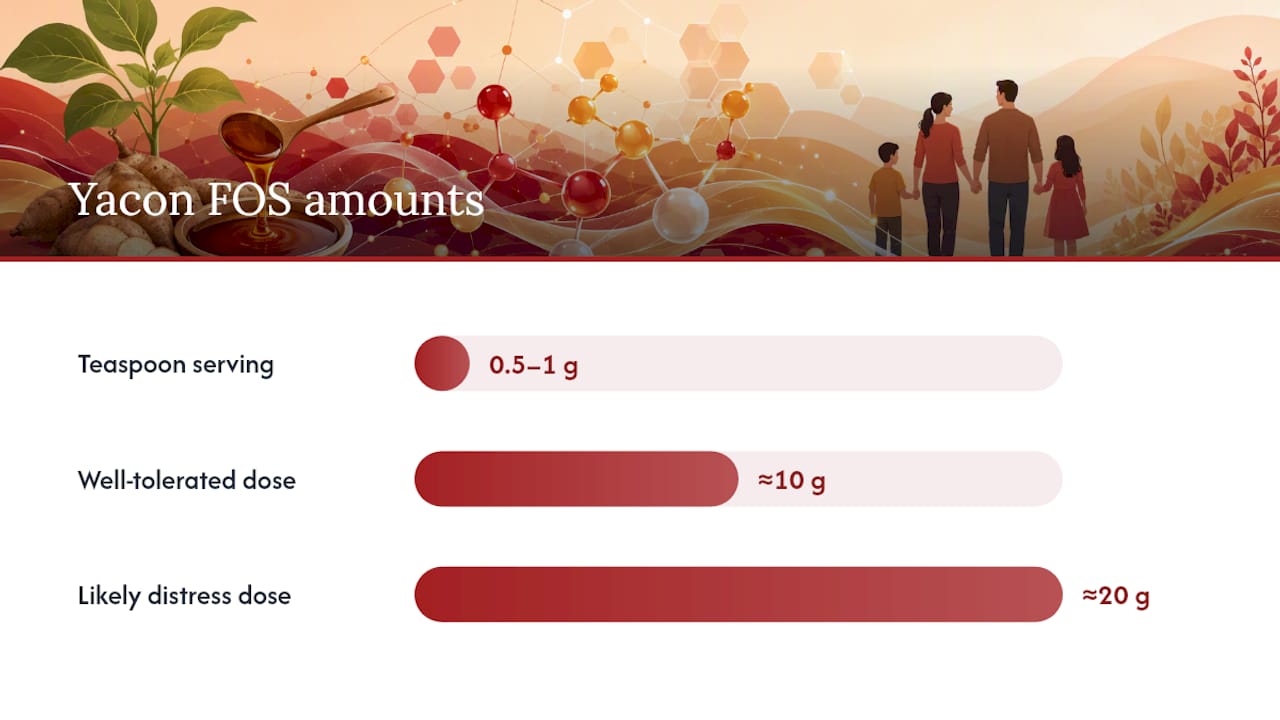
A separate body of research on yacon syrup’s effects on obesity and insulin resistance points to a rough dose threshold: around 10 grams of FOS per day was generally well tolerated, while intakes closer to 20 grams per day showed up more often in reports of gastrointestinal distress, including some study dropouts at the higher end.
A few things stand out when you look across these trials together:
- Reported side effects cluster into a short, predictable list: gas, bloating, mild abdominal discomfort, diarrhea, and occasionally nausea.
- Severity almost always tracked with dose, not with the syrup itself as an ingredient.
- Symptoms were consistently described as non-toxic and manageable, not dangerous.
- A longer 120-day trial in obese pre-menopausal women, using about 0.14 grams of FOS per kilogram of body weight daily, paired mild and largely temporary GI effects with measurable improvements in fasting insulin and insulin resistance markers, according to the same systematic review.
The honest summary: yacon syrup’s gastrointestinal issues are real, well documented, and dose-driven. They’re also the same trade-off you’d expect from any concentrated source of fermentable fiber. Your gut isn’t malfunctioning. It’s fermenting exactly what it’s supposed to ferment, just more of it than it’s used to.
Finding Your Right Amount: A Simple Adaptation Plan
Trial data suggests roughly 10 grams of FOS per day sits in the well-tolerated range for most people, while doses approaching 20 grams per day are more likely to cause distress. The trouble is that most people have no idea how many grams of FOS they’re actually pouring on their pancakes, which is exactly why a slow, observational approach beats trying to calculate an exact number.
A practical way to introduce yacon syrup:
- Start with a half to one small serving. Think a teaspoon rather than a tablespoon for your first few tries, roughly the equivalent of 0.5 to 1 gram of FOS.
- Hold that amount for three to four days. Notice how your stomach feels, whether you’re gassier than usual, and how your bowel habits shift, if at all.
- Increase gradually, not all at once. Add a small amount each week rather than jumping straight to a full tablespoon.
- Split larger amounts across two meals. Taking a small dose in the morning and another in the evening tends to ease peak fermentation in the colon compared to one big pour, which can blunt gas and looser stools.
- Pause and back off if symptoms escalate. Mild gas easing over a few days is normal adaptation. Symptoms getting worse the longer you use it is your signal to scale back.
Pro Tip: Drink a full glass of water alongside your first few servings. FOS pulls water into the colon, and staying hydrated helps your system move that extra fiber through more comfortably instead of feeling backed up.
Track what you notice for the first week or two, even informally. A quick mental note, “fine at a teaspoon, gassy at a tablespoon,” tells you more about your personal tolerance than any generic dosing chart ever could. Everyone’s gut bacteria respond a little differently to fermentable fiber, and yacon syrup is no exception.
Who Should Be Cautious or Check With a Doctor First
Yacon syrup’s biggest gastrointestinal risk group is people with irritable bowel syndrome or a known sensitivity to FODMAPs, the fermentable carbohydrates that include FOS. Because yacon syrup is concentrated in exactly this kind of fiber, it sits on the higher end of the FODMAP spectrum, and people managing IBS often find that fructans like FOS are among the first triggers worth eliminating during a low-FODMAP trial.
That doesn’t mean yacon syrup is automatically off the table for someone with IBS, but it does mean starting slower and smaller than a typical recommendation, and paying closer attention to symptoms. Readers navigating this can get more specific guidance from a breakdown of yacon syrup and FODMAP sensitivity before deciding how, or whether, to introduce it.
A few other groups worth naming directly:
- People who are pregnant or nursing should talk with their clinician before adding a new concentrated prebiotic to their diet, simply because digestive changes during pregnancy already vary widely.
- Anyone taking medications or supplements that affect gut motility, such as laxatives or certain diabetes medications, should mention yacon syrup to their prescriber, since combined effects on bowel movements aren’t well studied.
- Anyone with a diagnosed digestive condition beyond typical sensitivity, like inflammatory bowel disease, should get personalized guidance rather than relying on general dosing advice.
Certain symptoms are never just “adjustment” and deserve prompt medical attention: severe or worsening abdominal pain, diarrhea that persists for more than a couple of days, blood in the stool, or signs of dehydration like dizziness and reduced urination. Those go beyond the mild, dose-related effects described in clinical research and warrant a call to your doctor, not another week of watching and waiting.
Serving Yacon Syrup Without Upsetting Anyone’s Stomach
A family breakfast is not the place for trial and error at full volume. The easiest way to bring yacon syrup to your table is to treat the first pour like a taste test, not a topping: one small drizzle over a bowl of yogurt or oatmeal, enough to sweeten without saturating.
Pairing matters more than most people expect. Yacon syrup sits especially well with foods that are already hydrating and easy on digestion, like fresh fruit, plain yogurt, or a warm bowl of oatmeal. A family-oriented guide to prebiotic fiber covers this pairing logic in more depth if you want to build out a rotation of gentle, gut-friendly breakfasts. Very high baking temperatures are one place to go easy, since prolonged heat can alter the syrup’s texture and flavor more than it affects the fiber itself, so drizzling after baking tends to work better than baking it in for long stretches.
For families with young kids, keep servings noticeably smaller than what an adult would use, and treat the first attempt as an observation, not a routine. A single-serve trial for each family member, watched over a day or two, tells you far more than guessing at a “family portion” from day one.
A short list worth keeping in mind at the table:
- Start with a teaspoon-sized drizzle, especially for children or first-time tasters.
- Pair with yogurt, fruit, or oatmeal rather than dense, heavy dishes.
- Save the tablespoon-plus pours for once everyone’s tolerance is established.
- Watch for individual differences. What one family member handles easily, another might not.
Pro Tip: Pair a small yacon syrup serving with protein-rich foods like Greek yogurt or eggs. Protein slows overall digestion slightly, which can soften the osmotic effect of the fiber and make the whole meal sit more comfortably. Fermented foods can play a similar supporting role. A look at why fermented foods reduce bloating explains how an already-adapted gut microbiome handles new fermentable fiber more smoothly.
What Makes Yakonow’s Yacon Syrup Predictable to Dose
Dosing guidance only works if you know what’s actually in the bottle. The yacon syrup is a single-ingredient product, derived from yacon root and bottled in a facility meeting regulatory standards, with no glucose, colorants, or artificial sweeteners added. It carries a low glycemic index and is rich in prebiotic FOS fiber, with composition consistent across batches.
That consistency is the quiet advantage here. When a syrup’s composition doesn’t shift from batch to batch, the ramp-up plan described earlier, starting small and increasing gradually, actually holds up in practice. You’re adjusting to one known quantity instead of guessing at a moving target. Readers who want the fuller technical picture of how yacon syrup is made and where its fiber content comes from can find it in Yakonow’s complete guide to yacon syrup’s origins and composition.
None of this replaces watching how your own body responds. But a predictable ingredient list is what lets a slow, attentive introduction actually work the way it’s supposed to, rather than fighting against unknown variables hiding in the bottle.
Allergic Reactions and Hypersensitivity
True allergic reactions to yacon syrup are uncommon, and yacon isn’t among the major food allergens tracked by public health agencies. Most of what people describe as a reaction to yacon syrup is the digestive fermentation response covered earlier, gas, bloating, or looser stools, rather than an immune-driven allergy.
That said, hypersensitivity is still possible with any plant-derived food, and yacon belongs to the same broader plant family as sunflowers and ragweed, the Asteraceae family. People with known sensitivities to that plant family should introduce yacon syrup cautiously and watch for symptoms beyond the digestive ones already discussed, such as itching, hives, swelling around the mouth or throat, or difficulty breathing.
If any of those symptoms appear after trying yacon syrup, stop using it and seek medical attention, particularly if swelling or breathing changes are involved. This is different from the mild gas or bloating that shows up with normal dose adjustment, and it shouldn’t be managed the same way. A true allergic response needs a clinician’s evaluation, not a smaller serving next time.
For most families, the practical takeaway is simple: watch the first few servings the way you’d watch any new food introduced to a household, especially for kids, and treat digestive symptoms and allergic symptoms as two different signals that call for two different responses.
Does Yacon Syrup Interact With Medications or Supplements?
Yacon syrup’s biggest interaction concern isn’t chemical, it’s mechanical: its fiber content can affect how your gut behaves, which matters if you’re already taking something that does the same thing. Combining yacon syrup with laxatives, stool softeners, or other fiber supplements can compound the osmotic effect described earlier, increasing the odds of loose stools or cramping simply from stacking similar effects on top of each other.
People managing blood sugar with medication should also pay attention, not because yacon syrup spikes blood sugar (its low glycemic profile is well established), but because any dietary change that alters gut transit time can subtly shift how quickly other nutrients and medications are absorbed. This is worth a quick conversation with a pharmacist or prescriber rather than something to guess at.
Probiotic supplements are a slightly different story. Since FOS feeds the same bacteria probiotics are meant to support, combining the two isn’t inherently risky, but introducing both at once makes it harder to tell which one is behind any digestive changes you notice. It’s simpler to add one new gut-focused product at a time.
None of this rises to a serious drug interaction in the way pharmaceutical warnings usually mean it. It’s closer to a compounding effect worth being aware of, especially for anyone already managing a sensitive digestive system or a condition that requires close monitoring.

What Long-Term Studies Say About Ongoing Use
Most yacon syrup research to date covers weeks rather than years. Trial windows in the existing literature run from two weeks up to about 120 days, long enough to observe adaptation patterns and some metabolic markers, but not long enough to speak with confidence about years of daily use.
Within that window, the picture is reassuring rather than alarming. The systematic review of yacon research found that digestive symptoms consistently trended toward improvement the longer people used yacon syrup, not toward worsening, which is the pattern you’d expect from a gut microbiome adapting to a new fiber source rather than a reaction building over time. The 120-day trial mentioned earlier paired that adaptation with measurable improvements in insulin sensitivity, suggesting sustained use did not increase adverse effects.
What’s missing is multi-year data, and that’s worth saying plainly rather than glossing over. Nobody has published a study following daily yacon syrup users for five or ten years the way we have for some longer-studied foods. That’s not a red flag specific to yacon, it’s simply the current state of research on a sweetener that’s a relatively recent addition to broader dietary use outside the Andes. The honest position is that short and medium-term data look favorable, and long-term data is still catching up.
Pregnancy, Breastfeeding, and Yacon Syrup
Yacon syrup doesn’t have documented reports of serious harm during pregnancy or breastfeeding, but it also hasn’t been studied specifically in pregnant or nursing populations. That absence of dedicated research, not any known danger, is the reason for a cautious approach here.
Pregnancy already changes digestion for many people, sometimes toward constipation, sometimes toward increased sensitivity. Adding a concentrated prebiotic fiber on top of those existing shifts is reasonable for some people and less comfortable for others, and there’s no clinical trial data specific to pregnancy to predict which way it will go for you.
The sensible approach mirrors the caution already recommended for FODMAP-sensitive readers: start small, if at all, and loop in your OB or midwife before making yacon syrup a regular part of your diet during pregnancy or while breastfeeding. This isn’t because yacon syrup is flagged as unsafe. It’s because the research simply hasn’t been done in these specific populations, and “not yet studied” deserves a different response than “studied and found safe.”
A Note on Moderation and the Family Table
There’s a version of this conversation that turns into a spreadsheet, grams tracked against thresholds, symptoms logged like data points. That’s useful for the first week or two. It’s not how anyone actually wants to live with their food.
The better frame is the one your grandmother probably already knew: a little goes further than a lot, and the table rewards patience more than precision. A teaspoon of yacon syrup over Sunday oatmeal, watched and enjoyed rather than measured with a scale, tells you more about how it fits your family than any dosing chart. Let the first few tries be small and unhurried. Notice, adjust, repeat.
What actually matters isn’t hitting some perfect gram count. It’s whether this syrup earns its place in your kitchen, drizzled over the pancakes that get everyone to the table on a Saturday morning. Moderation here isn’t a restriction. It’s what makes the ritual sustainable, so the syrup stays part of the gathering instead of becoming one more thing to worry about.
— Celeste
Trying Yacon Syrup at Home: Which Bottle Fits Your Table
Because measured, predictable FOS content makes the ramp-up plan easier to follow, the format you choose matters almost as much as the pace you take. Yakonow offers three ways to bring it home, depending on where your family is in that process.

If you’re still in the testing phase, sweetening a single bowl of oatmeal to see how everyone responds, the single 6oz squeezable bottle is the low-commitment way to start. It’s sized for exactly the kind of small, observational trial described earlier in this guide, without committing to a pantry full of syrup before you know how it sits with your family.
Once yacon syrup has earned a regular spot at breakfast, the pack of two 6oz bottles covers the reality of busy weekday mornings without a mid-week grocery run. And for larger households or families who go through syrup faster than they’d like to admit, the pack of four 6oz bottles keeps the shelf stocked through pancake Saturdays and school-morning oatmeal alike.
Every bottle is single-ingredient, bottled in a Texas facility, and carries the same low glycemic profile no matter which size you choose, so the dosing habits you build with one bottle carry over cleanly to the next.
This article is general information, not a substitute for advice from a qualified doctor. Consult a qualified healthcare professional about your own circumstances before acting on anything here.
Sources
- Impacts of Yacon Syrup (Smallanthus sonchifolius) on Human Health: A Systematic Review of Scientific Evidence from the Last Decade
- Yacon syrup: Beneficial effects on obesity and insulin resistance in humans
- Effect of yacon syrup on blood lipid, glucose and metabolic endotoxemia in healthy subjects: a randomized, double-blind, placebo-controlled pilot trial