

Start Yacon Syrup on Yogurt at 1–2 Teaspoons for Family Mornings
Yes, yacon syrup belongs on yogurt. It’s low on the glycemic index, carries prebiotic fiber that feeds the same bacteria already living in your yogurt, and pours easily over a Sunday parfait. The only caveat: it’s naturally rich in fiber, so some people notice mild digestive sensitivity if they pour too much too soon. Start with a teaspoon, see how you feel, and build from there.
TL;DR:
- Using one to two teaspoons of yacon syrup on yogurt provides health benefits without causing digestive discomfort.
- Drizzle yacon syrup after yogurt has cooled to maintain its prebiotic fiber structure, avoiding heat exposure.
- Choosing minimally processed yacon syrup with high FOS content ensures maximum prebiotic benefits.
- Pairing yacon syrup with textured ingredients like berries or nuts balances sweetness and improves taste.
- Gradually increasing intake over several days helps prevent bloating or gas, especially for sensitive individuals.
Table of Contents
- How Do You Add Yacon Syrup to Yogurt?
- Why Do Yacon Syrup and Yogurt Work So Well Together?
- What Side Effects Should You Watch For?
- What Should You Look for When Choosing a Yacon Syrup?
- Three Yogurt Bowls to Try Tonight
- A Small Habit Worth Keeping
- Where to Find Yakonow Yacon Syrup for Your Kitchen
- Sources
How Do You Add Yacon Syrup to Yogurt?
Treat it like a finishing touch, not an ingredient you cook with. A teaspoon is the right starting point for most bowls, and once your palate and your gut adjust, one to two teaspoons is the sweet spot for flavor, and larger amounts can be used for bigger, family-style bowls if desired.
Drizzle it on cold or room-temperature yogurt right before you eat, rather than stirring it into a warm dish or baking it into anything. Heat breaks down the very fiber structure that makes yacon syrup worth reaching for in the first place, so a finishing drizzle preserves that prebiotic content far better than mixing it into hot oats.
Different yogurts call for different amounts:
- Greek and strained yogurts have more tang, so they can carry a slightly heavier drizzle.
- Coconut yogurt already leans sweet, so a light hand goes further.
- Flavored yogurts need barely a touch, since they’re pre sweetened.
Balance the bowl with texture: a few berries, a spoon of toasted oats, or a scatter of chopped nuts keeps the syrup from being the only thing you taste.
Why Do Yacon Syrup and Yogurt Work So Well Together?
This is the part that makes the pairing more than a flavor choice. Yacon syrup is loaded with fructooligosaccharides, or FOS, a type of prebiotic fiber your body can’t digest but your gut bacteria absolutely can. Yogurt, meanwhile, carries live cultures like Bifidobacterium and Lactobacillus. Put them in the same bowl and the FOS effectively feeds those cultures, which is the whole idea behind a synbiotic food pairing: the prebiotic and the probiotic working the same shift.
Glycemic index snapshot: Lab analysis puts yacon concentrate at a glycemic index of roughly 40, noticeably lower than maple syrup’s mid-50s range, meaning it raises blood sugar more slowly than most bottled sweeteners.
The gut benefits go beyond one meal. A systematic review of yacon syrup research found that longer-term use was more consistently linked to improved satiety, smoother intestinal transit, and better fasting insulin markers than short-term use, though results varied by dose and by person. If you’re curious how the glycemic load plays out per serving in kitchen terms, that’s worth a closer look too.
What Side Effects Should You Watch For?
The same fiber that feeds good bacteria can also cause trouble if you overdo it early on. Yacon syrup is highly osmotic, meaning it pulls water into the colon, and Cleveland Clinic notes that this can lead to bloating, gas, or loose stools if consumed in large amounts suddenly.
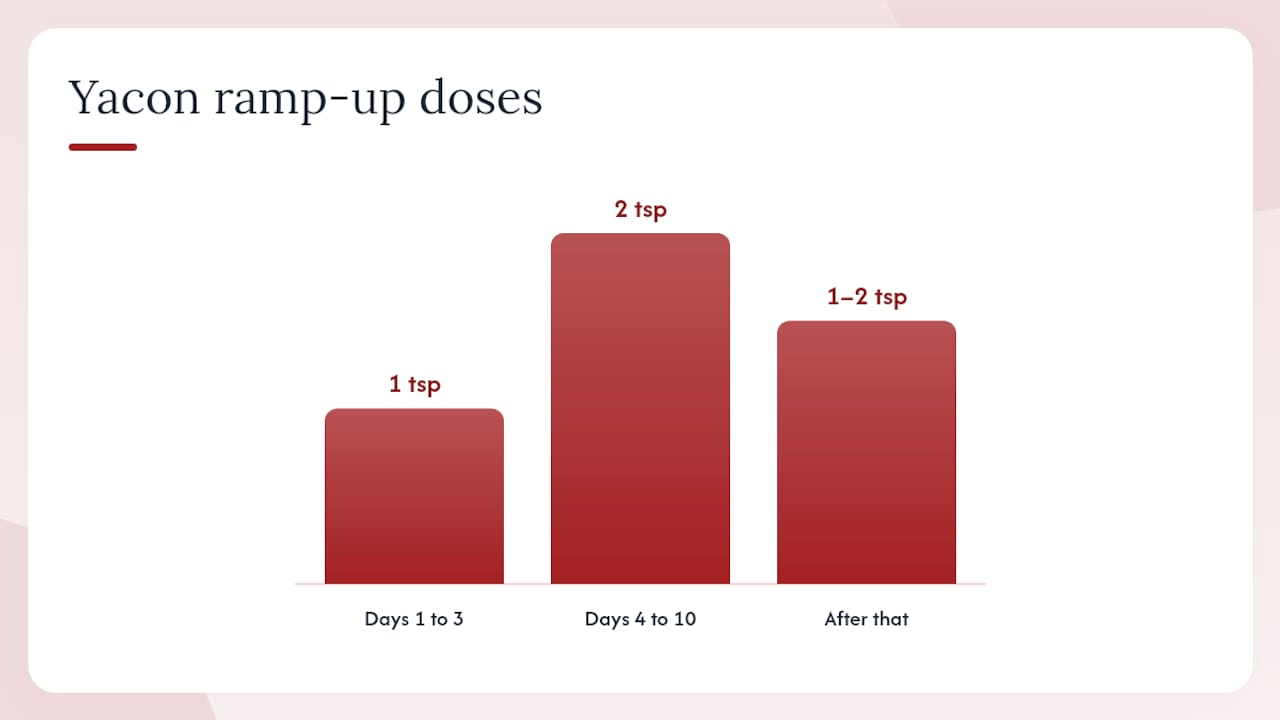
A simple ramp-up avoids most of that:
- Days 1 to 3: one teaspoon on yogurt, once a day.
- Days 4 to 10: two teaspoons, watching how your body responds.
- After that: settle into whatever amount feels comfortable, typically one to two teaspoons per serving for most adults.
If you have a history of severe IBS, FODMAP sensitivity, or you’re pregnant, it’s worth a quick conversation with your doctor before making yacon syrup a daily habit, simply because everyone’s tolerance for fermentable fiber is different.
Pro Tip: Pair your first few tries with a meal rather than an empty stomach. Food already in your system slows things down and makes that first FOS introduction much gentler.
What Should You Look for When Choosing a Yacon Syrup?

Not all yacon syrup delivers the same benefit, and this is where a lot of shoppers get fooled. Heat and heavy processing can hydrolyze the fructans in yacon root into simple sugars, which strips away the prebiotic value even though the label still says “yacon syrup.” Lab analysis has found FOS content in commercial concentrates swinging anywhere from roughly 10% to over 47%, depending on the cultivar and how it was processed.
A short label checklist helps:
- One ingredient, nothing else on the list.
- No added sugars or fillers.
- Clear origin, ideally traceable to Peru, where yacon root has been part of Andean foodways for generations.
- Language pointing to cold or minimal processing rather than high-heat extraction.
Producers who are transparent about how the syrup was made, and where the root came from, give you the clearest signal that what’s in the bottle still carries meaningful FOS.
For a deeper look at the fiber science itself, Yakonow’s breakdown of FOS walks through what the research actually says.
Three Yogurt Bowls to Try Tonight
You don’t need a recipe so much as a starting point. Here are three worth trying this week.
- The parfait. Layer Greek yogurt, a handful of berries, a spoon of oats, and one teaspoon of yacon syrup drizzled over the top just before eating.
- The savory bowl. Plain yogurt, grated cucumber, a squeeze of lemon, torn mint or dill, and a light drizzle of yacon syrup for a rounder, less sharp finish than plain yogurt alone.
- The kid-friendly bowl. Lightly sweetened or vanilla yogurt, sliced banana, and a small drizzle, kept modest since younger stomachs benefit from an even slower introduction.
Each one takes less than five minutes and gives you a real feel for how the syrup behaves before you build it into a regular rotation. For more ideas once you’re hooked, Yakonow’s recipe collection has a dozen more ways to use it beyond the breakfast bowl.
A Small Habit Worth Keeping
There’s something quietly good about a kitchen where breakfast isn’t rushed, where someone reaches for the syrup bottle instead of scrolling their phone. A drizzle of yacon over yogurt isn’t going to change your life. It’s just one small, steady habit that makes the table feel a little more like a place to gather instead of grab and go. Try it in small amounts, notice how it feels, and let the ritual matter more than the nutrition label.
— Celeste
Where to Find Yakonow Yacon Syrup for Your Kitchen
If you’re ready to try this at home, choosing a single-ingredient, cold-processed yacon syrup ensures the FOS content is protected, and a product bottled in a reputable facility can give assurance that the label matches the contents.

For a low-commitment way to test it on your own yogurt bowl, the single 6oz bottle is built for exactly that. Families who fall for it fast tend to move to the two-pack for busy weekday mornings, while households that go through syrup quickly often land on the pack of 12 so the pantry never runs dry between orders. Pick the size that matches how often your table gathers, and let the ritual build from there.
Sources
- Fructooligosaccharides and the interactions with gut microbiota (Journal article)
- A Comprehensive Chemical and Nutritional Analysis of New Zealand Yacon Concentrate
- Is Yacon Syrup Healthy? — Cleveland Clinic
- Impacts of Yacon Syrup (Smallanthus sonchifolius) on Human Health: A Systematic Review of Scientific Evidence from the Last Decade