

How Reading Nutrition Labels Helps Diabetics at Home
Nutrition labels are the clearest tool parents have for choosing foods that support steady blood sugar in children with diabetes. Understanding what those small panels actually say transforms a routine grocery run into a quiet act of care. The practice of reading food labels for diabetes management is sometimes called “label literacy,” and it matters more than most parents realize. You do not need a nutrition degree to use labels well. You need to know which numbers to look at first, and why.
How reading nutrition labels helps diabetics: the key parts to focus on
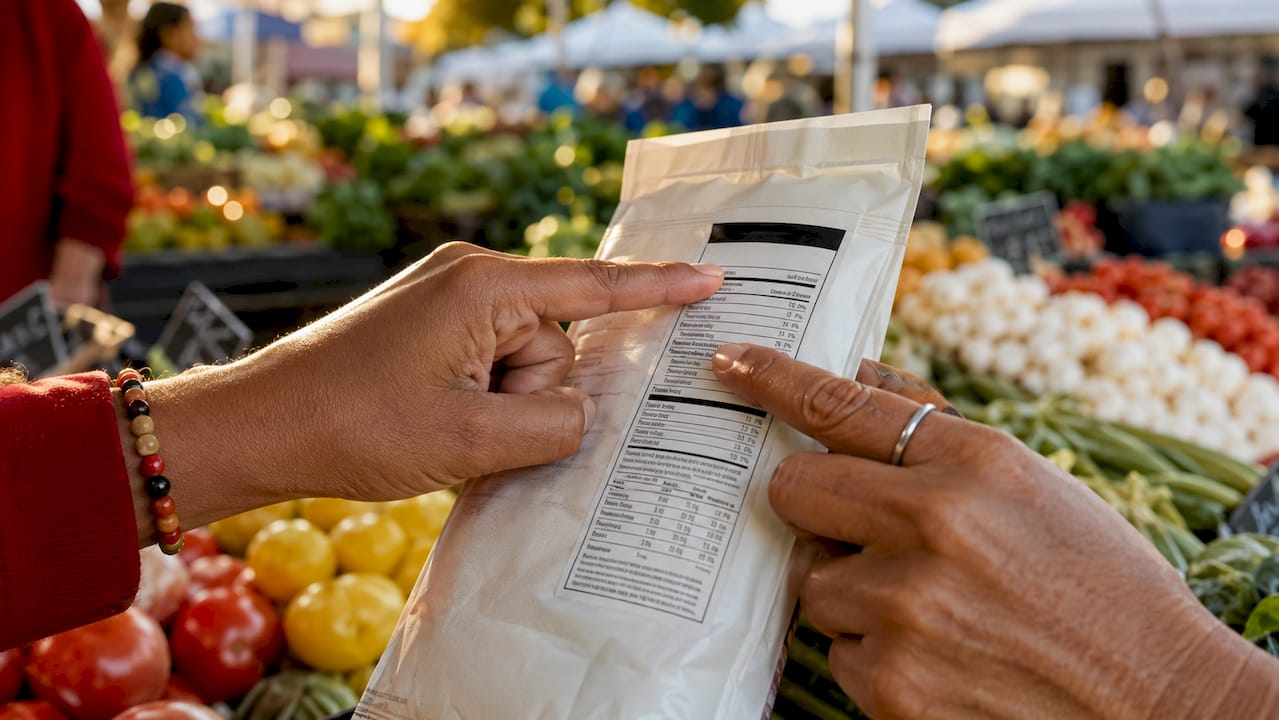
The Nutrition Facts panel is organized to give you the most important information at the top. Serving size comes first, and it sets the reference point for every number that follows. If the label says one serving is half a cup but your child eats a full cup, every gram of carbohydrate and sugar on that label doubles.
Here are the five sections that matter most for families managing diabetes:
- Serving size. Serving size is a reference, not a recommended portion. Always check it before reading anything else on the panel.
- Total carbohydrates. This number includes starches, dietary fiber, and sugars. It is the figure that most directly affects blood glucose.
- Dietary fiber. Fiber slows digestion and softens the blood sugar response. Subtract it from total carbs to estimate net carbs, which is the amount that actually raises blood glucose.
- Added sugars. The FDA recommends limiting added sugars to less than 10% of total daily calories. On a 2,000-calorie diet, that is no more than 50 grams per day. For children, the threshold is lower.
- Ingredient list. Ingredients appear in descending order by weight. If sugar or a refined starch appears in the first three ingredients, the product will likely spike blood sugar regardless of what the front of the package claims.
Pro Tip: Use the % Daily Value column as a quick filter. A % Daily Value of 5% or less means a little of that nutrient; 15% or more means a lot. Aim for high % DV on fiber, calcium, and potassium, and low % DV on sodium, saturated fat, and added sugars.
How do labels help manage blood sugar and meal planning?
Carbohydrates have the greatest impact on blood sugar of any macronutrient. Each carbohydrate choice in diabetes meal planning typically contains about 15 grams of carbohydrates. That standard unit helps parents and care teams estimate how a meal will affect blood glucose before it is served.
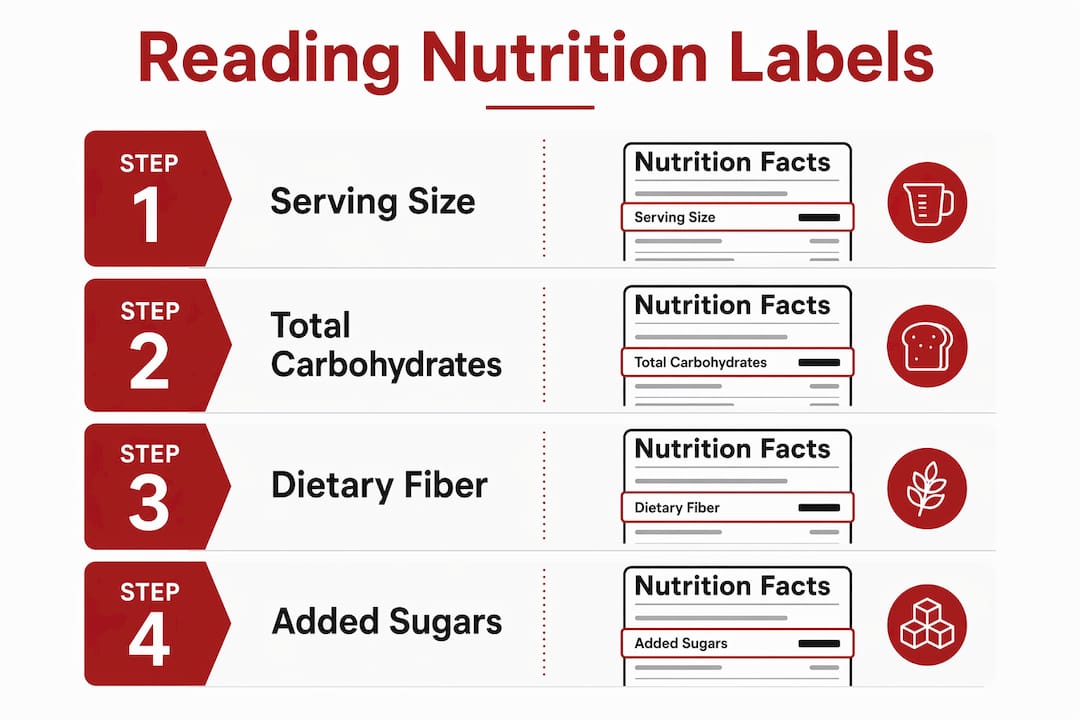
Here is a simple four-step approach for using labels during diabetic meal planning:
- Check the serving size first. Note how much your child will actually eat compared to the listed serving. If your child eats two servings, multiply all nutrients by two before calculating carbs.
- Find total carbohydrates. This is the number to count, not just the sugar line. Starches raise blood sugar just as sugars do.
- Subtract dietary fiber. Net carbs equal total carbs minus dietary fiber. A food with 30 grams of total carbs and 8 grams of fiber has roughly 22 grams of net carbs. That is a meaningful difference in how the body responds.
- Cross-check the ingredient list. Even a moderate carb count can carry a high glycemic load if the carbs come from refined starch or added sugar rather than whole grains or fiber-rich sources.
Pro Tip: Nutrition labels are based on a 2,000-calorie diet, but children’s needs vary by age, growth stage, and activity level. Use % Daily Value as relative guidance and confirm carb targets with your child’s care team.
A label-reading habit also helps at the family table in a gentler way. When you already know the carb count of the yogurt, the granola, and the syrup before breakfast is served, the morning feels calmer. There are fewer surprises, and the meal becomes something you planned with intention rather than guessed at.
What common pitfalls should parents watch for on labels?
Front-of-package claims are marketing, not nutrition guidance. Words like “natural,” “low-fat,” or “no added sugar” on the front of a box do not tell you what is actually inside. The Nutrition Facts panel and ingredient list are the only reliable sources.
These are the most common mistakes parents make when reading labels:
- Trusting the front of the package. A product labeled “made with real fruit” can still contain more added sugar than a candy bar. Always flip the package.
- Missing hidden sugars in the ingredient list. Ingredients ending in “-ose” are all forms of sugar: sucrose, dextrose, maltose, fructose. Terms like “candied,” “caramelized,” and “syrup” also signal added sugar.
- Not adjusting for actual portions. Effective label reading means multiplying nutrients by the number of servings your child actually eats. A bag of crackers with three servings per container is not a single-serving snack.
- Focusing only on the sugar line. Total carbohydrates, not just sugars, drive blood glucose. A food with zero added sugar can still carry a heavy carb load from starch.
- Skipping the ingredient list entirely. The ingredient list tells you the quality of the carbs, not just the quantity. Whole oats and corn syrup can show similar carb counts but behave very differently in the body.
Being an educated label reader means prioritizing the ingredient list alongside the numbers. The two panels together give you a complete picture.
How can parents use labels to choose better everyday ingredients?
Label reading becomes most useful when it shifts from a chore into a quiet habit at the store. The goal is not to find perfect foods. The goal is to find foods that fit your family’s table without hidden surprises.
A few practical ways to use labels while shopping:
- Compare similar products side by side. Two brands of oatmeal can look identical on the front but differ significantly in added sugars and fiber. The label tells you which one earns a place in your pantry.
- Prioritize fiber. Foods with beneficial nutrients like fiber, calcium, and potassium score higher % Daily Values in those rows. A higher fiber count slows digestion and supports more stable blood sugar.
- Look for short ingredient lists. Fewer ingredients usually means less processing. A single-ingredient food has no hidden sugars, no additives, and no label decoding required.
- Choose natural sweeteners with a low glycemic profile. Yakonow yacon syrup carries a glycemic index of just 1 and contains up to 50 grams of prebiotic FOS fiber per 100 grams. It has zero added sugar and no colorants. Drizzled over morning oatmeal or weekend waffles, it adds sweetness without the blood sugar concern that comes with conventional syrups.
Pro Tip: When comparing two products, check the prebiotic fiber content on the label. Prebiotic fiber feeds beneficial gut bacteria and supports digestion, which matters especially for children managing blood sugar day to day.
The table below shows how to use % Daily Value to quickly evaluate a food at the store:
| Nutrient | What to look for | Why it matters for families |
|---|---|---|
| Dietary fiber | 15% DV or higher | Slows digestion, softens blood sugar response |
| Added sugars | 5% DV or lower | Reduces unexpected glucose spikes |
| Sodium | 5% DV or lower | Supports heart health alongside diabetes care |
| Saturated fat | 5% DV or lower | Reduces long-term cardiovascular risk |
| Potassium | 15% DV or higher | Supports healthy blood pressure and nerve function |
Key takeaways
Reading nutrition labels gives parents of diabetic children a practical, daily tool for building meals that support steadier blood sugar and more confident family mornings.
| Point | Details |
|---|---|
| Serving size is a reference, not a portion | Always multiply nutrients by the actual amount your child eats. |
| Net carbs matter more than total carbs | Subtract dietary fiber from total carbs to estimate blood sugar impact. |
| Hidden sugars hide in the ingredient list | Look for “-ose” endings and terms like “candied” or “caramelized.” |
| % Daily Value is a quick shopping filter | Aim for high % DV on fiber and low % DV on added sugars and sodium. |
| Short ingredient lists signal cleaner foods | Fewer ingredients mean less processing and fewer hidden surprises. |
What I’ve learned from reading labels as a parent
I used to stand in the cereal aisle for five minutes, turning boxes over and feeling like I needed a spreadsheet. The panels felt dense, and the front of every package promised something wholesome. It took a while to realize that the label was not the enemy. It was the one honest voice in a very loud conversation.
The shift that helped most was narrowing my focus. I stopped trying to read every line and started with three things: serving size, total carbs, and the first five ingredients. That alone changed how I shopped. I caught things I would have missed entirely, like a “low-sugar” granola with maltose listed second in the ingredient list.
What surprised me more was how label reading changed the feeling of mealtimes. When I knew what was in the food before it hit the table, I relaxed. Breakfast felt less like a calculation and more like a morning. The kids noticed, too. A calmer parent at the stove makes for a warmer table.
Consulting a pediatric dietitian helped me apply general label guidance to my child’s specific needs, because the numbers on a label are built for a 2,000-calorie adult diet. That context matters. But the habit of reading labels, even imperfectly, is worth starting today. You do not need to get it perfect. You just need to look.
— Celeste
A sweeter morning, made simpler with Yakonow
Some mornings, the table is the whole point. Slow pancakes, a pot of tea, kids still in pajamas. Those are the moments worth protecting, and the ingredients you choose are part of what makes them possible.

Yakonow yacon syrup is made from a single ingredient: hand-harvested yacon root from Peru, bottled in an FDA-compliant facility in Texas. It has a glycemic index of just 1, zero added sugar, and a natural sweetness that works beautifully over pancakes, oatmeal, yogurt, and fresh fruit. For families who read labels carefully, it is one of the few naturally sweet syrups that holds up to scrutiny. The ingredient list is one word long.
FAQ
What parts of a nutrition label matter most for diabetics?
Serving size, total carbohydrates, dietary fiber, and added sugars are the four most relevant sections. The ingredient list confirms the quality of those carbs.
How do you calculate net carbs from a nutrition label?
Net carbs equal total carbohydrates minus dietary fiber. A food with 28 grams of total carbs and 6 grams of fiber has roughly 22 grams of net carbs that affect blood sugar.
Why is the ingredient list important for managing blood sugar?
Ingredients listed by weight reveal where sugar actually sits in a product. Sugar or refined starch near the top signals a likely glycemic impact, regardless of front-package claims.
Can children with diabetes use the same % Daily Value guidelines as adults?
% Daily Value is based on a 2,000-calorie adult diet. Children’s nutritional needs vary by age and activity, so use % DV as a relative guide and confirm specific carb targets with a pediatric care team.
Is yacon syrup a good option for families managing blood sugar?
Yakonow yacon syrup has a glycemic index of 1 and contains prebiotic FOS fiber, with zero added sugar. It is a naturally sweet option that fits well into diabetic-friendly meal planning for families who want to keep the table joyful without the worry.