

Prebiotics in Family Meals: A Guide for Parents
Prebiotics are non-digestible fibers found in everyday foods that feed and strengthen the beneficial bacteria living in your gut. The role of prebiotics in family meals goes far beyond nutrition labels. These fibers, found in foods like garlic, oats, and bananas, nourish bacteria like Bifidobacterium and Lactobacillus, which support digestion, immunity, mood, and metabolism for every person at your table. The good news is that most prebiotic-rich foods are already in your kitchen. You just need to know how to use them.
What is the role of prebiotics in family meals?
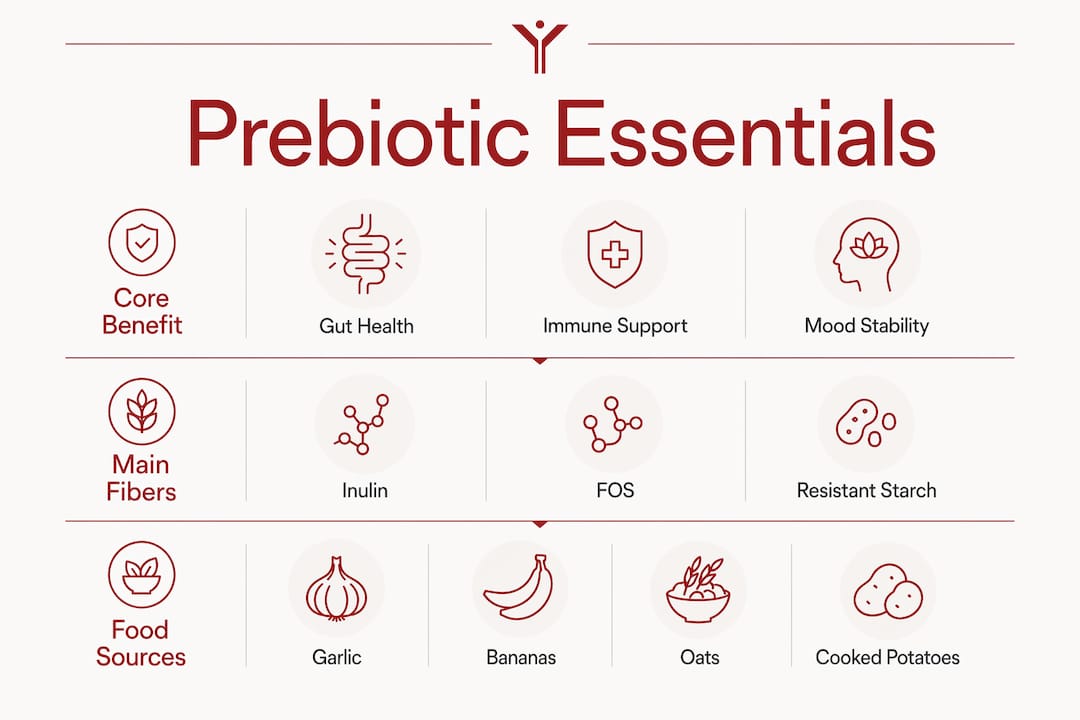
Prebiotics are a specific type of dietary fiber that the body cannot digest. Instead of being absorbed, they travel to the colon and feed the bacteria that live there. That bacterial community, called the gut microbiome, influences everything from how well your child absorbs calcium to how steady everyone’s mood feels after lunch.
The main prebiotic fibers found in family foods are inulin, fructooligosaccharides (FOS), and resistant starch. Inulin and FOS appear in garlic, onions, leeks, asparagus, and bananas. Resistant starch forms naturally in cooked-then-cooled foods like potatoes, rice, and pasta. Each type feeds different bacterial strains, which is why variety matters more than quantity.
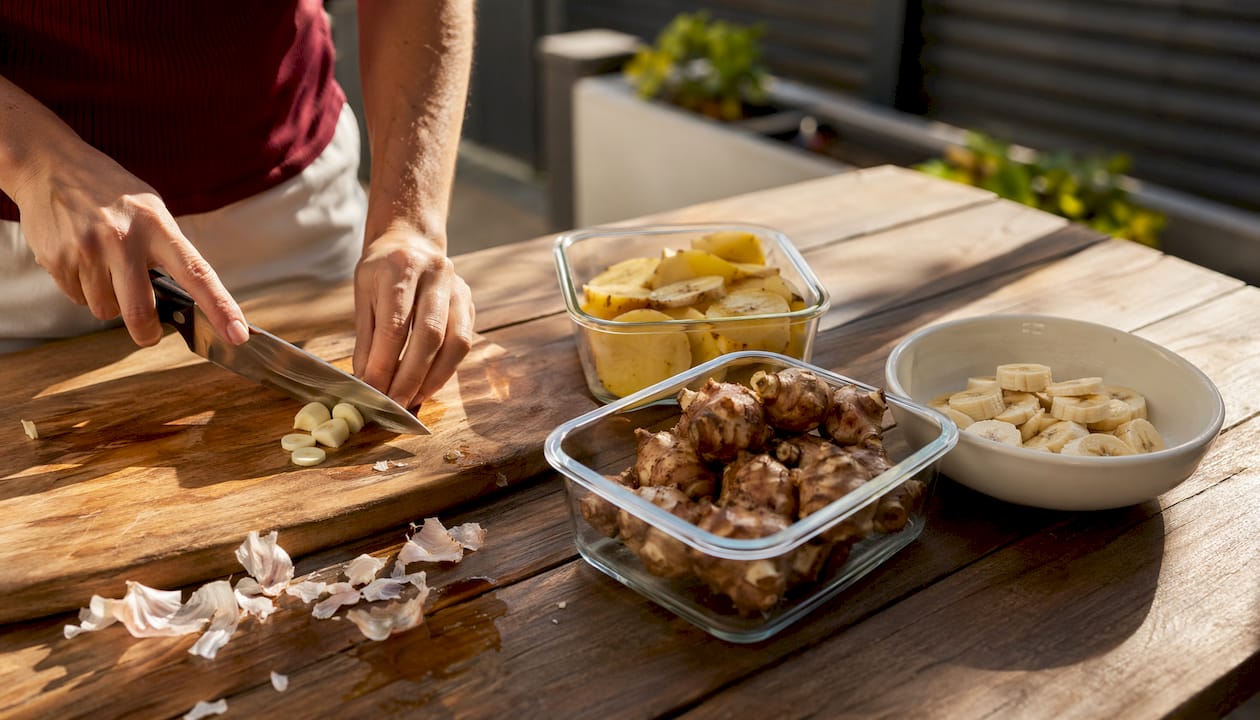
Experts recommend 2–3 daily servings of prebiotic foods and a weekly rotation of 20–30 different plant foods to build microbiome diversity. That sounds ambitious, but it adds up quickly when you count every vegetable, fruit, legume, and whole grain on the plate.
Top family-friendly prebiotic food sources
| Food | Main prebiotic fiber | Simple serving idea |
|---|---|---|
| Garlic | Inulin, FOS | Sauté as a base for soups, sauces, and stir-fries |
| Onions | Inulin, FOS | Add raw to salads or cook into every savory dish |
| Oats | Beta-glucan | Serve as overnight oats or warm porridge at breakfast |
| Bananas (slightly underripe) | Resistant starch, FOS | Slice over yogurt or blend into smoothies |
| Lentils and beans | Inulin, resistant starch | Stir into pasta sauces, soups, or grain bowls |
| Cooked-cooled potatoes | Resistant starch | Use in cold potato salad or next-day hash |
| Asparagus | Inulin | Roast as a side or chop into frittatas |
One detail worth knowing: cooking and cooling starchy foods increases their resistant starch content significantly. A bowl of cold potato salad delivers more prebiotic benefit than the same potatoes served hot. That makes leftovers a genuine asset in gut-healthy meal planning.
How do you include prebiotics across everyday family meals?
The most practical approach to adding prebiotics is to work with what your family already eats. You do not need new recipes. You need small, deliberate additions to the ones you already love.
Start with the cooking base. Garlic and onion as a flavor foundation for soups, pasta sauces, and roasted vegetables adds prebiotic fiber without changing the taste your family expects. Stir a cup of lentils into a tomato meat sauce and no one will notice the difference, but the fiber content climbs considerably. These are the “hidden in plain sight” moves that build a prebiotic-rich table without negotiation.
For breakfast, oats are the simplest entry point. A bowl of oatmeal topped with a sliced banana covers two prebiotic sources before 8 AM. For a gut-healthy breakfast that also feels like a treat, drizzle Yakonow yacon syrup over the oats. It adds natural sweetness with up to 50g of prebiotic FOS fiber per 100g, and a glycemic index of just 1.
- Build a garlic-onion base for every savory dish, from scrambled eggs to pasta sauce.
- Add lentils to sauces and soups in small amounts, starting with a quarter cup per pot.
- Serve cooked-cooled starches as planned leftovers: cold rice bowls, potato salad, pasta salads.
- Offer slightly underripe bananas as snacks instead of fully ripe ones for more resistant starch.
- Swap refined grains for oats at breakfast at least three times a week.
- Use asparagus as a regular side roasted with olive oil, which pairs well with almost any protein.
Pro Tip: Cook a double batch of rice or potatoes on Sunday, refrigerate overnight, and use the cold version in Monday’s lunch bowls. The cooling process increases resistant starch content, turning a simple leftover into a prebiotic-rich meal with no extra effort.
What are the benefits and considerations of prebiotics for family gut health?
Prebiotics improve digestion, immune function, and mood stability across all ages. They also improve the body’s absorption of calcium, iron, and magnesium, which matters especially for growing children. These benefits come from the short-chain fatty acids that gut bacteria produce when they ferment prebiotic fibers. Those acids strengthen the gut lining and reduce low-grade inflammation.
The one caution worth knowing is that too much fiber too fast causes discomfort. Gas, bloating, and abdominal cramps are common when prebiotic intake increases quickly. This is especially true for children and for adults with irritable bowel syndrome or small intestinal bacterial overgrowth.
The solution is simple: go slowly. One prebiotic food per day for the first week before gradually adding more gives the gut time to adjust. Soaking legumes before cooking also reduces the compounds that cause gas.
Signs to watch for during the transition:
- Mild bloating or gas in the first 1–2 weeks is normal and usually resolves on its own.
- Persistent cramping or diarrhea signals that the increase was too fast. Pull back and slow down.
- Children may show sensitivity earlier than adults. Start with gentler sources like oats and bananas before introducing garlic or beans.
- Spreading fiber intake across meals rather than concentrating it in one sitting reduces discomfort.
Pro Tip: If your child resists new foods, introduce prebiotic ingredients through familiar textures first. Blend white beans into a creamy pasta sauce or stir oats into pancake batter. The flavor stays familiar while the fiber quietly does its work.
How do prebiotics and probiotics work together in family meal planning?
Prebiotics feed beneficial bacteria. Probiotics are those bacteria themselves, delivered through fermented foods like yogurt, kefir, kimchi, miso, and sauerkraut. When you combine both in the same meal, the effect is called synbiotics. Synbiotics promote microbial diversity and the production of short-chain fatty acids, which strengthen the gut lining and reduce inflammation.
The pairing works best when you think of it as a two-part meal habit rather than a recipe formula. Serve a prebiotic-rich grain bowl for dinner and add a spoonful of miso to the dressing. Offer yogurt alongside a banana at breakfast. The combinations are simple and they fit naturally into meals families already enjoy.
One detail that changes everything: heat kills probiotic bacteria. Adding fermented foods during cooking destroys the live cultures that make them beneficial. Always add yogurt, kimchi, miso, or sauerkraut at the table, after the heat is off. This single habit preserves the synbiotic effect that most families miss.
Traditional meal patterns across many cultures naturally included both prebiotic fibers and fermented foods at nearly every meal. Modern families are simply returning to something that worked for generations.
| Prebiotic foods | Probiotic partners | Easy pairing idea |
|---|---|---|
| Oats | Yogurt | Overnight oats layered with plain yogurt |
| Garlic and onion base | Miso | Miso soup with a garlic-ginger broth |
| Banana | Kefir | Banana kefir smoothie |
| Lentils | Sauerkraut | Lentil bowl topped with sauerkraut at the table |
| Asparagus | Yogurt dip | Roasted asparagus with a yogurt-herb dip |
Rotating different prebiotic types and pairing them consistently with probiotic foods builds a more resilient and diverse gut microbiome over time. Variety is the mechanism, not any single superfood.
Key Takeaways
The most effective way to support family gut health is to build prebiotic and probiotic foods into everyday meals through small, consistent habits rather than dramatic dietary changes.
| Point | Details |
|---|---|
| Prebiotics feed gut bacteria | Fibers like inulin, FOS, and resistant starch nourish Bifidobacterium and Lactobacillus in the colon. |
| Cooking method matters | Cooling cooked starches like rice and potatoes increases resistant starch, a potent prebiotic. |
| Go slowly with new fiber | Introduce one prebiotic food per day for the first week to avoid bloating, especially for children. |
| Pair with probiotics at the table | Add fermented foods like yogurt or miso after cooking to preserve live cultures and maximize synbiotic benefits. |
| Variety builds resilience | Rotating 20–30 different plant foods weekly creates a more diverse and resilient gut microbiome. |
Why I stopped thinking of gut health as a separate project
The shift that changed how I cook for my family was realizing that prebiotic-rich eating is not a protocol. It is just cooking well. Garlic in the pan, beans in the pot, oats on the table on a slow Saturday morning. These are not health interventions. They are the rhythms of a kitchen that cares.
What I have noticed over time is that the families who eat well together are not following a plan. They are following a feeling. The feeling of a warm bowl passed around the table, of a sauce that took time, of a breakfast that nobody rushed. The gut health follows naturally from that kind of cooking. It always has.
The one thing I would tell any parent who wants to support their kids’ gut health through food is this: do not add prebiotics to your meals. Let them already be there. Build your pantry around garlic, onions, oats, lentils, and good fruit. Cook from that pantry. Gather around what you made. The microbiome takes care of the rest.
The art of the family table has always been about nourishment in the fullest sense. Prebiotics are just one quiet, beautiful part of that.
— Celeste
A naturally sweet prebiotic addition to your family table
Some of the best additions to a gut-friendly table are the ones that feel like a treat. Yakonow yacon syrup is hand-harvested from yacon root in Peru and bottled in an FDA-compliant facility in Texas. It carries up to 50g of prebiotic FOS fiber per 100g, a glycemic index of just 1, and zero added sugar.

Drizzle it over Saturday morning pancakes, stir it into oatmeal, or spoon it over yogurt with fresh fruit. It brings the sweetness your family loves and the prebiotic fiber that makes the moment genuinely nourishing. For families who want to keep a bottle on hand for slow mornings and easy snacks, the Yakonow single bottle is the place to start.
FAQ
What are prebiotics in simple terms?
Prebiotics are non-digestible fibers found in plant foods that feed the beneficial bacteria in your gut. They are not bacteria themselves but the food that keeps good bacteria thriving.
Which prebiotic foods are easiest for kids to eat?
Oats, bananas, and cooked-cooled potatoes are the gentlest starting points for children. They are familiar, mild in flavor, and less likely to cause digestive discomfort than stronger sources like garlic or raw onions.
Can too many prebiotics cause problems?
Yes. Introducing prebiotic fiber too quickly can cause bloating, gas, and cramping, especially in children or people with sensitive digestion. Starting with one new prebiotic food per day and increasing gradually prevents most discomfort.
What is the difference between prebiotics and probiotics?
Prebiotics are the fibers that feed gut bacteria. Probiotics are the live beneficial bacteria themselves, found in fermented foods like yogurt, kefir, and kimchi. Eating both together creates a synbiotic effect that supports a stronger, more diverse gut microbiome.
How do I add prebiotics to family meals without changing everything?
Start with the cooking base. Garlic and onion in every savory dish, oats at breakfast, and lentils stirred into sauces are the simplest moves. These additions work within meals your family already loves and require no new recipes.