

How Prebiotics Support Immune Function: A Family Guide
Prebiotics support immune function primarily by feeding beneficial gut microbes that ferment them into short-chain fatty acids (SCFAs), which then signal immune cells to stay balanced and tolerant rather than overreactive. A second, parallel pathway works faster: certain prebiotic fibers interact directly with immune receptors lining the gut wall, adjusting inflammatory signals before fermentation even completes. Together, these two routes make prebiotics one of the most studied dietary tools for immune modulation — a term immunologists prefer over “boosting” because the goal is balance, not hyperactivation.
The main actors in this process:
- SCFAs (butyrate, propionate, acetate): metabolic byproducts of microbial fermentation that regulate immune cell behavior throughout the gut and beyond
- Key microbes (Bifidobacteria, Lactobacillus): the beneficial bacteria that selectively ferment prebiotic fibers and crowd out pathogens
- Mucosal immune features (GALT, secretory IgA, regulatory T cells): the gut’s built-in immune infrastructure that prebiotics help train and maintain
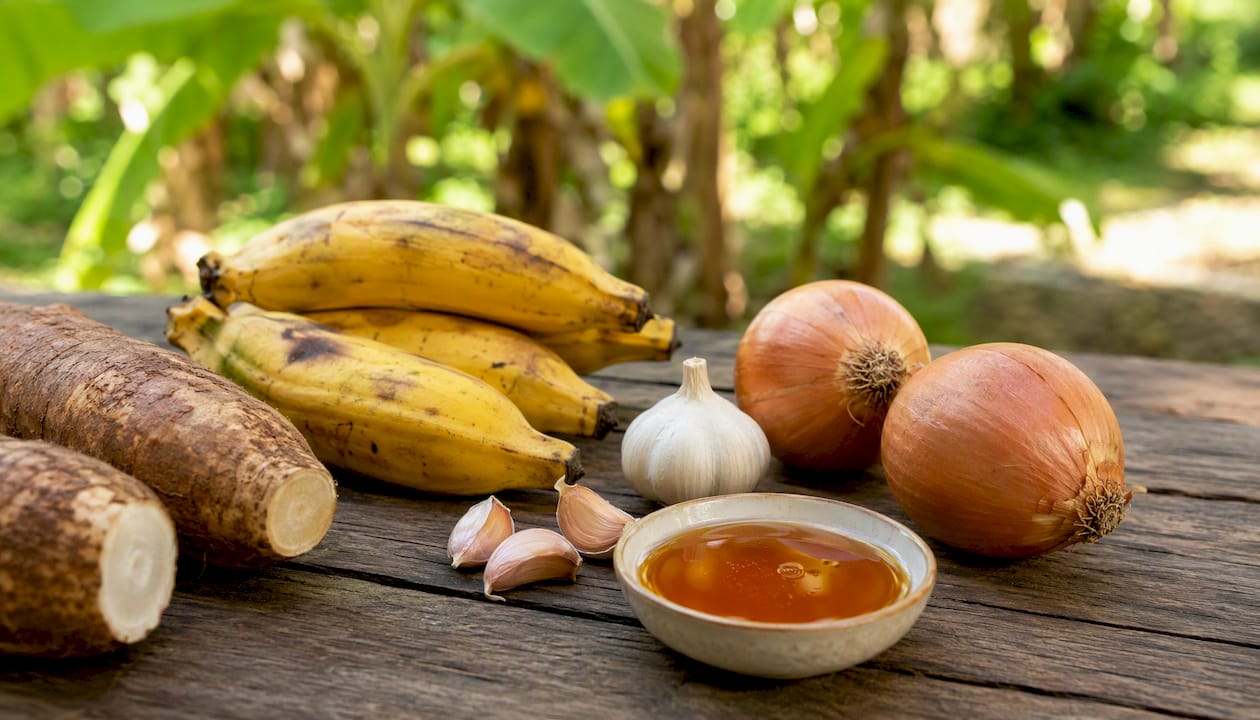
For families, the practical takeaway is simple: eating a variety of prebiotic-rich foods consistently is the most accessible way to support this system. Garlic, oats, bananas, and yacon syrup are all good starting points, and most of them fit naturally into a breakfast table without any special effort.
Key Takeaways
Prebiotics support immune function by feeding beneficial gut microbes that produce SCFAs, which regulate immune cell behavior, strengthen the intestinal barrier, and promote immune balance rather than hyperactivation.
| Point | Details |
|---|---|
| Core mechanism | Prebiotic fermentation produces SCFAs (butyrate, propionate, acetate) that signal immune cells via GPR receptors and HDAC inhibition. |
| Consistent human evidence | Across 22 RCTs, prebiotic intake reliably increases Bifidobacteria, raises fecal SCFAs, and improves intestinal barrier markers. |
| Timeline for changes | Microbial shifts appear within 2–4 weeks; immune marker and clinical changes typically require 8–12 weeks of consistent intake. |
| Safety and titration | Start with small amounts (1–2 g of fiber), increase gradually over 1–2 weeks; FODMAP-sensitive individuals and those with SIBO should proceed carefully. |
| Yakonow at the table | Yakonow yacon syrup delivers up to 50g of prebiotic FOS per 100g with a glycemic index of 1, making it a practical, family-friendly prebiotic food for daily breakfasts. |
Table of Contents
- How prebiotics support immune function at the biological level
- Which prebiotic types have been studied for immune effects?
- What do human studies actually show about prebiotics and immune health?
- How much prebiotic fiber, and how long before you notice changes?
- Side effects, safety, and when to check with a clinician
- How to add prebiotic foods to family meals, starting at breakfast
- The quiet case for small, consistent choices
- Yakonow yacon syrup at your breakfast table
- Sources
How prebiotics support immune function at the biological level
The mechanism begins with structure. Prebiotic fibers like inulin, fructooligosaccharides (FOS), galactooligosaccharides (GOS), and human milk oligosaccharides (HMOs) share one defining trait: human digestive enzymes cannot break them down. They arrive in the colon intact, where specific microbial species — primarily Bifidobacteria and Lactobacillus — ferment them selectively. That selectivity matters because it shifts the microbial balance toward species associated with immune tolerance, while making the environment less hospitable for opportunistic pathogens.
The fermentation process produces SCFAs, and butyrate is the one that gets the most attention. It serves as the primary energy source for colonocytes (the cells lining the colon), which helps maintain tight junction proteins that keep the intestinal barrier sealed. A leaky barrier allows bacterial fragments to cross into circulation and trigger systemic inflammation; butyrate helps prevent that. Propionate and acetate travel further, reaching the liver and peripheral tissues, where they continue signaling immune cells.
SCFA signaling: GPR receptors and HDAC inhibition
The cellular mechanics involve two main routes. First, SCFAs bind to G-protein-coupled receptors, particularly GPR41, GPR43, and GPR109A, on immune cells and epithelial cells. This binding modulates cytokine production, generally pushing the balance toward anti-inflammatory signals like IL-10 and away from pro-inflammatory ones like IL-6 and TNF-α. Second, butyrate inhibits histone deacetylase (HDAC) enzymes, which changes gene expression in immune cells and is one of the primary mechanisms by which SCFAs regulate both innate and adaptive immunity — including the induction of regulatory T cells (Tregs) that prevent immune overreaction.
One detail worth knowing: gut tissue SCFA concentrations are typically an order of magnitude lower than luminal contents, yet immune cells respond to these tissue-level cues. The Annual Reviews analysis of microbial metabolites and gut immunology explains how this tissue gradient is biologically meaningful — the immune system is exquisitely sensitive to small metabolite shifts at the mucosal surface.
Direct mucosal effects that don’t require fermentation
Some prebiotic oligosaccharides also act directly on intestinal epithelial cells, independent of microbial fermentation. Experimental kinome analysis has shown that certain non-digestible oligosaccharides can reduce MAPK and NF-κB activation in epithelial cells, dampening inflammatory signaling without any change to the microbiota. This direct pathway helps explain why immune effects sometimes appear quickly, before significant microbial shifts have occurred.
At the gut-associated lymphoid tissue (GALT), prebiotics also support secretory IgA (sIgA) production. sIgA is the antibody class that coats the mucosal surface and neutralizes pathogens before they can penetrate the epithelium. SCFAs, particularly acetate and butyrate, promote B-cell differentiation toward IgA-secreting plasma cells, creating a feedback loop that strengthens mucosal defense over time.
- Butyrate: seals tight junctions, fuels colonocytes, induces Tregs via HDAC inhibition
- Propionate: travels to liver and peripheral tissues, modulates dendritic cell function
- Acetate: supports B-cell differentiation toward IgA production, signals via GPR43
- sIgA: coats the mucosal surface, neutralizes pathogens at the first line of defense
- Tregs: prevent immune overreaction, maintain tolerance to commensal bacteria
Pro Tip: Vary your prebiotic fiber sources rather than relying on a single food. Different fiber types (short-chain FOS vs. longer-chain inulin) ferment at different rates and in different colon regions, activating multiple SCFA pathways. A breakfast that combines oats, banana, and a drizzle of yacon syrup covers more ground than any single source alone.
Which prebiotic types have been studied for immune effects?
Prebiotic chain length and molecular structure change fermentation patterns and immune outcomes in meaningful ways. Longer-chain inulin ferments more slowly and reaches further into the colon, while short-chain FOS is fermented rapidly in the proximal colon. That difference affects which microbial species are favored and which SCFA profile results. The Frontiers in Nutrition review on prebiotic structure and function makes clear that treating all prebiotics as interchangeable misses important distinctions.
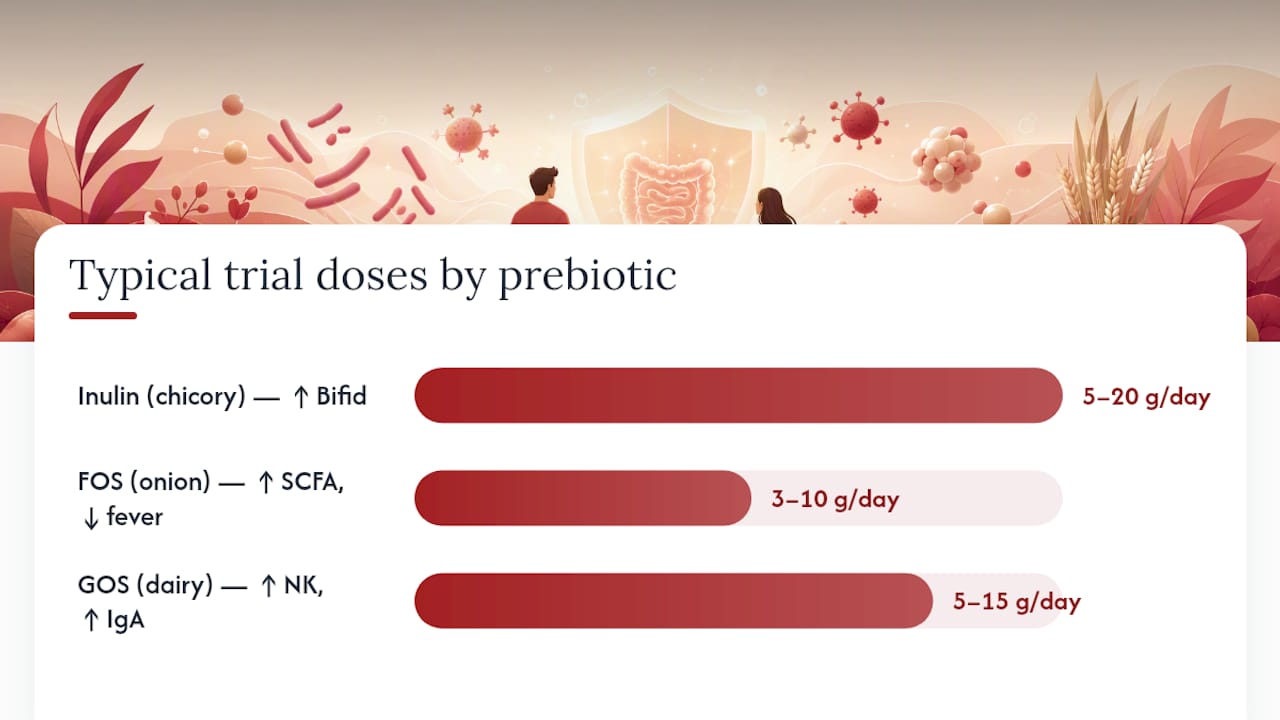
The table below maps the major prebiotic classes to their common food sources, typical doses used in human trials, and the immune-related outcomes most consistently reported.
| Prebiotic type | Common food sources | Typical trial dose | Reported immune outcomes |
|---|---|---|---|
| Inulin / inulin-type fructans (ITF) | Chicory root, Jerusalem artichoke, agave, yacon | 5–20 g/day | Increased Bifidobacteria, improved barrier markers, modest IgA increases |
| Fructooligosaccharides (FOS) | Onions, garlic, bananas, yacon syrup | 3–10 g/day | Bifidogenic effect, increased fecal SCFAs, reduced febrile episodes in some pediatric trials |
| Galactooligosaccharides (GOS) | Dairy-derived / industrially produced | 5–15 g/day | Increased NK cell activity in elderly adults, increased IgA in infants, mixed vaccine-response data |
| Human milk oligosaccharides (HMOs) / 2’-FL | Human breast milk; some infant formulas | Varies by formula | Reduced infection incidence in infants, sIgA support, microbiota maturation |
| Beta-glucans | Oats, barley, mushrooms | 3–6 g/day | Macrophage and NK cell activation, reduced upper respiratory infection duration in some trials |
Inter-individual variability is real across all of these. Baseline microbiota composition, age, antibiotic history, and diet all influence how strongly any individual responds to a given prebiotic type or dose. A dose that produces robust bifidogenic effects in one person may produce minimal change in another.
Yacon root is a particularly concentrated source of FOS, with up to 50g of prebiotic FOS fiber per 100g of yacon syrup. That makes it one of the higher-density prebiotic sweeteners available as a food, and a practical option for families who want to add prebiotic fiber at the breakfast table without a supplement.
What do human studies actually show about prebiotics and immune health?
The honest summary: the evidence is promising in specific areas and genuinely mixed in others. A narrative review synthesizing 22 randomized controlled trials found that prebiotic supplementation consistently increases beneficial bacteria and SCFA production and is associated with stronger intestinal barrier function and modulated immune responses, while noting considerable heterogeneity in dose and individual response. That consistency on the microbiota and barrier side is well-established. The immune-marker and clinical outcomes are where the picture gets more nuanced.
Where the evidence is consistent:
- Bifidogenic effect: nearly all well-designed trials show increased Bifidobacteria abundance
- Increased fecal SCFAs, particularly butyrate, with inulin-type fibers and FOS
- Improved intestinal barrier markers (reduced permeability indicators in several trials)
- Increased mucosal sIgA in infants and some adult populations
Where the evidence is mixed:
- Vaccine antibody responses: some trials show enhanced responses, others show no effect
- Systemic inflammatory markers (CRP, systemic cytokines): inconsistent across studies
- Clinical infection endpoints in adults: effect sizes vary and some trials show no significant difference
Study callouts worth knowing:
A systematic review of non-digestible carbohydrates found that GOS and FOS can increase IgA and reduce infection symptoms or incidence in infants and adults, while effects on vaccine responses and systemic inflammation remain inconsistent. Separately, select prebiotic mixtures have been associated with reduced respiratory infection incidence or antibiotic use in children in some trials, though effect sizes and consistency vary across studies.
The reasons for heterogeneity are worth understanding rather than dismissing. Prebiotic subtype matters enormously — GOS and inulin-type fructans produce different outcomes even at similar doses. Trial duration, baseline microbiota composition, age group, and whether the population was healthy or immunocompromised all shape results. Most trials are also relatively short (4–12 weeks), which may not capture the full trajectory of immune adaptation.
The evidence-quality note that matters most: most positive clinical findings come from specific populations (infants, elderly adults, people with compromised barriers) rather than healthy adults in general. Healthy adults with a diverse diet may see smaller measurable changes, even if the underlying mechanisms are active.
How much prebiotic fiber, and how long before you notice changes?
Human trials typically use doses in the range of 3–20 g/day depending on the prebiotic type, with most immune-focused studies landing between 5–10 g/day. Microbial shifts, including increased Bifidobacteria and elevated fecal SCFAs, tend to appear within 2–4 weeks of consistent intake. Immune marker changes, such as increased sIgA or altered cytokine profiles, generally require 8–12 weeks or longer in most trials. Clinical endpoints like reduced infection incidence take the longest to detect and require the largest study populations to show statistical significance.
For families introducing prebiotic foods rather than supplements, the timeline is gentler and the doses are naturally lower. That’s fine. The goal is consistency over time, not a large single dose.
Practical steps for introducing prebiotic foods into family meals:
- Start with one prebiotic food per meal, not several at once. Oatmeal with a small drizzle of yacon syrup is a good first step.
- Keep the initial serving small (1–2 g of prebiotic fiber) for the first week, especially for children or anyone with a sensitive gut.
- Increase gradually over 1–2 weeks, adding a second prebiotic source (sliced banana, a small serving of garlic in dinner) once the first is well tolerated.
- Aim for variety across the week rather than the same source daily. Different fibers reach different parts of the colon and feed different microbial species.
- Expect the first 2–4 weeks to feel unremarkable. Microbial shifts are happening, but they’re not visible. Stay consistent.
What to watch for:
- Mild bloating or gas in the first 1–2 weeks is common and usually resolves as the microbiota adapts
- If GI symptoms persist beyond two weeks, reduce the dose and increase more slowly
- Changes in stool consistency (firmer, more regular) are often the first noticeable sign that the microbiota is shifting
For a daily prebiotic routine that fits a family schedule, the key is attaching prebiotic foods to existing meals rather than adding new habits from scratch.
Side effects, safety, and when to check with a clinician
Most people tolerate prebiotic foods well, especially at the doses naturally present in whole foods. The side effects that do occur are almost always GI and temporary.
- Bloating and gas: the most common effects, caused by rapid fermentation in the proximal colon; typically peaks in the first 1–2 weeks and diminishes as the microbiota adapts
- Transient loose stools or cramping: more likely with high doses introduced quickly; titrating up slowly reduces this significantly
- Mitigation: start low, increase gradually, vary fiber sources, and stay hydrated
Two groups warrant extra attention. People who follow a low-FODMAP diet for irritable bowel syndrome (IBS) may find that FOS and inulin worsen symptoms, since these fibers are fermentable carbohydrates that the FODMAP framework restricts. Introducing them slowly and in small amounts is advisable, ideally with guidance from a registered dietitian. People with small intestinal bacterial overgrowth (SIBO) may also react poorly to fermentable fibers, since the issue in SIBO is bacteria fermenting in the wrong location. For both groups, a food-first approach with careful titration is more appropriate than jumping to high-dose supplements.
Prebiotic foods have minimal interactions with medications. People managing immunocompromising conditions, inflammatory bowel disease, or complex GI disorders should check with their clinician before significantly increasing prebiotic intake, not because the risk is high but because their baseline situation warrants personalized guidance.
For most healthy families, the reassurance is simple: whole-food prebiotic sources like oats, garlic, bananas, and yacon syrup are gentle on the gut and well-suited to daily use. When in doubt, start with food, go slowly, and consult a clinician if anything feels off.
How to add prebiotic foods to family meals, starting at breakfast
The breakfast table is genuinely one of the easiest places to build consistent prebiotic intake, because several naturally prebiotic-rich foods already belong there. The goal isn’t a dramatic dietary overhaul; it’s a few small, repeatable swaps that make the morning table both warmer and more nourishing.
High-prebiotic foods and simple family-friendly ways to serve them:
- Oats: a bowl of oatmeal topped with sliced banana and a drizzle of yacon syrup covers three prebiotic sources in one dish
- Bananas (slightly underripe): higher in resistant starch when not fully ripe; slice onto yogurt or cereal
- Garlic and onions: roast whole garlic cloves and spread on toast; sauté onions into eggs or a frittata
- Leeks: gentle in flavor, easy to add to scrambled eggs or a weekend quiche
- Chicory root: available as a coffee substitute or as an ingredient in some granolas and baked goods
- Yacon syrup: drizzle over pancakes, waffles, or fresh fruit; stir into oatmeal or plain yogurt as a naturally sweet, low-glycemic alternative to honey or maple syrup
Pantry swaps that build prebiotic fiber without changing the meal:
Swap maple syrup or honey for Yakonow yacon syrup on pancakes and waffles. The flavor is gently sweet with a mild molasses note, and the prebiotic FOS content makes it a more purposeful choice than a conventional sweetener. Use rolled oats instead of instant oats (more intact fiber structure). Keep a bunch of slightly underripe bananas on the counter for quick additions to any breakfast bowl.
For families building a longer-term gut-healthy pantry, the principle is simple: stock a few prebiotic staples that rotate naturally through the week’s meals rather than requiring special preparation.
A note on Yakonow yacon syrup: Hand-harvested from yacon root in Peru and bottled in an FDA-compliant facility in Texas, Yakonow is a single-ingredient syrup with a glycemic index of just 1 and up to 50g of prebiotic FOS fiber per 100g. It contains no added sugar, no colorants, and no artificial sweeteners. The squeezable bottle format makes it practical for family breakfasts, and the naturally sweet flavor works well anywhere you’d reach for maple syrup or honey. For readers who want to understand how to read prebiotic claims on food labels, the prebiotic ingredient label reading guide for families is a useful next step.
The quiet case for small, consistent choices
There’s a version of this conversation that turns into a supplement protocol, a tracking spreadsheet, and a lot of anxiety about whether you’re doing it right. That version misses the point.
What the science actually shows is that the gut immune system responds to consistency, not intensity. Repeated, low-level exposure to prebiotic fibers trains mucosal immunity the way a good morning routine trains a child: gently, over time, without drama. The Tregs that prevent overreaction, the sIgA that coats the mucosal surface, the tight junctions that keep the barrier sealed — all of these are maintained by the ordinary, daily act of eating a varied, fiber-rich diet. Not by a single heroic intervention.
What strikes me about this research is how well it maps onto the way families already eat when they’re eating well. A breakfast with oats, fruit, and something naturally sweet. A dinner with garlic and onions cooked into something warm. These aren’t clinical interventions. They’re just good food, shared at a table, eaten slowly enough to enjoy. The immune benefit is almost incidental to the pleasure of the meal.
The gathering is the point. The nourishment follows.
Yakonow yacon syrup at your breakfast table
A slow Sunday morning, pancakes on the griddle, the kids still in pajamas. That’s the moment Yakonow was made for.

Yakonow yacon syrup is a single-ingredient sweetener, hand-harvested from yacon root in Peru and bottled in Texas, with up to 50g of prebiotic FOS fiber per 100g and a glycemic index of just 1. No added sugar, no artificial anything. It drizzles beautifully over pancakes and waffles, stirs into oatmeal, and pairs with fresh fruit in a way that makes the breakfast table feel considered without any extra effort.
The single 6oz squeezable bottle is a good starting point for families trying it for the first time. For households that make it a weekly staple, the pack of 2 keeps the pantry stocked through busy mornings without running out. And for the family that treats it as a true pantry essential, the pack of 4 is the one that never leaves the shelf empty.
Try it stirred into warm oatmeal with a sliced banana this week. One small swap, one better morning.
Sources
The sources below cover the mechanisms, human trial evidence, and clinical context discussed throughout this article. Each is linked directly to the original publication.
- Regulation of short-chain fatty acids in the immune system - PMC
- Microbial Metabolites and Gut Immunology | Annual Reviews
- Impact of prebiotics on immune response: from the bench to the clinic
- Effects of non-digestible carbohydrates and prebiotics on immune markers and infection risk - CentAUR
- Impact of prebiotics on immune response: from the bench to the clinic
This article is general information, not a substitute for advice from a qualified doctor. Consult a qualified healthcare professional about your own circumstances before acting on anything here.