

FDA Compliant Labeling: What It Means for Your Food
FDA compliant labeling is defined as a product’s label meeting all factual and format requirements set by the FDA under Title 21 CFR Part 101, so consumers receive truthful, standardized information at every purchase. For food and dietary products sold in the US, this means six mandatory elements must appear on every package: a statement of identity, net quantity of contents, an ingredient list, allergen disclosures under FALCPA, a Nutrition Facts panel, and the name and contact information of the manufacturer, packer, or distributor. The Food, Drug, and Cosmetic Act (FD&C Act), the Nutrition Labeling and Education Act (NLEA), and the Fair Packaging and Labeling Act (FPLA) together form the legal backbone of these rules. Understanding what FDA compliant labeling means is not just a legal obligation. It is the quiet detail that tells your customers they can trust what they are putting on the family table.
What FDA labeling requirements must food and dietary product labels meet?
FDA-compliant food labels must include six core mandatory elements under 21 CFR Part 101. Each element serves a specific purpose, and missing even one can trigger enforcement action.
The six required elements are:
- Statement of identity. The product name must appear on the principal display panel. It tells the shopper exactly what the product is, with no ambiguity.
- Net quantity of contents. The label must state how much product is inside, expressed in both metric and US customary units for most packaged foods.
- Ingredient list. Ingredients must appear in descending order by weight. The heaviest ingredient comes first. This single rule makes it easy for shoppers to see what dominates the product.
- Major food allergen disclosure. Under FALCPA, nine major allergens must be clearly declared: milk, eggs, fish, shellfish, tree nuts, peanuts, wheat, soybeans, and sesame. Allergen errors are among the highest-risk labeling failures a food business can make.
- Nutrition Facts panel. Most packaged foods require a standardized Nutrition Facts panel. Small businesses with annual sales below a defined threshold may qualify for an exemption, but the criteria are specific and must be verified against current FDA guidance.
- Manufacturer, packer, or distributor information. A name and a US address must appear on the label. This allows regulators and consumers to trace a product back to its source.
Labeling also covers more than the physical panel. Any written, printed, or graphic material that accompanies the product, including brochures tucked into a shipment or text printed on a shipping carton, falls under the FDA’s definition of labeling. That scope matters for small business owners who may not realize their packing slips or inserts carry regulatory weight.
Pro Tip: Review your ingredient list every time a supplier changes a formula or a raw material source. A single substitution can alter allergen status and require an immediate label update.

How does the FDA define labeling, and what materials are included?
The FDA’s definition of labeling extends well beyond the sticker on a bottle. Under FD&C Act Section 201(m), labeling includes all written, printed, or graphic materials that accompany a product. That includes promotional brochures, point-of-sale displays, and in many interpretations, product-specific web pages.
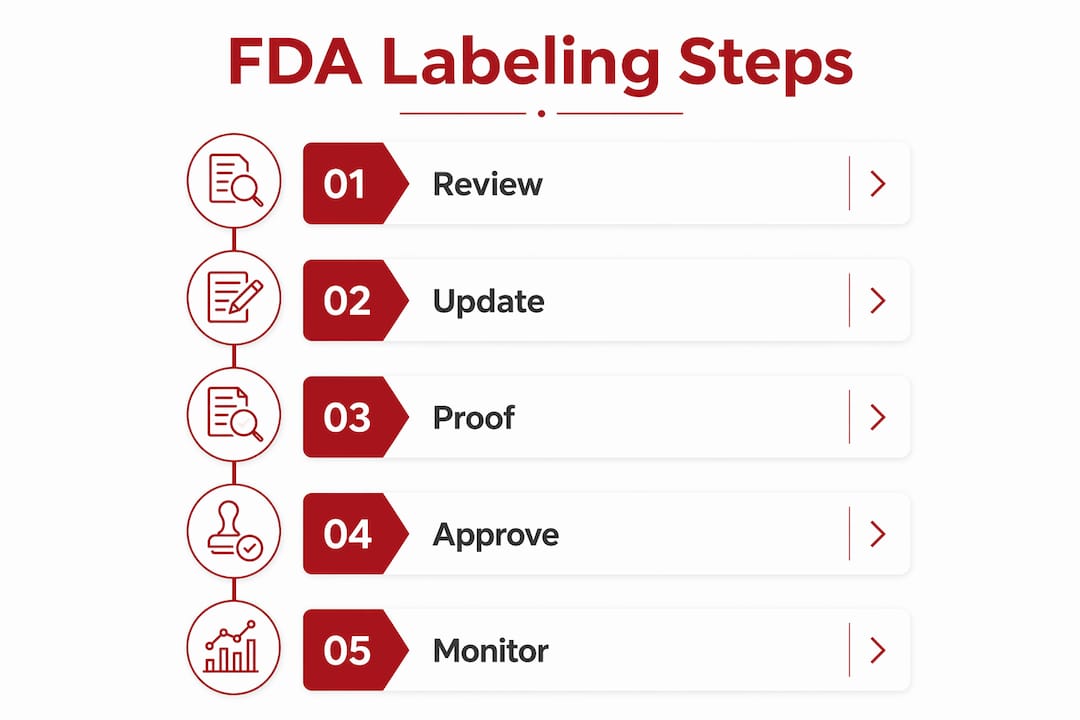
For small business owners, this has real consequences. A claim made on your website about a food product can be treated as labeling. If that claim is not supported by the product’s actual composition or is inconsistent with the physical label, it creates a compliance gap. The FDA focuses on factual content accuracy. The FTC separately regulates marketing claims, requiring manufacturers to substantiate statements like “All-Natural” or “Low-Glycemic” to avoid deceptive advertising. Both agencies can act independently.
Materials that fall under FDA labeling include:
- Physical labels on all panels of the package
- Package inserts and instruction sheets shipped with the product
- Point-of-sale displays and shelf talkers that reference product composition
- Digital content directly associated with a specific product, such as a product detail page
The practical takeaway is that compliance in labeling is not a one-time task completed at the printer. Every touchpoint where your product is described carries regulatory responsibility. A business that keeps its physical label current but lets its website copy drift out of alignment is still exposed.
Pro Tip: Audit your product web pages alongside your physical labels at every label revision. Treat them as one document, not two separate tasks.
What are common challenges and pitfalls in FDA labeling compliance?
Labeling errors are more common and more costly than most small business owners expect. Labeling mistakes account for 20% of recent product recalls, with missing allergen declarations as a leading cause. A recall does not just cost money. It damages the trust you have built with every customer who has ever put your product on their table.
The most frequent pitfalls follow a predictable pattern:
- Missing or incorrect allergen declarations. FALCPA requires specific language. “Contains wheat” must appear clearly. Vague phrasing or placement in a hard-to-read location is not sufficient.
- Typography that fails FDA standards. FDA typographic requirements specify typeface, minimum point sizes, border thickness, and spacing, all measured at final printed size. A label that looks correct on screen can fail when printed at actual dimensions.
- Informal approval workflows. Email threads and verbal sign-offs do not constitute a compliant review process. At an FDA audit, informal approvals are insufficient. Documented, timestamped version control is the standard.
- Outdated Nutrition Facts panels. Formula changes, serving size adjustments, or regulatory updates can make a previously compliant panel non-compliant. Labels must be reviewed whenever any of these factors change.
- Claims that outpace the label. A health or nutrient content claim on the front panel must be supported by the Nutrition Facts data on the back. Inconsistency between the two panels is a common trigger for warning letters.
The FDA issues warning letters with a 15-day response window for labeling violations. Missing that window escalates the matter and can lead to product seizure or injunction.
Most costly errors arise late in the process. Catching a mistake after printing 10,000 labels is expensive. Catching it at the specification stage costs almost nothing. Building a review step before artwork is finalized is the single most cost-effective habit a small food business can develop.
Pro Tip: Print a physical proof of every label at its actual size before approving the final print run. Check font size, contrast, and panel dimensions against FDA requirements on the printed piece, not the digital file.
How to implement and verify FDA compliant labeling in your small business
The FDA does not pre-approve food labels before they go to market. Your business carries full legal responsibility for label accuracy from the moment a product enters commerce. That responsibility requires a process, not just good intentions.
A practical implementation framework for small business owners includes:
- Build a controlled document system. Every label version should have a unique identifier, a date, and a record of who approved it. A simple shared folder with naming conventions works for very small operations. The goal is an audit trail that shows what was on the label, when it changed, and who signed off.
- Create a mandatory review checklist. Before any label goes to print, verify all six mandatory elements against current FDA and FALCPA standards. Check the ingredient declaration accuracy and confirm the allergen statement matches the actual formula.
- Verify the Nutrition Facts panel independently. Do not rely solely on the panel from a previous version. If the formula has changed at all, recalculate. Use an accredited laboratory or a validated nutrition analysis software tool.
- Coordinate with co-packers and suppliers in writing. If another facility produces or packages your product, get written confirmation of their labeling responsibilities. Verbal agreements do not hold at an audit.
- Understand your exemption status. Small businesses may qualify for Nutrition Facts exemptions, but the criteria are specific. Verify your eligibility annually, because sales volume changes can affect your status.
- Schedule a label review calendar. Set a fixed date each year to review all active labels against the current version of 21 CFR Part 101. Regulations update. Your labels need to keep pace.
The table below summarizes the core tasks and their purpose in a small business label compliance workflow.
| Task | Purpose |
|---|---|
| Assign a unique version ID to each label | Creates an audit trail and prevents use of outdated artwork |
| Verify all six mandatory elements before print | Confirms legal compliance before costs are committed |
| Conduct physical print proof review | Catches typography and dimension errors missed in digital review |
| Obtain written co-packer labeling agreements | Clarifies responsibility and protects your business in audits |
| Schedule annual label compliance review | Keeps labels current with regulatory updates |
Accurate label compliance requires reviewing formulas, allergen lists, Nutrition Facts panels, claims, artwork proofs, and final packaging specs together, not in isolation. When these elements are reviewed as a system, errors surface before they become recalls. Reading a prebiotic ingredient label carefully is a skill worth building, whether you are a producer or a parent.
Key Takeaways
FDA compliant labeling requires six mandatory elements, a documented approval process, and consistent review of all product-related materials, including digital content, before any product reaches consumers.
| Point | Details |
|---|---|
| Six mandatory elements | Every food label must include identity, quantity, ingredients, allergens, Nutrition Facts, and manufacturer info. |
| FDA’s broad labeling definition | Websites, inserts, and displays count as labeling and must align with the physical label. |
| Allergen errors drive recalls | Missing allergen declarations are a leading cause of food product recalls and FDA enforcement. |
| No FDA pre-approval | Businesses bear full legal responsibility for label accuracy before products enter commerce. |
| Systems prevent costly mistakes | Version control, physical print proofs, and annual reviews catch errors before they become recalls. |
Why labeling is an act of care, not just compliance
I have spent time thinking about what it means to put something on a family table. Not just the food itself, but the label on the bottle, the words on the jar, the small print that a mother reads in a grocery aisle while her kids wait. That moment is not bureaucratic. It is deeply personal.
When a label is accurate, complete, and honest, it is a quiet promise. It says: we made this carefully, and we want you to know exactly what it is. That is not a regulatory checkbox. That is the foundation of trust between a maker and the families who choose their product.
I have seen small food businesses treat labeling as the last step, the thing you do after the real work is finished. That framing gets it exactly backwards. The label is where your values become visible. A clean ingredient list, a clear allergen statement, an honest Nutrition Facts panel: these are not obstacles. They are the story you tell about how much you care.
Compliance in labeling is also, practically speaking, what allows the good moments to happen without worry. When you know your label is right, you can focus on the pancakes, the slow Sunday morning, the people gathered around the table. The paperwork fades. The moment stays.
— Celeste
Yakonow: a label you can read and trust
When you reach for a bottle at breakfast, the label should answer every question before you even think to ask one. Yakonow yacon syrup is bottled in an FDA-compliant facility in Texas, with a single-ingredient declaration and a Nutrition Facts panel that reflects exactly what is inside: pure yacon syrup, nothing added.
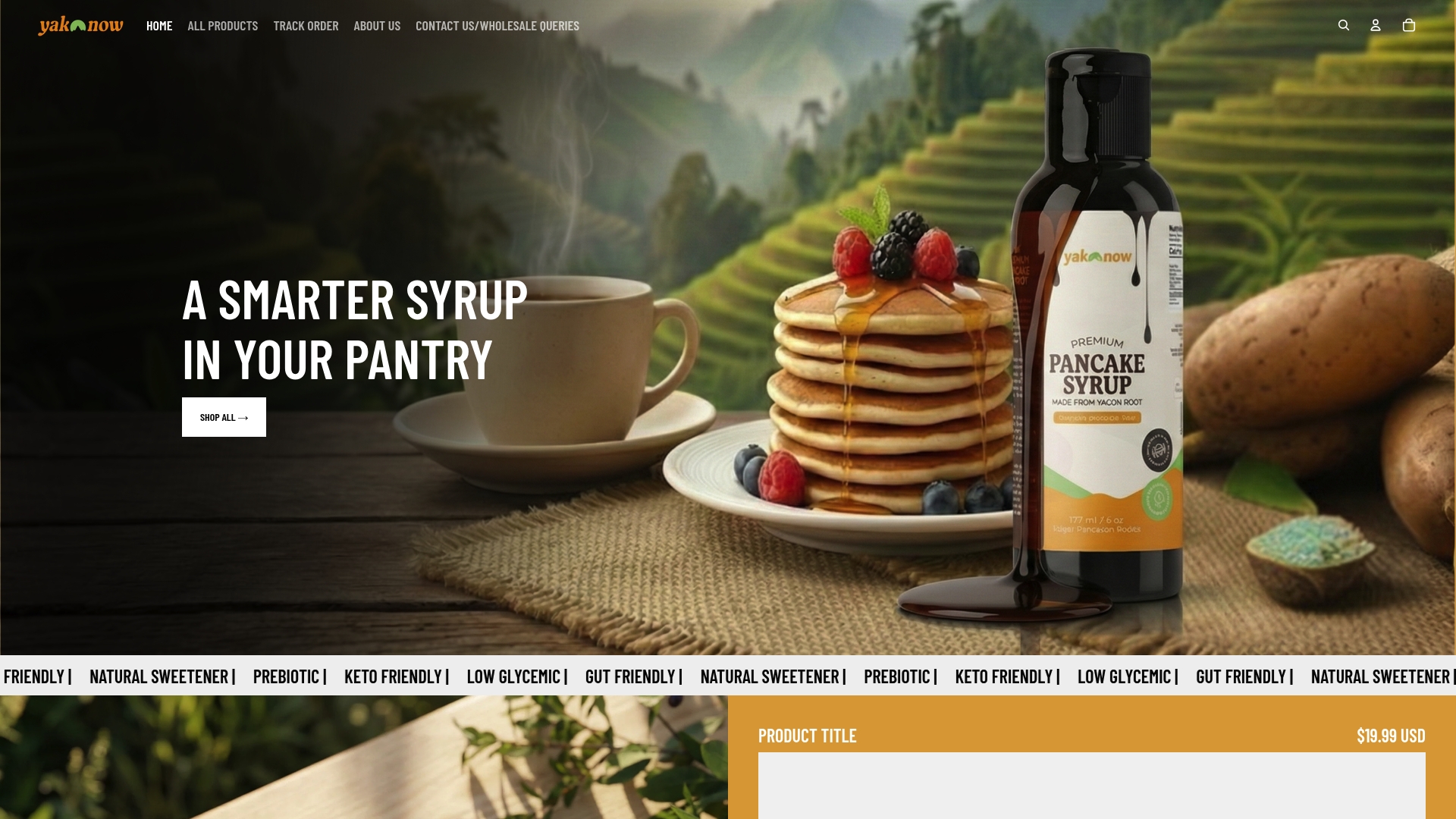
That kind of transparency is not incidental. It is the point. Yakonow carries a glycemic index of just 1 and up to 50g of prebiotic FOS fiber per 100g, and every claim on the label is backed by what is actually in the bottle. For families who want a trusted breakfast syrup without the guesswork of reading a complicated ingredient list, Yakonow is the answer. Slow mornings deserve a table you can trust completely.
FAQ
What does FDA compliant labeling mean for food products?
FDA compliant labeling means a food product’s label meets all requirements under 21 CFR Part 101, including six mandatory elements: statement of identity, net quantity, ingredient list, allergen disclosure, Nutrition Facts panel, and manufacturer information.
Does the FDA approve food labels before they go to market?
The FDA does not generally pre-approve food labels. Businesses bear full legal responsibility for label accuracy before their products enter commerce.
What counts as labeling under FDA rules?
FDA labeling includes all written, printed, or graphic materials that accompany a product, covering physical labels, package inserts, point-of-sale displays, and product-specific web pages.
What allergens must appear on a food label?
Under FALCPA, nine major allergens must be declared: milk, eggs, fish, shellfish, tree nuts, peanuts, wheat, soybeans, and sesame. Clear, specific language is required, not general warnings.
What happens if a food label violates FDA requirements?
The FDA issues warning letters with a 15-day response window for labeling violations. Failure to respond can escalate to product seizure, injunction, or a mandatory recall.