

How FOS Fiber Supports Digestion: A Family Guide
FOS fiber, the common name for fructooligosaccharides, is defined as a prebiotic dietary fiber that feeds beneficial gut bacteria and supports digestion by producing short-chain fatty acids in the colon. It resists breakdown in the stomach and small intestine, arriving intact where it matters most. Clinical guidelines recommend 3–10 g/day to improve stool consistency and increase Bifidobacterium populations. Understanding how FOS fiber supports digestion helps you make quiet, confident choices at the breakfast table, the kind that nourish your family without turning every meal into a nutrition lecture.
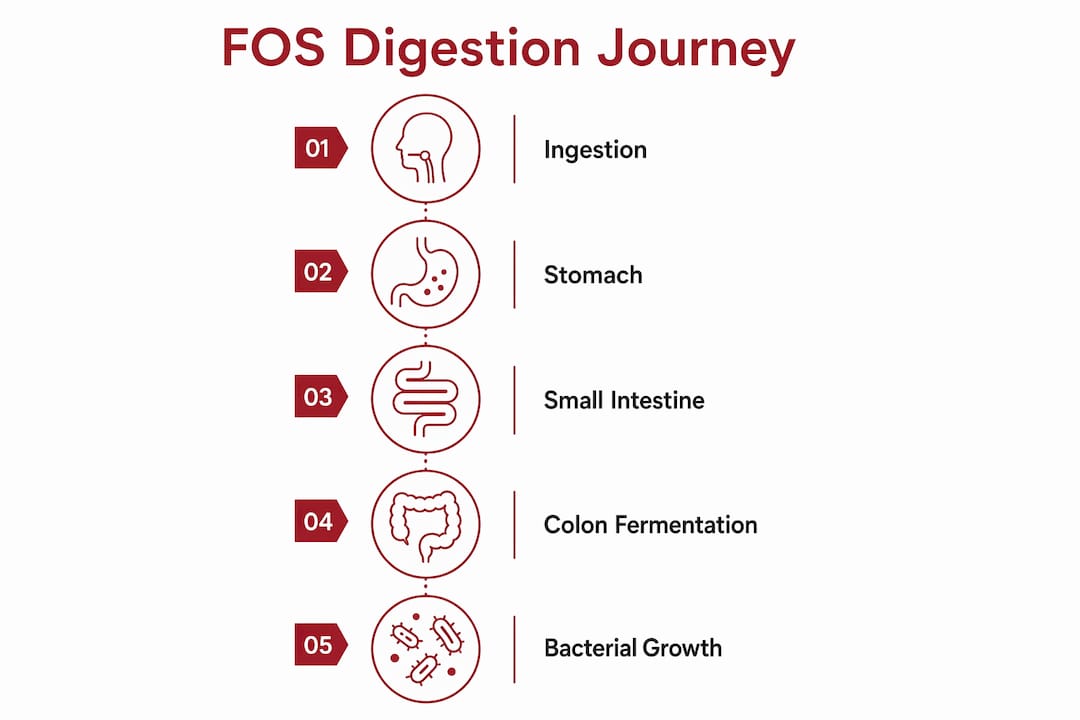
How FOS fiber moves through your digestive system
FOS is digestion-resistant by design. It passes through the mouth, stomach, and small intestine without being broken down by digestive enzymes. Less than 5% is absorbed in the small intestine, which means nearly all of it reaches the colon intact. That is the whole point.
Once FOS arrives in the colon, anaerobic bacteria go to work. They produce β-fructofuranosidases, the specific enzymes that break FOS chains apart and begin fermentation. This process is slow and steady, not a sudden sugar spike. The result is a controlled release of energy for your gut microbes, not for your bloodstream.

| Stage | Location | What happens |
|---|---|---|
| Ingestion | Mouth | No enzymatic breakdown begins |
| Gastric transit | Stomach | Acid environment; FOS remains intact |
| Small intestine | Small intestine | Minimal absorption (<5%); passes through |
| Fermentation | Colon | Bacteria ferment FOS via β-fructofuranosidases |
| SCFA production | Colon | Acetate, propionate, and butyrate released |
That table tells a simple story. FOS travels the full length of your digestive tract before it does anything meaningful. That journey is exactly what makes it valuable.
What gut bacteria do with FOS
FOS acts as a metabolic fuel for beneficial microbes, specifically Bifidobacterium and Lactobacillus species. These bacteria thrive on FOS while many harmful bacteria cannot use it efficiently. The result is a natural shift in your gut’s microbial balance toward the strains that support health.
Fermentation produces three key short-chain fatty acids: acetate, propionate, and butyrate. Each one plays a distinct role in keeping your gut healthy.
- Butyrate is the primary fuel for colonocytes, the cells lining your colon wall. It supports the gut barrier and reduces inflammation at the cellular level.
- Propionate travels to the liver, where it helps regulate glucose metabolism and signals satiety.
- Acetate enters the bloodstream and supports immune function and energy balance throughout the body.
FOS fermentation also lowers colonic pH, creating an acidic environment that limits the growth of harmful bacteria. Pathogens like Clostridium species struggle to survive in a low-pH colon. This natural defense mechanism works quietly, without any intervention on your part.
The degree of polymerization (DP) of FOS chains affects how quickly fermentation happens. Shorter chains ferment faster, producing more gas in a shorter window. Longer chains, which resemble inulin, ferment gradually and tend to be gentler on the gut. Natural FOS sources often contain a broader range of chain lengths, which spreads fermentation across a longer stretch of the colon.
Pro Tip: If you notice bloating after adding a new fiber source, the chain length profile of that product may be the reason. Natural food sources with mixed polymerization profiles tend to ferment more gently than isolated short-chain FOS supplements.
What are the practical digestive benefits of FOS?
The most direct benefit of FOS for digestion is improved bowel regularity. FOS increases stool bulk by drawing water into the colon and feeding the bacteria that produce fermentation byproducts. The result is softer, more consistent stools and a reduced risk of constipation. This is not a dramatic effect. It is the quiet, reliable kind that you notice over days, not hours.
Beyond regularity, FOS supports mineral absorption in a way that surprises most people. Fermentation-induced acidification of the colon increases the solubility of calcium and other minerals, making them easier for the body to absorb passively. Bone health and gut health turn out to be more connected than most breakfast conversations suggest.
Getting the dose right matters. Here is a practical framework for working FOS into your daily routine:
- Start at 3 g/day. This is the low end of the clinically effective range and a comfortable starting point for most people.
- Increase gradually over two to three weeks. Your gut microbiome needs time to adjust to a new fuel source.
- Stay within 3–10 g/day for ongoing use. This range consistently supports Bifidobacterium growth and stool consistency without triggering side effects in most people.
- Pair FOS with meals. Taking it alongside food slows fermentation slightly and reduces the chance of gas or bloating.
- Track how you feel. Digestive responses vary. What works well for one person may need adjustment for another.
Pro Tip: Spreading your FOS intake across two meals rather than taking it all at once reduces fermentation intensity at any single point in the colon. A drizzle of Yakonow yacon syrup at breakfast and again at an afternoon snack is one easy way to do this naturally.
For families who want to read prebiotic labels with confidence, knowing the dose range helps you assess whether a product actually delivers meaningful fiber or just traces of it.
Who should be cautious with FOS?
FOS is well tolerated by most people at recommended doses, but it is not without limits. Doses above 10–15 g/day commonly cause bloating, gas, and loose stools. These effects are dose-dependent, meaning they ease when intake drops back into the comfortable range.
People with irritable bowel syndrome (IBS) or sensitivity to FODMAPs often experience symptoms at lower doses than the general population. FOS is classified as a FODMAP, which means it can trigger discomfort in sensitive individuals even at amounts that feel fine for others. This is not a reason to avoid FOS entirely. It is a reason to start lower and move slowly.
A few groups who benefit from extra care:
- IBS sufferers and FODMAP-sensitive individuals: Begin at 1–2 g/day and increase only when symptoms are stable.
- People new to prebiotic fiber: Any significant increase in fermentable fiber can cause temporary gas as the microbiome adjusts.
- Those choosing isolated FOS supplements: Short-chain FOS products ferment rapidly and may cause more gas than natural food sources with mixed polymerization profiles.
- Anyone with a digestive condition: A conversation with a healthcare provider before significantly increasing prebiotic fiber intake is always a sensible step.
Natural sources of FOS, including yacon root, chicory, garlic, and onion, tend to contain a mix of chain lengths. That variety spreads fermentation more evenly and often feels gentler than a concentrated supplement. For families exploring plant-based prebiotic ingredients ranked by evidence, natural food sources consistently rank well for both efficacy and tolerability.
The key takeaway here is patience. A gut microbiome that has not been regularly fed prebiotic fiber needs a few weeks to build the bacterial populations that ferment FOS efficiently. Rushing the process is the most common reason people give up too soon.
Key Takeaways
FOS fiber supports digestion by resisting breakdown in the upper gut and fueling beneficial bacteria in the colon, producing short-chain fatty acids that improve regularity, gut barrier function, and mineral absorption.
| Point | Details |
|---|---|
| FOS reaches the colon intact | Less than 5% is absorbed in the small intestine, so nearly all FOS arrives where it is needed. |
| Fermentation produces SCFAs | Acetate, propionate, and butyrate nourish colon cells and support the gut environment. |
| Dose range matters | Clinical guidelines recommend 3–10 g/day for digestive benefits without common side effects. |
| Sensitive individuals need lower doses | People with IBS or FODMAP sensitivity should start at 1–2 g/day and increase gradually. |
| Natural sources ferment more gently | Mixed chain-length FOS from food sources spreads fermentation and reduces bloating risk. |
What I have learned from slowing down at the table
By Celeste
The science of FOS is genuinely fascinating, but what I keep coming back to is how little drama it requires. You do not need a supplement protocol or a tracking app. You need a few consistent, gentle habits and the patience to let your gut catch up.
What I have found is that the people who struggle most with prebiotic fiber are the ones who add too much too fast. They read about the benefits, double their intake overnight, and then blame the fiber when their stomach protests. The gut microbiome is not a machine you can reprogram in a week. It is more like a garden. You feed it steadily, you give it time, and it rewards you quietly.
I also think we underestimate how much the form of FOS matters. A drizzle of Yakonow yacon syrup over Saturday morning waffles is a very different experience from swallowing a concentrated supplement capsule. The syrup brings a whole ritual with it: the slow pour, the smell of something warm, the kids gathered at the table. That context matters. Eating with intention and ease is itself good for digestion. Stress is one of the most underrated disruptors of gut health, and a calm, unhurried breakfast is its own kind of medicine.
The other thing I would push back on is the idea that gut health is a solo project. When you choose a prebiotic-rich syrup for your family’s pancakes, you are quietly building a habit for everyone at the table. That is the part I find most worth celebrating.
— Celeste
Yakonow: prebiotic sweetness for your family table
Yakonow yacon syrup is made from a single ingredient: yacon root, hand-harvested in Peru and bottled in an FDA-compliant facility in Texas. It contains up to 50 g of prebiotic FOS fiber per 100 g, with a glycemic index of just 1. That means it drizzles beautifully over pancakes, waffles, and yogurt while quietly delivering the same fiber your gut bacteria love.

It is naturally sweet, free of added sugar, and gentle enough for the whole family. For anyone building a breakfast routine that feels good and tastes even better, Yakonow premium yacon syrup is the kind of small, considered swap that fits without effort. No measuring, no capsules, no fuss. Just a slow morning and a syrup that does more than sweeten.
FAQ
What is FOS fiber?
FOS, or fructooligosaccharides, is a prebiotic dietary fiber found naturally in foods like yacon root, chicory, garlic, and onion. It feeds beneficial gut bacteria and resists digestion in the small intestine.
How is FOS fiber digested?
FOS passes through the stomach and small intestine largely intact, with less than 5% absorbed. It is fermented by bacteria in the colon, producing short-chain fatty acids that support gut health.
What are the main benefits of FOS fiber for digestion?
FOS improves stool consistency, supports bowel regularity, feeds Bifidobacterium and Lactobacillus bacteria, and enhances calcium absorption through colonic acidification.
How much FOS fiber should you take daily?
Clinical guidelines recommend 3–10 g/day for digestive benefits. People with IBS or FODMAP sensitivity should start at 1–2 g/day and increase slowly over several weeks.
Can FOS fiber cause bloating or gas?
Yes, doses above 10–15 g/day commonly cause bloating, gas, or loose stools. Starting at a lower dose and increasing gradually reduces the risk of these side effects significantly.