

Microbiome Testing Explained: What You Need to Know
Microbiome testing is defined as the laboratory analysis of microorganisms living in your digestive tract, typically performed by sequencing genetic material from a stool sample. The process maps which bacteria, fungi, and other microbes are present and in what quantities. Consumer interest has grown alongside a market estimated at $1.8 billion in 2025, yet the NIH and FDA do not regulate these tests as clinical diagnostic tools. Understanding what these tests actually measure, and where they fall short, is the most useful thing you can do before spending a dollar on one.
What is microbiome testing explained, step by step?
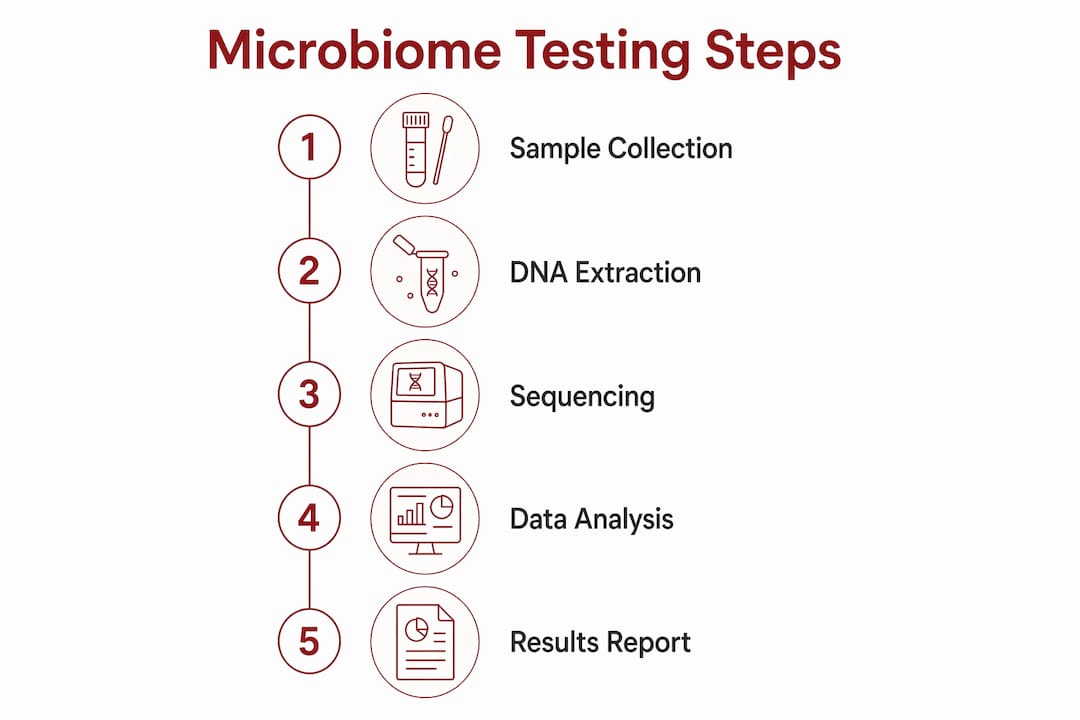
The process starts at home. Most direct-to-consumer kits include a collection swab or small container, a set of instructions, and a prepaid mailer. You collect a small stool sample and send it to the company’s partner laboratory, usually within 24–48 hours of collection.
Once the sample arrives at the lab, technicians extract DNA from the microbial cells present. Labs then use one of two main sequencing approaches:
- 16S rRNA sequencing targets a specific gene region shared by all bacteria, identifying which bacterial groups are present. It is faster and less expensive, but it cannot identify microbes at the species level with full accuracy.
- Shotgun metagenomics sequences all genetic material in the sample, giving a broader picture that includes fungi, viruses, and functional gene activity. It is more detailed but also more expensive and computationally intensive.
- Targeted gene panels focus on specific microbial markers linked to particular health outcomes, though these are less common in consumer products.
After sequencing, the lab’s software compares your microbial profile against a reference database. The resulting report typically lists bacterial families and genera, their relative abundance, a diversity score, and sometimes a “gut health” rating. Turnaround time runs from one to four weeks depending on the company.
Pro Tip: Read the methodology section of any test’s sample report before purchasing. If the company does not disclose which sequencing method it uses, that is a meaningful gap in transparency.

The report’s readability varies widely. Some companies present results through a simple color-coded dashboard; others provide dense tables of bacterial names. Neither format tells you what to do next with clinical certainty.
What can microbiome testing reveal about your gut health?
Microbiome analysis can surface genuinely interesting information. A test can show your overall microbial diversity, flag an unusually low abundance of certain well-studied bacteria like Lactobacillus or Bifidobacterium, and give you a snapshot of your gut’s bacterial composition at one point in time.
The limitations, though, are significant and worth knowing before you act on any result.
- No universal definition of “healthy” exists. A 2026 international expert consensus from the British Society of Gastroenterology found no condition where commercial microbiome profiling is clinically indicated or adds proven value. Without a validated reference range, “low diversity” on your report is a comparison to a database, not a medical standard.
- Tests measure presence, not function. Microbiome tests often measure bacterial presence but do not capture the chemical activity those microbes perform. Knowing a bacterium is there tells you little about what it is doing.
- Stool reflects the colon, not the whole gut. The small intestine, where much of digestion and absorption happens, is not represented in a stool sample.
- Results do not diagnose disease. No direct-to-consumer microbiome test is approved to diagnose any medical condition. Acting on a flagged result without a physician’s guidance carries real risk.
- Reports can suggest fixes without evidence. Test reports sometimes flag imbalances that have no evidence-based medical fix, nudging people toward restrictive diets or supplement regimens that are not supported by clinical research.
“There is currently no condition where commercial microbiome profiling is clinically indicated or adds proven value. Scientific rigor and standardization are still emerging, and widespread clinical use is premature.” British Society of Gastroenterology Expert Panel, 2026
Symptoms like bloody stool, severe abdominal pain, or unexplained weight loss require a licensed physician, not a mail-in kit. Dr. Arvind Reddy advises bypassing consumer tests entirely when serious gastrointestinal symptoms are present.
How reliable are direct-to-consumer microbiome tests?
The reliability problem is more serious than most marketing materials suggest. NIST researchers sent the same homogenized stool sample to multiple testing companies and found that only one bacterial genus, Streptococcus, appeared consistently across all seven labs. Every other result differed substantially. That means two reports from the same sample could point you in completely different directions.
Three factors drive this variability:
| Source of variability | What it means for your results |
|---|---|
| DNA extraction method | Different protocols pull different amounts of microbial DNA, skewing abundance readings |
| Sequencing technology | 16S rRNA and metagenomics produce different species-level resolution |
| Bioinformatics pipeline | Each company’s software uses different reference databases and algorithms |
NIST and international research panels call for standardization of genetic material isolation, sequencing, and data reporting, but those standards do not yet exist in commercial practice. The result is a market where two tests from the same person can look like two different people’s gut profiles.
Expert Diane Hoffmann highlights that unreliable test results can lead to wrong interventions and delays in proper treatment, particularly for people already managing chronic gut conditions. That is not a hypothetical risk. It is the documented outcome of acting on unvalidated data.
Pro Tip: If you choose to retest over time, use the same company each time. Experts note that consistency within one provider is more reliable than comparing results across different labs. Even then, treat trends cautiously, not as clinical findings.
Practical ways to support your gut microbiome without testing
The good news is that the most effective tools for gut health do not require a lab. A fiber-rich, Mediterranean-style diet remains the gold standard for supporting a diverse microbiome, according to Harvard Health and multiple gastroenterology experts. Lifestyle habits consistently outperform test results as a guide for gut wellness.
Here are the practices with the strongest evidence behind them:
- Eat a wide variety of plants. Aim for 30 or more different plant foods per week, including vegetables, fruits, legumes, nuts, seeds, and whole grains. Diversity in your diet feeds diversity in your gut.
- Prioritize prebiotic fiber. Foods rich in fructooligosaccharides (FOS), like chicory root, garlic, onions, and yacon root, selectively feed beneficial bacteria. Yakonow yacon syrup contains up to 50g of prebiotic FOS fiber per 100g, making it one of the most concentrated natural prebiotic sources available.
- Add fermented foods. Yogurt, kefir, kimchi, sauerkraut, and miso introduce live cultures that support microbial balance. These are not supplements; they are foods your gut recognizes.
- Move your body regularly. Exercise increases microbial diversity independent of diet. Even a 30-minute walk most days produces measurable effects on gut bacterial populations.
- Protect your sleep. Gut bacteria follow circadian rhythms. Disrupted sleep shifts microbial composition in ways that affect digestion and immune function.
- Manage stress with intention. The gut-brain axis is real. Chronic stress alters gut permeability and microbial balance. Slow mornings, shared meals, and unhurried time at the table are not luxuries. They are gut health practices.
Avoid making major dietary changes based solely on a consumer test report. Cutting out entire food groups because a report flagged a bacterial imbalance, without a physician’s guidance, can reduce the dietary diversity your gut actually needs. The gut microbiome diet staples that consistently show up in research are whole, varied, and plant-forward, not restrictive.
For families with children, prebiotic foods for kids follow the same principles. Variety, fiber, and fermented foods matter at every age.
Key Takeaways
Microbiome testing provides a snapshot of gut bacterial composition, but lifestyle habits built around dietary diversity and prebiotic fiber deliver more reliable and lasting gut health benefits than any single test result.
| Point | Details |
|---|---|
| Testing has real limits | No consumer test is FDA-approved for diagnosis; results vary widely across labs. |
| Variability is the core problem | NIST found only one consistent genus across seven labs testing the same sample. |
| Diet outperforms testing | A Mediterranean-style, fiber-rich diet is the evidence-backed foundation for gut health. |
| Prebiotic fiber matters daily | Foods high in FOS, like yacon root, feed beneficial bacteria consistently over time. |
| Serious symptoms need a doctor | Alarming gut symptoms require clinical evaluation, not a mail-in microbiome kit. |
What I actually think about microbiome testing right now
The science of the gut microbiome is genuinely one of the most exciting areas of health research happening today. I find myself reading every new study that comes out, and I understand completely why people want a window into what is happening inside their own bodies. That curiosity is healthy and worth honoring.
But I also think the consumer market has run well ahead of the science. When the same stool sample produces dramatically different results at seven different labs, that is not a minor technical footnote. It is a fundamental problem with the product being sold. Spending $100–$500 on a report that cannot be reproduced is a real cost, and the risk of acting on that report without medical guidance is also real.
What I keep coming back to is this: the habits that research consistently shows support a healthy gut are the same habits that make life feel good in a broader sense. Eating a wide variety of real food. Slowing down at the table. Sharing meals. Sleeping well. Moving your body. These are not consolation prizes for people who cannot afford a test. They are the actual answer.
Microbiome testing may become a genuinely useful clinical tool as standardization improves. Right now, I would treat it as an interesting curiosity rather than a guide for major health decisions. And I would put the money toward a beautiful, varied, plant-forward pantry instead.
— Celeste
Nourish your family’s gut the simple way, with Yakonow
Good gut health starts at the table, not in a lab. Yakonow yacon syrup is hand-harvested from yacon root in Peru and contains up to 50g of prebiotic FOS fiber per 100g, the same fiber type that feeds the beneficial bacteria your gut relies on every day. It has a glycemic index of just 1, zero added sugar, and a naturally sweet flavor that works beautifully drizzled over pancakes, yogurt, oatmeal, and fresh fruit.

It is the kind of small, daily choice that adds up quietly over time. A slow Saturday morning with waffles and Yakonow is not just a meal. It is a gut-friendly ritual the whole family can share. Try the 6oz squeezable bottle and see how naturally it fits into your table.
FAQ
What does microbiome testing actually measure?
Microbiome testing measures the types and relative abundance of bacteria and other microbes in your stool sample using genetic sequencing. It does not measure functional chemical activity or diagnose any medical condition.
How much does a gut microbiome test cost?
Direct-to-consumer microbiome tests typically cost between $100 and $500, are not covered by insurance, and are not regulated by the FDA as clinical diagnostic tools.
Are microbiome test results accurate?
Results vary significantly across labs. NIST research found that the same stool sample sent to seven different companies produced consistent results for only one bacterial genus, raising serious questions about reproducibility.
Can microbiome testing replace a doctor’s evaluation?
No. Clinical gastroenterologists are clear that microbiome tests cannot replace medical evaluation, especially for symptoms like bloody stool, severe abdominal pain, or unexplained changes in digestion.
What is the best way to improve gut health without testing?
A fiber-rich, plant-diverse diet in the Mediterranean style is the evidence-backed foundation for gut health. Adding prebiotic fiber sources like yacon root, fermented foods, regular exercise, and quality sleep supports a healthy microbiome without requiring a test.